Σχετικά
The Silent City Beneath the Sands: The Untold Story of Jenné Jeno the Ancient African Metropolis
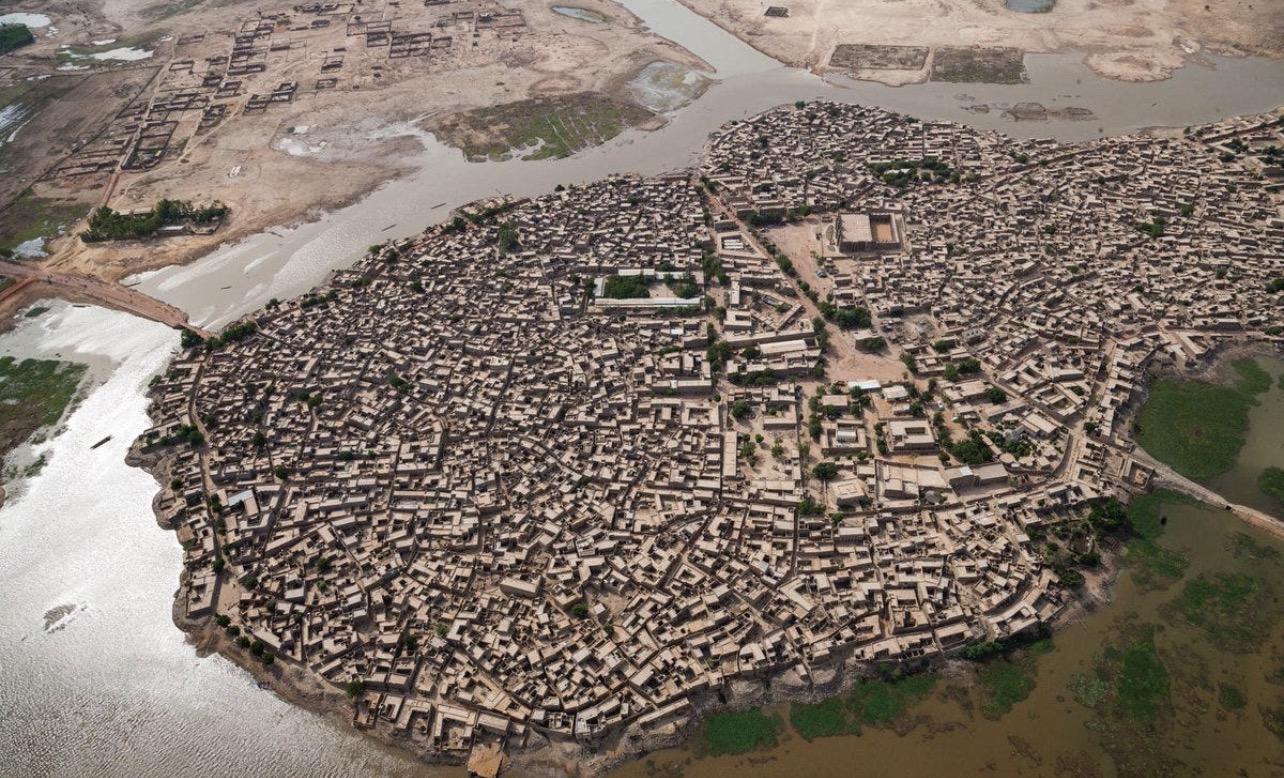
Jenné Jeno
Long before the rise of famous empires like Mali and Songhai, long before the arrival of European explorers in West Africa, there existed an extraordinary city in the fertile floodplains of the Niger River. This city was Jenné Jeno, one of the oldest known urban centers in sub Saharan Africa.
Today Jenné Jeno lies quietly near the famous city of Djenné in modern day Mali. From the surface it may look like nothing more than an ordinary archaeological mound rising gently from the land. But beneath the soil lies the story of a remarkable civilization that flourished for more than a thousand years.
Jenné Jeno is not only important because it was ancient. It is historic because it challenges many outdated ideas about African history. For many years some historians wrongly believed that complex cities in Africa developed only after outside influences arrived. The discoveries at Jenné Jeno proved otherwise.
The ancient city revealed that Africans built organized cities, developed trade networks, produced advanced craftsmanship, and created vibrant cultures centuries before many parts of the world even knew of their existence.
The Birth of a City in the Inland Delta
The story of Jenné Jeno begins around 250 before the common era in the inland delta of the Niger River. This region is a unique landscape where the Niger River spreads into a wide network of waterways, lakes, and fertile floodplains.
Every year seasonal floods brought rich soil that made the land ideal for agriculture. The area was also filled with fish and wildlife, providing abundant food for early settlers.
Small farming and fishing communities began settling in this fertile environment. Over time these communities grew and gradually formed what would become Jenné Jeno.
Unlike many ancient cities that grew around kings or temples, Jenné Jeno appears to have developed as a network of closely connected neighborhoods. Archaeologists believe that the city expanded organically as more people moved into the area.
By around the first century of the common era Jenné Jeno had become a large urban center covering more than thirty hectares.
At its peak the population may have reached between ten thousand and twenty thousand people, making it one of the largest cities in West Africa at the time.
This early urban development makes Jenné Jeno historically significant because it shows that African urbanization began much earlier than previously believed.
A City Without Kings
One of the most fascinating aspects of Jenné Jeno is that archaeologists have found little evidence of royal palaces or centralized political power.
Many ancient civilizations such as Egypt or Mesopotamia built huge monuments for kings and rulers. But Jenné Jeno appears to have functioned differently.
Instead of being ruled by a single king, the city seems to have been organized through a complex network of social groups, families, and craft communities.
Each neighborhood may have specialized in different activities such as metalworking, pottery production, fishing, or farming.
This type of urban organization shows that complex societies can develop through cooperation and shared economic activity rather than strict centralized authority.
This makes Jenné Jeno unique in world history and highlights the diversity of African political systems.
The Power of Trade
Trade was one of the main forces that helped Jenné Jeno grow into an important city.
The Niger River served as a natural highway connecting communities across West Africa. Boats and canoes moved goods along the waterways while caravans carried products across the surrounding savannah.
Jenné Jeno became a major trading hub where merchants exchanged goods from many regions.
People traded rice, fish, millet, and vegetables grown in the fertile floodplains. They also traded pottery, iron tools, beads, and copper objects.
One of the most important discoveries made by archaeologists at Jenné Jeno was evidence of long distance trade.
Glass beads found at the site came from North Africa and possibly from as far away as the Middle East or India. Copper and other metals may have come from distant mining regions.
These findings show that Jenné Jeno was connected to a wide network of trade routes that linked West Africa to the Sahara and beyond.
This trading system later became part of the famous trans Saharan trade routes that supported the rise of powerful empires like Ghana and Mali.
Iron and Craftsmanship
Another important aspect of Jenné Jeno was its skilled craftsmanship.
Archaeological excavations have revealed iron tools, pottery, jewelry, and terracotta sculptures created by the city’s artisans.
Ironworking was particularly important. Blacksmiths produced tools such as knives, farming implements, and weapons that supported both agriculture and trade.
The presence of iron technology shows that Jenné Jeno had advanced technical knowledge and specialized labor.
Pottery from the city is also remarkable. The designs show artistic creativity and cultural expression.
Perhaps the most famous artistic objects discovered at Jenné Jeno are terracotta figurines.
These sculptures often represent human figures or animals and may have had religious or symbolic meanings.
The terracotta figures show detailed hairstyles, jewelry, and clothing, giving historians insight into the appearance and culture of ancient West African societies.
Religion and Spiritual Life
Although much about the spiritual beliefs of Jenné Jeno remains mysterious, archaeologists believe that religion played an important role in the life of the city.
The terracotta sculptures may have been used in rituals or ceremonies.
Some sculptures appear to represent ancestors or spiritual beings.
Ancestor reverence was common in many African societies and may have been practiced in Jenné Jeno as well.
Burial sites found near the city show that the dead were treated with care and respect.
These practices reveal the deep spiritual traditions that shaped daily life.
The Rise of the Djenné Region
Over time Jenné Jeno became part of a larger network of settlements in the Niger Inland Delta.
More than sixty nearby mounds have been identified as related communities.
Together they formed a complex urban landscape connected through trade, family ties, and cultural traditions.
This network allowed the region to support a large population and a thriving economy.
The success of this region eventually laid the foundation for the later development of Djenné, one of the most famous cities in West African history.
Djenné would later become a major center of Islamic scholarship and trade during the Mali Empire.
But the roots of that greatness began with Jenné Jeno.
The Beginning of Decline
By around the eleventh century the importance of Jenné Jeno began to decline.
Several factors may have contributed to this change.
Climate variations may have affected agriculture and the flooding patterns of the Niger River.
Trade routes may have shifted as new political powers emerged in the region.
Another important factor was the spread of Islam across West Africa.
As Islam expanded, new cities and trading centers developed that were closely linked to Islamic scholarship and commerce.
The nearby city of Djenné began to rise as a religious and commercial center.
Gradually the population moved away from Jenné Jeno toward Djenné, leaving the ancient city abandoned.
Over time the buildings collapsed and the city became buried beneath layers of earth.
For centuries its story was forgotten.
Rediscovery of the Ancient City
The hidden history of Jenné Jeno remained unknown until the twentieth century when archaeologists began studying the region.
In the 1970s and 1980s extensive excavations revealed the true age and importance of the site.
Researchers discovered pottery layers dating back more than two thousand years.
They also uncovered iron tools, beads, sculptures, and evidence of long distance trade.
These discoveries completely changed how historians understood African history.
Jenné Jeno proved that complex urban societies existed in West Africa long before the rise of famous empires.
It showed that African civilizations had developed their own systems of trade, technology, and culture independently.
Why Jenné Jeno Is Historic
Jenné Jeno is historically important for many reasons.
First it is one of the oldest known cities in sub Saharan Africa.
Second it demonstrates that urban life in Africa developed through local innovation rather than outside influence.
Third it reveals that West Africa was connected to regional and international trade networks centuries before colonial contact.
Fourth it provides evidence of advanced craftsmanship including ironworking and terracotta art.
Finally the city helps historians understand how early urban societies in Africa were organized.
Instead of massive monuments or centralized kingship Jenné Jeno developed through community cooperation and economic specialization.
This makes it a unique example of urban development in world history.
The Legacy of Jenné Jeno
Although the ancient city eventually disappeared beneath the soil, its legacy continues to influence West African history.
The traditions of trade, craftsmanship, and cultural exchange that began in Jenné Jeno shaped the development of later civilizations in the Niger River region.
Cities such as Djenné and Timbuktu carried forward this legacy and became famous centers of commerce and learning.
Today the archaeological site of Jenné Jeno is recognized as one of Africa’s most important historical locations.
Its discoveries continue to inspire scholars and researchers seeking to understand the true depth of African civilization.
Standing on the quiet mound today, it is hard to imagine the bustling city that once existed there.
But beneath the earth lies the story of a community that built one of the earliest cities in Africa and helped shape the history of the continent.
Jenné Jeno reminds the world that Africa’s past is rich with innovation, culture, and human achievement waiting to be rediscovered.

Κατηγορίες
Διαβάζω περισσότερα
Femi Otedola Olufemi Peter Otedola, commonly known as Femi Otedola, was born on 4 November 1962 in Ibadan, Oyo State, Nigeria to Sir Michael Otedola, a former Governor of Lagos State, and Lady Doja. He grew up in a prominent Nigerian family and early on developed a keen interest in business. Although he struggled academically repeating classes and not completing advanced formal...

Prince Adewale (POV) The sight froze me. My seal. On the floor. And Adebimpe standing over it. The room smelled wrong fear, not guilt. But the palace had taught me that innocence often wore the same face as betrayal. “Explain,” I said, my voice cold. She fell to her knees immediately. “My prince, I swear I did not steal it. I was told it was missing. I came to...

President Bola Tinubu has called for the urgent ratification of the Biodiversity Beyond National Jurisdiction (BBNJ) Agreement and a significant increase in funding to support blue economy initiatives, especially in developing countries, to ensure the sustainable use and protection of the world’s oceans. Speaking on behalf of the president at the ongoing United Nations Ocean Conference in...

Baba Ijesha Baba Ijesha, whose real name is Olanrewaju James Omiyinka, is a Nigerian actor and comedian known for his roles in Yoruba Nollywood movies. He became popular for his comic style, expressive acting, and ability to play humorous and dramatic roles. Early Life and Background Baba Ijesha was born in Nigeria and is originally from Ilesha, Osun State. He grew up in the...

Maryam Booth When the name Maryam Booth is mentioned in Northern Nigeria, it carries familiarity, admiration, and sometimes controversy. She is recognized as one of Kannywood’s most talented and resilient actresses. Elegant, expressive, and bold in her own way, she has carved out a lasting place in the Hausa film industry. But behind the name that fans know so well is her...