About
About
The City of Knowledge in the Desert: The Untold Story of the Timbuktu Manuscripts and the Ancient Libraries of Mali
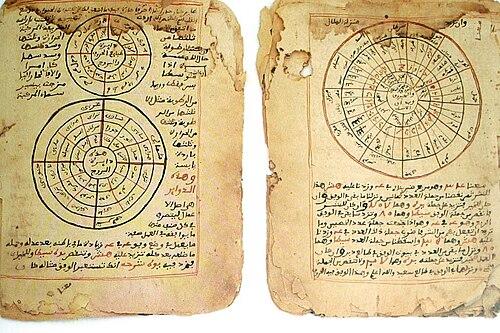
Timbuktu Manuscripts
In the heart of the Sahara Desert, far from the noise of modern cities and surrounded by endless sands, lies a place that once stood as one of the greatest centers of knowledge in the world. This place is Timbuktu, a legendary city in present day Mali that for centuries symbolized learning, scholarship, culture, and intellectual greatness.
When many people hear the name Timbuktu today, they imagine a distant and mysterious place at the edge of the world. But centuries ago, Timbuktu was not a forgotten town. It was a thriving intellectual capital where scholars debated philosophy, astronomy, law, medicine, and religion. Its libraries were filled with manuscripts written by some of the greatest minds in Africa and beyond.
The story of the Timbuktu manuscripts and the ancient libraries is a powerful reminder that Africa has long been a center of scholarship and intellectual tradition. These manuscripts hold the memories of a golden age when books were treasures, knowledge was currency, and scholars were respected like kings.
The Rise of Timbuktu
The story begins in the eleventh century when Timbuktu was founded as a small trading post by Tuareg nomads. The city was located near the Niger River and close to important trans Saharan trade routes. Merchants traveling between North Africa and West Africa often stopped there to rest and trade goods.
Soon Timbuktu became an important commercial center. Traders brought gold from West Africa, salt from the Sahara, and goods from distant lands. The wealth flowing through the city helped it grow quickly.
But what truly transformed Timbuktu into a historical legend was not only trade. It was knowledge.
During the fourteenth and fifteenth centuries, the Mali Empire and later the Songhai Empire encouraged education and scholarship. Islamic scholars began arriving in Timbuktu from places like Egypt, Morocco, and Andalusia in Spain. They brought books, ideas, and intellectual traditions with them.
Mosques were built not just as places of worship but also as centers of learning. Among the most famous were the Sankore Mosque, Djinguereber Mosque, and Sidi Yahya Mosque.
Over time these mosques evolved into universities where students gathered from all parts of Africa and the Islamic world to study.
The Sankore University
One of the greatest institutions in Timbuktu was the Sankore University.
At its height in the fifteenth and sixteenth centuries, Sankore was one of the most respected centers of learning in the world. Thousands of students studied there under the guidance of respected scholars.
Education at Sankore was serious and demanding. Students studied subjects such as theology, mathematics, law, astronomy, medicine, literature, and philosophy.
Unlike many universities today, Sankore had no central campus building. Instead, learning took place in homes, mosques, and private libraries. Scholars often taught small groups of students who lived and studied with them for years.
Graduating from Sankore was a great honor. A student had to demonstrate deep understanding of complex texts and intellectual debates before being recognized as a scholar.
The Manuscripts
The true treasure of Timbuktu was its manuscripts.
These manuscripts were handwritten books created over centuries by scholars, scribes, and students. They covered a wide range of subjects including religion, science, politics, law, medicine, poetry, history, and trade.
Some manuscripts discussed astronomy and the movement of stars. Others explained medical treatments and herbal remedies. Some recorded legal decisions and political agreements.
Many manuscripts were written in Arabic, which was the scholarly language of the time. Others included local African languages written in Arabic script.
Families in Timbuktu treasured these manuscripts. They were often passed down from generation to generation like precious heirlooms.
Owning a large library was a sign of prestige. Scholars competed not only in knowledge but also in the size and importance of their collections.
Some families owned hundreds or even thousands of manuscripts.
Famous Scholars of Timbuktu
The golden age of Timbuktu produced many brilliant scholars whose works still survive today.
One of the most famous was Ahmed Baba.
Ahmed Baba was born in 1556 into a family of scholars. He became one of the most respected intellectuals in Timbuktu. His writings covered Islamic law, theology, and philosophy.
Ahmed Baba wrote dozens of books and became a teacher to many students. His personal library reportedly contained thousands of manuscripts.
Another important scholar was Mahmoud Kati, a historian who wrote one of the most important historical chronicles of West Africa called Tarikh al Fettash.
There was also Abderrahmane al Sadi who wrote Tarikh al Sudan, another important historical record of the region.
These scholars helped document the political, cultural, and intellectual life of West Africa.
Their writings are among the most valuable historical sources about African history before colonial times.
Timbuktu Becomes Legendary
By the sixteenth century Timbuktu had become famous across the world.
Travelers and explorers from Europe heard stories about the city of gold and knowledge deep in Africa. Some imagined it as a mysterious city filled with wealth and wisdom.
Scholars from different regions continued traveling there to study.
At one point Timbuktu was believed to have around twenty five thousand students. Considering the size of the city at the time, this meant a large portion of the population was involved in learning.
Books were considered more valuable than gold in Timbuktu. Merchants traded manuscripts as precious goods.
The Fall of Timbuktu
Unfortunately the golden age of Timbuktu did not last forever.
In 1591 the Moroccan army invaded the Songhai Empire and captured Timbuktu. The invasion disrupted the intellectual and economic life of the city.
Many scholars were arrested or exiled. Ahmed Baba himself was taken to Morocco as a prisoner.
Although he was later allowed to return, the intellectual dominance of Timbuktu had already begun to decline.
Over the following centuries trade routes changed and political instability increased. The once thriving center of learning slowly faded.
However the manuscripts survived.
The Hidden Libraries
Even as Timbuktu declined, families protected the manuscripts.
They understood the value of these documents and hid them carefully in private homes and secret libraries.
For generations families guarded the manuscripts as priceless treasures. Many were stored in wooden chests or wrapped in cloth to protect them from dust and heat.
Some collections remained hidden for centuries.
It is believed that Timbuktu may contain hundreds of thousands of manuscripts. Some researchers estimate that more than seven hundred thousand manuscripts may exist in the region.
Rediscovery of the Manuscripts
In the twentieth century scholars began rediscovering the importance of the Timbuktu manuscripts.
Historians realized that these documents contained valuable information about African history, science, culture, and intellectual life.
They proved that Africa had a strong tradition of scholarship long before European colonization.
Institutions such as the Ahmed Baba Institute were created to collect, preserve, and study the manuscripts.
Researchers from around the world began visiting Timbuktu to study these texts.
They found writings about mathematics, astronomy, medicine, law, and trade that showed advanced knowledge and intellectual debates.
The Rescue During War
One of the most dramatic moments in the history of the manuscripts happened in 2012.
During a conflict in Mali, armed extremist groups took control of Timbuktu. There were fears that the manuscripts might be destroyed.
But the people of Timbuktu refused to let their history disappear.
In a secret operation, librarians, families, and ordinary citizens worked together to smuggle thousands of manuscripts out of the city.
They hid them in metal boxes and transported them by boat, motorcycle, donkey carts, and cars to safer places.
This dangerous mission saved most of the manuscripts from destruction.
It was an extraordinary act of courage and cultural protection.
Why the Timbuktu Manuscripts Are Important
The Timbuktu manuscripts are important for many reasons.
First they prove that Africa had thriving intellectual traditions centuries ago. They challenge the outdated belief that Africa had no written history.
Second they provide valuable information about the history of West Africa including political systems, trade networks, and cultural life.
Third they show the connections between Africa and the wider world through trade, religion, and scholarship.
The manuscripts also reveal scientific knowledge developed by African scholars.
For example some manuscripts discuss astronomical observations and mathematical calculations.
Others describe medical practices and treatments.
These writings show that scholars in Timbuktu were part of a global tradition of learning.
Preserving the Legacy
Today efforts continue to preserve and digitize the Timbuktu manuscripts.
Many manuscripts are fragile because they were written on paper hundreds of years ago.
Heat, humidity, insects, and time have damaged some of them.
International organizations, historians, and local communities are working together to protect them.
Digitization projects aim to create digital copies so that scholars around the world can study them without risking damage to the originals.
These efforts ensure that the knowledge contained in the manuscripts will survive for future generations.
The Symbol of African Knowledge
Timbuktu remains a powerful symbol of African intellectual heritage.
The manuscripts remind the world that Africa has always been a place of knowledge, creativity, and scholarship.
Long before modern universities were built in Europe and America, scholars in Timbuktu were debating philosophy, studying astronomy, and writing books.
Their libraries were filled with ideas that shaped cultures and influenced generations.
Today the story of the Timbuktu manuscripts inspires historians, students, and researchers around the world.
It tells us that knowledge can survive even through centuries of change, invasion, and conflict.
And it reminds us that sometimes the greatest treasures in history are not gold or jewels but words written on fragile pages that carry the wisdom of the past.
Timbuktu may sit quietly in the desert today, but within its ancient manuscripts lies the voice of centuries of African brilliance waiting to be heard again.


Categories
Read More
Olusegun Obasanjo is one of Nigeria’s most influential political figures, having served both as a military Head of State and later as a democratically elected President. His leadership spans critical periods in Nigeria’s political history, including the post civil war era and the return to civilian rule in 1999. Early Life and Education Olusegun Matthew Okikiola Aremu Obasanjo was...
In pharmacies, clinics, and households across Nigeria, a silent killer is spreading—counterfeit drugs. Disguised as genuine medicine, these fake pharmaceuticals are endangering lives and undermining trust in the country’s healthcare system. Every year, thousands fall victim, often without ever realizing the true cause of their suffering. One such victim is Mrs. Ore Oluwatobi,...

Democratic Republic of the Congo The Democratic Republic of the Congo is one of Africa’s largest and most resource rich nations. At its heart flows the Congo River, the second longest river in Africa and one of the most powerful in the world. Its forests are vast, its soil rich, and its history both glorious and painful. From ancient kingdoms to colonial brutality, from...
Björk Björk is an Icelandic singer, songwriter, producer, and creative visionary known for her experimental music, unique voice, and artistic innovation. She is widely regarded as one of the most original and influential artists in modern music. Her full name is Björk Guðmundsdóttir, and she was born on November 21, 1965, in Reykjavík, Iceland. Early Life and...

President Bola Tinubu has allegedly continued his smoking habit despite repeated interventions from close aides and allies urging him to quit, SaharaReporters has gathered. Sources familiar with the matter revealed that concerns about the President’s health have been raised several times, but Tinubu has shown no sign of giving up the practice. “Tinubu’s smoking addiction is...