Sobre
Sobre
The Rise and Fall of Carthage: The Legendary City That Challenged an Empire
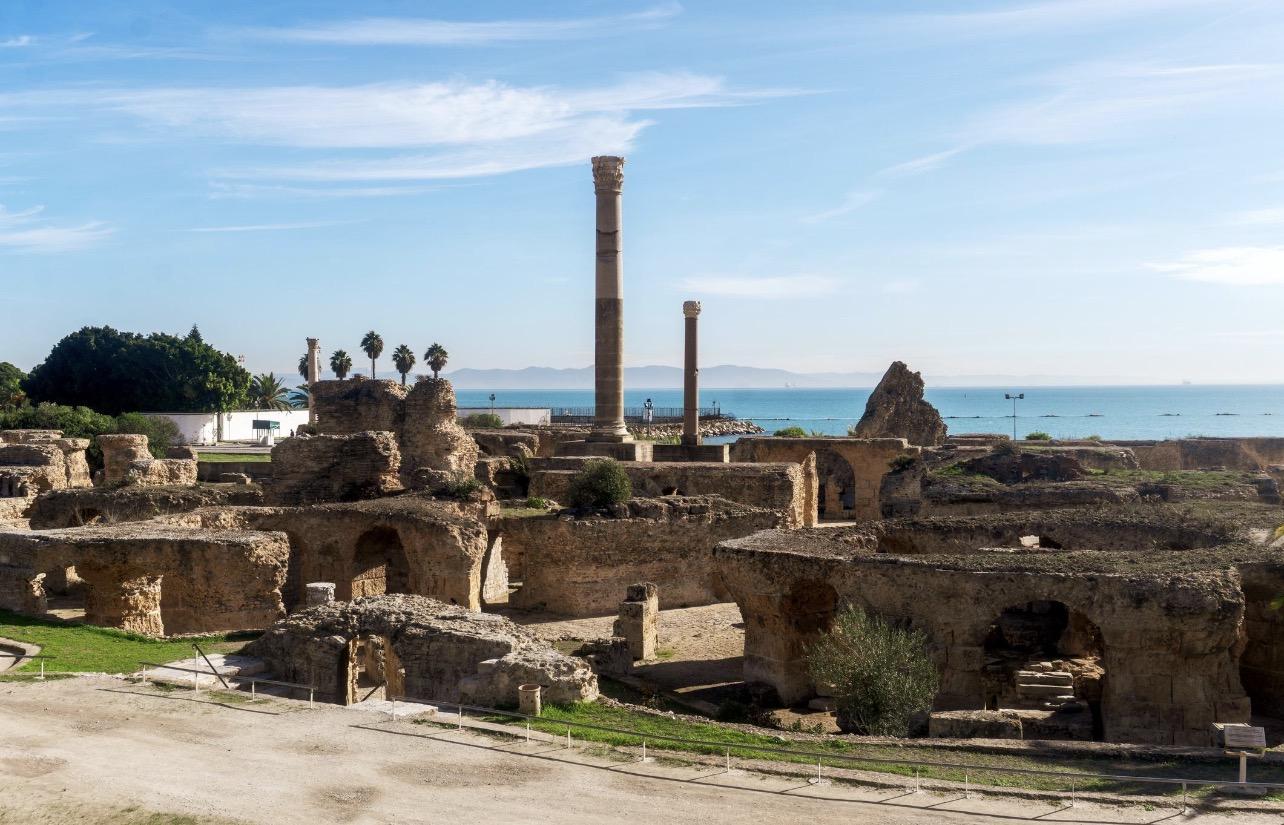
Carthage
Long before many of the modern cities of North Africa were built, before colonial borders were drawn and long before modern Tunisia became a nation, there stood a magnificent city along the Mediterranean coast that once controlled trade, power, and influence across the ancient world. That city was Carthage.
Today the remains of Carthage lie quietly near the modern city of Tunis, overlooking the same blue Mediterranean waters that once carried fleets of merchants, soldiers, and explorers. Broken columns, ancient roads, and scattered stone foundations are all that remain. Yet these ruins tell the story of one of the most powerful civilizations the world had ever seen.
The story of Carthage is not just about a city. It is about ambition, trade, war, brilliance, and one of the greatest rivalries in human history.
The Beginning of a Legendary City
According to ancient legends, Carthage was founded in the ninth century BC by a Phoenician princess named Dido. She fled from the city of Tyre in present day Lebanon after her brother murdered her husband in a struggle for power.
Dido gathered loyal followers and sailed across the Mediterranean searching for a new home. When she arrived on the coast of North Africa she negotiated with the local people for land. The ruler agreed to give her only as much land as could be covered with an ox hide.
Dido accepted the challenge. She cut the ox hide into thin strips and used them to outline a large piece of land on a hill overlooking the sea. This clever act allowed her to claim a much larger area than the ruler expected. That hill later became known as Byrsa Hill, the heart of the future city.
From that moment a new civilization began.
The city was named Carthage which came from the Phoenician words meaning New City.
What started as a small settlement would eventually become one of the richest and most powerful cities in the ancient Mediterranean.
The Birth of a Maritime Power
Carthage grew quickly because of its location. Positioned between Europe and Africa, the city became a gateway for trade across the Mediterranean Sea.
Phoenician traders were already known as some of the greatest sailors in the ancient world. They built strong ships and traveled great distances in search of valuable goods.
Carthaginian merchants traded gold, ivory, salt, spices, textiles, metals, and precious stones. They established trade routes that stretched from Spain to West Africa and even to the British Isles.
Their ships sailed everywhere.
Soon Carthage was not just a city but the center of a vast commercial empire. Colonies and trading posts were established across North Africa, Sicily, Sardinia, Corsica, and southern Spain.
Wealth poured into the city. Carthage became famous for its busy harbors, magnificent temples, strong walls, and grand homes.
At the heart of the city were two famous harbors. One was a rectangular commercial harbor filled with merchant ships bringing goods from every corner of the known world. The second harbor was circular and served as a military base capable of holding hundreds of warships.
This naval power made Carthage nearly unbeatable on the sea.
But power always invites rivals.
The Rise of a Rival Named Rome
Across the Mediterranean another city was slowly rising in power.
Rome.
At first Rome was just one of many city states in Italy. But over time it expanded, conquering neighboring territories and growing stronger.
Eventually Rome and Carthage began to see each other not as partners in trade but as competitors.
The island of Sicily became the spark that ignited one of the most famous wars in history.
Both Rome and Carthage wanted control of Sicily because of its strategic location and rich farmland. Tensions escalated until war broke out.
This conflict became known as the First Punic War.
The Punic Wars That Changed History
The word Punic comes from the Roman name for the Phoenicians.
The First Punic War began in 264 BC and lasted more than twenty years.
At the beginning Carthage had a powerful navy while Rome had almost none. But Rome quickly adapted. Roman engineers studied captured Carthaginian ships and built their own fleet.
After years of fierce battles at sea Rome eventually defeated Carthage.
Carthage was forced to surrender Sicily and pay huge amounts of money to Rome.
But the conflict was far from over.
The Rise of Hannibal
One of the most legendary figures in military history was born during this time in Carthage.
His name was Hannibal Barca.
As a child Hannibal was brought by his father to an altar and made to swear eternal hatred toward Rome. This promise would shape the rest of his life.
Years later Hannibal became a brilliant military commander.
Instead of attacking Rome directly by sea, Hannibal planned something daring and almost unbelievable.
He would invade Rome from the north.
To do this he led his army from Spain across the Pyrenees mountains and then across the massive Alps mountains into Italy.
With him were thousands of soldiers, cavalry, and even war elephants.
The journey was brutal. Snow, landslides, and enemy attacks reduced his army. But Hannibal managed to reach Italy and shock the Roman world.
Over the next several years he defeated Roman armies again and again.
One of his most famous victories was the Battle of Cannae in 216 BC. Roman forces were surrounded and destroyed in one of the greatest tactical victories ever recorded.
For a moment it seemed that Rome might fall.
But Rome refused to surrender.
The Fall of Carthage
Eventually Rome rebuilt its strength and attacked Carthaginian territories in Spain and North Africa.
Hannibal was forced to return home to defend Carthage.
In 202 BC Roman forces led by Scipio Africanus defeated Hannibal at the Battle of Zama.
Carthage lost the war.
But Rome was still not satisfied.
Decades later tensions rose again and Rome decided to destroy Carthage completely.
The Third Punic War began in 149 BC.
Roman forces surrounded the city and laid siege for three long years.
The people of Carthage fought desperately. Citizens turned their homes into workshops making weapons. Women cut their hair to make ropes for war machines.
But the Roman army eventually broke through the defenses.
In 146 BC the city of Carthage fell.
What followed was one of the most tragic moments in ancient history.
The Romans destroyed the city. Buildings were burned. Streets were leveled. Thousands of people were killed or enslaved.
Carthage which had once ruled the Mediterranean was reduced to ruins.
For centuries the land remained silent.
Why the Ruins of Carthage Are Important in History
The ruins of Carthage represent more than the remains of an ancient city.
They symbolize one of the greatest struggles for power in the ancient world.
The rivalry between Carthage and Rome shaped the future of Europe, North Africa, and the Mediterranean.
If Carthage had won the Punic Wars, the history of the world might have been completely different.
Language, culture, and political systems across Europe might have developed under Carthaginian influence rather than Roman rule.
The ruins remind us of how powerful civilizations can rise and fall.
What Remains of Carthage Today
Although the Romans destroyed much of the original city, archaeologists have uncovered many fascinating remains.
Visitors to the site today can explore the Antonine Baths which were some of the largest Roman baths ever built. These massive structures show the architectural brilliance of the Roman period that followed the destruction of Carthage.
Byrsa Hill still stands overlooking the sea just as it did when Queen Dido first claimed the land centuries earlier.
Excavations have also revealed houses, temples, streets, ports, and burial grounds that tell the story of daily life in the ancient city.
Fragments of statues, pottery, and inscriptions continue to provide clues about Carthaginian culture and religion.
In 1979 the ruins of Carthage were recognized as a UNESCO World Heritage Site because of their historical importance.
A City That Refuses to Be Forgotten
Walking through the ruins today feels like stepping into a forgotten chapter of human history.
Broken pillars lie where temples once stood.
Ancient stones mark the paths where merchants once traded goods from distant lands.
The sea still glitters beside the old harbor where powerful warships once prepared for battle.
Although the city was destroyed more than two thousand years ago, its story still lives on.
Carthage reminds the world that greatness can rise from ambition, intelligence, and courage. But it also teaches that power and rivalry can lead to destruction.
The ruins are silent now, but the history they hold continues to echo through time.
The story of Carthage is not just the story of a fallen city.
It is the story of human ambition, resilience, war, and legacy.
And among the ancient stones of Tunisia, that story still waits for those who are willing to listen.


Categorias
Leia Mais
The Director-General of the National Orientation Agency (NOA), Lanre Issa-Onilu, has cautioned Nigerians against falling for foreign propaganda aimed at portraying the country as unsafe or divided along religious lines. Speaking in Abuja on Wednesday, Issa-Onilu warned that such narratives could lead Nigeria into chaos similar to Iraq and Libya, citing false Western claims that led to...

The digital landscape is shifting from general analytics toward deep, actionable insights. As physical and digital storefronts converge, the Visitor Behavior Intelligence Software Market Analysis is experiencing a period of transformative growth. By 2034, this sector is expected to become a cornerstone of corporate strategy, moving beyond simple heatmaps to integrated artificial intelligence...

Mandy Moore Mandy Moore is an American singer, actress, and voice artist known for her sweet vocals, emotional acting, and long lasting career in both music and television. Her full name is Amanda Leigh Moore, and she was born on April 10, 1984, in Nashua, New Hampshire, United States. Early Life and Background Mandy Moore grew up in Florida, where she developed a passion for singing and...

Adewale’s POV The palace courtyard was full. Chiefs. Elders. Guards. Servants. Everyone. I stood beside my father, the crown heavy on my head not because of its weight, but because of what I was about to do. I searched the crowd until I found her. Adebimpe. She stood quietly, unaware that her life was about to change in front of the entire kingdom. I stepped forward. “People...

Nigeria is actively courting global investment for a $25 billion undersea gas pipeline project aimed at supplying natural gas to Europe via Morocco, in a strategic move to boost its energy exports and economic growth. The ambitious Nigeria-Morocco Gas Pipeline project was a key focus during a meeting on Monday between Vice President Kashim Shettima and executives from global energy and...