About
About
The Ancient Drakensberg San Rock Art Story of Africa’s Oldest Mountain Paintings
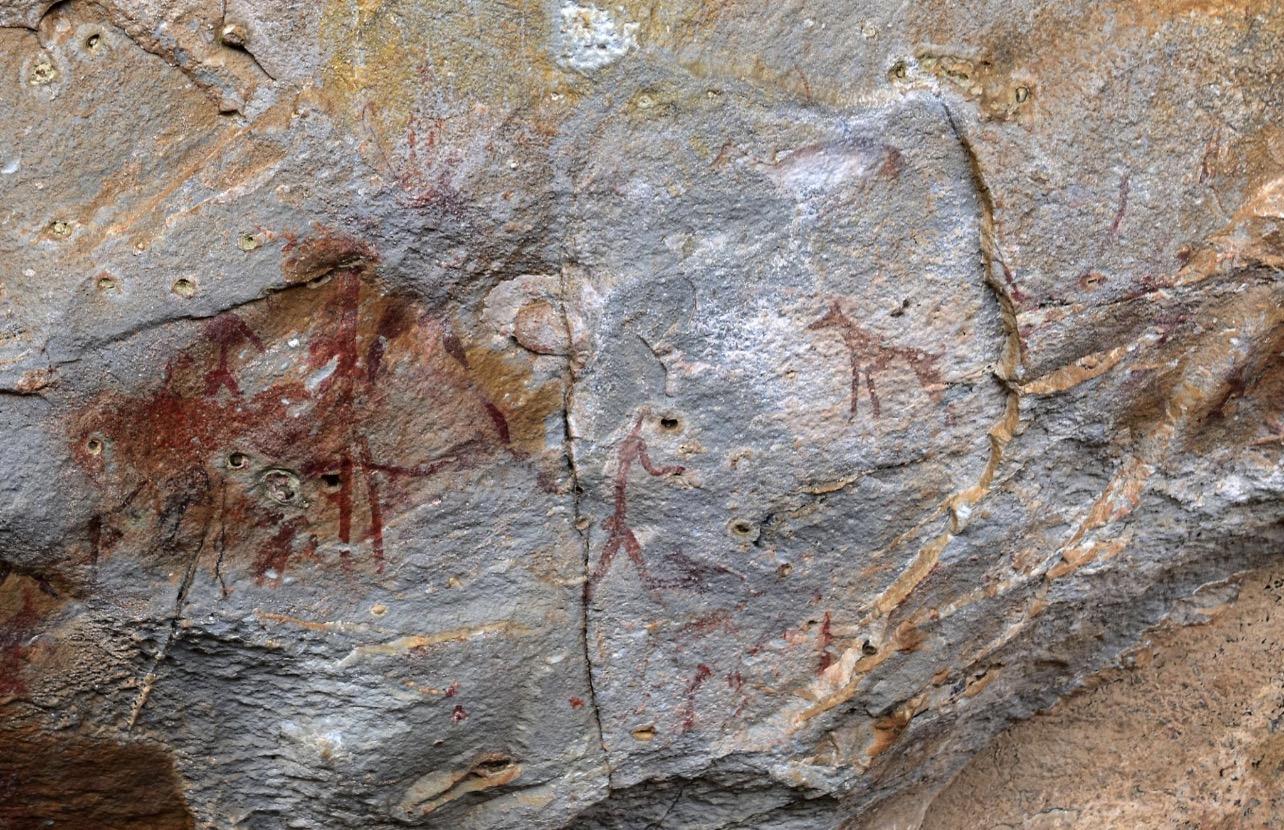
The Ancient Drakensberg San Rock Art
High in the rugged mountains that stretch between modern day South Africa and Lesotho lies one of the most remarkable historical treasures in Africa. The Drakensberg Mountains are not only famous for their breathtaking cliffs, misty valleys, and dramatic peaks. Hidden within these rocks are thousands of ancient paintings that tell the story of a people whose voices have nearly disappeared from history.
These are the Drakensberg San rock paintings, artworks created by the San people thousands of years ago. Long before modern cities rose across Africa, long before colonial borders divided lands and cultures, the San people lived among these mountains, hunting, gathering, and recording their world on stone walls.
Today these paintings are considered one of the greatest archaeological and cultural treasures in Africa. They are more than art. They are messages from the past, windows into the beliefs, spirituality, and daily life of some of the earliest human communities in southern Africa.
Their story is one of survival, creativity, spirituality, and deep connection to nature.
The People Behind the Paintings
The creators of the Drakensberg rock art were the San people, often referred to historically as Bushmen. They are among the oldest surviving cultural groups in the world, with a history in southern Africa that stretches back tens of thousands of years.
The San were hunter gatherers who lived in small mobile communities. They did not build large cities or kingdoms like some other African civilizations. Instead they lived closely with nature, moving across landscapes in search of animals, water, and seasonal plants.
Their knowledge of the land was extraordinary. They could track animals across rocky ground, survive in harsh climates, and identify hundreds of edible or medicinal plants.
But what truly set them apart was their rich spiritual culture.
The San believed that the world was filled with powerful spiritual forces. Animals, landscapes, and even weather were connected to a spiritual realm. Their shamans or spiritual leaders performed rituals and entered trance states to communicate with these forces.
Many scholars believe the rock paintings were created during or inspired by these spiritual experiences.
The Mountains That Became a Canvas
The Drakensberg Mountains form one of the most dramatic landscapes in Africa. Rising sharply from the plains, they create a natural fortress of cliffs, valleys, and caves.
For the San people, these mountains were not just a place to live. They were sacred landscapes filled with spiritual meaning.
The caves and rock shelters provided protection from weather and predators. These same shelters became the galleries where San artists painted their visions.
Over thousands of years, the San covered the walls of these shelters with paintings of animals, humans, hunters, dancers, and mysterious spiritual figures.
The largest concentration of these paintings can be found in the Ukhahlamba Drakensberg region. Archaeologists estimate that there are more than thirty five thousand individual images spread across hundreds of rock shelters.
This makes it the largest and most concentrated group of rock art in Africa south of the Sahara.
Each painting is like a page from an ancient book.
How the Paintings Were Made
Creating rock art thousands of years ago required creativity and knowledge.
The San did not have modern paints or tools. Everything they used came from nature.
They made pigments from natural materials such as iron rich ochre stones, charcoal, clay, and crushed minerals. These were mixed with animal fat, blood, egg, or plant sap to create durable paint.
For brushes they used animal hair, feathers, sticks, or even their fingers.
Despite these simple materials, the paintings are incredibly detailed and sophisticated.
Many animals are painted with great accuracy. The shapes, colors, and movements capture the spirit of the creatures in ways that still impress modern artists and archaeologists.
Some paintings show shading and fine lines that suggest careful observation and artistic skill.
These were not quick drawings. They were carefully crafted artworks.
The Animals of the Drakensberg
Animals appear frequently in San rock art.
Antelope are among the most common figures, especially the eland. The eland was the largest antelope in southern Africa and held deep spiritual significance for the San people.
To them the eland symbolized power, fertility, rain, and spiritual energy.
In many paintings the eland appears larger than other animals or humans. This was not simply artistic style but reflected the animal’s sacred importance.
Other animals shown include zebra, wildebeest, hartebeest, elephants, lions, and even birds.
Some paintings show hunting scenes where groups of hunters track animals with bows and arrows. Others show animals moving peacefully through landscapes.
These images reveal not only the wildlife of ancient southern Africa but also the deep respect the San had for the animals they depended on for survival.
Scenes of Human Life
The rock paintings also reveal fascinating scenes of human life.
Hunters are often shown carrying bows, arrows, and hunting sticks. Some paintings show groups of people dancing or participating in rituals.
These dances were not ordinary celebrations. They were spiritual ceremonies performed by San shamans.
During these rituals, dancers would enter trance states believed to allow them to communicate with spirits, heal sickness, and influence natural forces such as rain.
Many scholars believe that some of the strange human figures in the rock art represent shamans in trance.
Some appear to have animal features such as antelope heads or elongated limbs. Others appear to float or bend in unusual ways.
These images may represent visions experienced during spiritual rituals.
The Mystery of the Spirit World
One of the most fascinating aspects of Drakensberg rock art is its connection to the spiritual world.
For many years early European observers believed the paintings were simple hunting scenes or decorations. But later research revealed that many images have deeper meanings.
Anthropologists studying San traditions discovered that trance rituals played a central role in their culture.
During trance dances shamans believed they could travel into the spirit world.
Some rock paintings appear to show exactly this experience.
Figures may appear half human and half animal. Some seem to transform or merge with animals.
Others show strange patterns or lines that scholars believe represent spiritual energy or supernatural power.
In this way the rock art may have served as a visual record of spiritual journeys.
The caves themselves may have been considered sacred spaces where the physical world and spirit world met.
Discovery by the Outside World
For thousands of years these paintings remained hidden within the mountains.
But in the nineteenth century European settlers and explorers began to encounter them.
At first many did not understand their significance. Some thought they were made by ancient lost civilizations. Others dismissed them as primitive drawings.
Unfortunately many paintings were damaged during this period.
Some settlers removed pieces of rock containing paintings as souvenirs. Others scratched their names over the ancient images.
Over time, however, scientists and historians began to study the paintings more carefully.
By the twentieth century it became clear that these artworks were among the most important cultural records of the San people.
The Disappearance of the San from the Mountains
While the paintings survived on the rocks, the people who created them faced tragedy.
During the expansion of European settlers across southern Africa, many San communities were displaced or destroyed.
Their hunting lands were taken for farms and settlements. Conflicts broke out between settlers and San hunters who depended on the land for survival.
Many San people were killed or forced to move into remote areas.
By the late nineteenth century the San had largely disappeared from the Drakensberg region.
The voices behind the paintings were gone.
But their stories remained on the cave walls.
A Cultural Treasure Recognized by the World
In modern times the importance of the Drakensberg rock art has become widely recognized.
The Ukhahlamba Drakensberg Park, which contains many of these rock shelters, has been declared a UNESCO World Heritage Site.
This recognition highlights both the natural beauty of the mountains and the cultural significance of the San rock art.
Archaeologists, historians, and conservationists now work to preserve the paintings.
Special care is taken to protect them from weather damage, vandalism, and tourism pressure.
Many sites are carefully managed so visitors can see the art without harming it.
What Makes the Drakensberg Rock Art So Important
Several factors make these paintings historically significant.
First, they provide one of the most detailed visual records of ancient hunter gatherer life anywhere in the world.
Second, they reveal complex spiritual beliefs that challenge earlier ideas about prehistoric societies.
The San people were not simply surviving in nature. They had rich cultures, spiritual traditions, and artistic expression.
Third, the sheer number of paintings makes the Drakensberg one of the most important rock art sites on Earth.
With more than thirty five thousand images spread across hundreds of shelters, it represents thousands of years of human creativity.
Finally, the paintings remind us of cultures that were nearly erased from history.
They give voice to people whose written records do not exist.
The Legacy of the San Artists
Standing inside one of these rock shelters today can feel like stepping back thousands of years.
You see the outlines of animals painted with careful strokes. You see dancers frozen in motion. You see strange figures that seem to belong to another world.
Every image was created by a human being who lived, hunted, believed, and dreamed beneath these same mountains.
The San artists never imagined that people thousands of years later would still be looking at their work.
Yet their paintings survived storms, time, and human conflict.
They remain as one of Africa’s greatest historical treasures.
The Drakensberg rock art is more than ancient decoration. It is a record of human imagination, spirituality, and resilience.
It shows that even without writing or modern tools, early societies found powerful ways to tell their stories.
And those stories still speak today.
They speak through silent images painted on stone walls high in the mountains.
A message from a world long gone, yet never truly forgotten.

Categorii
Citeste mai mult
Ali Jita Early Life Ali Jita was born on July 15, 1983, in Kano State, Nigeria. He grew up in a humble home where culture, tradition, and religion were deeply respected. As a young boy, Ali showed interest in music very early. He would listen carefully to local Hausa songs and try to imitate the sounds. His environment helped shape his passion. Living in Kano, a city rich in culture...

Peter Fatomilola Peter Fatomilola is a veteran Nigerian actor, poet, playwright, and cultural icon widely respected for his powerful roles in Yoruba-language films and theatre. Known for his deep voice and commanding presence, he has been a strong pillar in the development of Yoruba cinema. Early Life and Background Peter Fatomilola was born on January 16, 1946, in Ifisin,...
Charles Olumo Charles Olumo, popularly known as Agbako, is a legendary Nigerian actor and one of the pioneers of the Yoruba film industry. He is widely respected for his powerful roles in traditional Yoruba movies, often playing tough, mystical, or villainous characters. Born on February 20, 1923, in Abeokuta, Ogun State, Nigeria, Charles Olumo became one of the oldest and most...

Final Epilogue: What Grows Back My name is Toke. I am forty-one years old today. I light no candles. I cut no cake. I do not celebrate years that remember me. I lived quietly after Zainab. That was my punishment. No mansion. No drivers. No soft life sermons on Instagram. I moved inland. A small flat. A regular job. Synthetic wigs stacked neatly like harmless lies. For a long time, it...

The Federal Government has debunked a fake recruitment letter circulating on social media, warning the public to beware of scammers posing as officials of the Civil Defence, Correctional, Fire and Immigration Services Board (CDCFIB). In a statement released by the Board’s Secretary, AM Jibril, the CDCFIB clarified that although Presidential approval has been granted for recruitment into...