Σχετικά
Kollington Ayinla: The Fuji General Who Turned Street Rhythm into Royal Sound
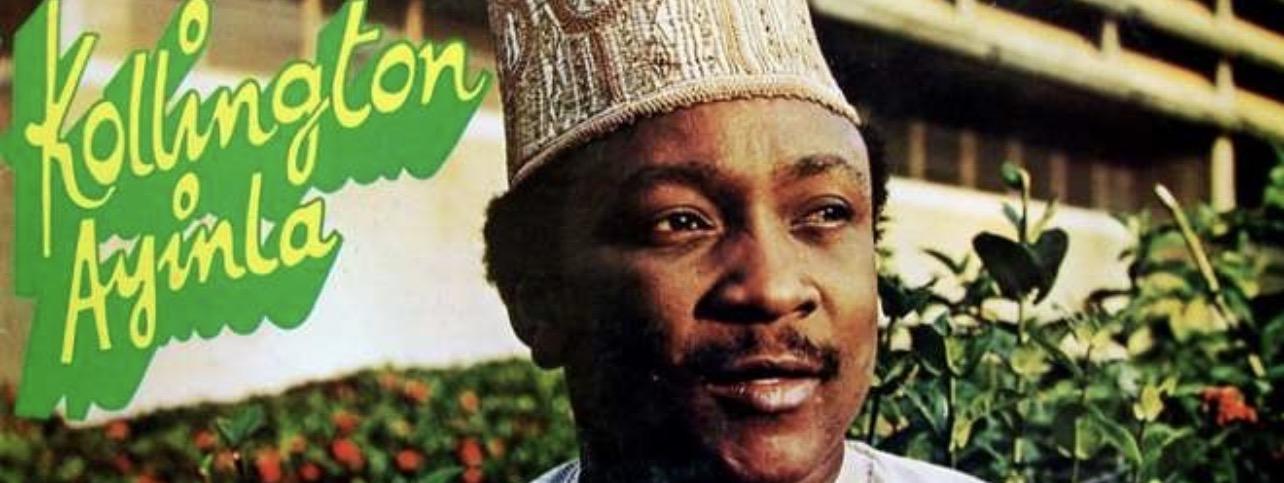
Kollington Ayinla
In the vibrant streets of Lagos Island, where drums speak louder than words and rhythm carries history, a young boy grew up surrounded by music that would one day define his destiny. That boy would become one of the most powerful voices in Fuji music. His name is Kollington Ayinla.
Known to fans as Baba Alatika and later crowned the Fuji General, Kollington Ayinla’s journey is a story of resilience, rivalry, survival, and a lifelong devotion to Yoruba cultural sound.
Early Life and Humble Beginnings
Kollington Ayinla was born on March 5, 1953, in Lagos Island, Nigeria. Though raised in Lagos, his roots trace back to Ilota in Ikorodu, Lagos State. He grew up in a modest environment where survival required hustle and creativity.
As a child, he absorbed the sounds of Islamic waka chants, traditional Yoruba percussion, and the evolving street style that would later become Fuji. Ramadan nights were filled with Ajisari music, performed to wake Muslims for pre dawn meals. That early exposure shaped his musical foundation.
Unlike many musicians who began with formal training, Kollington’s classroom was the street. He learned rhythm from community drummers and refined his voice in local gatherings.
The Birth of a Fuji Star
The 1970s marked a transformative period for Nigerian music. Fuji was emerging from its Islamic Ajisari roots into a full fledged genre blending percussion, praise singing, and social commentary.
Kollington Ayinla entered the scene with determination. His early recordings carried raw energy. His voice was powerful, commanding, and unmistakable. He developed a stage presence that was both aggressive and charismatic.
He earned the nickname Baba Alatika due to his bold lyrical style. His songs praised patrons, addressed social issues, and sometimes targeted rivals. Fuji was not just music. It was competition, status, and identity.
The Rivalry That Defined an Era
No story of Kollington Ayinla is complete without mentioning his legendary rivalry with Ayinde Barrister.
Ayinde Barrister is widely credited with pioneering Fuji music’s modern structure. But Kollington Ayinla brought fierce competition and innovation to the genre.
Throughout the 1980s and 1990s, fans were divided into camps. Concerts became arenas of musical supremacy. Albums were released with subtle and sometimes direct lyrical jabs.
The rivalry pushed both artists to greater heights. While Barrister carried an aristocratic elegance, Kollington embodied street strength and vocal dominance.
Though intense at times, their competition elevated Fuji music’s popularity across Nigeria and beyond.
Musical Style and Signature Sound
Kollington’s music is defined by heavy percussion, talking drums, and extended praise segments. His ability to improvise lyrics for patrons during live performances became one of his strongest trademarks.
Fuji music often celebrates social elites, business moguls, and community leaders. Kollington mastered the art of weaving names and achievements into rhythmic chants.
His songs also addressed political themes and societal issues, reflecting the realities of Nigerian life.
Over the decades, he released numerous albums, building a vast discography that solidified his place in Fuji history.
The Title of Fuji General
As years passed and Fuji evolved, Kollington’s influence became undeniable. He was eventually recognized with the title Fuji General, symbolizing his authority within the genre.
His command on stage remained strong even as younger Fuji artists emerged. While new voices entered the industry, Kollington’s generation retained a unique cultural respect.
He did not merely sing Fuji. He represented its golden era.
Personal Life and Public Persona
Kollington Ayinla’s personal life has often attracted public attention. He was married to the late waka music icon Salawa Abeni. Their union was widely discussed in the Nigerian entertainment scene, as both were powerful musical figures.
Though their marriage later ended, it remains one of the most talked about relationships in Fuji and waka history.
Kollington is known for his confidence and outspoken personality. His interviews often reflect pride in his legacy and candid opinions about the state of Fuji music.
Challenges and Survival
Like many artists from earlier generations, Kollington faced challenges as music distribution shifted from vinyl and cassettes to digital platforms.
Fuji music, once dominant at parties and social gatherings, faced competition from Afrobeats and hip hop. Yet Kollington maintained relevance within core Yoruba cultural spaces.
He also endured personal losses and health challenges but continued performing and mentoring younger artists.
Cultural Impact
Kollington Ayinla’s contribution extends beyond entertainment. Fuji music plays a vital role in Yoruba social ceremonies, naming events, weddings, and political rallies.
Through his music, Kollington preserved language, praise poetry, and traditional percussion techniques. His style reflects deep Yoruba heritage blended with urban Lagos energy.
He inspired generations of Fuji musicians who grew up studying his vocal delivery and stage craft.
The Elder Statesman of Fuji
As one of the surviving pillars of classic Fuji, Kollington stands as a living archive of the genre’s evolution.
From Ramadan Ajisari chants to global stages, his journey mirrors the transformation of Fuji from local Islamic street music to mainstream cultural expression.
His rivalry with Ayinde Barrister, his powerful voice, his lyrical sharpness, and his commanding performances shaped an era many fans consider Fuji’s golden age.
Legacy in Motion
Kollington Ayinla’s story is not merely about fame. It is about persistence. It is about turning neighborhood rhythm into national identity.
He began as a boy absorbing drumbeats in Lagos Island. He grew into a fierce competitor who challenged Fuji’s pioneer. He became Fuji General, a title earned through decades of dominance.
Even as musical trends change, his name remains central whenever Fuji history is discussed.
In the grand orchestra of Nigerian music, Kollington Ayinla’s drumbeat still echoes. It echoes in parties across Lagos, in cultural festivals, and in the memory of fans who witnessed the era when Fuji ruled the streets.
His journey proves that rhythm can become royalty and that street sound can rise to legendary status.

Κατηγορίες
Διαβάζω περισσότερα
Jenné Jeno Long before the rise of famous empires like Mali and Songhai, long before the arrival of European explorers in West Africa, there existed an extraordinary city in the fertile floodplains of the Niger River. This city was Jenné Jeno, one of the oldest known urban centers in sub Saharan Africa. Today Jenné Jeno lies quietly near the famous city of...

Minister of the Federal Capital Territory and former Rivers State Governor, Nyesom Wike, on Thursday night confirmed that the political rift between him and Governor Siminalayi Fubara has been resolved following a peace meeting brokered by President Bola Tinubu in Abuja. Speaking to journalists after the closed-door meeting at the Presidential Villa, Abuja, Wike said both camps had reached a...

Yewande Adekoya Yewande Adekoya, also known as Yewande Adekoya Abiodun, is a Nigerian actress, producer, and director known for her work in Yoruba Nollywood films. She is recognized for her versatility, creativity, and strong storytelling ability, both in front of and behind the camera. Early Life and Background Yewande Adekoya was born on January 20, 1983, in Lagos State,...

Joseph Sarwuan Tarka Joseph Sarwuan Tarka was one of the most influential political figures to emerge from Nigeria’s Middle Belt region during the country’s early years of political awakening. Known for his courage, determination, and deep commitment to the rights of minority groups, Tarka became a powerful voice for the Tiv people and other communities that felt...

Oluremi Tinubu Oluremi Tinubu, popularly known as Remi Tinubu, is a Nigerian politician, pastor, and the First Lady of Nigeria. She is the wife of Nigeria’s president Bola Ahmed Tinubu and a former senator who represented Lagos Central Senatorial District in the Nigerian Senate for three consecutive terms. Over the years, Remi Tinubu has built a reputation as a strong advocate...