About
About
Nasir El Rufai: The Fearless Reformer Who Chose Controversy Over Silence
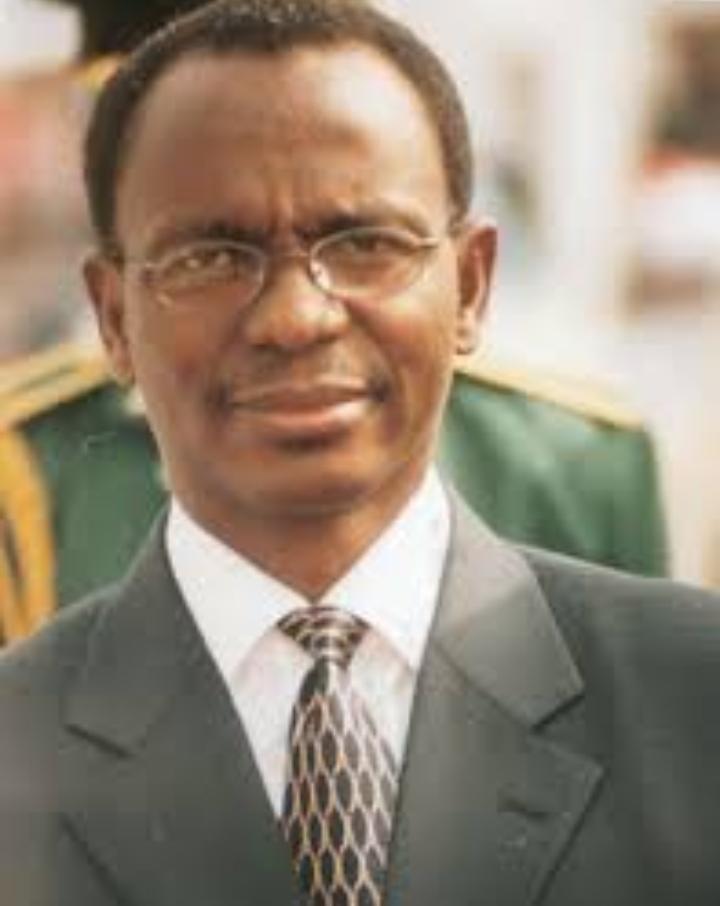
Nasir El Rufai
In the ancient city of Daura in present day Katsina State, a boy was born on February 16, 1960. He would grow up in a Nigeria still defining itself after independence, a nation balancing hope and hardship. That boy would later become one of the most outspoken and controversial political figures in modern Nigeria. His name is Nasir El-Rufai.
His story is not one of quiet compromise. It is a story shaped by intellect, reform, political battles, criticism, loyalty, and bold decisions that often divided opinion across the country.
Early Life and Education
Nasir Ahmad El Rufai was born in Daura but grew up in Kaduna State, a region that would later become central to his political journey. His early education took place in Kaduna, where he was known to be intelligent and outspoken.
He studied Quantity Surveying at Ahmadu Bello University in Zaria, graduating with distinction. His technical training equipped him with analytical skills and attention to structure. But his ambition stretched beyond engineering and numbers.
El Rufai later attended executive programs at institutions including Harvard Kennedy School. Exposure to global governance systems sharpened his views on reform and economic restructuring.
Early Career and Rise to National Attention
Before entering the political spotlight, El Rufai worked in the private sector and in public service roles related to development and planning. His breakthrough into national politics came during the administration of President Olusegun Obasanjo.
He was appointed Director General of the Bureau of Public Enterprises, where he supervised privatization programs. The reforms were bold and controversial. Supporters viewed them as necessary steps toward economic liberalization. Critics accused the process of favoritism and insufficient transparency.
His visibility increased further when he was appointed Minister of the Federal Capital Territory under Olusegun Obasanjo.
The Abuja Years
As Minister of the Federal Capital Territory from 2003 to 2007, El Rufai became a household name. Abuja, Nigeria’s capital, had long struggled with unregulated development that violated its master plan.
El Rufai embarked on a controversial demolition campaign, targeting structures built without proper approval. Entire neighborhoods were affected. While some Nigerians praised him for restoring urban planning discipline, others criticized the demolitions as harsh and insensitive to displaced residents.
He defended his actions by insisting that Abuja must follow its original master plan. To him, order required enforcement, even when unpopular.
These years cemented his image as a reformer unafraid of confrontation.
Political Exile and Return
After the end of the Obasanjo administration, El Rufai faced political challenges and legal scrutiny. At one point, he left Nigeria, describing himself as a victim of political persecution. During this period, he wrote and spoke openly about corruption and governance issues in Nigeria.
His return to active politics came through the formation of the All Progressives Congress. He aligned with prominent political figures including Muhammadu Buhari, supporting the coalition that would eventually defeat the ruling party in 2015.
Governor of Kaduna State
In 2015, El Rufai was elected Governor of Kaduna State. Kaduna, historically one of Nigeria’s politically sensitive states, faced challenges ranging from insecurity to infrastructure decay.
His administration focused on urban renewal projects, school reforms, and efforts to modernize governance systems. Thousands of teachers were tested for competency, and some were dismissed after failing assessments. The move sparked national debate. Supporters said it was necessary to improve education standards. Critics argued it was insensitive and disruptive.
He also introduced reforms in the civil service and emphasized digital governance. Infrastructure projects, including road rehabilitation and public facility upgrades, became visible across the state.
Security challenges, particularly banditry and communal violence, remained a significant issue throughout his tenure. El Rufai often spoke candidly about the complexity of insecurity in Northern Nigeria. His blunt communication style sometimes intensified political tensions.
Leadership Style and Public Persona
Nasir El Rufai is widely known for his direct and sometimes confrontational communication. Unlike politicians who prefer carefully neutral statements, he often speaks plainly and forcefully.
Supporters admire his intellectual depth and willingness to tackle structural issues. Critics view his tone as divisive and occasionally inflammatory.
He is also known for engaging actively on policy discussions, publishing books and articles reflecting on governance and political strategy.
Political Influence Beyond Kaduna
After completing his second term as governor in 2023, El Rufai remained influential within national political circles. His role in party strategy and internal negotiations often kept him in headlines.
At various moments, he has been seen as both a political strategist and a lightning rod for controversy. His alliances and disagreements with other national figures have shaped Nigeria’s evolving political landscape.
Personal Life
El Rufai is married and has children. One of his sons, Bello El Rufai, has also entered politics. Despite his public controversies, he maintains a strong family presence and frequently speaks about the importance of education and discipline in personal development.
He has openly discussed personal losses, including the death of his son in 2020, a tragedy that revealed a more vulnerable side of his otherwise tough public image.
Controversies and Criticisms
Throughout his career, El Rufai has faced allegations, criticisms, and political battles. His demolition campaigns in Abuja remain debated. His education reforms in Kaduna sparked protests. His comments on sensitive national issues sometimes generated backlash.
Yet, even critics acknowledge that he rarely avoids difficult conversations. He positions himself as a reformer willing to endure political cost for structural change.
Legacy in Progress
Nasir El Rufai’s journey reflects the paradox of reform in a diverse democracy. Reform often requires disruption. Disruption generates resistance. Resistance fuels controversy.
From Daura to Kaduna, from Abuja’s demolitions to Kaduna’s teacher reforms, his career has consistently revolved around restructuring systems he believed were broken.
He is seen by supporters as a courageous reformer who challenges inefficiency. He is seen by critics as a polarizing figure whose methods can be uncompromising.
But regardless of perspective, his imprint on Nigeria’s governance discourse is undeniable.
His story is still unfolding. In a country where politics often rewards silence and compromise, El Rufai chose boldness. Whether history judges him primarily as a reformer or a controversial tactician, his name remains firmly etched in Nigeria’s political narrative.

Categories
Read More
Constitutional lawyer and public affairs analyst, Fred Nzeako, has declared that the conviction of IPOB leader, Nnamdi Kanu, amounts to ‘a travesty of justice’, insisting that the presiding judge acted outside the law and that the entire procedure was fundamentally defective. Speaking in an interview with ARISE News on Sunday, Nzeako said the key question before Nigerians was not...
The Aircraft EMI Shielding Market Overview documents the United States as the preeminent national market for aircraft electromagnetic interference shielding products, driven by the concurrent scale of its commercial aviation manufacturing programs, the technical demands of its defense aviation procurement requirements, and the geographic concentration of globally leading EMI shielding...

Bolaji Ogunmola Bolaji Ogunmola is a Nigerian actress, filmmaker, and entrepreneur known for her vibrant screen presence and versatility in Nollywood. Over the years, she has built a reputation for playing dynamic roles in romantic dramas, comedies, and emotional storylines, making her one of the notable actresses of her generation. Early Life and Background Bolaji Ogunmola was...

The High Court of the Federal Capital Territory (FCT), Maitama, has granted bail to the suspended Senator representing Kogi Central, Natasha Akpoti-Uduaghan, in the sum of ₦50 million. Justice Chizoba Orji, who delivered the ruling on Thursday, rejected the Federal Government’s request to remand the embattled lawmaker in prison custody pending trial. Ruling on the bail application,...
The Land That Speaks When the first light of dawn stretches across the red earth of the village, the land begins to whisper its ancient stories. Old farmers say the soil remembers everything. In the quiet farming village of Nkokonjeru, elders often sit beneath the great baobab tree. Their conversations drift between memories, seasons, and proverbs passed down through generations. To...