About
About
Peter Obi: The Relentless Journey of Nigeria’s Unconventional Politician
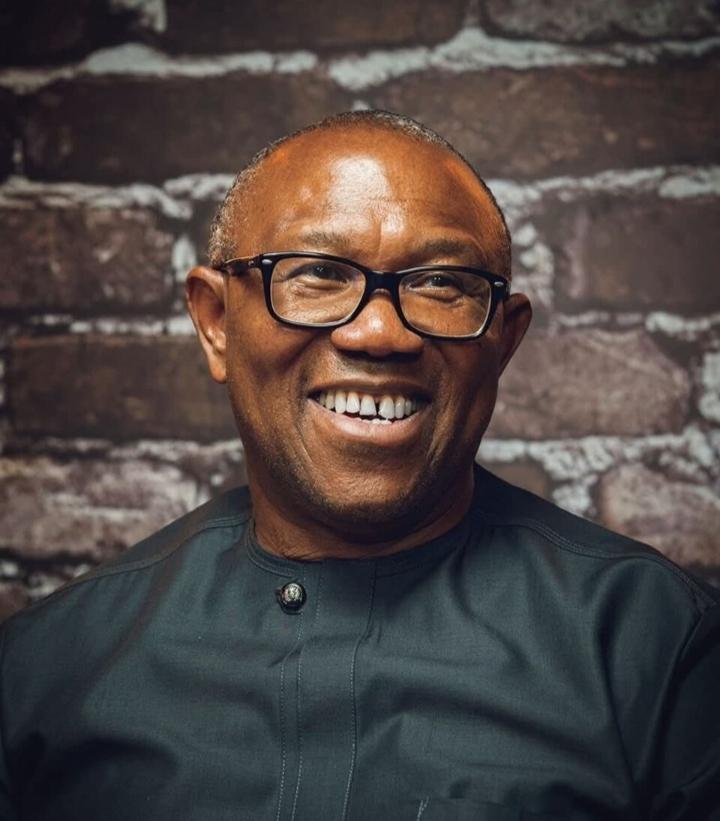
Peter Obi
In the bustling commercial city of Onitsha, in Anambra State, a young boy once watched traders haggle under the scorching sun. He observed how discipline, patience, and calculation determined who made profit and who went home empty handed. That boy would grow up to become one of Nigeria’s most talked about political figures, a man whose name would echo across markets, campuses, churches, and social media spaces. That boy is Peter Obi.
His story is not one of overnight fame. It is a story shaped by commerce, faith, discipline, controversy, resilience, and a movement that would later redefine political conversations among Nigerian youths.
Early Life and Background
Peter Gregory Obi was born on July 19, 1961, in Onitsha, Anambra State, Nigeria. Onitsha, known for its vibrant markets and entrepreneurial spirit, played a quiet but powerful role in shaping his worldview. Growing up in a trading community, Obi learned early the value of prudence and accountability.
He attended Christ the King College, Onitsha, where discipline and academic excellence were strongly emphasized. Those who knew him as a young student often described him as calm, observant, and deliberate. He was not the loudest in the room, but he listened carefully.
After secondary school, he gained admission into the University of Nigeria, Nsukka, where he studied Philosophy. Philosophy sharpened his analytical thinking and deepened his interest in ethics and governance. It also influenced the calm, reflective tone that would later define his political speeches.
Business Career and Corporate Leadership
Before politics ever called his name, Peter Obi had already built a strong presence in business. He ventured into trading and later into corporate leadership. He served as chairman and director of several companies across Nigeria.
Obi became known for his structured approach to business management. He attended executive programs at prestigious institutions such as Harvard Business School and the London School of Economics. These exposures strengthened his understanding of global finance and governance systems.
His business success provided him financial independence before entering politics. Supporters often point to this independence as a reason they believe he was less susceptible to political pressure. Critics, however, argued that business success does not automatically translate into effective governance. Yet, Obi remained consistent in presenting himself as a technocrat who believed in numbers, accountability, and measurable outcomes.
The Political Awakening
In the early 2000s, Peter Obi made a decision that would change his life forever. He joined politics under the platform of the All Progressives Grand Alliance. In 2003, he contested for the governorship of Anambra State.
The election was declared in favor of another candidate, but Obi did not walk away quietly. He went to court. What followed was a prolonged legal battle that tested his patience and resilience. After nearly three years, the court ruled in his favor in 2006, declaring him the rightful winner.
That moment marked the beginning of his tenure as Governor of Anambra State. It also introduced him to Nigerians as a man willing to fight through legal means rather than violence.
However, his time in office did not start smoothly. He was impeached by the state House of Assembly in 2006, only to be reinstated by the courts months later. The cycle of removal and reinstatement could have broken a weaker politician. But for Obi, it became part of his narrative of persistence.
Governance in Anambra State
Peter Obi governed Anambra State from 2006 to 2014, completing his tenure after legal clarifications extended his term.
His administration focused heavily on fiscal discipline. He frequently emphasized saving public funds and reducing debt. By the end of his tenure, he claimed to have left significant savings for the state and reduced its debt profile.
Education became one of the pillars of his administration. Schools received grants, and partnerships with religious institutions were strengthened. Healthcare infrastructure was improved, and some roads were rehabilitated.
Supporters credit him with transforming Anambra into one of Nigeria’s more financially stable states at the time. Critics argue that development was not evenly distributed. Like most Nigerian governors, his record remains debated, but few deny that he cultivated a reputation for frugality and cautious spending.
From State Politics to National Spotlight
After leaving office in 2014, Obi remained politically active. He later joined the Peoples Democratic Party and in 2019 became the vice presidential candidate alongside Atiku Abubakar.
Though they did not win the election, Obi’s national visibility increased significantly. He was often seen discussing economic reforms, production over consumption, and the need for data driven governance.
In 2022, he made a dramatic political move. He left the Peoples Democratic Party and joined the Labour Party. Many initially dismissed the decision as political miscalculation. The Labour Party was considered a minor political platform at the time.
What followed surprised the nation.
The Rise of the Obidient Movement
As the 2023 presidential election approached, a wave of support began building organically, especially among young Nigerians. Social media platforms were flooded with messages supporting Obi. The term “Obidient” became a symbol of political awakening for many youths.
Rallies in major cities attracted massive crowds. For many first time voters, Peter Obi represented a break from the traditional political establishment dominated by older figures.
His message was simple yet powerful. Move Nigeria from consumption to production. Invest in education. Strengthen healthcare. Reduce the cost of governance. Fight corruption through systemic reforms.
The 2023 election became one of the most keenly contested in Nigeria’s history. While Obi did not emerge as president, his performance reshaped political calculations in the country. He won significant votes in urban centers and demonstrated that alternative political platforms could mobilize nationwide support.
Leadership Style and Public Image
Peter Obi is often described as soft spoken but firm. He prefers data to drama and statistics to slogans. During interviews, he frequently references economic figures and global comparisons.
Supporters admire his perceived integrity, frugality, and disciplined lifestyle. Stories circulate of him carrying his own luggage and flying economy class. These gestures, whether symbolic or strategic, reinforced his brand as a modest leader.
Critics argue that governance requires more than prudence and that complex national challenges demand broader coalitions and aggressive political maneuvering. Yet even critics acknowledge that he changed the tone of political discourse by making economic conversations central to campaigns.
Faith, Family, and Personal Life
Peter Obi is a devout Catholic and has been involved in church related activities for years. His faith plays a visible role in his public persona. He is married to Margaret Obi, and they have children together.
Despite intense political activity, Obi maintains a relatively private family life. He rarely flaunts luxury or personal wealth in public spaces, aligning with the modest image he projects politically.
Challenges and Controversies
No political career is free from scrutiny. Obi has faced allegations and criticisms, including questions about business dealings and policy decisions while governor. Like many public figures, he has also been caught in Nigeria’s polarized political debates.
The Panama Papers revelations once mentioned companies linked to him, though he defended himself by stating that due process was followed and that the assets were declared.
Political opponents have questioned the feasibility of his national economic plans. Others have accused his supporters of excessive online aggression. Obi, however, consistently calls for peaceful engagement and democratic processes.
Legacy in the Making
Peter Obi’s story is still unfolding. Whether viewed as a reformist hero or a skilled political strategist, his impact on Nigerian politics is undeniable.
He ignited political participation among young Nigerians in unprecedented ways. He shifted conversations toward accountability and fiscal prudence. He demonstrated that smaller political parties could challenge established giants.
His journey from a quiet boy in Onitsha to a two term governor and presidential contender reflects persistence shaped by discipline and strategic thinking.
In a country often divided along ethnic, religious, and political lines, Peter Obi’s rise represents something larger than one individual. It represents the evolving expectations of citizens who demand more transparency, competence, and measurable performance from leaders.
The markets of Onitsha taught him calculation. The classrooms of Nsukka sharpened his reasoning. The courts strengthened his resilience. The campaign trails tested his endurance. And the movement that followed his name proved that political narratives in Nigeria are no longer predictable.
Peter Obi remains one of the most influential political figures of his generation, a man whose story continues to shape conversations about leadership, governance, and the future of Africa’s most populous nation.


Categories
Read More
Gary Oldman Gary Oldman is a British actor, filmmaker, and one of the most versatile performers in modern cinema. He is known for his ability to completely transform into different characters, making him one of the most respected actors in Hollywood. Gary Leonard Oldman was born on March 21, 1958, in London, England. Early Life and Background Gary Oldman was born and raised in London. He...
Oba Adeyeye Ogunwusi In the ancient city of Ile Ife, where myths and history blend like morning mist over sacred shrines, destiny once stirred quietly in the life of a young prince who would one day ascend one of Africa’s oldest thrones. That prince was Oba Adeyeye Ogunwusi, known to the world today as Ojaja II, the Ooni of Ife. His story is not just about royalty. It is about...
William Shakespeare: Biography The Man Who Gave Language a New Voice Introduction William Shakespeare is widely regarded as the greatest writer in the English language and one of the most influential dramatists in world history. His works have shaped literature, theater, philosophy, and even everyday speech for more than four centuries. Yet despite his monumental legacy, the details of his...
Aminat (POV) I had never felt fear like the day I saw her my mother walking through the college gates. She looked small, fragile, dressed in faded clothes that screamed of struggle. My chest tightened. I wanted to run, to disappear into the crowd. I told myself I was busy, that I could not see her now, that the lies were necessary. I sent a cold text instead: I am busy. Please go home....

Strive Masiyiwa Strive Masiyiwa’s story starts with a problem that sounded bigger than one man: a country where telecoms were controlled, permission was political, and the future felt locked behind a government monopoly. He didn’t begin as “a billionaire.” He began as an engineer with a stubborn belief that Africans deserved modern connectivity—and that one...