About
About
William Shakespeare: Biography The Man Who Gave Language a New Voice
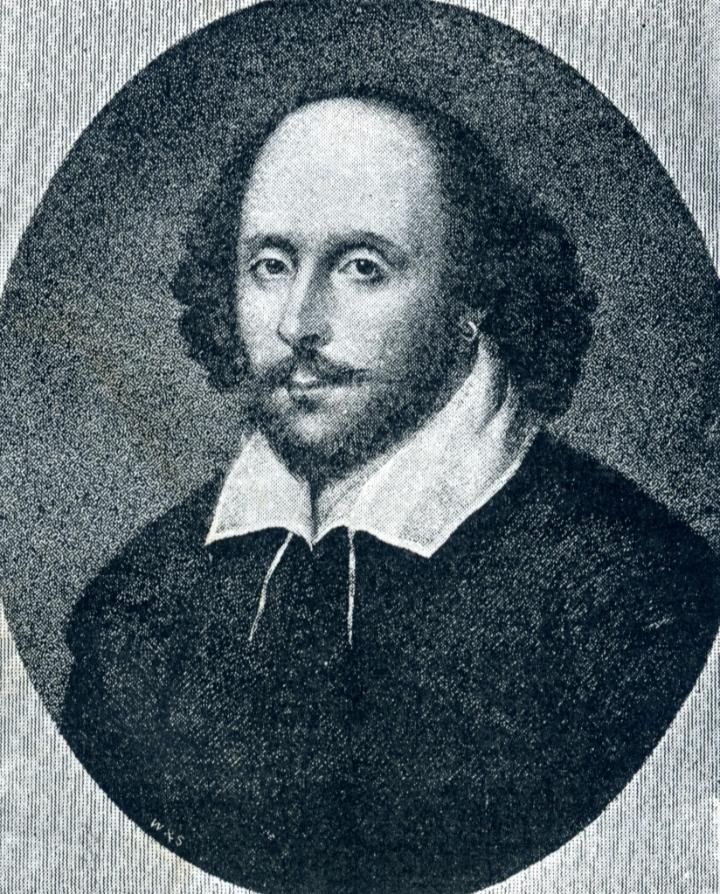
William Shakespeare: Biography The Man Who Gave Language a New Voice
Introduction
William Shakespeare is widely regarded as the greatest writer in the English language and one of the most influential dramatists in world history. His works have shaped literature, theater, philosophy, and even everyday speech for more than four centuries. Yet despite his monumental legacy, the details of his life remain partly shadowed by gaps in the historical record. He was not born into nobility. He was not university educated. He was a provincial boy from a market town who rose to dominate the London stage.
Behind the immortal plays and sonnets was a man navigating ambition, competition, plague outbreaks, political censorship, financial risk, family responsibilities, and the fragile life expectancy of the Elizabethan era. His life unfolded during a time of religious tension, royal power, social mobility, and cultural explosion in England.
This is a full and deep biography of William Shakespeare, including what is known, what is debated, and what happened in his final years.
Birth and Family Background
William Shakespeare was born in Stratford upon Avon in Warwickshire England. His baptism was recorded on April 26 1564 at Holy Trinity Church, and it is traditionally believed that he was born on April 23 1564. His father was John Shakespeare, a glove maker and local official. His mother was Mary Arden, from a relatively prosperous farming family.
Stratford was a small but active market town. John Shakespeare rose in local government and at one point served as bailiff, a position similar to mayor. This meant that young William grew up in a household that was neither poor nor aristocratic but positioned within the aspiring middle class.
However, during Shakespeare’s youth, his father’s fortunes declined. Records suggest financial difficulties and possible legal trouble. These fluctuations in status may have shaped William’s understanding of ambition, pride, and social instability, themes that later appear frequently in his plays.
Education
Although there are no surviving school records that directly list William Shakespeare as a student, it is widely accepted that he attended the King’s New School in Stratford. Grammar schools at the time provided rigorous instruction in Latin grammar, rhetoric, classical literature, and logic.
Students studied authors such as Ovid, Seneca, Cicero, and Virgil. The influence of these classical writers is visible throughout Shakespeare’s works. His deep knowledge of Roman history and mythology suggests strong formal training.
Unlike some other playwrights of his era, Shakespeare did not attend university. This later became part of criticism from rivals who called him an upstart crow. Yet his lack of university education did not prevent him from mastering language and structure at a level that surpassed many academically trained contemporaries.
Marriage and Family Life
In November 1582, at age eighteen, Shakespeare married Anne Hathaway, who was twenty six. Their first child, Susanna, was baptized in May 1583. Twins Hamnet and Judith were baptized in February 1585.
The marriage has been the subject of much speculation. Some historians believe it was prompted by Anne’s pregnancy. The age difference and limited surviving personal documents leave room for debate about the nature of their relationship.
Tragedy struck in 1596 when Hamnet died at the age of eleven. The loss of his only son may have deeply affected Shakespeare. Some scholars suggest that themes of grief and fatherhood in plays written after this period reflect that experience.
The Lost Years
Between 1585 and the early 1590s, the historical record becomes sparse. These years are often called the lost years.
Various theories suggest he may have worked as a schoolteacher, traveled with acting companies, or fled legal trouble related to poaching deer. None of these claims are confirmed with certainty.
By 1592, however, he was in London and active in the theater world. A pamphlet by playwright Robert Greene criticized him as an upstart crow beautified with our feathers. This insult proves that Shakespeare had already gained attention and possibly jealousy from established writers.
Rise in London Theater
Shakespeare became associated with the Lord Chamberlain’s Men, a leading acting company. He was not merely a playwright but also a shareholder in the company, which gave him financial stability.
London in the late sixteenth century was a thriving center of theater. Playhouses such as The Theatre and later the Globe drew diverse audiences, from common laborers to nobles.
In 1599 the company built the Globe Theatre on the south bank of the Thames. Shakespeare’s plays were performed there to packed crowds.
His early works included comedies such as A Midsummer Night’s Dream and The Merchant of Venice, and histories such as Richard III and Henry V.
His writing displayed remarkable range. He explored ambition, love, betrayal, power, jealousy, and mortality.
Major Tragedies
Between roughly 1600 and 1608 Shakespeare produced some of his most powerful tragedies.
Hamlet examined indecision, revenge, and existential doubt.
Othello explored jealousy and manipulation.
King Lear depicted aging, madness, and filial betrayal.
Macbeth confronted ambition and moral corruption.
These works reveal deep psychological insight. His characters are not simple villains or heroes. They are complex human beings driven by conflicting desires.
Relationship with Royal Power
Shakespeare’s company enjoyed royal patronage. When James I of England became king in 1603, the company became the King’s Men.
This royal connection elevated their prestige but also required careful navigation of political themes. Shakespeare wrote plays that reflected concerns of monarchy, legitimacy, and authority without openly challenging the crown.
Financial Success
Unlike many artists of his time, Shakespeare achieved financial success. He invested in property in Stratford, including New Place, one of the town’s largest houses.
His wealth allowed him to maintain status in both London and Stratford. He secured a coat of arms for his family, elevating them socially.
The Sonnets
In addition to plays, Shakespeare wrote 154 sonnets. These poems explore love, time, beauty, betrayal, and mortality.
They are addressed to a young man and a mysterious dark lady. Their emotional intensity has sparked centuries of debate about Shakespeare’s personal relationships and inner life.
Later Years and Return to Stratford
Around 1613 Shakespeare appears to have reduced his involvement in London theater and returned more permanently to Stratford.
He collaborated on later plays and continued business dealings. His final plays, often called romances, including The Tempest, suggest themes of reconciliation and forgiveness.
Illness and Death
William Shakespeare died on April 23 1616, traditionally believed to be his fifty second birthday. The exact cause of death is unknown.
One story claims he died after a night of heavy drinking with fellow writers, but this account is based on later anecdote rather than solid evidence.
He was buried in Holy Trinity Church in Stratford. His grave bears an epitaph warning against moving his bones.
The First Folio
Seven years after his death, two fellow actors published the First Folio in 1623. Without this volume, many of his plays might have been lost.
The First Folio preserved works that define his legacy.
Legacy
Shakespeare transformed English drama. He expanded vocabulary, deepened characterization, and elevated storytelling.
His works continue to be performed worldwide.
He was not a mythic figure untouched by controversy. Questions about authorship, religious beliefs, and personal relationships continue to circulate. But historical evidence strongly supports his authorship.
He lived during plague outbreaks, political tension, and rapid social change. He adapted, survived, and thrived.
He died a respected and relatively wealthy man in his hometown.
Four centuries later, his words still shape how people speak about love, power, jealousy, and death.

Categorieën
Read More
The Nigerian government has been accused of secretly detaining a prominent Zaria-based Islamic scholar, Sheikh Sani Khalifa, for over three weeks without charge, raising serious concerns about human rights abuses and violations of due process. Sources told SaharaReporters on Saturday that Sheikh Khalifa has been in custody for 23 days, with his whereabouts unknown to family members and...

Temi Otedola Temiloluwa Elizabeth Otedola, popularly known as Temi Otedola, was born on March 20, 1996, into one of Nigeria’s most prominent business families. She is the daughter of billionaire businessman Femi Otedola and Nana Otedola. Growing up in a household known for wealth, influence, and philanthropy, Temi’s early life was shaped by privilege but also by...

Since February, the U.S. military has conducted 32 airstrikes in Somalia, targeting ISIS-Somalia and al-Shabaab operatives. Confirmed by AFRICOM, these strikes form a key part of America’s ongoing counterterrorism strategy in the Horn of Africa. Despite their scale and significance, officials note these operations receive little media coverage, even as they continue to shape the...

Paul Sodo In many parts of Africa, daily life still revolves around the search for energy. Millions of families depend on firewood and charcoal to cook their meals. This dependence has contributed to deforestation, rising fuel costs, and dangerous indoor air pollution that affects the health of women and children the most. In Uganda, like many developing countries, cooking energy...

I am telling this story from a cold prison cell, where nights are long and memories refuse to sleep. My name is Veronica, and this is my own truth, the kind that burns the tongue but must be spoken. I was once a housemaid in a fine home, a place with shining tiles, heavy curtains, and a happiness I mistook for something I deserved. I came to the city with nothing but hope and a small bag...