Environ
Oba Lamidi Adeyemi III The Charismatic Alaafin Who Carried the Thunder of Oyo
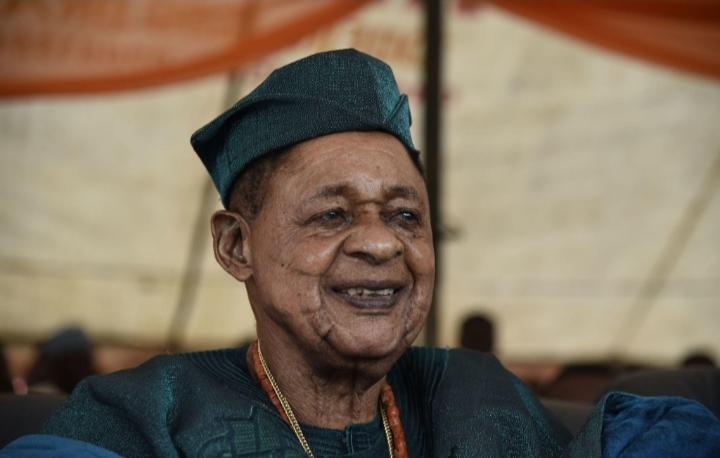
Oba Lamidi Adeyemi III
In the ancient town of Oyo, where echoes of cavalry once shook the earth and the memory of empire still breathes in palace walls, a king rose whose presence commanded attention far beyond his kingdom. He was regal, bold, eloquent, and deeply conscious of history. He was Lamidi Adeyemi III, the Alaafin of Oyo.
His life was not just a reign. It was a performance of heritage, intellect, and authority woven into one.
A Prince Shaped by History
Lamidi Olayiwola Adeyemi was born on October 15, 1938, into the royal Alowolodu family of Oyo. His lineage traced back to the powerful Alaafins who once ruled the old Oyo Empire, one of the most formidable pre colonial empires in West Africa.
The Oyo Empire was known for its cavalry, administrative structure, and diplomatic reach. To be born into that royal line was to inherit a legacy of strength.
But destiny tested him early.
In 1954, his father, Alaafin Adeniran Adeyemi II, was deposed by the colonial administration. The young Lamidi experienced firsthand the fragility of power. He saw how politics and authority could collide.
That early lesson never left him.
Education and Early Struggles
He attended Baptist High School in Oyo before traveling to the United Kingdom for further studies. Exposure to British society broadened his perspective on governance and leadership.
Yet life was not always smooth. After his father’s deposition, the family experienced periods of difficulty. Royal birth did not guarantee comfort.
These experiences shaped Lamidi Adeyemi into a man who understood both privilege and hardship.
The Unexpected Coronation
In 1970, after the death of Alaafin Gbadegesin Ladigbolu II, the throne of Oyo became vacant.
Lamidi Adeyemi, then just 31 years old, was selected as the new Alaafin.
It was a dramatic turn of history. The son of a deposed king was returning to reclaim the throne.
His coronation marked not only personal restoration but symbolic redemption for his family.
He ascended as Alaafin Lamidi Olayiwola Adeyemi III, becoming one of the youngest monarchs in Yoruba land at the time.
A King with Presence
From the beginning, Oba Lamidi Adeyemi III carried himself with unmistakable charisma.
Tall, articulate, and confident, he understood the symbolic power of the throne. He dressed in majestic agbadas and wore coral beads with authority. When he spoke, his words carried theatrical depth.
He did not hide his pride in Oyo’s imperial history.
He frequently reminded audiences that Oyo once stood as a dominant power in West Africa.
Reviving the Pride of Oyo
One of his greatest missions was restoring the prestige of the Alaafin stool.
He invested heavily in cultural festivals and historical education. He promoted the Sango Festival, honoring Sango, the legendary Alaafin who became the Yoruba god of thunder.
Through such festivals, he reconnected younger generations with Oyo’s rich spiritual and historical roots.
Under his reign, the Oyo palace remained a powerful symbol of Yoruba identity.
A Political Player in Royal Robes
Unlike monarchs who maintained distance from politics, Oba Lamidi Adeyemi III engaged openly in national conversations.
He built relationships with political leaders across different administrations. He offered opinions on governance, federalism, and Yoruba interests.
His voice carried weight, particularly in matters concerning the South West.
He sometimes clashed with other traditional rulers, reflecting the complex hierarchy among Yoruba monarchs.
The Alaafin stool historically held imperial authority over large territories. Lamidi Adeyemi often asserted that legacy confidently.
Controversies and Strength
A reign that lasted over five decades could not escape controversy.
There were disputes within Oyo’s traditional council. There were moments of political disagreement. There were debates about succession and palace affairs.
Yet through all challenges, Oba Adeyemi maintained firm control of the throne.
His ability to navigate tension demonstrated political intelligence honed over decades.
The Family and Palace Life
Oba Lamidi Adeyemi III was known for having a large family. As a traditional Yoruba monarch, he married multiple wives and had many children.
His palace life was vibrant and deeply rooted in tradition. Royal ceremonies, chieftaincy installations, and ancestral rites were conducted with strict adherence to custom.
Despite modern influences, he upheld traditional protocols firmly.
The Cultural Diplomat
Beyond Oyo, Oba Adeyemi served as a cultural ambassador for Yoruba heritage.
He attended international events and academic conferences where Yoruba history and religion were discussed.
He emphasized that African civilizations possessed organized governance long before colonialism.
His speeches often blended history with advocacy for cultural pride.
A Long Reign Through Changing Nigeria
Lamidi Adeyemi III reigned from 1970 until his passing in 2022.
During that time, Nigeria transitioned through military coups, democratic experiments, economic booms, and recessions.
Through it all, the Alaafin remained seated on the throne.
Few traditional rulers in Nigeria matched his longevity.
He witnessed the evolution of modern Nigeria while guarding ancient tradition.
The Final Chapter
On April 22, 2022, Oba Lamidi Adeyemi III passed away at the age of 83.
His death marked the end of a remarkable fifty two year reign.
Tributes poured in from across Nigeria and beyond. Political leaders, traditional rulers, and citizens recognized the significance of his era.
He left behind not just children and wives, but a revitalized royal identity for Oyo.
The Thunder That Endures
In Yoruba cosmology, Sango symbolizes thunder and fire. Many saw parallels between Sango’s boldness and the Alaafin’s commanding personality.
Oba Lamidi Adeyemi III did not reign quietly.
He spoke loudly when needed.
He celebrated history unapologetically.
He guarded tradition fiercely.
His life story reflects restoration, resilience, and performance of kingship in modern times.
In the palace courtyards of Oyo, where drums still echo and horses once charged into battle, the memory of Lamidi Adeyemi III lingers.
He was more than a monarch.
He was a living reminder that empire may fade, but identity endures.


Catégories
Lire la suite
Orji Uzor Kalu Orji Uzor Kalu is one of Nigeria’s most talked about businessmen and political figures. His journey is not a quiet one. It is bold, dramatic, controversial, and undeniably powerful. From trading palm oil as a teenager to building a media and business empire, his story reflects ambition at its highest level. Humble Beginnings in Abia Orji Uzor Kalu was born...

Bukola Awoyemi Bukola Awoyemi is a Nigerian actress, film producer, and entrepreneur. She is widely known for her roles in Yoruba Nollywood movies and is popularly called Bukola Arugba. Early Life and Background Bukola Awoyemi was born on December 28, 1990, in Ilorin, Kwara State, Nigeria. She grew up in a Yoruba cultural environment where storytelling and performance were highly...

Harry Styles Harry Styles is a British singer, songwriter, and actor known for his unique voice, bold fashion style, and global influence in music and pop culture. He first rose to fame as a member of the boy band One Direction before becoming a successful solo artist. Harry Edward Styles was born on February 1, 1994, in Redditch, Worcestershire, England. Early Life and Background...

Aweni, Abike, Ajoke, and Chichi were inseparable. They all lived together in Mile 12, Lagos four young women from different places, united by one dream: to escape poverty. Aweni was from Ikoyi in Osun State. Abike and Ajoke were sisters from Oyo. Chichi came all the way from Calabar. Life had brought them together under one roof, and survival kept them together. By day, they were regular...

Obafemi Awolowo Obafemi Awolowo was one of Nigeria’s most important nationalist leaders, political thinkers, and reformers. He is best known for building a strong political movement in Western Nigeria, championing federalism and regional development, and introducing pioneering social policies such as free primary education and major public welfare programs. He remains a central figure in...