Sobre
Sobre
Muhammadu Sanusi II: The Fearless Reformer Who Wore the Crown and Spoke Truth to Power
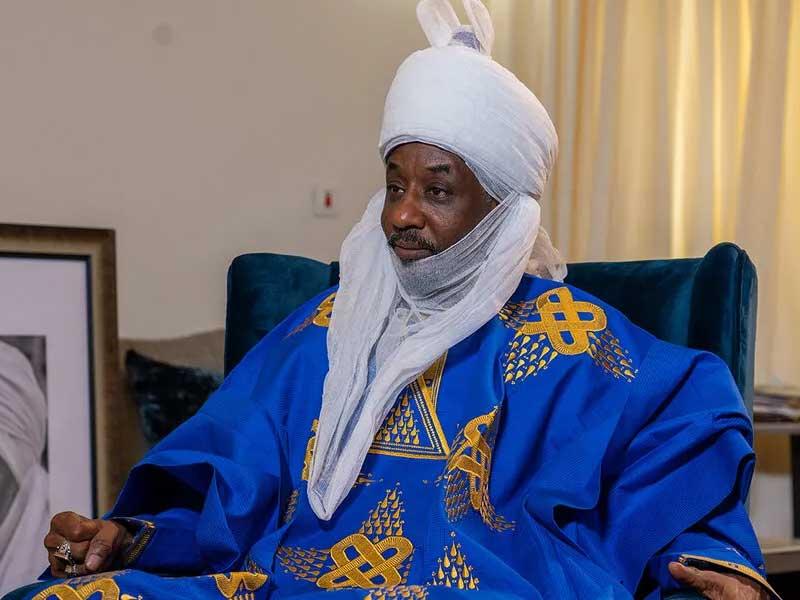
Muhammadu Sanusi II
In the ancient city of Kano, where centuries of royal drums echo through narrow streets and sandstone walls whisper stories of empires, a child was born into legacy. That child would grow to become one of Nigeria’s most outspoken intellectuals, a central banker who shook financial giants, and later a monarch whose voice could not be silenced.
He is Muhammadu Sanusi II, also known as Sanusi Lamido Sanusi.
His life reads like a political drama, a spiritual journey, and a reformer’s manifesto all at once.
Born Into Legacy
Muhammadu Sanusi II was born on July 31, 1961, in Kano State, Nigeria. He came from a royal Fulani lineage deeply rooted in the historic Kano Emirate.
His grandfather, Sir Muhammadu Sanusi I, had served as Emir of Kano from 1954 until his deposition in 1963. That chapter of family history would later echo powerfully in Sanusi II’s own life.
From childhood, he was surrounded by scholarship and tradition. His father, Aminu Sanusi, served as a diplomat and later as a traditional title holder. Education, discipline, and Islamic scholarship were pillars of his upbringing.
The palace was not unfamiliar territory. But neither were books.
The Scholar and Economist
Young Sanusi excelled academically. He attended King’s College Lagos, one of Nigeria’s most prestigious secondary schools. Later, he studied Economics at Ahmadu Bello University in Zaria, graduating in 1981.
But he was not just a numbers man.
He immersed himself in Islamic studies, philosophy, and global political thought. He later earned a master’s degree in Economics and became known for his intellectual sharpness and analytical depth.
Those who encountered him early described him as brilliant, bold, and unafraid to question authority.
It was only a matter of time before he would step into the high stakes world of banking.
Rising Through Nigeria’s Financial System
Sanusi began his banking career at Icon Limited and later moved to United Bank for Africa. Over the years, he built a reputation for competence and integrity.
In 2009, amid Nigeria’s banking crisis, he was appointed Governor of the Central Bank of Nigeria by President Umaru Musa Yar'Adua.
It was a turbulent time.
Nigeria’s banking sector was collapsing under reckless lending, corruption, and poor regulation. Sanusi moved swiftly. He audited banks, exposed financial irregularities, and dismissed several powerful bank executives.
He injected billions to stabilize the system and restored public confidence.
Some praised him as courageous. Others called him controversial.
He did not seem to mind either label.
Whistleblower and Controversy
In 2013, Sanusi made explosive allegations that billions of dollars in oil revenue were missing from the Nigerian National Petroleum Corporation.
His claims triggered national debate and political tension.
In February 2014, he was suspended as Central Bank Governor by President Goodluck Jonathan.
To his supporters, he was punished for speaking truth to power. To critics, he had overstepped his role.
But destiny was about to redirect his path.
The Crown Returns to the Family
On June 8, 2014, after the death of Emir Ado Bayero, Muhammadu Sanusi II was appointed the 14th Emir of Kano.
The grandson of a deposed emir had now reclaimed the throne.
His appointment was not without controversy. The selection divided opinions within Kano and beyond. Yet he ascended the throne with determination, adopting the traditional regalia and responsibilities of the emirate.
But this was no silent monarch.
A King Who Spoke Boldly
As Emir, Sanusi II refused to be ceremonial.
He used his platform to address issues many leaders avoided. He spoke passionately about:
Education for girls
Poverty in Northern Nigeria
Polygamy and economic responsibility
Population growth
Corruption
He criticized political leaders openly, including those in power.
His speeches often blended Islamic scholarship with economic reasoning. He urged Northern Nigeria to confront its social challenges rather than blame outsiders.
For many young Nigerians, he became a rare voice of honesty within traditional leadership.
For others, he became inconvenient.
⚖️ Clash With Political Power
Tensions grew between Emir Sanusi II and the Kano State government under Governor Abdullahi Umar Ganduje.
In 2020, after a series of political disagreements, the Kano State Government dethroned him, citing insubordination.
History repeated itself.
Like his grandfather decades earlier, Muhammadu Sanusi II was removed from the throne.
He was immediately banished to Nasarawa State.
The images of a former central bank governor and sitting emir being escorted into exile stunned the nation.
Yet even in exile, he remained composed.
🕊️ Life After Dethronement
Following legal battles and public outcry, courts later ruled aspects of his dethronement invalid. Over time, political dynamics shifted.
In 2024, following the restructuring of the Kano Emirate system, Muhammadu Sanusi II was reinstated as Emir of Kano.
The return marked a dramatic chapter in Nigerian traditional politics.
It symbolized resilience.
He had worn the crown, lost it, and worn it again.
Global Voice and Thought Leader
Beyond Nigeria, Sanusi II is respected internationally.
He has spoken at global forums including the World Economic Forum and various Islamic finance conferences. He advocates reform within Muslim societies, emphasizing education, women’s rights within Islamic context, and economic modernization.
He remains a bridge between tradition and intellectual modernity.
Personal Life
Muhammadu Sanusi II is married with children. As a traditional ruler, he practices polygamy in accordance with Islamic law.
Despite public controversy, he maintains a scholarly lifestyle. He is fluent in Arabic and English and is widely read in classical Islamic texts.
Those close to him describe him as disciplined, principled, and spiritually grounded.
The Reformer’s Legacy
Sanusi’s story is not simple.
He has been:
An economist
A banking reformer
A whistleblower
A monarch
A deposed king
A reinstated emir
Few Nigerians have moved between technocratic power and traditional authority with such intensity.
He challenges systems from within. He blends faith with policy. He speaks even when silence might be safer.
A Crown and a Conviction
In Kano’s ancient palace, beneath carved arches and centuries of history, Muhammadu Sanusi II continues to sit on a throne that represents more than royalty.
It represents endurance.
His life reminds Nigerians that leadership is not always comfortable. Sometimes it costs position. Sometimes it demands sacrifice.
But whether as Central Bank Governor or Emir of Kano, Sanusi II has shown one consistent trait.
He does not fear the truth.
And in a nation searching for reform, that may be his most powerful legacy.


Categorias
Leia mais
Sir Abubakar Tafawa Balewa Tafawa Balewa was one of Nigeria’s most important independence era leaders and the country’s first and only Prime Minister. He is best known for guiding Nigeria through the early years of nationhood after independence in 1960, representing Nigeria on the global stage, and helping shape the foundations of the First Republic. Early Life and Background Sir...

The National Economic Council (NEC) has approved N100 billion—subject to President Bola Tinubu’s final approval—for the rehabilitation of Nigeria Police Force and other security agencies’ training institutions across the country. The decision was reached during NEC’s 154th virtual meeting after reviewing a report by an ad hoc committee chaired by Enugu State...

Onyeka Onwenu In Nigeria’s vibrant cultural history, some voices do more than entertain. They challenge society, inspire hope, and tell stories that echo across generations. One of those voices belonged to Onyeka Onwenu, a woman whose music, journalism, acting, and activism made her one of the most respected cultural icons in Nigeria. Her journey was not only about...
Esther Kalejaiye Esther Kalejaiye is a Nigerian Nollywood actress, producer, and television personality best known for her roles in Yoruba language films. She is one of the respected veteran actresses in the Yoruba movie industry and is widely admired for her ability to portray strong motherly and emotional characters on screen. Over the years she has built a reputation as a hardworking and...

HURIWA Accuses Tinubu of Plotting 2027 Election Manipulation Through INEC Control The Human Rights Writers Association of Nigeria (HURIWA), has accused President Bola Tinubu of perfecting procedural manipulation of the 2027 general election by putting in place a smart set of systems and manipulative processes to effectively gain absolute control and command of the Independent National Electoral...