About
About
The Story of Osun Osogbo Sacred Grove and the Living Spirit of a People Part 2

The Sacred Forest of the River Goddess
Episode Two
Kings, Priestesses, Colonial Storms and the Hidden Mysteries of Osun Osogbo
When a covenant is made between humans and the divine, it must be guarded.
In Osogbo, that responsibility did not belong to one person. It belonged to a sacred structure of power, tradition, and spiritual discipline that held the town together through centuries of change.
At the center of this structure stands the Ataoja of Osogbo, the traditional king whose throne is spiritually tied to the river goddess.
One notable modern custodian of this throne is Jimoh Olanipekun Oyetunji, the Ataoja of Osogbo who has played a significant role in promoting and preserving the cultural heritage of the grove in contemporary times.
But the Ataoja is not alone.
The Throne and the River
In Yoruba cosmology, kingship is not merely political. It is sacred.
The Ataoja is seen as the earthly representative of the covenant first made by Olutimehin and his people. During the annual Osun festival, the king participates in rituals that renew the ancient agreement with the goddess. His presence confirms that the throne still recognizes Osun as the spiritual mother of the town.
If the king prospers, the town prospers. If the covenant weakens, the people fear imbalance.
That is why the grove is not separated from governance. It is woven into it.
The Priesthood of Osun
Beyond the throne lies the spiritual backbone of the grove, the priesthood.
The high priestess of Osun carries enormous responsibility. She oversees rituals, interprets spiritual signs, and ensures that taboos are respected. Beneath her are other priests and priestesses who maintain shrines dedicated to various deities within the grove.
Each shrine has meaning.
Some represent protection.
Some symbolize fertility.
Some are linked to healing.
The grove is not random. It is a spiritual map.
The Arugba and the Burden of Purity
Perhaps the most symbolic figure during the festival is the Arugba, the young virgin chosen to carry the sacred calabash of offerings to the river.
Her selection is not casual. She must come from a lineage considered spiritually appropriate. She must maintain strict purity throughout her period of service.
As she walks during the procession, crowds chant and drums thunder. Yet she moves in silence, carrying the symbolic burden of the entire community.
Inside the calabash are offerings and prayers. It is believed that the spiritual fate of Osogbo for the coming year rests upon that ritual journey.
The Colonial Winds
When British colonial administration expanded into Yoruba land in the nineteenth century, many traditional institutions were weakened.
Missionaries discouraged indigenous worship. Sacred groves across Yorubaland were destroyed or abandoned. Shrines were labeled pagan.
Osun Osogbo Sacred Grove survived, but not without scars.
Attendance at rituals declined. Younger generations drifted toward new religions. Economic pressures threatened sacred land. The forest shrank.
For a time, it seemed the ancient covenant might fade into memory.
Then came revival.
The New Sacred Art Movement
In the twentieth century, artists and traditional devotees worked to protect the grove from physical destruction.
Among them was Susanne Wenger, whose earlier story shaped the modern survival of the grove.
Working with local artists, she transformed deteriorating shrines into monumental sculptures that blended traditional symbolism with contemporary form. These structures did not erase tradition. They amplified it.
Massive figures of deities rose from the earth. Serpent forms curved around trees. Spiritual guardians appeared at shrine entrances.
The forest became both gallery and sanctuary.
This artistic revival reawakened pride in Osogbo’s heritage. It attracted scholars, tourists, and cultural preservationists.
From Sacred Space to World Stage
Recognition by UNESCO in 2005 placed the grove on the global map. It was no longer just a local spiritual site. It became internationally acknowledged as a rare surviving example of a sacred Yoruba forest.
But recognition brought new challenges.
Tourism increased. Cameras replaced quiet contemplation. Economic interest grew.
The community faced a delicate question.
How do you protect what is sacred while welcoming the world?
Balance became essential.
Certain areas remain restricted. Rituals continue according to tradition. The spiritual core is preserved even as visitors walk designated paths.
Hidden Myths of the Grove
Within the forest are stories rarely told to outsiders.
There are whispers of sacred trees that must never be cut. Of spots where initiates receive spiritual visions. Of animals considered messengers of the goddess.
Some elders say that during certain nights, the river glows under the moon in ways that defy explanation.
Others speak of times when the town faced crisis and unusual signs appeared in the grove, interpreted by priests as warnings or blessings.
Whether one believes in the supernatural or not, one truth remains undeniable.
The grove commands reverence.
The Meaning in a Changing World
Today, Osogbo is a modern town with schools, banks, roads, and digital connections. Yet at its heart, the forest still stands.
Children who use smartphones still learn about Osun. Families who attend churches and mosques still gather for the festival. Identity here is layered, not erased.
The grove teaches continuity.
It reminds the Yoruba people and the wider world that spirituality can coexist with progress. That culture is not backward simply because it is ancient. That nature deserves sacred respect.
The Covenant Continues
Centuries ago, a hunter heard a river speak.
Instead of ignoring it, he listened.
Because he listened, a town was born.
Because generations honored that promise, a forest survived colonization, modernization, and neglect.
Because artists, priests, kings, and ordinary people refused to let it die, the Osun Osogbo Sacred Grove stands today as living testimony.
The river still flows.
The drums still beat.
The Arugba still walks.
And somewhere within the whispering trees, the spirit of Osun still watches over her people.
The story does not end because the covenant has not ended.
As long as the river flows through Osogbo, the Sacred Grove will remain not just a forest, but a living soul of a people.

Categories
Read More
Suspected bandits arrested by Nigerian Army troops in Ifelodun Local Government Area of Kwara State have alleged that AK-47 rifles and a patrol vehicle found in their possession were supplied by Kwara State government officials. The suspects made the claims during interrogation in a video obtained by SaharaReporters, as authorities are yet to issue an official response amid rising insecurity in...

My name is paulina, and I am a model in Lagos a city that never sleeps, because dreams here are always running late. By 6 a.m., my phone is already buzzing with casting calls, location pins, and last-minute cancellations. Lagos doesn’t wait for anyone, especially not a girl chasing a future with her face and posture. People think modeling is easy. They see the pictures the smooth...

Sadio Mané Early Life Sadio Mané was born on April 10, 1992, in Bambali, a small village in Senegal. Life was not easy growing up. His family lived a simple life, and football was not seen as a serious path. As a child, Mané often played football barefoot on dusty fields. He didn’t have proper boots or equipment, but he had something stronger passion. While...

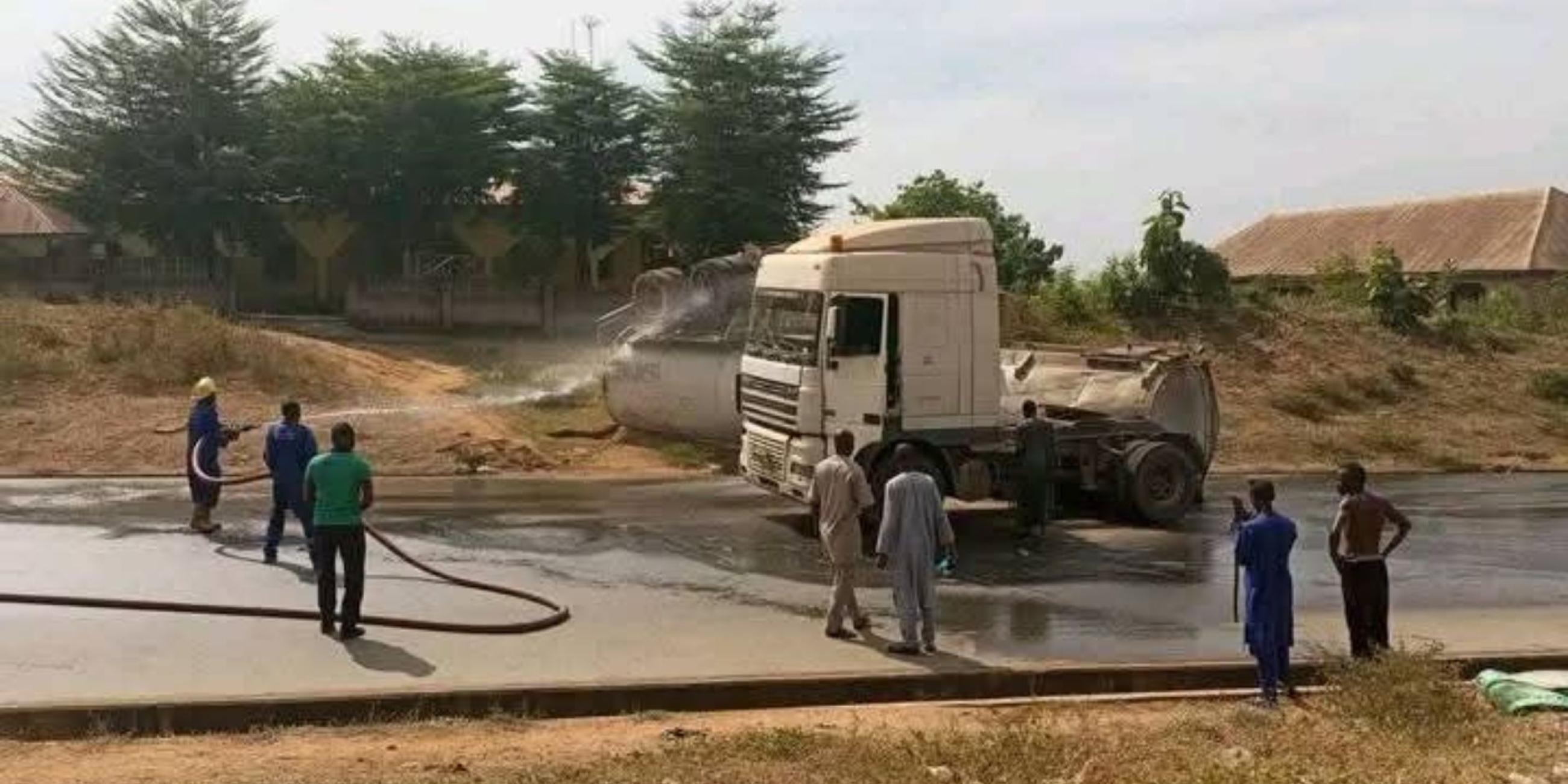
Traffic on the Lapai–Agaie Road in Niger State was disrupted on Monday morning when a fuel tanker’s compartment detached from the main truck, obstructing the road. The driver, travelling from Lagos to Gombe, reported the incident, but no casualties were recorded. Security agencies and firefighters quickly responded to prevent any fire hazards, and the area remains under tight...
Get Featured. Build Your Brand. Share Your Story. Are you an artist, actor, entrepreneur, public figure, content creator, influencer, athlete, comedian, or rising star?Submit your biography on Fintter and let more people discover your journey, achievements, and story. We publish engaging, well-structured, and SEO-friendly biography content across entertainment, lifestyle, business,...