


 Σχετικά
Eritrea From Ancient Red Sea Kingdoms to a Nation Forged by Thirty Years of Struggle
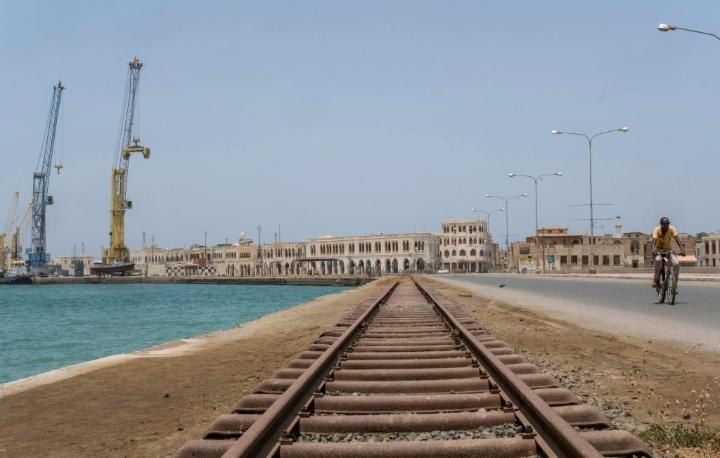
Eritrea
On the western shores of the Red Sea lies Eritrea, a land of high mountains, vast deserts, and ancient ports that once connected Africa to Arabia and beyond. Its history reaches back to some of the earliest civilizations in the Horn of Africa. From powerful kingdoms and foreign empires to one of Africa’s longest wars for independence, Eritrea’s story is one of endurance, identity, and hard won sovereignty.
The Earliest Civilizations
Long before Eritrea became a modern state, it was part of early civilizations that flourished along the Red Sea coast.
Archaeological discoveries show that the region was connected to the ancient Land of Punt, a trading partner of Pharaonic Egypt thousands of years ago. Punt supplied gold, incense, and exotic goods.
By the first millennium BCE, the Kingdom of D’mt emerged in parts of present day Eritrea and northern Ethiopia. It developed agriculture, trade, and early systems of governance.
Later, one of the greatest civilizations of the region rose to power. The Kingdom of Aksum became a major empire between the first and seventh centuries CE.
Aksum controlled trade routes across the Red Sea and into the Mediterranean world. It minted its own coins and became one of the great powers of its time.
Christianity was adopted as a state religion in the fourth century under King Ezana, making the region one of the earliest Christian societies in the world.
Trade and Islamic Influence
After the decline of Aksum, Eritrea’s coastal areas remained important in Red Sea trade.
With the rise of Islam in the seventh century, Muslim traders and settlers became active along the coast. Cities such as Massawa developed as commercial centers.
Over time, Eritrea became home to both Christian highland communities and Muslim coastal and lowland populations. This religious and cultural diversity remains part of Eritrea’s identity today.
Different local rulers and external powers influenced the territory, including Ethiopian highland kingdoms and Ottoman forces along the coast.
Ottoman and Egyptian Control
In the sixteenth century, the Ottoman Empire took control of parts of the Eritrean coastline, particularly Massawa. Their rule focused on controlling trade routes rather than deeply administering inland territories.
Later, Egyptian forces expanded into the region during the nineteenth century. However, their control remained limited and short lived.
Italian Colonization
In the late nineteenth century, European powers scrambled for African territory. Italy sought colonies to establish itself as a European power.
In 1890, Italy officially declared Eritrea as its colony. It became Italy’s first colony in Africa.
Italian rule left a lasting impact. Infrastructure such as railways, ports, and buildings were constructed, particularly in the capital city Asmara.
Asmara developed distinctive architecture, much of it influenced by Italian design. Today, it is known for its well preserved modernist buildings.
However, colonial rule also imposed racial segregation and economic exploitation. Eritreans had limited political rights under Italian administration.
British Administration
During World War Two, British forces defeated Italian troops and took control of Eritrea in 1941.
The British administered the territory until 1952. During this period, political movements began forming among Eritreans, debating whether the country should unite with Ethiopia or become independent.
Federation and Annexation
In 1952, the United Nations decided to federate Eritrea with Ethiopia under the Ethiopian crown. Eritrea was given its own parliament and autonomy within the federation.
However, in 1962, Ethiopian Emperor Haile Selassie dissolved the federation and annexed Eritrea as a province.
This decision sparked resistance and marked the beginning of a long armed struggle for independence.
The Thirty Year War
In 1961, Eritrean fighters launched an armed resistance against Ethiopian rule. The conflict would last for three decades.
Two main movements emerged during the struggle, eventually united under the Eritrean People’s Liberation Front.
The war was intense and costly. Thousands of lives were lost. Villages were destroyed, and many Eritreans fled as refugees.
Despite limited resources, Eritrean fighters built organized structures, including schools and healthcare systems in liberated areas.
In 1991, after years of struggle, Eritrean forces captured Asmara and effectively achieved independence.
In 1993, a United Nations supervised referendum was held. An overwhelming majority voted for independence.
Isaias Afwerki became the first president of the new nation.
Post Independence Challenges
Independence brought hope but also new challenges.
In 1998, a border dispute with Ethiopia escalated into a two year war. Thousands were killed, and tensions remained high for decades.
Eritrea developed a system of national service that required citizens to serve in military or public roles. The policy became controversial internationally.
The government emphasized self reliance and national unity. However, political freedoms have been limited, and Eritrea has faced international criticism over governance and human rights.
Culture and Identity
Eritrea is home to nine recognized ethnic groups. Tigrinya and Tigre are widely spoken, alongside Arabic and other languages.
Christianity and Islam are the two major religions, reflecting centuries of shared history.
Traditional music, coffee ceremonies, and community festivals remain central to daily life.
The country’s landscapes range from highland plateaus to Red Sea islands and desert plains.
Eritrea Today
Today, Eritrea continues navigating its post war identity. Recent diplomatic efforts have eased tensions with Ethiopia, offering hope for regional stability.
Though small in population, Eritrea’s history is vast. From ancient Aksumite power to modern independence struggle, its story is marked by resilience.
A Nation Forged in Struggle
Eritrea’s journey began with ancient trade and powerful kingdoms. It endured colonization, federation, annexation, and one of Africa’s longest liberation wars.
Its independence was not given but fought for over thirty years.
Eritrea stands today as a nation forged by determination. Its past carries lessons of unity and sacrifice. Its future depends on balancing sovereignty with opportunity.
From the shores of the Red Sea to the heights of Asmara, Eritrea’s story remains one of endurance and pride.


Κατηγορίες
Διαβάζω περισσότερα
Former U.S. President Donald Trump has issued a stern warning to Iran, declaring that any attack on the United States would trigger an overwhelming military response. “If we are attacked in any way, shape, or form by Iran, the full strength and might of the US Armed Forces will come down on you at levels never seen before,” Trump said Sunday via his Truth Social platform. He...
Bolaji Idowu Bolaji Idowu is a Nigerian pastor, teacher, and leadership speaker best known as the Lead Pastor of Harvesters International Christian Centre and the convener of Next Level Prayers. Harvesters says the church began on 13 December 2003 from a small gathering and has since grown into a multi-location ministry with branches in Nigeria, the United Kingdom, and the United States,...
The Nigerian Communications Commission (NCC), once lauded as a premier regulatory body in Africa, is now embroiled in a deepening internal crisis. Allegations of corruption, nepotism, and targeted retaliation against whistleblowers are shaking the agency’s foundation and eroding public trust. At the center of the controversy is Executive Vice Chairman (EVC), Dr. Aminu Maida, whose...

Oxlade Some artists are made by privilege. Others are shaped by pressure. The journey of Oxlade is a story of talent meeting hardship, of a young boy who lost his mother too early and found comfort in melody. Before the global tours and streaming numbers, before the bright lights and viral hits, there was simply Ikuforiji Olaitan Abdulrahman, a boy in Surulere with a voice that refused...

Fangda presents its SDS Plus Hammer Drill series, engineered for high performance, durability, and precision in demanding applications. Designed for professionals and home users, these tools combine innovative engineering with reliable materials to ensure smooth operation and consistent results. With it, every drilling task becomes easier, accurate, and efficient, delivering confidence in...

