Sobre
Sobre
Whistleblowers Face Retaliation Amid Corruption Allegations at NCC; Akpabio, Senator Bilbis' Relatives Allegedly Favoured in Appointments – Sources

The Nigerian Communications Commission (NCC), once lauded as a premier regulatory body in Africa, is now embroiled in a deepening internal crisis. Allegations of corruption, nepotism, and targeted retaliation against whistleblowers are shaking the agency’s foundation and eroding public trust.
At the center of the controversy is Executive Vice Chairman (EVC), Dr. Aminu Maida, whose administration is facing mounting criticism over alleged fraudulent recruitment practices, biased promotions, and preferential appointments based on political connections and regional affiliations.
Whistleblowers Under Fire
Rather than addressing these serious allegations transparently, insiders say the EVC has launched an aggressive campaign to silence dissent within the Commission. Multiple sources told SaharaReporters that long-serving staff members who have raised concerns are being harassed, threatened, or pushed out without due process.
“This is a full-blown witch hunt,” one senior employee said. “The leadership is more focused on identifying and punishing whistleblowers than on fixing the rot.”
One staffer warned that “the real battle for justice is only beginning,” as internal resistance grows despite intimidation tactics.
Accusations of Nepotism and Backdoor Recruitment
Among the most troubling claims are reports of high-profile appointments allegedly made without adherence to due process:
-
A daughter of Senator Ikra Aliyu Bilbis, Chairman of the Senate Committee on Telecommunications, reportedly secured a position at the NCC without undergoing competitive screening.
-
Tanimu Yakubu, said to be a cousin’s daughter of the EVC, was also allegedly recruited through informal channels.
-
A relative of Senate President Godswill Akpabio was reportedly fast-tracked through probation and seconded to another government agency—again, bypassing formal procedures.
Sources argue these are not isolated incidents but signs of systemic abuse of power and elite patronage.
Fraudulent Promotions and Alleged Bias
The crisis escalated following the March 2025 staff promotion exercise, which many employees have condemned as rigged and discriminatory. An internal memo obtained by SaharaReporters, titled “2025 Staff Promotion Exercise: All Levels”, listed 239 promoted staff, including top-level appointments. However, many employees claim the process was deeply flawed.
A group of staff operating under the name “Concerned Staff of the Nigerian Communications Commission” described the promotion process as “fraudulent, bigoted, and sadistic.” Among their complaints:
-
Logistical failures during the promotion exams left some candidates being assessed for nearly 24 hours.
-
An internal apology from Director of Human Capital, Hafsat Lawal, acknowledged the poor handling of the exams.
-
Promotion decisions allegedly favoured employees previously selected for elite overseas trainings—like at Harvard and the London School of Economics—while excluding equally or more qualified staff.
-
The pass mark was arbitrarily raised from 60% to 70%, violating Public Service Rules and disadvantaging many.
A lawyer representing affected staff has reportedly identified 10 legal grounds to challenge the promotion results in court.
Ethnic Marginalisation and Violation of Federal Character
Sources also allege that the Commission’s leadership deliberately sidelined staff from southern regions. In one batch, no Southeastern candidate was promoted from Principal Manager to Assistant Director. In another, only one southerner advanced from Assistant Director to Deputy Director.
Despite the presence of representatives from all geopolitical zones on promotion panels, aggrieved staff say such representation was symbolic and failed to prevent systemic bias.
Institutional Decline and Public Concern
Critics warn that the NCC is drifting from its founding principles of merit, transparency, and professionalism. Former staff, including retired senior officials, have called for immediate reforms to salvage the Commission’s credibility.
“The NCC was built by dedicated professionals,” one retired executive said. “If the current leadership believes intimidation will silence the truth, they are mistaken.”
There are now growing calls for urgent intervention by the National Assembly, the Presidency, and anti-corruption agencies to address the situation before it deteriorates into broader scandals involving procurement fraud and financial mismanagement.
Despite repeated efforts, the Commission has yet to publicly respond to the allegations. NCC’s Director of Corporate Communications, Nnenna Ukoha, initially promised a response after a meeting but subsequently failed to return calls.
Categorias
Leia mais
Sanusi Abdul Sanusi Sanusi Abdul Sanusi’s story is the kind that travels fast in Kogi because it sounds like something people want to believe in: a man who did not just chase success, but chose to plant it where his roots are. He is described as a son of Ankpa in Kogi East, raised with the kind of community closeness that teaches you early that your name is not only what people...

Teju Cole: Some people travel the world to escape. Others travel to understand it. The life of Teju Cole is the story of a man who walks through cities not just with his feet, but with his mind wide open. He is a novelist, essayist, art historian, and photographer whose work blends observation with memory, politics with poetry. Teju Cole does not shout his ideas. He examines them. He...

Sasha P Sasha P, born Anthonia Yetunde Alabi, is one of Nigeria’s pioneering female rappers. She was born on May 21, 1983, in Ibadan, Oyo State, Nigeria. As of 2026, Sasha P is 42 years old. She is widely respected for breaking barriers in a male-dominated hip-hop industry and for helping shape the early era of Nigerian rap music. Early Life and Education Sasha P grew up...

Bola Are Bola Are, popularly known as Evangelist Bola Are, is a legendary Nigerian gospel singer, evangelist, and one of the pioneers of indigenous gospel music in Nigeria. She is widely respected for her powerful voice, spiritual depth, and long lasting impact on gospel music. Early Life and Background Bola Are was born on October 1, 1954, in Erio-Ekiti, Ekiti State, Nigeria....
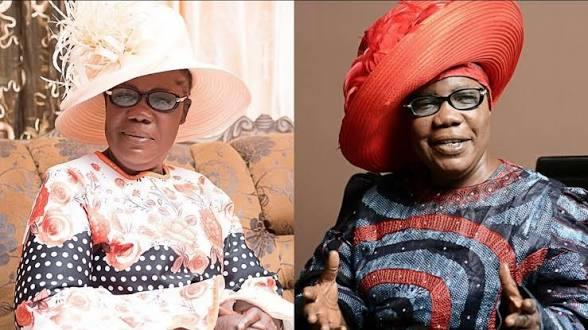
Patience Ozokwor Patience Ozokwor, popularly known as Mama G, is one of Nigeria’s most respected and recognizable actresses. Born on September 14, 1958, in Ngwo, Enugu State, she grew up in a modest Igbo family where discipline, culture, and strong moral values shaped her early life. From a young age, Patience displayed a lively personality. She was dramatic, expressive, and naturally...