О нас
О нас
Democratic Republic of the Congo The Mighty River Kingdoms and the Struggle of a Giant
Democratic Republic of the Congo
The Democratic Republic of the Congo is one of Africa’s largest and most resource rich nations. At its heart flows the Congo River, the second longest river in Africa and one of the most powerful in the world. Its forests are vast, its soil rich, and its history both glorious and painful.
From ancient kingdoms to colonial brutality, from independence dreams to modern conflict and hope, the story of the Democratic Republic of the Congo is the story of a giant whose journey is still unfolding.
The Earliest Peoples
Long before written history, the region was home to early forest dwelling communities often associated with Pygmy groups such as the Mbuti. They lived in the dense Congo rainforest, hunting, gathering, and maintaining deep spiritual connections with nature.
Over time, Bantu speaking peoples migrated into the region. They brought farming, ironworking, and organized societies. Crops such as yam, oil palm, and bananas became staples. Villages grew into chiefdoms, and trade networks expanded across Central Africa.
The Congo River and its many tributaries became natural highways. Communities used canoes to trade goods such as salt, copper, fish, and agricultural products.
The Rise of Powerful Kingdoms
By the fourteenth century, strong centralized states had formed. Among the most influential was the Kingdom of Kongo, which extended into western parts of present day Congo.
The Kingdom of Kongo developed a complex political structure with a king known as the Manikongo. It engaged in trade with neighboring regions and later with Europeans.
In central areas, the Luba Kingdom rose to prominence. The Luba built a sophisticated system of governance based on sacred kingship and spiritual authority. Their influence shaped many surrounding societies.
To the southeast, the Lunda Kingdom expanded across large territories. The Lunda organized trade routes that linked Central Africa with the Indian Ocean coast.
These kingdoms demonstrated political organization, artistic achievement, and economic strength long before European colonization.
European Contact and the Slave Trade
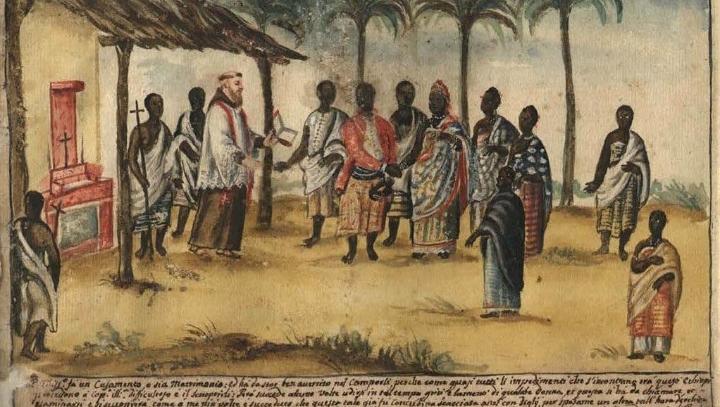
In the late fifteenth century, Portuguese explorers reached the mouth of the Congo River. Initial contact with the Kingdom of Kongo included diplomacy and Christian missions.
However, European interest soon focused on trade, especially the transatlantic slave trade. Millions of Central Africans were captured and transported to the Americas over centuries.
The slave trade destabilized kingdoms, fueled wars, and caused immense suffering. Entire communities were torn apart.
By the nineteenth century, European explorers began pushing deeper into the interior of the Congo Basin.
The Congo Free State
One of the darkest chapters in African history began in the late nineteenth century. King Leopold II of Belgium claimed the Congo Basin as his personal property, calling it the Congo Free State.
In reality, it was neither free nor a state in the modern sense. Leopold’s agents exploited the land for rubber and ivory. Local people were forced into brutal labor. Those who resisted faced violent punishment.
Historians estimate that millions of Congolese died during this period due to violence, disease, and starvation.
International outrage eventually forced Belgium to take control in 1908, turning the territory into the Belgian Congo.
Belgian Colonial Rule
Under Belgian administration, infrastructure such as railways and mining operations expanded. The colony became a major source of minerals, including copper, cobalt, and diamonds.
However, political participation for Congolese people was almost nonexistent. Education was limited, and power remained in European hands.
As the twentieth century progressed, Congolese nationalism began to rise.
Independence and Crisis
In 1960, the Belgian Congo gained independence and was renamed the Republic of the Congo. One of the leading figures of independence was Patrice Lumumba.
Lumumba became the first prime minister. However, political tensions quickly erupted. The country faced secession attempts, foreign interference, and internal division.
Within months, Lumumba was removed from power and later assassinated, an event that shocked Africa and the world.
In 1965, Joseph Mobutu seized control and later renamed the country Zaire. He ruled for more than three decades.
The Era of Mobutu
Mobutu Sese Seko centralized power and promoted a policy called Authenticity, encouraging African names and cultural pride. However, his rule became associated with corruption and authoritarianism.
Despite vast natural resources, much of the population remained poor. Wealth from minerals benefited a small elite.
By the 1990s, regional conflicts and internal unrest weakened Mobutu’s government.
War and Renaming
In 1997, rebel forces led by Laurent Desire Kabila overthrew Mobutu and restored the country’s name to the Democratic Republic of the Congo.
However, conflict continued. The country became the center of what has been called Africa’s World War, involving multiple neighboring nations.
The wars in the late 1990s and early 2000s caused millions of deaths, many from disease and displacement.
Modern Congo
Today, the Democratic Republic of the Congo remains one of the most resource rich countries in the world. It holds vast reserves of cobalt, coltan, gold, and diamonds. These minerals are essential for modern technology.
Yet the country continues to face challenges, including armed groups in eastern regions, poverty, and infrastructure gaps.
Kinshasa, the capital, is one of Africa’s largest cities, filled with energy, music, and creativity. Congolese rumba has gained international recognition and reflects the country’s cultural strength.
The Congo River remains central to life, carrying goods and connecting communities.
A Giant with a Powerful Heart
From ancient forest societies to powerful kingdoms, from colonial exploitation to independence and war, the Democratic Republic of the Congo has endured extraordinary trials.
It is a land of immense beauty and immense potential. Its forests are often called the lungs of Africa. Its river is among the strongest in the world.
Though its history includes deep suffering, it also tells a story of resilience.
The giant of Central Africa continues to stand. Its future depends on peace, unity, and the wise use of its natural wealth.
The story of the Democratic Republic of the Congo is not finished. It is still being written by millions of people who call the vast land along the Congo River home.

Категории
Больше
Adeniyi Johnson Adeniyi Johnson is a Nigerian Nollywood actor, filmmaker, and television personality best known for his work in Yoruba language films. Over the years he has built a strong reputation as a versatile actor who can perform both comic and serious roles. His charisma, expressive acting style, and dedication to the craft have made him a familiar face in the Nigerian movie industry....

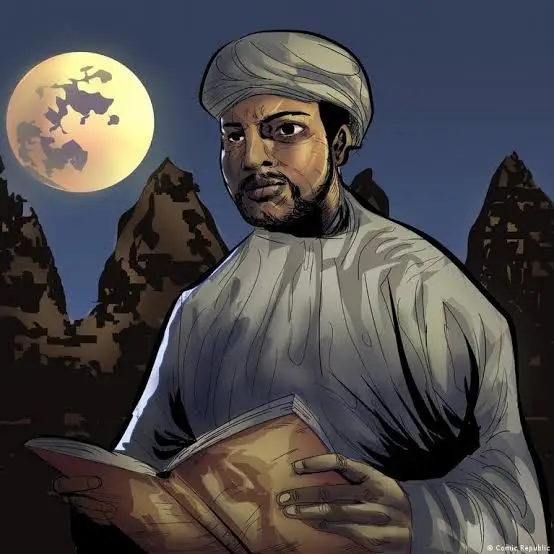
Ahmad Baba al Timbukti Early Life Ahmad Baba al-Timbukti was born in 1556 in the famous city of Timbuktu, a place known across Africa and the world as a center of learning and knowledge. He grew up in a family of scholars. From a young age, books were part of his life. His father and teachers trained him in Islamic studies, law, and literature. Unlike many children, Ahmad Baba...
Zuby Michael Zuby Michael is a Nigerian actor, filmmaker, producer, and politician widely known for his action-packed roles and tough-guy characters in Nollywood. With his bold screen presence and commanding voice, he has become one of the most recognized faces in contemporary Nigerian cinema Early Life and Background Zuby Michael was born Azubuike Michael Egwu on February 1,...
Bob Jensen: The Man Who Drove Into History There are moments in history that seem small when they happen, but years later they grow into legends. A wheel touches the ground. An engine roars. A crowd gasps. And something changes forever. That is how the story of Bob Jensen is told in certain circles. A foreign engineer with restless curiosity, steady hands, and an appetite for impossible...
Aishwarya Rai Bachchan Aishwarya Rai Bachchan is an Indian actress, model, and former beauty queen. She is one of the most famous and influential actresses in Bollywood and has gained international recognition. Early Life and Background Aishwarya Rai Bachchan was born on November 1, 1973, in Mangalore, Karnataka, India. She grew up in Mumbai, where she spent most of her childhood....