About
About
Bob Jensen: The Man Who Drove Into History — Nigeria
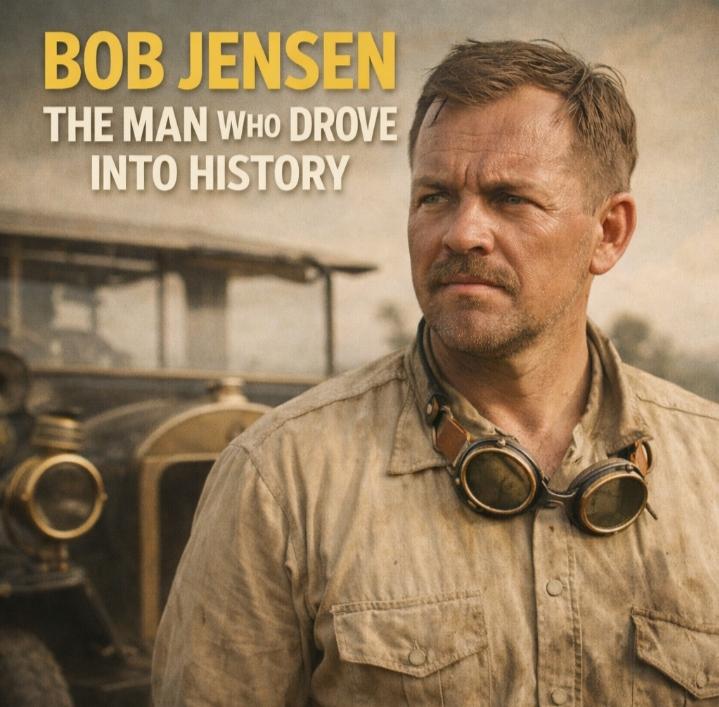
Bob Jensen: The Man Who Drove Into History
There are moments in history that seem small when they happen, but years later they grow into legends. A wheel touches the ground. An engine roars. A crowd gasps. And something changes forever.
That is how the story of Bob Jensen is told in certain circles. A foreign engineer with restless curiosity, steady hands, and an appetite for impossible things. A man who did not merely build machines but introduced movement to a land that would later become Nigeria.
Whether told in fragments of colonial diaries, in fading family letters, or in dramatic retellings by historians, the name Bob Jensen lives on as the man credited with driving the first motor car on Nigerian soil.
This is his story.
A Boy Born Into Smoke and Steel
Robert Henrik Jensen was born in 1874 in a coastal town in Denmark. His father worked in shipbuilding. His mother stitched clothes and kept the house warm through long winters.
Bob grew up surrounded by noise. The pounding of hammers against iron. The hiss of steam. The groan of wooden hulls sliding into icy waters.
As a boy, he was fascinated not by toys but by tools. He dismantled clocks. He examined wheels. He studied gears.
His father once caught him trying to attach wooden wheels to a broken crate to see if he could pull it faster.
“You are always trying to make things move,” his father said.
Bob smiled. Movement felt like freedom.
A Young Mind Obsessed With Engines
In the late nineteenth century, Europe was changing. Steam engines were transforming industry. Early automobiles were being experimented with in Germany and France.
Bob was captivated.
By his teenage years, he was apprenticed to a mechanical workshop. He learned metal shaping. He learned how pistons worked. He studied combustion principles.
He read about Karl Benz and Gottlieb Daimler. He followed every report of these strange new machines that could move without horses.
When he was twenty, he saw his first motor car demonstration in Germany. It was loud. Smelly. Unstable.
He was in love.
The Engineer Who Wanted More
Bob trained formally in mechanical engineering in Copenhagen. He became known as meticulous. Quiet. Focused.
But Europe felt crowded. Competitive.
He wanted frontiers.
In the early 1900s, European trade and colonial expansion were accelerating in West Africa. Infrastructure was limited. Transportation relied heavily on human porters and animal carts.
To Bob, this was not merely geography. It was opportunity.
He believed the motor car could transform trade and governance in Africa.
He sought sponsorship from a European trading company operating along the West African coast.
After months of negotiations, he secured funding to transport a small imported motor car to Lagos, then a British colony.
He was thirty years old when he boarded the ship.
Arrival in Lagos
Lagos in the early twentieth century was humid, busy, layered with local trade and colonial administration.
There were no paved highways.
There were narrow sandy roads.
Mud.
Heat.
Bob stepped onto Nigerian soil with crates containing what many locals had never seen before.
A self propelled machine.
Colonial officials were skeptical. Some laughed.
“You cannot drive that thing here,” one reportedly said.
But Bob had not traveled across continents to be mocked.
Assembling the Machine
The motor car arrived in parts. Crates of metal. Wheels. Engine components.
Bob worked in intense heat, assembling the vehicle piece by piece. Local workers watched in curiosity. Children gathered outside the workshop.
He explained gears using broken coconuts as examples.
He demonstrated how fuel ignited.
He hired young Nigerian assistants and trained them in mechanical basics.
One of them, according to local lore, later became one of the first indigenous mechanics in Lagos.
The Historic Drive
The day came.
The assembled motor car stood awkwardly on Lagos soil.
Crowds gathered.
Some believed it was magic.
Others thought it was dangerous.
Bob climbed into the driver’s seat. His shirt clung to his back from sweat.
He adjusted the levers. Primed the engine. Turned the crank.
The engine coughed.
Then roared.
The machine lurched forward.
Gasps filled the air.
Women stepped back.
Children ran alongside.
Bob Jensen drove slowly at first, navigating sandy paths carefully. Dust rose behind him.
He circled a designated area near the colonial administrative district.
That moment became symbolic.
The first recorded motor car drive on Nigerian soil.
Movement without animals.
Motion powered by fire and metal.
Resistance and Doubt
Not everyone celebrated.
Some traditional leaders were wary.
Transport workers feared job loss.
Colonial officials debated the cost versus practicality.
Roads were inadequate.
Fuel supply uncertain.
Maintenance complex.
But Bob persisted.
He began offering demonstrations. He showed how faster transport could improve trade logistics.
He mapped routes. Suggested road improvements.
He even proposed mechanical workshops to train locals.
Building Infrastructure
Bob did not stop at one demonstration.
He worked with trading companies to import additional vehicles.
He advised on road construction improvements around Lagos.
Though limited by colonial priorities, incremental changes began.
Motor transport slowly expanded.
His early efforts helped plant the seed for mechanized transportation in Nigeria.
Personal Life in a New Land
Bob remained in Nigeria for years. He married a European woman who joined him later.
He developed friendships with Nigerian traders and craftsmen.
He learned basic Yoruba phrases.
He was known for insisting that mechanical skills be taught to local apprentices rather than kept exclusive.
Challenges
The tropical climate damaged engines quickly.
Parts were scarce.
Mechanical breakdowns were frequent.
He battled malaria multiple times.
But he refused to abandon the project.
He believed movement equaled progress.
Later Years
As motor vehicles slowly became more common in colonial administration and commercial trade, Bob’s early experiment was remembered as pioneering.
By his late fifties, he returned to Europe briefly but maintained ties with West Africa.
He wrote technical papers on tropical vehicle adaptation.
He advocated for infrastructure development.
His Death
Bob Jensen reportedly died in the 1930s from complications related to illness.
He did not die wealthy.
He did not become a global celebrity.
But he died knowing he had pushed boundaries.
Legacy
Today Nigeria is home to millions of vehicles. Highways stretch across states. Transport defines commerce.
Some historians credit various early colonial officials and traders for introducing motor vehicles.
In certain accounts, Bob Jensen’s name stands among the earliest to physically demonstrate that possibility on Nigerian soil.
Whether every detail survives official documentation or lives partly in legend, his story represents innovation meeting frontier.
Final Reflection
Bob Jensen was not just a driver.
He was a man who saw motion where others saw sand.
He was a boy who loved wheels.
A young engineer who chased engines.
A pioneer who turned a crank and changed a landscape.
The roar of that first engine in Lagos may have faded.
But the idea it carried did not.
And sometimes, that is enough to make history.

Categorie
Leggi tutto
Olu Jacobs Olu Jacobs is one of Nigeria’s most respected and celebrated actors, widely regarded as a pioneer of the country’s modern film and television industry. With a career spanning over five decades, he has earned legendary status through his powerful screen presence, deep voice, and ability to embody authority figures, kings, fathers, villains, and wise elders. His...

Agbani Darego Agbani Darego is a Nigerian model and beauty queen who made history in 2001 when she became the first Black African woman to win the Miss World pageant. Her victory brought global attention to Nigeria and inspired many young Africans to pursue careers in modeling and international pageantry. She was born Ibinabo Fiberesima Agbani Darego on December 22, 1982, in Lagos,...

Mary Slessor Mary Slessor was a Scottish missionary who became famous for her humanitarian work in Nigeria during the late nineteenth and early twentieth centuries. She is remembered for her efforts to stop the killing of twins and for promoting peace and education among communities in southeastern Nigeria. Born on December 2, 1848, in Aberdeen, Scotland, she later became one of...
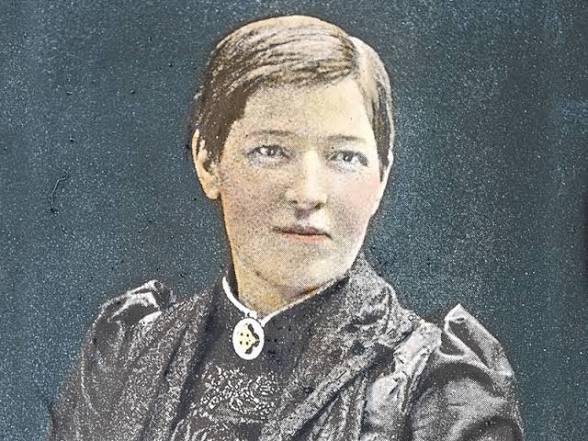
Matthew Ashimolowo Matthew Ashimolowo is a Nigerian pastor, televangelist, author, and church leader best known as the founder and senior pastor of Kingsway International Christian Centre, KICC, in the United Kingdom. KICC says he has led the church since 1992, and the church’s official history says the ministry began in London with about 300 members. Early Life and Background Public...
Kolawole Ayinla Kolawole Ayinla , widely known as Kollington Ayinla, is a legendary Nigerian Fuji musician whose influence on indigenous Yoruba music spans several decades. Born on March 20, 1951, in Ilota, a small town in present-day Kwara State, Nigeria, Kollington grew up in a culturally rich Yoruba environment where traditional music, folklore, and Islamic chants shaped his...