About
About
Chad From Ancient Lake Kingdoms to a Nation of Endurance in the Sahel
Chad
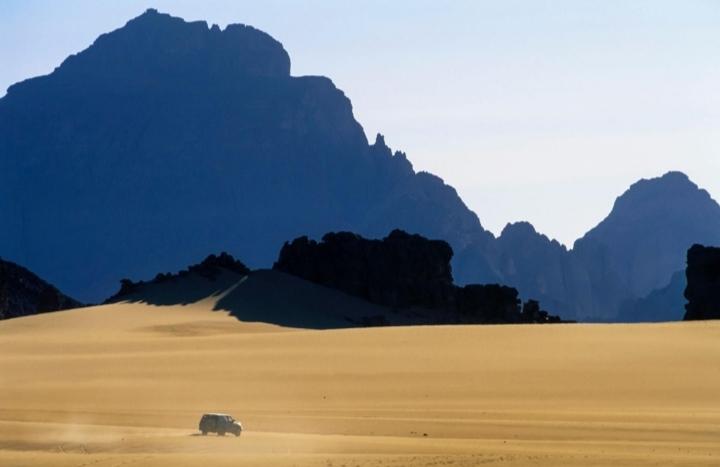
Chad is a land of contrasts. In the north lies the vast Sahara Desert. In the center stretch dry Sahel plains. In the south, greener lands support farming and rivers. At its heart sits Lake Chad, once one of Africa’s largest lakes and a cradle of early civilization.
The story of Chad is ancient and powerful. It begins with prehistoric life, rises through mighty kingdoms, passes through colonial control, and continues today as a nation shaped by resilience and survival.
The Earliest Beginnings
Thousands of years ago, much of what is now Chad was not desert. The Sahara was greener, dotted with lakes and wildlife. Rock paintings in the Tibesti Mountains show cattle, giraffes, and daily life scenes, proving that early communities thrived in the region.
As the climate changed and the Sahara became drier, people moved toward more fertile areas, especially around Lake Chad. The lake became a center for fishing, farming, and trade. Communities developed complex social systems and began forming organized states.
The Rise of Ancient Empires
By the ninth century, one of Africa’s most powerful empires emerged near Lake Chad. The Kanem Empire rose in the northeast of present day Chad.
The rulers of Kanem controlled trade routes that connected Central Africa to North Africa and the Mediterranean. They traded salt, gold, livestock, and enslaved people. Wealth and influence grew.
Over time, Kanem expanded and evolved into the Kanem Bornu Empire. Islam became an important part of the ruling class beginning in the eleventh century, linking the region more closely with the wider Islamic world.
The empire lasted for centuries and became one of the longest surviving states in African history.
In western and southern Chad, other kingdoms such as Baguirmi and Wadai developed. These states competed, traded, and sometimes fought with Kanem Bornu and neighboring regions.
Chad during this period was not isolated. It was connected to vast trade networks crossing the Sahara and linking to the Nile Valley and West Africa.
Trade and Trans Saharan Connections
Caravans crossed the desert carrying goods and ideas. Islamic scholars traveled with traders, spreading religious teachings and literacy in Arabic.
However, this era also saw slave raiding. Armed groups captured people to sell into North Africa and the Middle East. Many communities were disrupted by these raids.
Despite these challenges, the region remained politically organized and economically active for centuries.
European Arrival and French Colonization
In the late nineteenth century, European powers began dividing Africa during the Scramble for Africa. France moved into Central Africa and gradually extended control over Chad.
By 1900, French forces defeated local rulers and incorporated Chad into French Equatorial Africa.
Colonial rule in Chad was harsh and extractive. Forced labor was imposed to build infrastructure and grow cotton. Many Chadians were required to work under difficult conditions.
Little investment was made in education or development. The territory was administered from afar and received limited attention compared to other colonies.
The colonial borders grouped together many ethnic and cultural communities, including Arab, Toubou, Sara, and others. These divisions would later shape political tensions.
The Road to Independence
After World War Two, independence movements spread across Africa. Political awareness grew in Chad, and local leaders began pushing for autonomy.
One of the most important figures of this period was Francois Tombalbaye. He became the first president when Chad gained independence from France on August 11, 1960.
At independence, Chad faced enormous challenges. It was landlocked, economically weak, and deeply divided between the largely Muslim north and the mostly Christian and animist south.
Years of Conflict
Political instability soon followed independence. Regional tensions and dissatisfaction with government policies led to rebellion in the north during the 1960s.
Chad entered a long period of civil war. Multiple factions fought for control. Foreign countries, including Libya and France, became involved.
In the 1980s, fighting intensified between Chadian forces and Libyan troops over disputed northern territories. Eventually, Chad regained control of its land.
Leadership changed hands through coups and armed struggle. Governments rose and fell, often amid violence.
Oil and Modern Challenges
In the early 2000s, oil production began in southern Chad. The discovery of oil offered hope for economic growth. Pipelines were built to export oil through Cameroon.
However, oil wealth did not fully solve the country’s problems. Poverty, corruption, and insecurity remained major challenges.
Chad has also faced threats from extremist groups in the Lake Chad region. The shrinking of Lake Chad due to climate change has further affected livelihoods, especially for farmers and fishermen.
Culture and Diversity
Chad is home to more than two hundred ethnic groups. Arabic and French are official languages, and many local languages are widely spoken.
Traditional music, storytelling, and dance remain important parts of daily life. Nomadic herders in the north live differently from farming communities in the south, yet all share a connection to the land.
The country’s landscapes are striking. The Sahara dominates the north, while wildlife parks in the south protect elephants, lions, and antelope.
Despite hardship, communities maintain strong family ties and cultural traditions.
Chad Today
Today, Chad continues to navigate political transitions and security concerns. It plays a strategic role in regional security efforts in the Sahel.
The country remains one of Africa’s least developed nations, yet it possesses rich history and cultural depth.
From ancient Kanem Bornu rulers to modern presidents, from trans Saharan caravans to oil pipelines, Chad’s story spans centuries of adaptation.
A Land of Survival
Chad’s history is not simple. It is a story of powerful empires, colonial struggle, civil conflict, and persistent hope.
The land has endured climate shifts, invasions, and political turmoil. Yet its people remain.
At the crossroads of North and Central Africa, Chad stands as a nation shaped by endurance. Its past is ancient, its present complex, and its future still unfolding.

Categorie
Leggi tutto
Etsu Masaba Introduction In the heart of northern Nigeria, where rivers bend and kingdoms rise, lived a man whose name still echoes through time Etsu Masaba. He was not just a ruler; he was a force of strength, vision, and deep influence. His story is one of power, leadership, conflict, and legacy. Early Life Etsu Masaba, also known as Masaba dan Malam Dendo, was born into a...
I used to believe that love was proven by sacrifice. If you gave enough, endured enough, and stayed long enough, the other person would eventually see your worth. That was the version of love I carried into my relationship with Kolawole and it almost broke me. I met Kolawole when I was already finding my feet as a makeup artist in Lagos. Lagos is not a gentle city; it teaches you...

Sydney Talker Sydney Talker whose real name is Sydney Egere was born on October 12, 1995, in Edo State, Nigeria. Although he was born in Edo State, he spent most of his childhood in Lagos State, where he grew up and developed his passion for entertainment. Growing up, Sydney was known for being playful and humorous. His ability to make friends laugh and entertain people naturally...

Atiku Abubakar In the quiet town of Jada in Adamawa State, in 1946, a child was born into modest circumstances. His father was a trader and farmer, cautious about Western education. That child would grow into one of Nigeria’s most enduring political figures, a man whose name has appeared repeatedly on presidential ballots for decades. That child is Atiku Abubakar. His...

Ola Rotimi In the vibrant cultural landscape of Nigeria, where storytelling has always been woven into the fabric of everyday life, one man rose to transform traditional stories into powerful theatre that spoke to both Africa and the world. His name was Ola Rotimi, a playwright, director, scholar, and cultural visionary whose work helped shape modern African drama. His plays...