


 About
About
Bilkisu Shema Biography Life Story of Strength Leadership and Northern Nigerian Influence
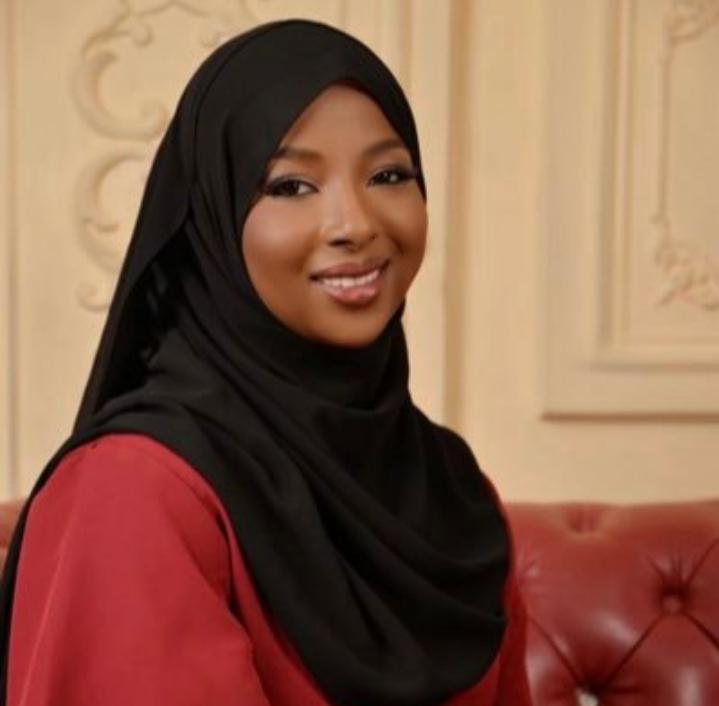
Bilkisu Shema
When people hear the name Bilkisu Shema, many immediately think of dignity, composure, and the quiet strength often associated with Northern Nigerian women who carry influence with grace. But behind that well known name is a deeper story rooted in culture, family, education, marriage, public life, and personal evolution. Her full name is Bilkisu Shehu Shema, and her journey reflects the delicate balance between tradition and modern leadership.
To understand Bilkisu Shema’s story, one must begin from the very beginning, long before public recognition and political association shaped her identity.
Early Life and Childhood
Bilkisu Shehu Shema was born into a respected Northern Nigerian family at a time when education for girls was still fighting for full acceptance in many parts of the region. Growing up in Northern Nigeria meant being raised within strong Islamic values, cultural discipline, and communal responsibility. Her early years were shaped by structure, modesty, and respect for elders.
From childhood, Bilkisu was known to be calm but observant. While other children played freely, she often showed signs of maturity beyond her age. Family members recall that she listened more than she spoke. She paid attention to conversations among adults, absorbing lessons about leadership, patience, and social responsibility.
Her upbringing emphasized education as both a right and a responsibility. In many Northern households, daughters are trained not only to become wives but to become pillars of stability. Bilkisu grew up with that expectation. She learned early that influence does not always come from loudness. Sometimes it comes from character.
Her primary education introduced her to structured learning, where she developed confidence in reading and communication. Teachers reportedly described her as disciplined and respectful. As she advanced into secondary school, her sense of awareness broadened. She became more conscious of societal dynamics, especially the differences between opportunity and limitation faced by women.
Education and Personal Growth
Education played a crucial role in shaping Bilkisu Shema’s worldview. While details of every academic milestone may not be publicly documented, it is clear that she pursued learning with seriousness. In Northern Nigeria, education often requires resilience, especially for young women navigating cultural expectations alongside ambition.
Her academic journey was not just about certificates. It was about exposure. It allowed her to interact with people from different backgrounds and understand governance, society, and leadership beyond household conversations.
During her formative years, she cultivated a strong sense of identity. She understood tradition but also recognized the importance of progress. This balance later became one of her defining characteristics.
Marriage and Entry into Public Visibility
Bilkisu Shema’s life took a significant turn when she married Ibrahim Shema, who would later serve as the Governor of Katsina State from 2007 to 2015. With that marriage came an entirely new dimension of responsibility and visibility.
Marriage in Northern Nigeria is not just a union of two individuals. It is a merging of families, reputations, and social expectations. When Ibrahim Shema assumed office as governor, Bilkisu Shema stepped into the role of First Lady of Katsina State.
Becoming a First Lady is not simply ceremonial. It demands diplomacy, emotional intelligence, and community engagement. For Bilkisu, this period became one of the most defining chapters of her life.
Role as First Lady of Katsina State
As First Lady, Bilkisu Shema focused largely on women, children, and vulnerable communities. Northern Nigeria faces several social challenges, including poverty, limited access to healthcare, and educational inequality. She understood these realities not as statistics but as lived experiences.
She reportedly supported initiatives aimed at empowering women through skills acquisition programs. In many Northern states, women struggle with economic independence. By promoting vocational training and small scale business support, she contributed to conversations about financial stability for women.
Healthcare advocacy also became part of her public identity. Maternal health remains a sensitive issue in Northern Nigeria, where access to medical facilities can be limited in rural communities. Bilkisu’s involvement in outreach programs helped amplify awareness around maternal and child health.
Her public appearances were marked by modesty and cultural pride. She dressed traditionally, representing Northern heritage with dignity. Unlike louder political figures, her influence was subtle but consistent.
Leadership Style and Personality
One of the most interesting aspects of Bilkisu Shema’s life story is her leadership style. She did not seek the spotlight for personal glorification. Instead, she embraced supportive leadership. Her strength was quiet but firm.
People who interacted with her often described her as approachable. In leadership spaces where hierarchy can create distance, she maintained warmth. This balance allowed her to connect with women at grassroots levels while still functioning within elite political circles.
Her ability to navigate tradition and modern governance demonstrated emotional intelligence. In conservative environments, pushing change requires strategy. Bilkisu seemed to understand this deeply.
Challenges and Public Scrutiny
Life in public office rarely comes without criticism or scrutiny. As the wife of a state governor, Bilkisu Shema inevitably experienced public attention. Political transitions, governance debates, and opposition narratives often extend beyond the elected official to their family.
Being in such a position requires resilience. For a Northern woman balancing cultural modesty with political exposure, the pressure can be intense. Yet she maintained composure.
When her husband’s tenure ended in 2015, the transition marked another shift in her life. The spotlight gradually dimmed, but her influence within social and political networks remained.
Life Beyond Government House
After the administration ended, Bilkisu Shema’s life did not stop. Many former First Ladies retreat quietly, focusing on family and private ventures. While she became less publicly visible, her experience in governance circles gave her lasting influence.
Life after public office often becomes a period of reflection. It is a time to assess impact and personal growth. For Bilkisu, it likely meant rediscovering aspects of herself beyond political identity.
Cultural Significance
In Northern Nigeria, women who hold public positions while maintaining cultural integrity often become symbolic figures. Bilkisu Shema represents a model of that balance.
She embodies the idea that leadership does not always need confrontation. Sometimes it needs consistency, empathy, and silent strength. In regions where women’s voices are still fighting for amplification, her presence in leadership spaces carried meaning.
Legacy and Influence
Legacy is not always measured by headlines. Sometimes it is measured by lives touched quietly. Through women empowerment initiatives, health awareness programs, and representation, Bilkisu Shema contributed to shaping conversations around women’s roles in governance support structures.
Her story reminds many young Northern girls that visibility and modesty can coexist. That influence can be exercised without abandoning cultural roots.
Personal Values
Throughout her journey, certain values seem consistent. Faith. Family. Responsibility. Community. These pillars defined her early upbringing and continued to guide her public life.
She navigated marriage, motherhood, and public office without dramatic controversies overshadowing her identity. That in itself speaks to discipline and careful stewardship of reputation.
The Broader Context of Northern Nigerian Women in Politics
To fully appreciate Bilkisu Shema’s biography, one must understand the context of Northern Nigeria’s sociopolitical environment. Women’s participation in politics has historically been limited compared to Southern Nigeria.
However, First Ladies often become gateways for soft influence. Through foundations and social programs, they create impact even without holding elective office. Bilkisu Shema operated within that structure.
Her role contributed to the gradual normalization of women occupying public advocacy positions in conservative states.
Reflection on Her Journey
From a young girl raised with discipline and faith to a First Lady navigating the complexities of governance, Bilkisu Shehu Shema’s life reflects resilience and adaptation.
Her journey is not one of loud rebellion but of steady presence. Not one of aggressive ambition but of measured responsibility.
In a world where leadership is often equated with dominance, her story offers a different model. A model rooted in culture, family, and service.
Conclusion
Bilkisu Shema whose full name is Bilkisu Shehu Shema is more than a political spouse. She is a woman shaped by Northern tradition, education, marriage, and public responsibility.
Her life tells a story of balance between private identity and public duty. It speaks of a generation of Northern women redefining influence without abandoning cultural pride.
While history may record her primarily as the wife of a former governor, those who look deeper will see a narrative of quiet leadership and meaningful social engagement.
Her biography is ultimately a reminder that behind every visible office holder, there are individuals whose support and advocacy shape the social fabric in profound ways.

Categories
Read More
National Affairs Zulum, Shehu of Borno urge Federal Government to expedite work on the Alau Dam to mitigate flood risks. FG relocates 484 pilgrims after a fire incident at a hotel in Saudi Arabia; no casualties reported. NIN registration still unavailable in 256 correctional facilities across the country, raising concerns about identity management. Fibre cuts disrupt telecom services in nine...

Chad Chad is a land of contrasts. In the north lies the vast Sahara Desert. In the center stretch dry Sahel plains. In the south, greener lands support farming and rivers. At its heart sits Lake Chad, once one of Africa’s largest lakes and a cradle of early civilization. The story of Chad is ancient and powerful. It begins with prehistoric life, rises through mighty...

THE MIDNIGHT SACRIFICE Episode One: The Night the House Locked Itself “Junior, come and serve me. Your father is too old to satisfy the spirits tonight.” The words didn’t sound human. They slid out of my stepmother’s mouth as she loosened her wrapper, slow and deliberate, like she had rehearsed it in front of a mirror. My scream hit the wall before my body did....

Ngozi Fulani: There are people who live quiet lives, and there are people whose lives become symbols of deeper conversations. The story of Ngozi Fulani is one of identity, survival, activism, and controversy. It is the story of a British woman of Caribbean heritage who built a refuge for vulnerable women and, decades later, found herself at the center of a national debate about race and...
The Enugu State Police Command has begun a manhunt for the gunmen who assassinated Rev. Fr. Matthew Eya, the parish priest of St. Charles Catholic Church, Eha-Ndiagu, while he was returning to his parish on September 19, 2025. The attackers, reportedly riding on a motorcycle, intercepted the priest’s vehicle along the Eha-Alumona–Eha-Ndiagu Road and shot him dead on the spot. In...

