


 Sobre
Sobre
Portable The Street Prophet Who Turned Chaos Into Fame
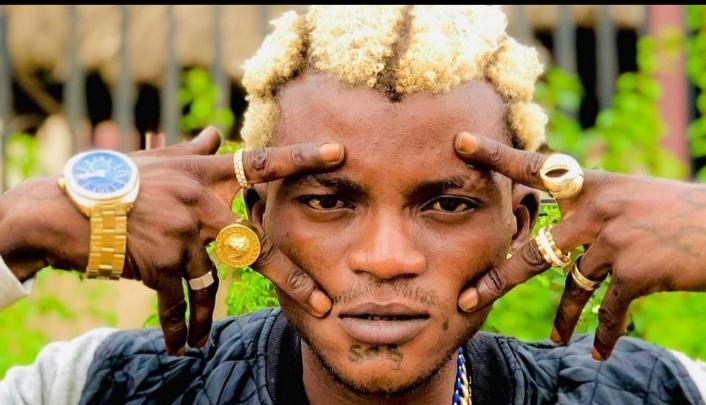
Habeeb Okikiola Badmus
Before the viral videos, before the controversies, before the chants of “Zazu Zeh” echoed across Nigeria, there was a restless boy in Ogun State who refused to be ignored. The world would later know him as Portable, but his journey began as Habeeb Okikiola Badmus — a street-born dreamer with a loud voice, unpredictable energy, and hunger that could not be silenced.
Born on March 12, 1994, in Abeokuta, Ogun State, Portable grew up in a modest environment where survival came before ambition. Life was not polished. It was raw. His early years were shaped by hustle, community noise, and the relentless rhythm of street life.
Growing Up in the Trenches
Portable did not grow up in luxury. His childhood was marked by financial struggle. Like many young boys in crowded Nigerian neighborhoods, he learned early that if you wanted something, you had to fight for it.
School was part of his upbringing, but education did not fully capture his spirit. He was restless, energetic, sometimes rebellious. His personality was larger than the room.
Music became his escape.
The streets of Abeokuta were filled with Fuji sounds, street-hop rhythms, and local chants. Portable absorbed everything. He listened to traditional Yoruba Fuji artists, street rappers, and Afrobeats stars. He admired musicians who carried bold stage presence.
He didn’t want to just sing.
He wanted to dominate attention.
The Beginning of a Street Dream
As a teenager, Habeeb began performing at small gatherings, local shows, and street carnivals. He wasn’t polished. He wasn’t refined. But he had something powerful — raw charisma.
He would shout, chant, dance wildly, and engage the crowd directly. Some laughed at him. Some dismissed him. But nobody ignored him.
He adopted the name “Portable,” symbolizing movement, flexibility, and the ability to carry his sound anywhere. Later, the nickname “Zazu” would define him even further.
Years passed without major breakthrough. He recorded songs independently. He hustled. He networked. He faced rejection repeatedly.
But giving up was not an option.
The Zazu Explosion
In 2021, everything changed.
Portable released “Zazu Zeh,” featuring Olamide and Poco Lee. The song exploded across social media and street playlists. The chant “Zazu Zeh” became unavoidable.
Suddenly, the same raw, chaotic energy that once made people doubt him became his selling point.
Olamide’s co-sign gave him credibility. The streets gave him loyalty.
Portable had arrived.
He became an overnight sensation. Shows increased. Interviews followed. His name trended constantly.
Fame and Controversy
But fame did not slow him down.
If anything, it amplified him.
Portable quickly became known not just for music, but for viral outbursts, controversial statements, and public altercations. Social media became his stage as much as concerts.
He was unpredictable. One day he was celebrating success. The next day he was arguing publicly.
Many criticized him. Some called him reckless. Others saw authenticity — a street boy who refused to pretend.
He leaned into the chaos.
Unlike carefully managed celebrities, Portable seemed unfiltered. What he felt, he said. What he thought, he expressed loudly.
The Street-Hop Identity
Musically, Portable belongs to Nigeria’s street-hop culture. His sound blends Fuji-inspired chants with Afrobeats percussion and street slang.
His songs reflect hustle, survival, betrayal, and celebration. He often references his struggles, his enemies, and his gratitude for breakthrough.
He does not try to sound international. He sounds local — unapologetically Yoruba street.
And that authenticity resonates with a particular audience.
Business Moves and Zeh Nation
As his fame grew, Portable founded his own label, Zeh Nation. He began signing artists and branding himself as more than just a singer.
He understood something important: attention is currency.
Whether positive or negative, he stayed in conversation.
Concert bookings expanded beyond Nigeria. Diaspora audiences were curious. Social media engagement remained high.
He turned controversy into marketing.
Legal Troubles and Public Scrutiny
Portable’s journey has not been smooth.
He has faced arrests, public disputes, and industry conflicts. At various points, he clashed with promoters, fellow artists, and even authorities.
Each incident fueled headlines.
Yet, each time, he bounced back.
For some fans, this resilience reinforces his “street survivor” image. For critics, it raises concerns about discipline and long-term stability.
But one thing is certain: he refuses to fade quietly.
Personal Life
Portable is a father and often shares moments with his children online. Despite his wild public persona, glimpses of his softer side appear when he speaks about family.
His relationships have sometimes played out publicly, adding to his dramatic reputation.
Still, beneath the noise, there is a young man who once struggled for recognition and now commands attention.
Influence on Street Culture
Portable represents a new era of Nigerian street-hop artists who thrive on viral culture. Unlike earlier generations who relied solely on radio and TV, he mastered social media virality.
He embodies the unpredictable energy of Gen Z street expression.
He does not fit into traditional celebrity molds.
He is loud.
He is messy.
He is magnetic.
The Man Behind the Persona
Behind Portable’s explosive personality is Habeeb Okikiola Badmus — a boy from Abeokuta who refused to remain invisible.
His story is not one of smooth corporate planning.
It is one of raw hustle.
He did not wait for industry validation.
He forced it.
Legacy Still Being Written
Portable’s career is still evolving. Some believe he must refine his image to sustain longevity. Others argue that his authenticity is exactly what makes him unique.
From performing at small street shows to commanding major stages, his rise reflects the power of persistence and timing.
He turned one viral moment into a brand.
He transformed noise into currency.
He proved that even chaos can be strategic.
Portable’s story is still unfolding. Whether he becomes a long-term icon or remains a symbol of viral era fame depends on choices ahead.
But one truth remains undeniable.
Habeeb Okikiola Badmus came from the streets of Ogun State with nothing but volume and belief.
And he made the world listen.

Categorias
Leia Mais
Life has a way of testing us when we least expect it. At 23, I’ve seen more hardship than most people see in a lifetime. I lost my parents when I was still young. One by one, relatives who should have been there for me vanished, leaving me with nothing but memories and an aching void. After secondary school, I had dreams of furthering my education, of building a life that would honor my...

Shola kosoko Shola Kosoko is a respected Nigerian actress known for her strong presence in the Yoruba film industry. She was born on January 7, 1979, in Lagos State, Nigeria. As of 2026, she is 47 years old. She was born into a royal and theatrical family, which played a major role in shaping her career path. She is the daughter of veteran Nollywood actor and prince, Jide...

Yemi Alade Yemi Alade is one of Africa’s most celebrated female Afropop stars. She is best known for the global success of her 2014 hit “Johnny”, her energetic pan-African stage presence, and her ability to blend Afropop with highlife, dancehall, pop, and R&B while singing in multiple languages. Early Life and Background Yemi Eberechi Alade was born on March 13,...

Mark Zuckerberg’s fortune jumped by $85 billion in 2024, yet a school he co-founded for low-income children is set to close due to financial troubles—sparking public backlash. Launched in 2016 by Zuckerberg and his wife, Priscilla Chan, The Primary School in California aimed to blend education, healthcare, and social services for underprivileged families. Backed by nearly $100...

Key Strategies China Uses to Become a Great Nation — and Lessons for Nigeria 1. Long-Term National Planning China works with 20–50 year development plans that remain consistent even when leaders change. Nigeria Can Emulate By: Creating long-term national development plans that must continue regardless of party or president. Making infrastructure, education,...

