О нас
О нас
9ice The Gongo Aso Voice That Rose From Bariga to National Glory
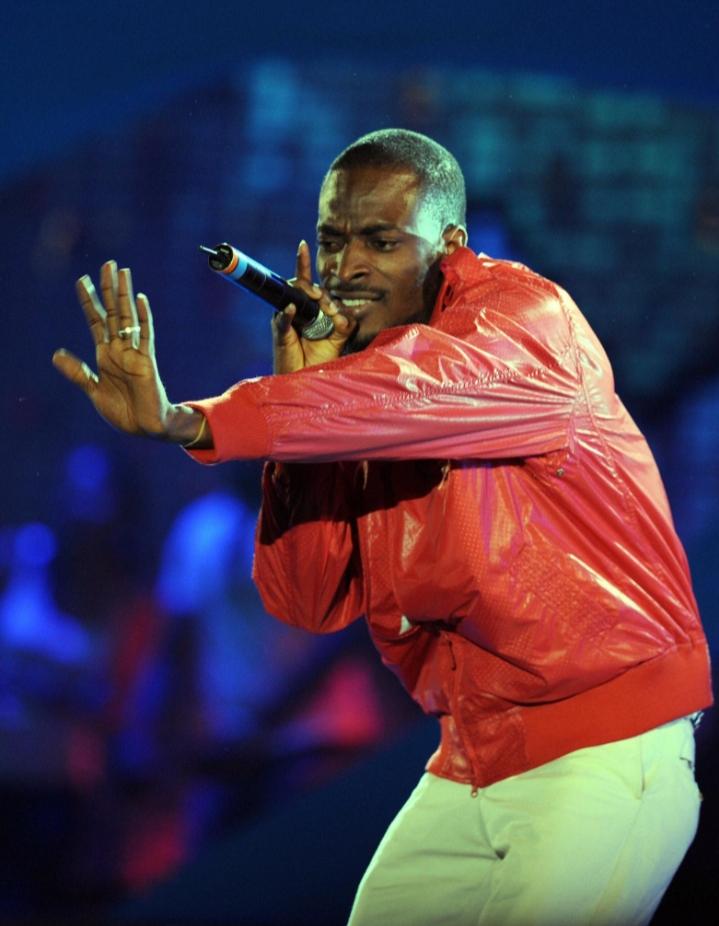
Alexander Abolore Adegbola Akande
Before the awards, before the hit records, and before crowds roared the words “Gongo Aso,” there was a young boy in Bariga, Lagos, trying to find rhythm in the noise of everyday survival. The world would later know him as 9ice, but his journey began as Alexander Abolore Adegbola Akande — a child shaped by hardship, culture, and the poetry of Yoruba language.
Born on January 17, 1980, in Ogbomosho, Oyo State, but raised in Bariga, Lagos, 9ice grew up in a large polygamous family. He was one of nine children, and life in a crowded household taught him resilience early. Resources were limited. Privacy was rare. Dreams had to fight for space.
Bariga in the 1980s and 1990s was not glamorous. It was full of hustle. Street vendors, bus conductors shouting destinations, Fuji music blasting from roadside speakers — that was the environment that shaped young Alexander.
Music was everywhere.
A Childhood Surrounded by Sound
Growing up, 9ice was deeply influenced by legendary Nigerian musicians. He listened to the works of King Sunny Ade and Ebenezer Obey. Their mastery of Yoruba proverbs, storytelling, and rhythm fascinated him. He also admired Pasuma and other Fuji stars whose music dominated the streets.
While other children were playing football, Alexander found himself drawn to lyrics. He loved words. He loved how proverbs could carry wisdom in just a few lines. He began writing songs as a teenager, often performing for friends and neighbors.
Education was important in his home, and he attended Abule Okuta Primary School before moving on to CMS Grammar School in Lagos. Though school gave him structure, music gave him identity.
Discovering His Voice
As a young man, 9ice began experimenting with music seriously in the late 1990s. The Nigerian music industry was evolving. Hip hop and R&B were gaining popularity, but traditional Yoruba influences still held power.
Unlike many artists chasing Western sounds, 9ice leaned heavily into his Yoruba roots. His voice carried a raw, emotional texture. It was not polished pop. It was deep, intense, and expressive.
His stage name “9ice” symbolized excellence and uniqueness. It represented being “nice” but in a distinct way. He wanted to stand out, not blend in.
Early in his career, he collaborated with artists like Ruggedman, gaining some underground recognition. But mainstream success did not come immediately. He faced rejection. He struggled financially. There were moments of doubt.
Still, he refused to quit.
The Gongo Aso Explosion
Everything changed in 2008 with the release of his album “Gongo Aso.” The title track became a nationwide anthem. The phrase “Gongo Aso” entered street vocabulary. His voice echoed from buses, markets, clubs, and radio stations.
The album was a masterpiece of Yoruba lyricism blended with contemporary beats. Songs like “Street Credibility” and “Photocopy” further solidified his place in the industry.
“Gongo Aso” was not just a hit; it was a cultural moment.
The album won multiple awards, including the prestigious Headies Award for Album of the Year. 9ice suddenly became one of Nigeria’s biggest stars.
His success proved that indigenous language music could dominate mainstream charts.
International Recognition
Following the success of “Gongo Aso,” 9ice’s career reached new heights. He performed internationally, representing Nigeria on global stages. He was even invited to perform at events linked to world leaders, including appearances during international diplomatic gatherings.
His music carried the depth of Yoruba culture across borders.
He became known as a modern griot — a storyteller who used rhythm to preserve wisdom.
Musical Style and Themes
9ice’s music stands out because of his lyrical depth. He often uses Yoruba proverbs, metaphors, and philosophical expressions. His songs speak about life struggles, gratitude, betrayal, politics, and survival.
Unlike many artists focused solely on partying, 9ice’s music often carries reflective themes. He sings about the streets because he lived them.
His voice — gritty, emotional, commanding — became his trademark.
He did not try to sound American. He sounded Yoruba. That authenticity became his power.
Personal Life and Public Scrutiny
Like many celebrities, 9ice’s personal life became public conversation. His marriage to Toni Payne attracted media attention, and their eventual separation made headlines.
Public scrutiny tested him. Fame brought pressure. Mistakes were amplified.
But through it all, he continued making music.
Later in life, he ventured into politics, contesting for a seat in the House of Representatives under the All Progressives Congress party. Though he did not win, the move showed his desire to influence society beyond music.
Reinvention and Longevity
Unlike artists who fade after one big album, 9ice continued releasing projects. While none matched the explosive success of “Gongo Aso,” his consistency kept him relevant.
He collaborated with younger artists, adapted to evolving sounds, and maintained his core identity.
His journey reflects both triumph and turbulence — a realistic portrait of fame.
Influence on Nigerian Music
9ice helped popularize indigenous Yoruba lyricism in mainstream Afrobeats. Many artists today confidently sing in local languages because pioneers like him proved it could succeed commercially.
He inspired a generation of musicians to embrace cultural authenticity.
His success also highlighted the importance of lyrical substance in an industry sometimes driven by trends.
The Man Behind the Music
Beyond the stage persona, Alexander Abolore Adegbola Akande is a father, a cultural custodian, and a survivor of industry highs and lows.
He represents resilience.
From the crowded rooms of Bariga to sold-out shows across Nigeria, his journey was never smooth. It was carved through determination.
Legacy
9ice’s story is not just about fame. It is about identity. It is about staying true to roots in a changing world.
When “Gongo Aso” first played on Nigerian airwaves, it felt like a declaration that Yoruba language, culture, and wisdom would not be sidelined.
Today, his name remains etched in Nigerian music history.
He rose from Bariga with nothing but a voice and words.
And that voice still echoes.


Категории
Больше
Bolaji Idowu Bolaji Idowu is a Nigerian pastor, teacher, and leadership speaker best known as the Lead Pastor of Harvesters International Christian Centre and the convener of Next Level Prayers. Harvesters says the church began on 13 December 2003 from a small gathering and has since grown into a multi-location ministry with branches in Nigeria, the United Kingdom, and the United States,...

THE WOMAN WHO ATE AT NIGHT The wardrobe smelled of old clothes, mothballs, and fear. Tolani pressed her back against the wooden wall, knees drawn to her chest, one hand clamped over her mouth so tightly her jaw ached. The other hand gripped the heavy ceramic flower vase she had picked from the dresser in blind panic. Her arms were shaking. Her teeth were chattering. Outside the...

Isabella Pov I had never known love like this dangerous, consuming, eternal. Every night with him was a dance on the edge of death, a game I had chosen to play despite knowing the stakes. And yet, for the first time in my life, I felt alive in ways I never imagined. We walked the moonlit streets together, his presence a shadow that both protected and terrified me. I knew the world...

Growing up, I thought being strong meant never crying. I watched my mother carry burdens silently, and I learned early that weakness was not welcomed in our home. So I trained myself to endure everything quietly pain, disappointment, betrayal. People admired my strength. They came to me with their problems, leaned on my shoulders, and trusted me to be unbreakable. What...
The Nigerian Air Force (NAF) has clarified that the 11 officers and a C-130 military transport aircraft reportedly seized in Burkina Faso have not yet been released, while firmly rejecting allegations that the mission was linked to espionage. In a statement, the NAF spokesperson dismissed claims that the aircraft was forced to land on suspicion of spying, explaining that the C-130 was on a...