About
About
Sefi Atta: The Quiet Fire Behind Nigeria’s Powerful Stories

Sefi Atta:
Some writers shout. Others whisper so clearly that the whole world leans in to listen. The life of Sefi Atta belongs to the second kind. Her stories do not rely on noise or spectacle. Instead, they unfold gently, exposing the quiet struggles of women, families, and societies navigating change.
Sefi Atta did not set out to become a global literary voice. She simply began by observing the world around her. But those observations, layered with honesty and discipline, would one day carry Nigerian stories far beyond its borders.
This is the journey of a girl from Lagos who grew into one of Africa’s most respected novelists.
A Childhood in Lagos
Sefi Atta was born in Lagos, Nigeria, in 1964. Lagos in the 1960s and 1970s was a city bursting with ambition. Oil wealth was beginning to reshape the country. Urban life was expanding. Politics was unpredictable, but culture was alive.
She grew up in a middle class Nigerian household where education was not optional. It was expected. Her father was a civil servant who valued discipline, structure, and public service. Her mother managed the home with grace and strength, embodying the resilience of Nigerian womanhood.
As a child, Sefi was observant rather than loud. She noticed small things. The way adults spoke in coded language. The way women laughed differently when men were present. The invisible rules governing class and gender.
These early observations would later become the foundation of her fiction.
She attended Queen’s College, Lagos, one of Nigeria’s prestigious girls’ schools. There, she encountered a blend of discipline and independence. The school environment nurtured ambition but also exposed the social expectations placed on young Nigerian girls.
Leaving Home to Find Perspective
After completing her secondary education, Sefi Atta moved abroad for higher studies. Like many Nigerians of her generation, she traveled to the United Kingdom.
She studied accounting at Birmingham University. It was a practical choice. Writing was not yet her declared ambition. Stability and professional credentials seemed more urgent.
Later, she studied law at the College of Law in London and qualified as a chartered accountant. She had built a solid career path, respectable and secure.
But beneath that structured life, stories were quietly forming.
Living abroad sharpened her awareness of identity. She was Nigerian in Britain. African in a Western society. A woman navigating multiple expectations.
She saw how Africa was often misunderstood. She noticed how migration complicated belonging. These experiences slowly nudged her toward storytelling.
Discovering the Writer Within
It was not until later that Sefi Atta formally studied creative writing. She enrolled in a Master of Fine Arts program in Creative Writing at Antioch University in the United States.
That decision changed everything.
For the first time, writing was no longer a private interest. It was serious work. She learned structure, pacing, dialogue, and the discipline required to transform ideas into novels.
But even with formal training, her voice remained deeply Nigerian. She did not write to imitate Western narratives. She wrote about Lagos streets, family tensions, military regimes, and the emotional lives of Nigerian women.
Her stories were not loud revolutions. They were intimate revelations.
The Breakthrough Novel
In 2005, Sefi Atta published her first novel, Everything Good Will Come.
The novel follows Enitan, a Nigerian woman growing up during the political turbulence of the 1970s and 1980s. Through Enitan’s eyes, readers witness friendship, betrayal, gender expectations, and Nigeria’s shifting political landscape.
The novel was not dramatic in a sensational way. Instead, it was deeply human. It captured the interior life of a woman struggling to reconcile independence with cultural expectation.
Critics praised the book for its authenticity and emotional depth. It won the Wole Soyinka Prize for Literature in Africa and established Sefi Atta as a major literary voice.
But more importantly, it resonated with readers who saw themselves reflected in Enitan’s journey.
Writing Women as Whole Human Beings
One of Sefi Atta’s defining strengths is her portrayal of women. She does not romanticize them. She does not turn them into symbols. She allows them to be complex.
Her female characters make mistakes. They love imperfectly. They question tradition. They wrestle with ambition and guilt.
In her later novel Swallow, she explores the story of young women entangled in drug trafficking in 1980s Lagos. The book examines economic pressure, moral compromise, and survival in a harsh environment.
Again, her approach is layered. She avoids simplistic judgment. Instead, she reveals the circumstances that push ordinary people toward dangerous choices.
Swallow was later adapted into a film, bringing her storytelling to a new audience.
Themes That Define Her Work
Across her novels and short stories, several themes appear consistently:
Identity
Migration
Gender roles
Political instability
Family obligation
Class tension
Sefi Atta writes about Nigeria without romanticism. She neither condemns nor glorifies. She simply observes.
Her characters often stand at crossroads between tradition and modernity. They are educated yet constrained. Ambitious yet cautious. Loving yet frustrated.
Through them, she captures the quiet tension of societies in transition.
Beyond the Novel
Sefi Atta’s work extends beyond novels. She has written plays, radio dramas, and short stories. Her storytelling adapts to different mediums while maintaining emotional clarity.
She has taught creative writing and mentored younger writers. She participates in literary festivals around the world, contributing to conversations about African literature and representation.
Despite international recognition, she maintains a low profile. She is not known for dramatic public statements or controversy. Instead, her authority comes from consistency and craft.
A Voice Among Giants
Sefi Atta belongs to a powerful generation of Nigerian writers that includes Chimamanda Ngozi Adichie and Wole Soyinka.
Yet her style remains distinct.
Where some writers confront politics directly, Atta often embeds politics within domestic life. She shows how national events ripple through kitchens, marriages, and friendships.
Her quiet fire burns steadily.
Balancing Two Worlds
For many years, Sefi Atta lived between Nigeria and the United States. That dual existence deepened her understanding of migration and displacement.
She understands the longing for home and the frustration with it. She understands the pride and the disappointment that coexist within diasporic identity.
Her later works, including A Bit of Difference, explore the life of a Nigerian woman working in London who returns home to confront both nostalgia and reality.
Through such narratives, Atta reminds readers that identity is rarely simple.
Discipline Over Drama
Unlike some literary figures who build fame through controversy, Sefi Atta has built hers through discipline.
She writes steadily. Revises carefully. Publishes thoughtfully.
Her strength lies not in spectacle but in craft.
She once suggested that storytelling requires patience. That patience shows in her layered characters and realistic dialogue.
The Legacy Still Growing
Sefi Atta’s work is studied in universities worldwide. Her novels appear on reading lists exploring postcolonial literature and feminist narratives.
But beyond academic recognition, her impact is personal. Many readers see their own lives mirrored in her pages.
Young Nigerian women, especially, find comfort in her honest portrayals. She affirms that ambition and cultural loyalty can coexist, though not without tension.
The Meaning of Her Story
Sefi Atta’s biography is not defined by scandal or dramatic rebellion. It is defined by steady courage.
She chose writing over silence. She chose complexity over stereotype. She chose authenticity over performance.
From a disciplined schoolgirl in Lagos to an internationally respected novelist, her journey reflects the power of observation and persistence.
She reminds us that revolution does not always roar. Sometimes it speaks softly, sentence by sentence, until the world begins to listen differently.
Sefi Atta continues to write, continuing to shape the narrative of contemporary Nigeria through intimate storytelling.
Her life proves that stories matter not because they shout, but because they reveal.
And in revealing, they transform.

Categories
Read More
Growing up, I thought being strong meant never crying. I watched my mother carry burdens silently, and I learned early that weakness was not welcomed in our home. So I trained myself to endure everything quietly pain, disappointment, betrayal. People admired my strength. They came to me with their problems, leaned on my shoulders, and trusted me to be unbreakable. What...
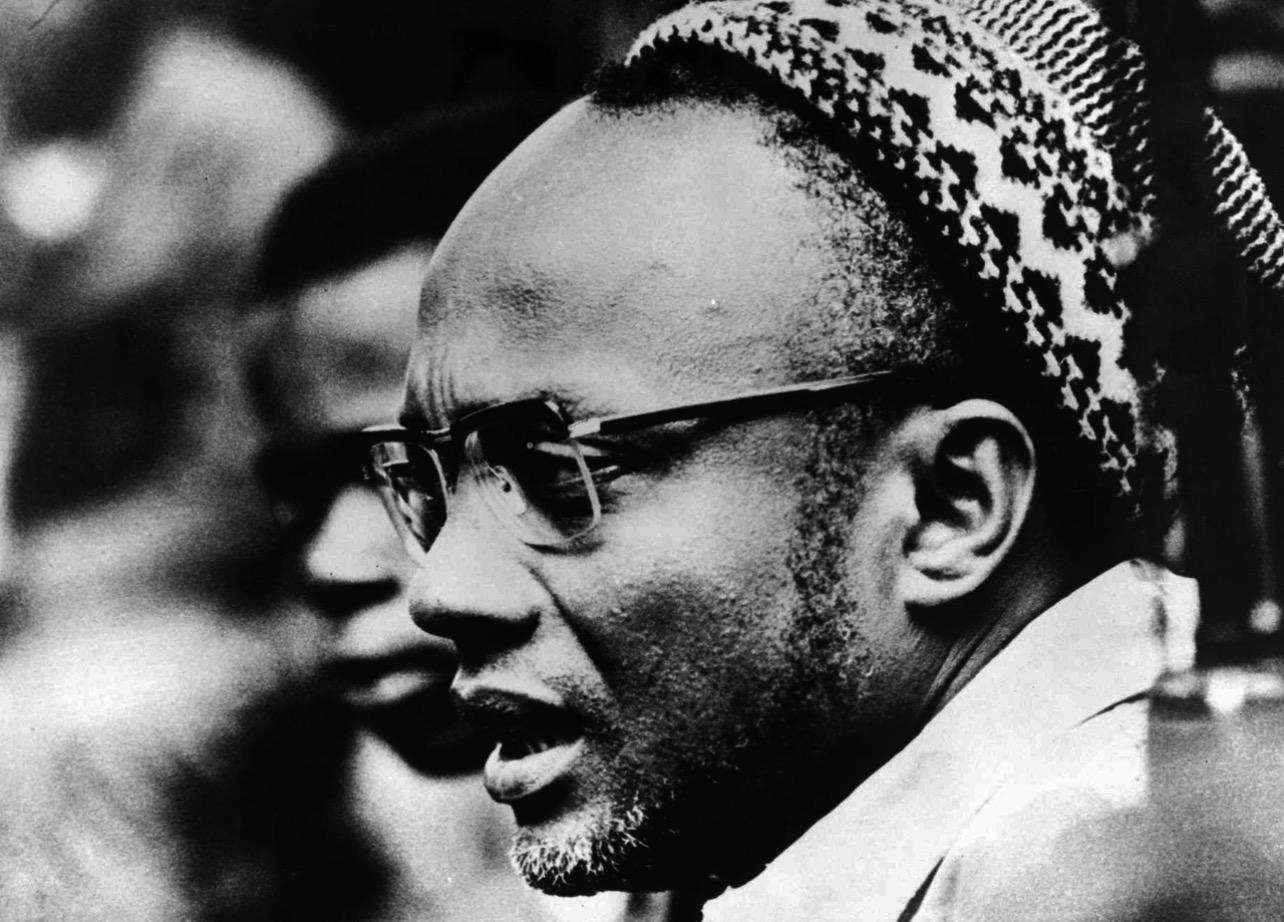
Amílcar Cabral Early Life and Background Amílcar Cabral was born on September 12, 1924, in Bafatá, a town in what is now Guinea-Bissau. At that time, the land was under Portuguese colonial rule. His parents were Cape Verdean, and they valued education deeply, even though life was not easy. As a young boy, Cabral grew up between Guinea-Bissau and Cape Verde. He...
I didn’t start talking to her because I liked her. I started talking to her because people were cruel. In our area, being a single mother was a label heavier than any bag she carried. Neighbors whispered when she passed. Friends avoided sitting close to her. Even her parents looked at her with disappointment, as if her mistake had erased every good thing she had ever been. I saw...

Timini Egbuson Timini Egbuson is a prominent Nigerian actor, model, and media personality widely regarded as one of the leading faces of contemporary Nollywood. Known for his charming screen presence, confident personality, and versatility in romantic and dramatic roles, Timini has carved a unique space for himself in Nigeria’s fast-growing film industry. Over the years, he has...

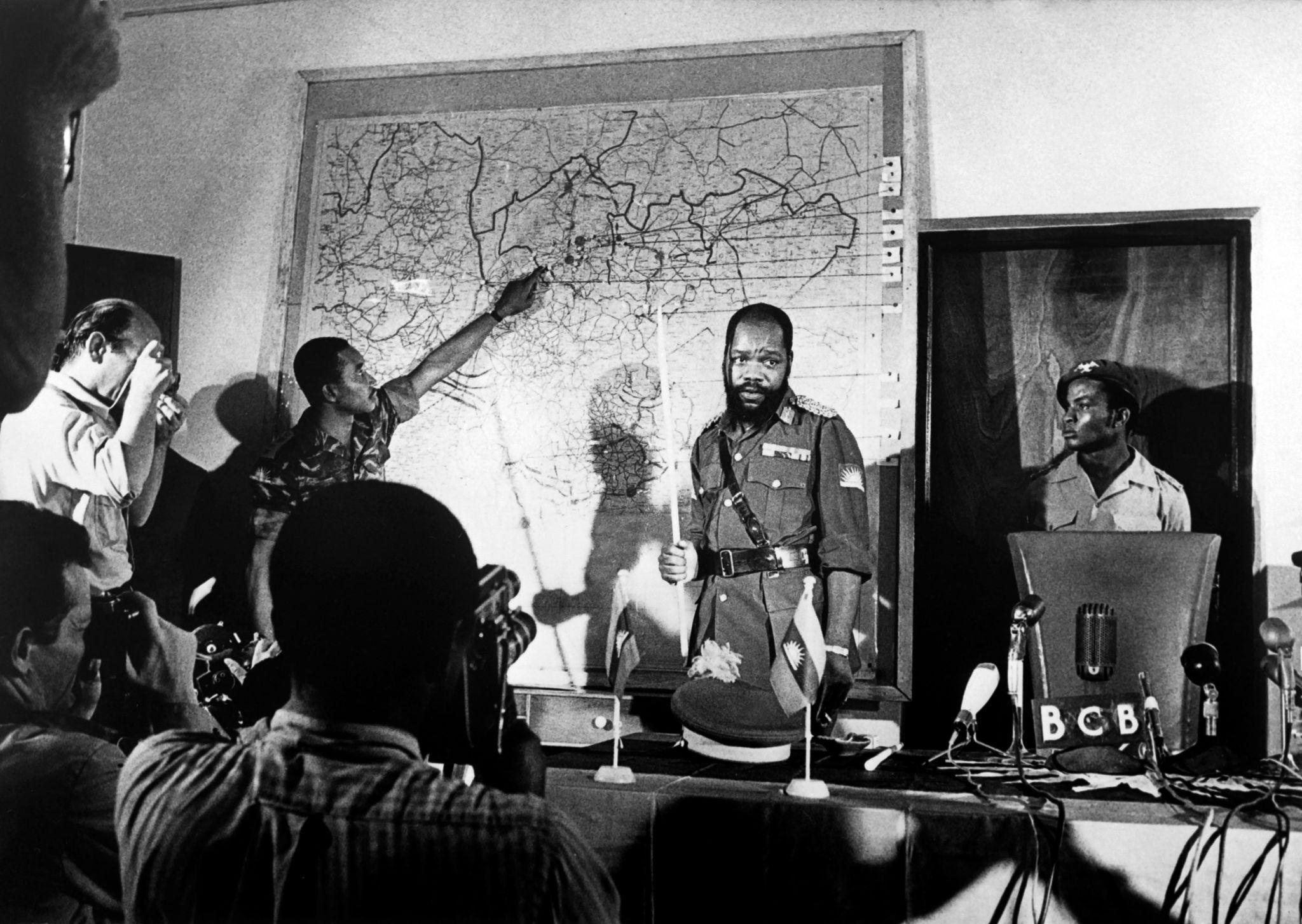
A Full Historical Account The Biafra War, officially known as the Nigerian Civil War, was fought between 1967 and 1970. It remains one of the most consequential and tragic conflicts in African history, claiming over one million lives, most of them civilians. The war reshaped Nigeria’s political structure, ethnic relations, and national identity, leaving wounds that still influence the...