


 About
About
ZUMA ROCK
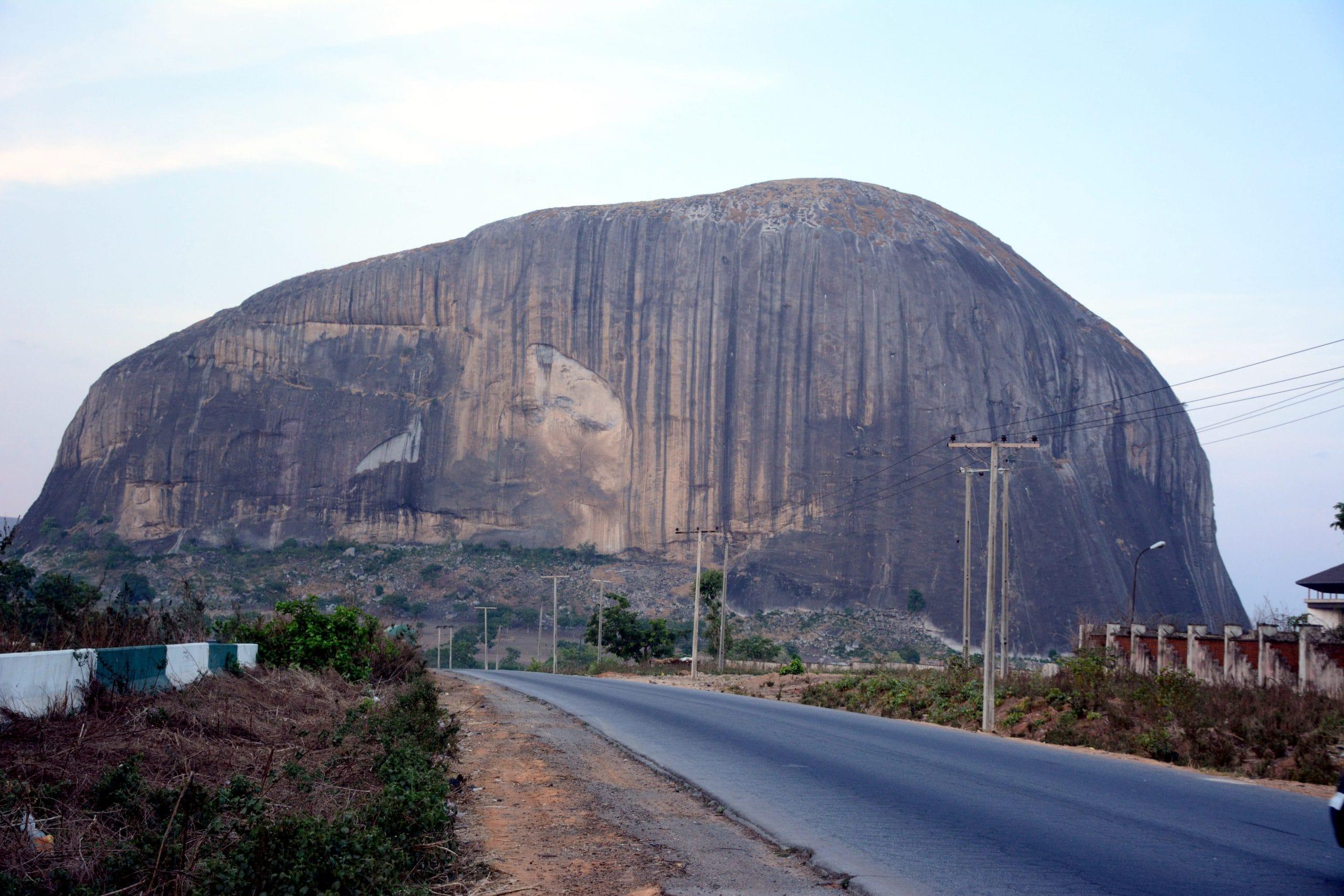
Zuma Rock
Zuma Rock is one of Nigeria’s most famous natural landmarks. Located in Madalla, Niger State,just along the Abuja–Kaduna Expressway, it stands as a powerful symbol of strength, mystery, and cultural pride. Often called the “Gateway to Abuja,” Zuma Rock welcomes visitors entering Nigeria’s capital city.
Location and Physical Features
Zuma Rock rises about 725 meters (2,379 feet) above its surroundings, making it taller than "Aso Rock"and even taller than Olumo Rock,Unlike many rocks that sit on hills, Zuma Rock stands alone on flat land, which makes it appear even more massive and majestic.
One of its most fascinating features is the *natural human face*visible on one side of the rock. Many people believe the face represents a protective spirit watching over the land and its people.
Historical and Cultural Significance
Zuma Rock holds deep spiritual and cultural meaning, especially for the Gwari (Gbagyi) people,the original inhabitants of the area.
Origin of the Name
The name “Zuma” is believed to have come from the Gbagyi word “Zubam”,meaning “catch guinea fowl.”According to local stories, hunters once used the rock as a hiding place to catch guinea fowls in the surrounding forest.
Spiritual Beliefs
For centuries, the Gbagyi people considered Zuma Rock a sacred place. It was believed to:
* Serve as a protective deity
* Provide refuge during inter-tribal wars
* Possess spiritual powers that protect the community
Some legends say that the rock sometimes catches fire after rainfall, which strengthens local beliefs about its mystical powers.
Zuma Rock in Ancient Times
Historically, Zuma Rock served as a natural fortress. During times of conflict, local communities hid within its caves and surrounding forests for protection. Its height and location made it easy to spot enemies from a distance.
The rock also became a landmark for travelers and traders moving between northern and southern Nigeria.
Modern Importance
When Abuja became Nigeria’s capital in 1991, Zuma Rock gained even more national attention. Today, it is:
* A major **tourist attraction
* A national symbol of unity and strength
* Featured on the **₦100 Nigerian currency note
Many visitors stop to take photographs when traveling between Abuja and Kaduna.
Tourism and Development
Over the years, there have been plans to develop the area around Zuma Rock into a major tourist center, including proposals for resorts and recreational parks. However, most of the rock remains in its natural state.
Tourists visit to:
* Take pictures
* Explore nearby caves
* Learn about Gbagyi culture
* Enjoy the scenic viewFun Facts About Zuma Rock
* It is often called “The Gateway to Abuja.”
* It is taller than Aso Rock.
* It has visible caves and indentations.
* The “human face” becomes more visible at certain angles and lighting.
* It appears on Nigeria’s ₦100 note.
Conclusion
Zuma Rock is more than just a massive stone formation. It represents history, spirituality, protection, and national pride. From ancient tribal refuge to modern national symbol,continue to stand tall,watching Nigeria like the face carved into its surface .....

Categories
Read More
Justice Emeka Nwite of the Federal High Court in Abuja has ordered the permanent forfeiture of $49,700 recovered from former INEC Resident Electoral Commissioner (REC) in Sokoto, Nura Ali, during the 2023 general elections. The ruling followed an application by the Independent Corrupt Practices and Other Related Offences Commission (ICPC) after no claimant came forward during the public notice...

Public outrage has erupted in Delta State after a viral video showed some police officers allegedly brutalising a young motorist and unlawfully driving away with his car in Asaba, the state capital. The disturbing footage, obtained on Tuesday, captured at least three officers confronting the victim after stopping his vehicle. While two officers restrained the young man by holding his hands,...

THE QUIET RECOVERY Doña Margarita recovered slowly not like a miracle, but like a human being. Some days she had faint echoes of pain. Some nights she woke sweating. But she laughed again. She ate. She watched her favorite soap operas and criticized everyone’s acting like she always had. One morning, she asked Alejandro to open the curtains. Sunlight spilled into the room....

**Victoria’s POV** Hiding love is harder than people think. By Friday, Daniel and I had agreed to keep our relationship quiet at work. Not because we were ashamed, but because we wanted peace. Still, knowing he was so close and yet untouchable felt like punishment. That morning, I dressed carefully, choosing an outfit that wouldn’t draw attention. When I arrived at...

Bisola Adebayo (Eyin Oka) Bisola Adebayo, popularly known as Eyin Oka, is a respected Nigerian actress, filmmaker, and producer in the Yoruba segment of Nollywood. Over the years, she has built a reputation for her emotional depth, cultural authenticity, and strong screen presence. Her nickname “Eyin Oka,” which translates from Yoruba as “back of the corn,” became a...

