About
About
Lionel Messi, Football Legend, Argentina World Cup Winner
Lionel Messi
Lionel Andrés Messi is widely regarded as one of the greatest footballers in the history of the sport. His life story is not just about trophies and goals. It is about a small boy from Rosario who faced a medical condition that threatened his dream, a teenager who crossed the ocean with his family for a chance at survival in football, a young prodigy who became the heart of a historic club era, and a man who carried the hopes of an entire nation before finally lifting the most coveted prize in world football.
Because he is still alive and active in football at the time of writing, there is no account of his death. Instead, what can be told in full detail is the remarkable journey of his life so far and the chapters that shaped him into a global icon.
Early life in Rosario
Lionel Messi was born on June 24, 1987 in Rosario, Santa Fe, Argentina. He grew up in a working class family. His father Jorge Messi worked in a steel factory and also coached a local youth football team. His mother Celia Cuccittini worked in a magnet manufacturing workshop. Messi was the third of four children, with two older brothers Rodrigo and Matias and a younger sister Maria Sol.
Football was not a distant dream in his household. It was part of daily life. His father coached him at a young age at a local club called Grandoli. From the beginning, Messi displayed unusual balance, coordination, and control. He was small compared to other children, but he moved with quickness and confidence. By the age of eight, he joined Newell's Old Boys, one of Rosario’s well known clubs. There he became part of a youth team nicknamed The Machine of 87, referencing the year of birth shared by several talented players.
Growth hormone deficiency and uncertainty
At the age of ten, Messi was diagnosed with a growth hormone deficiency. The treatment required expensive injections that his family struggled to afford. Without the treatment, his growth would be severely limited, and his football prospects uncertain. The condition could have ended his dream before it truly began.
His family sought help from larger Argentine clubs, including River Plate, but no club committed to covering the medical costs. At that crucial moment, a lifeline appeared from Spain.
Move to Barcelona
In 2000, at the age of thirteen, Messi traveled to Spain with his father for a trial at FC Barcelona. The club’s sporting director Carles Rexach was reportedly so impressed with the young Argentine’s talent that he agreed to sign him, famously drafting a contract on a paper napkin to secure the deal.
Barcelona agreed to pay for his medical treatment. The move required immense sacrifice. Messi and his father relocated to Spain, leaving much of the family behind in Argentina initially. The young teenager faced homesickness, cultural adjustment, and the pressure of proving that Barcelona’s investment in him was worthwhile.
La Masia and development
Messi joined La Masia, Barcelona’s youth academy, where he refined his skills in a system built on technical mastery and possession football. Despite his small stature, he developed strength, balance, and extraordinary dribbling ability. Coaches noticed not just his technical gifts but his quiet determination.
He progressed rapidly through the youth ranks. In 2004, at just seventeen years old, he made his official debut for the Barcelona first team in a league match against Espanyol. He became the youngest player at that time to represent Barcelona in La Liga.
Rise to stardom
The departure of Ronaldinho’s era coincided with Messi’s emergence as Barcelona’s central figure. Under coach Pep Guardiola, Barcelona built one of the greatest teams in football history. Alongside Xavi Hernandez and Andres Iniesta, Messi became the focal point of a style known for fluid passing and intelligent movement.
In 2009, Barcelona won an unprecedented six trophies in a single calendar year, including La Liga, Copa del Rey, and the UEFA Champions League. Messi’s performances were extraordinary. He scored in the Champions League final against Manchester United, sealing his status as a global superstar.
Ballon d'Or dominance
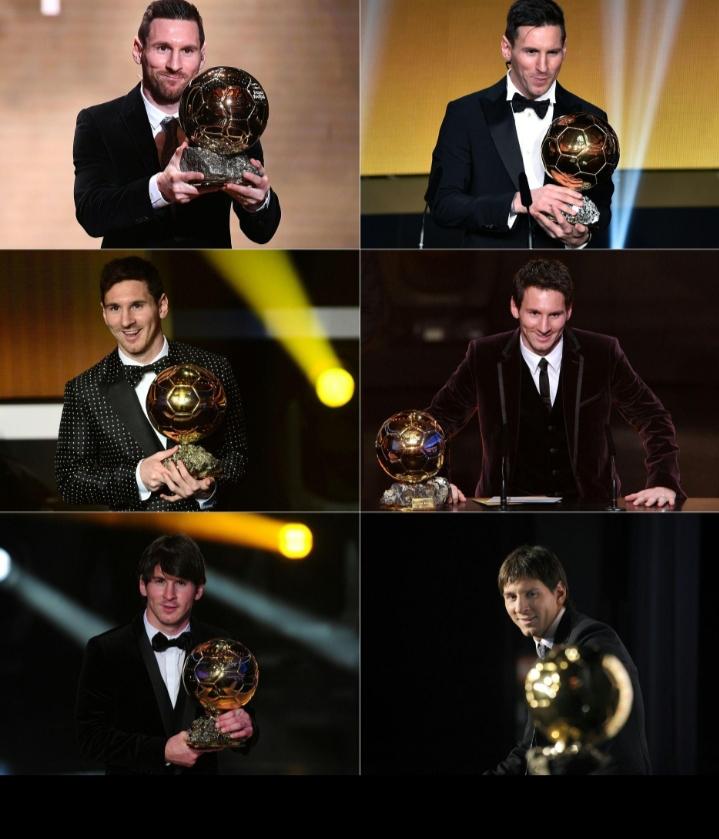
Between 2009 and 2012, Messi won four consecutive Ballon d'Or awards, recognizing him as the best player in the world. In the 2011 to 2012 season, he scored an astonishing 73 goals in all competitions for Barcelona, breaking long standing records. His playing style combined low center of gravity, close ball control, acceleration, and vision. Defenders struggled to contain him.
He continued collecting domestic titles with Barcelona, winning multiple La Liga championships and Champions League trophies. By the late 2010s, he had become Barcelona’s all time top scorer.
International heartbreak
While Messi enjoyed immense success at club level, his journey with the Argentina national team was marked by heartbreak for many years. He represented Argentina at youth levels, winning the Under 20 World Cup in 2005 and the Olympic gold medal in 2008.
However, senior international tournaments brought disappointment. Argentina reached the World Cup final in 2014 but lost to Germany in extra time. Messi was awarded the Golden Ball as the tournament’s best player, yet the defeat weighed heavily on him.
Argentina also lost consecutive Copa America finals in 2015 and 2016. After the 2016 loss to Chile, a visibly emotional Messi announced his retirement from international football. The reaction in Argentina was immediate and passionate. Public appeals urged him to reconsider. He eventually returned to the national team.
Copa America triumph
In 2021, Argentina finally broke their long drought by winning the Copa America. The victory came against Brazil at the Maracana Stadium. Messi played a crucial role throughout the tournament, scoring and assisting key goals. The image of him lifting a major international trophy for Argentina became a defining moment in his career.
Departure from Barcelona
In 2021, financial difficulties at Barcelona led to one of the most shocking developments in football history. Despite both Messi and the club expressing a desire to continue together, La Liga’s financial regulations prevented Barcelona from registering a new contract for him.
In an emotional press conference, Messi confirmed his departure from the club he had joined as a teenager. He left Barcelona as their all time leading scorer and one of the most decorated players in their history.
Paris Saint Germain
Messi signed with Paris Saint Germain in August 2021. His time in France brought league titles but also mixed reactions from fans. While he showed moments of brilliance, the experience differed from his deep roots in Barcelona.
World Cup glory
The pinnacle of Messi’s career came in December 2022 at the FIFA World Cup in Qatar. Argentina advanced to the final against France. The match became one of the greatest finals in football history. Messi scored twice during regular time and converted his penalty in the shootout. Argentina won the World Cup.
The image of Messi lifting the World Cup trophy fulfilled a lifelong dream and silenced long standing debates about his international legacy. For many fans, this victory cemented his status as the greatest player of all time.
Move to Inter Miami
In 2023, Messi chose to join Inter Miami in Major League Soccer. His arrival transformed the club and significantly boosted the popularity of football in the United States. He won the Leagues Cup with Inter Miami, continuing to influence the sport globally even outside Europe’s major leagues.
Personal life
Messi married Antonela Roccuzzo in 2017. The couple had known each other since childhood in Rosario. They have three sons Thiago, Mateo, and Ciro. Despite immense fame, Messi has often been described as reserved and family oriented. He has also been involved in charitable efforts through the Leo Messi Foundation, supporting access to education and health care for vulnerable children.
Legal challenges
In 2016, Messi and his father were convicted in Spain for tax fraud related to image rights income. Both were given suspended prison sentences, meaning they did not serve jail time, and were fined. Messi stated that he relied on financial advisors and did not knowingly commit wrongdoing. The case became part of the complex reality of global sports finances.
Playing style and influence
Messi’s playing style is defined by dribbling precision, vision, passing range, and goal scoring instinct. He can operate as a forward, playmaker, or deeper creative presence. His ability to control the ball in tight spaces is often described as unmatched.
He has inspired a generation of players and redefined expectations of consistency at the highest level. His rivalry with Cristiano Ronaldo dominated football discourse for over a decade, pushing both players to extraordinary achievements.
Current status and legacy
As of now, Lionel Messi remains alive and continues to play professional football. There is no chapter about what happened before he died because that chapter has not been written. Instead, his life continues to evolve.
His legacy already includes multiple Ballon d'Or awards, numerous league titles, Champions League trophies, Copa America success, and the ultimate prize of the World Cup. Beyond statistics, he represents perseverance, loyalty to roots, and the triumph of talent over early adversity.
From a small boy in Rosario facing medical uncertainty to a global icon lifting the World Cup, Lionel Messi’s story is one of resilience, brilliance, and historic achievement. And unlike many legends whose stories end in tragedy, his continues to unfold in real time, watched by millions around the world.

Categorías
Read More
Margaret Thatcher Margaret Thatcher was a British politician who served as the Prime Minister of the United Kingdom from 1979 to 1990. She was the first woman to hold the office and became one of the most influential and controversial leaders in modern British history. Her full name was Margaret Hilda Thatcher, and she was born on October 13, 1925, in Grantham, England. Early Life and...
The All Progressives Congress (APC) has declared that Osun State must be reclaimed ahead of the 2027 general elections, describing the state as strategically important to President Bola Ahmed Tinubu. National Organising Secretary Sulaiman Argungu stated that the party will rely on the guidance of the Osun APC Elders’ Council in selecting its 2026 governorship candidate. He made the...
Prosecutors from the Delta State Ministry of Justice have admitted they lack witnesses in the cyberstalking case against detained child rights activist, Comrade Ighorhiohwunu Aghogho. The admission came on Monday, June 16, before Justice H.A. Nganjiwa at the Federal High Court in Warri, during the resumed hearing of Federal Republic of Nigeria v. Ighorhiohwunu Aghogho (Charge No:...
Ne Muanda Nsemi Early Life Ne Muanda Nsemi was born on September 1, 1946, in the Kongo Central region of the Democratic Republic of Congo. His birth name was Zacharie Badiengila. He grew up in a traditional Kongo environment where history, spirituality, and cultural identity were deeply respected. From a young age, he showed strong intelligence and curiosity. He listened to elders...
Senator Orji Uzor Kalu, representing Abia North, has called on President Bola Tinubu to dismiss some ministers and security chiefs, citing their poor performance and lack of tangible contributions to national progress. Speaking on Politics Today, a Channels Television programme aired Monday, the former Abia State governor said the President must make “bold and courageous” decisions...