Environ
The Kiriji War (Ekiti Parapo War / Yoruba Civil War), 1877–1893
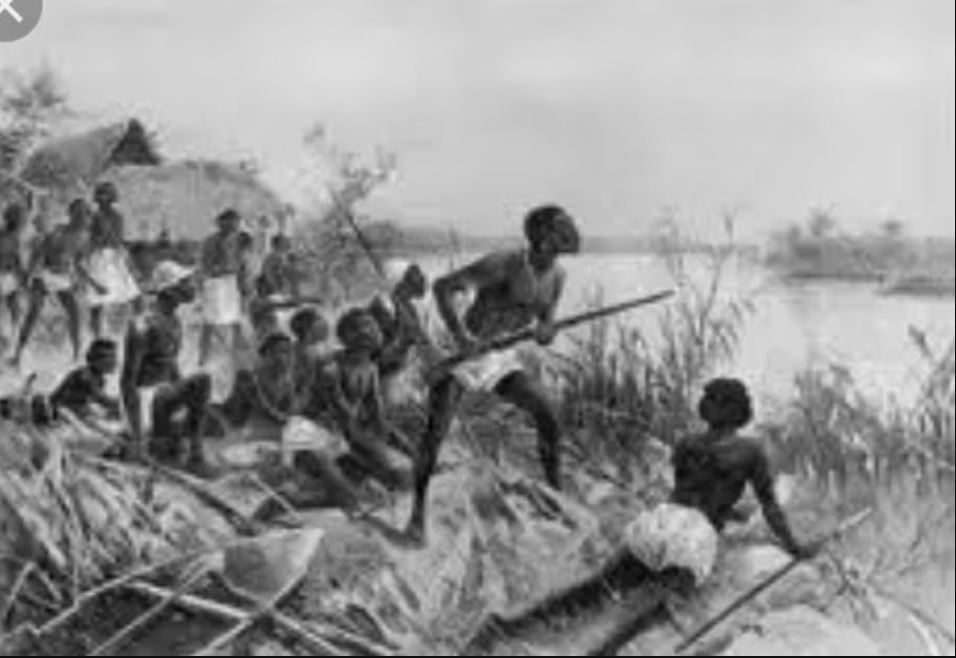
A Historical Account
The Kiriji War, also known as the Ekiti Parapo War or more broadly the Yoruba Civil War, was a prolonged conflict fought between 1877 and 1893. Lasting over sixteen years, it ranks among the longest civil wars in African history and marked a decisive turning point in the political history of the Yoruba people.
Historical Background
The roots of the Kiriji War lie in the collapse of the Oyo Empire in the early nineteenth century. As the empire weakened, central authority disappeared, leaving former provinces and military settlements to operate independently. In this vacuum, several powerful city-states emerged.
Foremost among them was Ibadan, a city founded by warriors and governed by military leaders rather than hereditary kings. By the mid-1800s, Ibadan had become the dominant military power in Yorubaland, extending its influence over large areas of eastern Yoruba territory.
Ibadan Rule and Eastern Yoruba Resistance
Ibadan controlled its territories through appointed military administrators known as ajeles. Their rule was often harsh, characterized by heavy taxation, forced levies, political interference, and frequent abuses of power. Communities in Ekiti, Ijesa, Akoko, Igbomina, and neighboring regions increasingly viewed Ibadan’s authority as oppressive.
Over time, resentment grew, and eastern Yoruba states began to organize resistance against Ibadan’s dominance.
Formation of the Ekiti Parapo Alliance
In 1877, several eastern Yoruba groups formed a defensive military alliance known as Ekiti Parapo, meaning “Ekiti united.” The alliance brought together multiple towns and kingdoms with a shared objective: to break free from Ibadan’s political and military control.
This alliance marked the formal beginning of the Kiriji War.
Nature and Course of the War
The war was characterized by intense fighting, defensive fortifications, and prolonged stalemates. Both sides had access to firearms acquired through coastal trade, which significantly increased the scale and destructiveness of the conflict.
The name “Kiriji” is believed to have originated from the thunderous sound produced by newly introduced explosive weapons, a sound witnesses described as kiriji, kiriji. This marked a shift from traditional Yoruba warfare to gunpowder-based combat.
Despite numerous battles, neither Ibadan nor the Ekiti Parapo forces achieved decisive victory. The conflict dragged on year after year, becoming a war of attrition.
Social and Economic Impact
The prolonged war had devastating consequences:
-
Many towns and villages were destroyed
-
Agricultural production collapsed
-
Trade routes were disrupted
-
Famine and disease spread
-
Large populations were displaced
Thousands were killed, while many captives were enslaved or sold. Traditional political institutions weakened as military leaders gained greater influence over civil affairs.
Foreign Mediation and the End of the War
By the 1880s, the conflict had severely destabilized the region, alarming European missionaries and traders, particularly the British, whose commercial and evangelical activities were threatened.
British officials intervened diplomatically, presenting themselves as neutral mediators. In 1886, a ceasefire agreement was negotiated under British supervision. Although sporadic fighting continued for several years, active hostilities gradually declined.
By 1893, the Kiriji War had effectively come to an end.
Aftermath and Historical Significance
The war ended Ibadan’s dominance over eastern Yorubaland and granted the Ekiti Parapo states relative autonomy. However, the prolonged conflict had exhausted all parties involved.
The greatest beneficiary was Britain, as the weakened Yoruba states were unable to resist colonial expansion. Within a few years, Yorubaland was brought under British colonial rule.
Conclusion
The Kiriji War marked:
-
The end of large-scale inter-Yoruba warfare
-
The collapse of precolonial military power structures
-
The transition from indigenous political control to colonial domination
It stands as a defining episode in Yoruba history—a conflict that reshaped society, altered political boundaries, and paved the way for colonial rule in southwestern Nigeria.

Catégories
Lire la suite
Nigerian music sensation Rema has just made Afrobeats history! His iconic album, Rave & Roses Ultra, has officially crossed a jaw-dropping 3 billion streams on YouTube Music — the first African album to ever hit that milestone. Released as a deluxe version of his 2022 breakout album Rave & Roses, the Ultra edition delivered global hits like “Calm Down (Remix)”...

James Ibori James Ibori is one of the most controversial and influential political figures in Nigeria’s modern history. His story blends ambition, political dominance, business interests, international legal battles, and a dramatic fall and return. It is a story of power gained, power challenged, and a legacy still debated. Early Life and Humble Origins James Onanefe...

According to Vanguard, Former Senate President, Dr. Abubakar Bukola Saraki, has revealed that his official portrait was excluded from the Senate Gallery honouring past presiding officers for four years, a development he described as “unfortunate but telling.” Speaking during a recent visit to the National Assembly, Saraki confirmed that the omission had remained unresolved until the...

In the dusty streets of Greenville, South Carolina, a young boy grew up watching a divided America. He saw two worlds. One white. One Black. One privileged. One struggling. And even as a child, Jesse Louis Jackson felt something burning inside him — a refusal to accept that this was the way life had to be. Born in 1941 to a teenage mother, his start in life was far from easy. Poverty...

Seyi Shay Seyi Shay is a Nigerian singer, songwriter, actress, and television personality known for her powerful vocals, international background, and contribution to the growth of Afrobeats. With a career spanning over a decade, she has built a reputation as one of Nigeria’s most versatile female artists. Early Life and Background Seyi Shay was born Deborah...