Are Terrorists Fleeing U.S. Airstrikes in Sokoto Now Spreading Violence Into Benue? Why Agatu Council Chairman Says Armed Groups Have Infiltrated Communities, Forced Policy Reversals, and Triggered a New Security Crisis
Are counterterrorism operations in one part of Nigeria unintentionally pushing violence into other states? That is the concern raised by the Chairman of Agatu Local Government Area in Benue State, James Melvin Ejeh, who says armed groups displaced by recent U.S.–Nigerian military airstrikes in Sokoto State are now infiltrating communities in his region.
According to Ejeh, terrorists targeted in coordinated air operations in December have not been eliminated but instead relocated across state borders, spreading insecurity into rural Benue communities. He described a surge in attacks on Agatu villages, warning that innocent residents are now facing “unprecedented terror” as fleeing fighters establish new footholds.
The council chairman said intelligence reports and local accounts indicate that the militants, after being dislodged from Sokoto, are moving into neighbouring states, with Agatu among the hardest hit. He stressed that what was intended as a strategic blow against terrorism may now be creating a dangerous spillover effect, exposing vulnerable farming communities to renewed violence.
In response to the escalating attacks, Ejeh announced a decisive policy shift: the immediate cancellation of a 2017 grazing agreement that allowed herdsmen access to Adepati Island. He argued that the agreement, originally framed as a peacebuilding measure, had instead compromised community safety and enabled armed elements to operate within Agatu territory.
Describing the pact as an arrangement made “under the guise of promoting peaceful coexistence,” Ejeh accused previous local administrations of placing diplomacy above the security of residents. He declared the agreement null and void, ordered all armed herders to vacate Agatu land, and emphasized that no portion of Agatu belongs to herders under any guise.
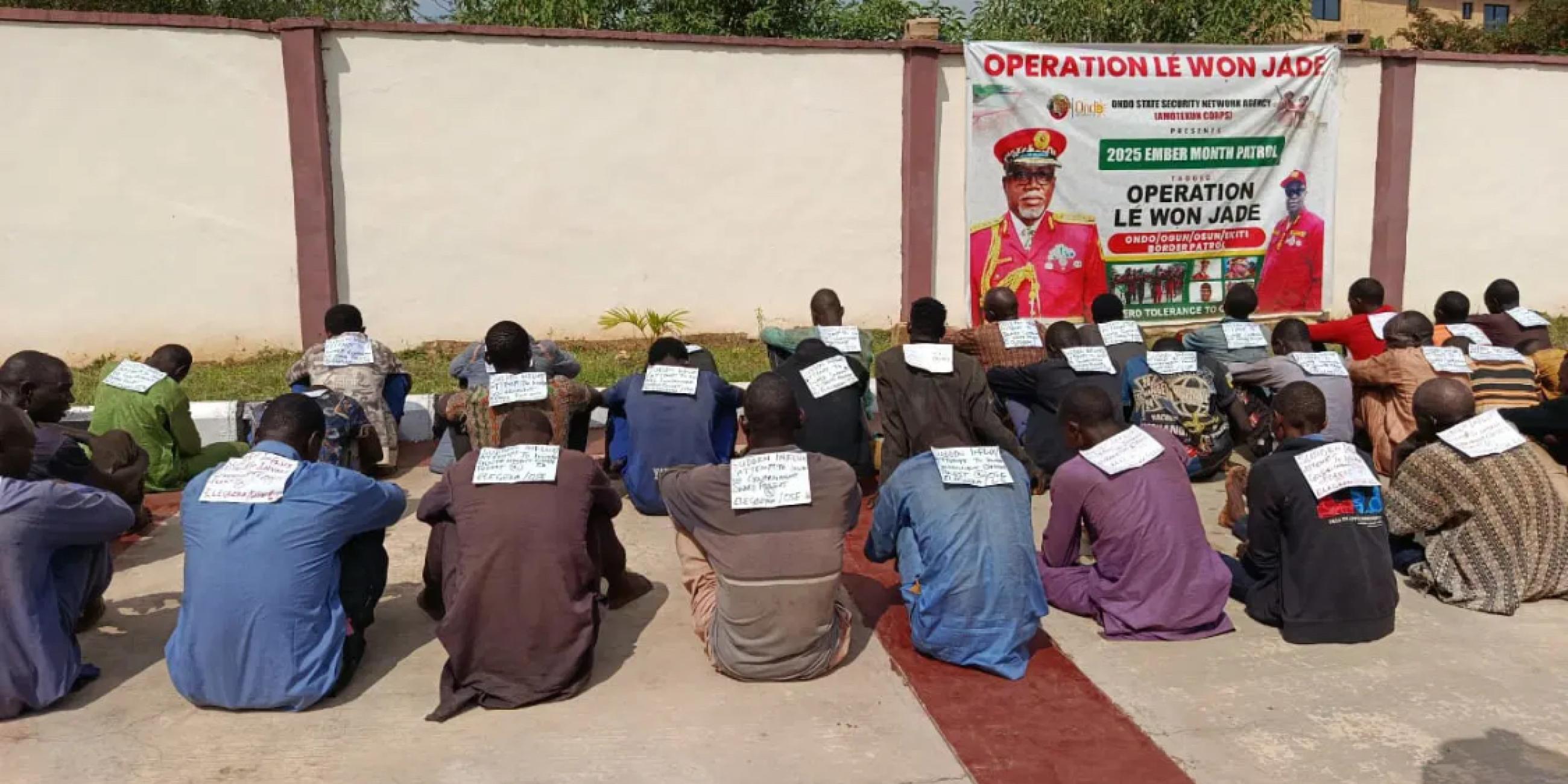
Ejeh further revealed that security agencies have begun arrests and investigations, warning that anyone found collaborating with armed groups will face the full weight of the law. He maintained that the people of Agatu have reached a firm position: no future engagement with herders will occur unless it is conducted lawfully, transparently, and only after broad consultation with traditional rulers and community stakeholders.
The development raises urgent national questions: Are military airstrikes merely displacing terrorists rather than dismantling their networks? Is Nigeria witnessing a dangerous redistribution of insecurity from one region to another? And can local governments withstand the security fallout without stronger federal coordination?
As communities in Benue confront the consequences of a conflict they did not initiate, the Agatu chairman’s warning highlights a growing fear that counterterrorism victories in one state may be creating new frontlines elsewhere, leaving civilians trapped in the crossfire of shifting militant movements.
Are Terrorists Fleeing U.S. Airstrikes in Sokoto Now Spreading Violence Into Benue? Why Agatu Council Chairman Says Armed Groups Have Infiltrated Communities, Forced Policy Reversals, and Triggered a New Security Crisis
Are counterterrorism operations in one part of Nigeria unintentionally pushing violence into other states? That is the concern raised by the Chairman of Agatu Local Government Area in Benue State, James Melvin Ejeh, who says armed groups displaced by recent U.S.–Nigerian military airstrikes in Sokoto State are now infiltrating communities in his region.
According to Ejeh, terrorists targeted in coordinated air operations in December have not been eliminated but instead relocated across state borders, spreading insecurity into rural Benue communities. He described a surge in attacks on Agatu villages, warning that innocent residents are now facing “unprecedented terror” as fleeing fighters establish new footholds.
The council chairman said intelligence reports and local accounts indicate that the militants, after being dislodged from Sokoto, are moving into neighbouring states, with Agatu among the hardest hit. He stressed that what was intended as a strategic blow against terrorism may now be creating a dangerous spillover effect, exposing vulnerable farming communities to renewed violence.
In response to the escalating attacks, Ejeh announced a decisive policy shift: the immediate cancellation of a 2017 grazing agreement that allowed herdsmen access to Adepati Island. He argued that the agreement, originally framed as a peacebuilding measure, had instead compromised community safety and enabled armed elements to operate within Agatu territory.
Describing the pact as an arrangement made “under the guise of promoting peaceful coexistence,” Ejeh accused previous local administrations of placing diplomacy above the security of residents. He declared the agreement null and void, ordered all armed herders to vacate Agatu land, and emphasized that no portion of Agatu belongs to herders under any guise.
Ejeh further revealed that security agencies have begun arrests and investigations, warning that anyone found collaborating with armed groups will face the full weight of the law. He maintained that the people of Agatu have reached a firm position: no future engagement with herders will occur unless it is conducted lawfully, transparently, and only after broad consultation with traditional rulers and community stakeholders.
The development raises urgent national questions: Are military airstrikes merely displacing terrorists rather than dismantling their networks? Is Nigeria witnessing a dangerous redistribution of insecurity from one region to another? And can local governments withstand the security fallout without stronger federal coordination?
As communities in Benue confront the consequences of a conflict they did not initiate, the Agatu chairman’s warning highlights a growing fear that counterterrorism victories in one state may be creating new frontlines elsewhere, leaving civilians trapped in the crossfire of shifting militant movements.


 About
About