• Emir Sanusi Lamido Gains Special Admission Into Northwest University Kano Law Programme

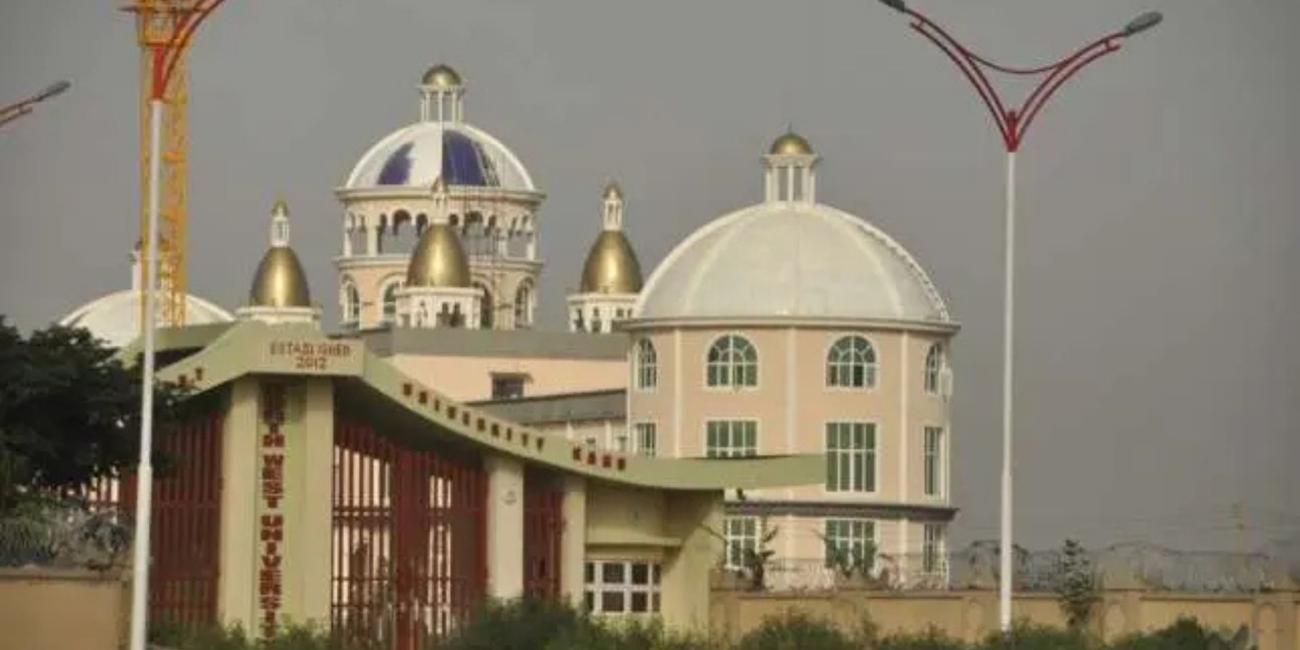
    Northwest University, Kano, has granted special admission to the Emir of Kano, Sanusi Lamido Aminu Sanusi, into its LL.B. Common Law and Shariah programme, effective from the 2024/2025 session. The approval, conveyed in a January 12, 2026 letter, places him at Level 200 through direct entry. The university directed him to complete all registration requirements and comply with institutional regulations. NWU emphasized that the admission follows academic standards and administrative protocols.

    #EmirSanusi #NWUKano #LawAdmission #EducationNigeria

    Emir Sanusi Lamido Gains Special Admission Into Northwest University Kano Law Programme Northwest University, Kano, has granted special admission to the Emir of Kano, Sanusi Lamido Aminu Sanusi, into its LL.B. Common Law and Shariah programme, effective from the 2024/2025 session. The approval, conveyed in a January 12, 2026 letter, places him at Level 200 through direct entry. The university directed him to complete all registration requirements and comply with institutional regulations. NWU emphasized that the admission follows academic standards and administrative protocols. #EmirSanusi #NWUKano #LawAdmission #EducationNigeria
    0 Commenti ·0 condivisioni ·620 Views
  • Tragedy for Epe: 6 RCCG Worshippers Killed as Truck Slam Church, Others Injured

    Gobe don happen for Lagos oo! For Epe area, six people don die and plenty others injure after one truck wey carry sharp sand ram into Redeemed Christian Church of God (RCCG) around 8:30pm on Monday night. Di church don just finish evening service, some people still dey pray inside, as truck lose control, come crash inside building.

    Eyewitness talk say di truck brakes fail as e dey descend Hospital Road. Di driver try shout, honk, avoid people and other cars, but na so e still crash inside church. Another resident yan say if e happen earlier, wahala go pass.

    Emergency responders rush injured go hospital, while Lagos Fire Service and security agencies carry out rescue. Police confirm say truck no get registration and driver don run. Bodies of di six deceased don dey morgue, investigation dey go on.

    People dey mourn di victims and dey beg authorities make dem do something to prevent similar tragedy.

    Tragedy for Epe: 6 RCCG Worshippers Killed as Truck Slam Church, Others Injured Gobe don happen for Lagos oo! For Epe area, six people don die and plenty others injure after one truck wey carry sharp sand ram into Redeemed Christian Church of God (RCCG) around 8:30pm on Monday night. Di church don just finish evening service, some people still dey pray inside, as truck lose control, come crash inside building. Eyewitness talk say di truck brakes fail as e dey descend Hospital Road. Di driver try shout, honk, avoid people and other cars, but na so e still crash inside church. Another resident yan say if e happen earlier, wahala go pass. Emergency responders rush injured go hospital, while Lagos Fire Service and security agencies carry out rescue. Police confirm say truck no get registration and driver don run. Bodies of di six deceased don dey morgue, investigation dey go on. People dey mourn di victims and dey beg authorities make dem do something to prevent similar tragedy.
    love
    1
    · 0 Commenti ·0 condivisioni ·359 Views
  • Wahala Don Sup! FCCPC Targets 103 Digital Loan Apps as Registration Deadline Expires

    Wahala don really sup for Nigeria’s digital loan space! The Federal Competition and Consumer Protection Commission (FCCPC) has now set its eyes firmly on 103 digital lending apps after the January 5, 2026, registration deadline passed. These apps, operated by companies that didn’t register with the commission, are now on a strict regulatory watchlist and could face heavy fines, delisting from platforms, or even prosecution.

    In total, 521 digital lenders in Nigeria are now under FCCPC supervision. Out of these, 457 have received full approval to operate, while 35 were given conditional approval. Additionally, 29 lenders licensed by the Central Bank of Nigeria (CBN) also fall under FCCPC oversight. The commission’s move comes as part of its ongoing effort to bring order to the fast-growing digital lending market, which has often faced criticism for harassment of borrowers and unethical practices.

    The 2025 Digital Lending Regulations are at the heart of this crackdown. They require all digital lenders—whether online, app-based, or non-traditional—to register, provide clear loan disclosures, protect borrower data, charge fair interest rates, and adopt ethical recovery methods. Apps are also prohibited from pre-authorised lending or accessing borrowers’ personal data like photos, contacts, and transaction history without consent. These rules aim to ensure that consumers are protected and that lenders operate fairly.

    Industry stakeholders, however, have expressed concerns about the FCCPC’s capacity to supervise such a huge number of players. Gbemi Adelekan, president of the Money Lenders Association, noted that while the commission is engaging actively with lenders, monitoring over 500 registered lenders alongside hundreds of illegal operators could stretch resources thin. Still, early results show that borrower complaints have already started reducing since the regulations took effect, suggesting that sanity is slowly returning to the sector.

    The FCCPC’s enforcement is now official. Non-compliant apps risk fines of up to N100 million or 19% of turnover, and company directors could face up to five years of disqualification. Analysts say this crackdown could be a game-changer for Nigeria’s digital credit market, helping build consumer confidence and encouraging responsible lending.

    As the dust settles, one thing is clear: wahala don sup for these loan apps, and Nigerians are watching closely to see which apps survive the regulatory storm.

    Wahala Don Sup! FCCPC Targets 103 Digital Loan Apps as Registration Deadline Expires Wahala don really sup for Nigeria’s digital loan space! The Federal Competition and Consumer Protection Commission (FCCPC) has now set its eyes firmly on 103 digital lending apps after the January 5, 2026, registration deadline passed. These apps, operated by companies that didn’t register with the commission, are now on a strict regulatory watchlist and could face heavy fines, delisting from platforms, or even prosecution. In total, 521 digital lenders in Nigeria are now under FCCPC supervision. Out of these, 457 have received full approval to operate, while 35 were given conditional approval. Additionally, 29 lenders licensed by the Central Bank of Nigeria (CBN) also fall under FCCPC oversight. The commission’s move comes as part of its ongoing effort to bring order to the fast-growing digital lending market, which has often faced criticism for harassment of borrowers and unethical practices. The 2025 Digital Lending Regulations are at the heart of this crackdown. They require all digital lenders—whether online, app-based, or non-traditional—to register, provide clear loan disclosures, protect borrower data, charge fair interest rates, and adopt ethical recovery methods. Apps are also prohibited from pre-authorised lending or accessing borrowers’ personal data like photos, contacts, and transaction history without consent. These rules aim to ensure that consumers are protected and that lenders operate fairly. Industry stakeholders, however, have expressed concerns about the FCCPC’s capacity to supervise such a huge number of players. Gbemi Adelekan, president of the Money Lenders Association, noted that while the commission is engaging actively with lenders, monitoring over 500 registered lenders alongside hundreds of illegal operators could stretch resources thin. Still, early results show that borrower complaints have already started reducing since the regulations took effect, suggesting that sanity is slowly returning to the sector. The FCCPC’s enforcement is now official. Non-compliant apps risk fines of up to N100 million or 19% of turnover, and company directors could face up to five years of disqualification. Analysts say this crackdown could be a game-changer for Nigeria’s digital credit market, helping build consumer confidence and encouraging responsible lending. As the dust settles, one thing is clear: wahala don sup for these loan apps, and Nigerians are watching closely to see which apps survive the regulatory storm.
    0 Commenti ·0 condivisioni ·968 Views
  • Wahala Don Happen: Abuja Lawyer Abducted, Brutally Killed by ‘One-Chance’ Criminals – Ejiofor Raises Alarm!

    Abuja wahala don reach another level! Human rights lawyer Ifeanyi Ejiofor has cried out over the shocking abduction and brutal murder of Abuja-based lawyer, Princess Nwamaka Mediatrix Chigbo, allegedly carried out by notorious “one-chance” criminals hiding under the guise of commercial taxis.

    In a statement shared with journalists, Ejiofor described the killing as a tragic reflection of the worsening insecurity in the nation’s capital and a failure of leadership and proper intelligence-led policing.

    According to the rights lawyer, urgent, discreet, and intelligence-driven action is needed to dismantle these “one-chance” syndicates. He suggested measures like vehicle profiling, mandatory registration, digital tagging, and biometric capture of all commercial transport operators in the FCT, while eliminating unregistered taxis through continuous enforcement and undercover operations.

    Ejiofor lamented that Abuja, once meant to be the secure heart of Nigeria, is increasingly becoming a city of fear where criminals attack unsuspecting citizens in broad daylight.

    He described the late Princess Chigbo, an active Nigerian Bar Association (NBA) member, as a brilliant lawyer whose death marks the alarming rise of insecurity in the capital. The lawyer was reportedly abducted on January 5, 2026, after boarding what seemed like a normal commercial taxi—what Ejiofor called a “moving death chamber.” She was allegedly tortured and killed by her abductors.

    Ejiofor also called out leadership failure in the FCT, accusing the Minister of neglecting his constitutional duty as Chief Security Officer of Abuja, allegedly being more focused on political activities outside the capital.

    With insecurity on the rise, Nigerians are now left wondering: is Abuja still safe for everyday citizens trying to go about their business?


    Wahala Don Happen: Abuja Lawyer Abducted, Brutally Killed by ‘One-Chance’ Criminals – Ejiofor Raises Alarm! Abuja wahala don reach another level! Human rights lawyer Ifeanyi Ejiofor has cried out over the shocking abduction and brutal murder of Abuja-based lawyer, Princess Nwamaka Mediatrix Chigbo, allegedly carried out by notorious “one-chance” criminals hiding under the guise of commercial taxis. In a statement shared with journalists, Ejiofor described the killing as a tragic reflection of the worsening insecurity in the nation’s capital and a failure of leadership and proper intelligence-led policing. According to the rights lawyer, urgent, discreet, and intelligence-driven action is needed to dismantle these “one-chance” syndicates. He suggested measures like vehicle profiling, mandatory registration, digital tagging, and biometric capture of all commercial transport operators in the FCT, while eliminating unregistered taxis through continuous enforcement and undercover operations. Ejiofor lamented that Abuja, once meant to be the secure heart of Nigeria, is increasingly becoming a city of fear where criminals attack unsuspecting citizens in broad daylight. He described the late Princess Chigbo, an active Nigerian Bar Association (NBA) member, as a brilliant lawyer whose death marks the alarming rise of insecurity in the capital. The lawyer was reportedly abducted on January 5, 2026, after boarding what seemed like a normal commercial taxi—what Ejiofor called a “moving death chamber.” She was allegedly tortured and killed by her abductors. Ejiofor also called out leadership failure in the FCT, accusing the Minister of neglecting his constitutional duty as Chief Security Officer of Abuja, allegedly being more focused on political activities outside the capital. With insecurity on the rise, Nigerians are now left wondering: is Abuja still safe for everyday citizens trying to go about their business?
    0 Commenti ·0 condivisioni ·956 Views
  • Why Is Oyo Police Cracking Down on Unmarked Vehicles, Fake Number Plates and Face-Concealing Motorcyclists—Is This the End of Crime Through Disguise in the State?

    Is Oyo State entering a new phase of security enforcement—and will it finally curb crimes committed through disguise and anonymity? The Oyo State Police Command has announced a statewide operation targeting unmarked vehicles, fake or defaced number plates, and motorcyclists who conceal their faces, as part of what it describes as a proactive and intelligence-led policing strategy.

    Approved by the Commissioner of Police, Femi Haruna, the operation is scheduled to commence on Monday and will focus on vehicles without valid registration numbers, those using covered, blinded, defaced, fake, dealer’s, or unauthorized plates, as well as motorcyclists who wear hoods or masks to obscure their identities while riding.

    According to the police, offenders will face arrest, vehicle impoundment, and prosecution following investigations. The Command explained that the crackdown is driven by intelligence reports showing that criminals increasingly exploit unmarked vehicles and concealed identities to evade detection, carry out robberies, kidnappings, and other violent crimes, and escape law enforcement scrutiny.

    The announcement follows earlier engagements by CP Haruna with commercial motorcyclists across the state, where he issued warnings that any motorcycle linked to criminal activity would attract severe penalties. He also urged riders and residents to provide timely intelligence, assuring them of confidentiality and swift police response.

    Beyond this specific enforcement drive, the police reaffirmed that routine stop-and-search operations, checkpoints, and intelligence-based patrols remain central to crime prevention in Oyo State. Residents were advised to stay vigilant, comply with vehicle and traffic regulations, and report suspicious movements or activities to the nearest police station.

    As security challenges continue to evolve, the operation raises key questions: Will the removal of fake plates and masked riding close a major loophole criminals use to operate? Can stricter enforcement improve public safety without disrupting legitimate transport and commercial activity? For many residents, the coming weeks will determine whether this strategy marks a turning point in the fight against crime—or merely another short-term security campaign.


    Why Is Oyo Police Cracking Down on Unmarked Vehicles, Fake Number Plates and Face-Concealing Motorcyclists—Is This the End of Crime Through Disguise in the State? Is Oyo State entering a new phase of security enforcement—and will it finally curb crimes committed through disguise and anonymity? The Oyo State Police Command has announced a statewide operation targeting unmarked vehicles, fake or defaced number plates, and motorcyclists who conceal their faces, as part of what it describes as a proactive and intelligence-led policing strategy. Approved by the Commissioner of Police, Femi Haruna, the operation is scheduled to commence on Monday and will focus on vehicles without valid registration numbers, those using covered, blinded, defaced, fake, dealer’s, or unauthorized plates, as well as motorcyclists who wear hoods or masks to obscure their identities while riding. According to the police, offenders will face arrest, vehicle impoundment, and prosecution following investigations. The Command explained that the crackdown is driven by intelligence reports showing that criminals increasingly exploit unmarked vehicles and concealed identities to evade detection, carry out robberies, kidnappings, and other violent crimes, and escape law enforcement scrutiny. The announcement follows earlier engagements by CP Haruna with commercial motorcyclists across the state, where he issued warnings that any motorcycle linked to criminal activity would attract severe penalties. He also urged riders and residents to provide timely intelligence, assuring them of confidentiality and swift police response. Beyond this specific enforcement drive, the police reaffirmed that routine stop-and-search operations, checkpoints, and intelligence-based patrols remain central to crime prevention in Oyo State. Residents were advised to stay vigilant, comply with vehicle and traffic regulations, and report suspicious movements or activities to the nearest police station. As security challenges continue to evolve, the operation raises key questions: Will the removal of fake plates and masked riding close a major loophole criminals use to operate? Can stricter enforcement improve public safety without disrupting legitimate transport and commercial activity? For many residents, the coming weeks will determine whether this strategy marks a turning point in the fight against crime—or merely another short-term security campaign.
    0 Commenti ·0 condivisioni ·548 Views
  • US Seizes Oil Tanker Linked to Venezuela and Russia Over Sanctions Violation
    January 7, 2026 – International

    The United States has confirmed the seizure of an oil tanker accused of violating U.S. sanctions, marking a major enforcement action against vessels attempting to bypass American restrictions. The tanker, originally identified as M/V Bella 1, had been renamed Marinera and was operating under a Russian flag while sailing in the North Atlantic. Reports indicate that the vessel previously flew a Guyana flag before its re-registration under Russia.

    The U.S. European Command stated that the seizure was executed in coordination with multiple federal agencies, including the Department of Justice and the Department of Homeland Security. Tracking operations were supported by the U.S. Coast Guard cutter Munro. According to officials, the operation was carried out pursuant to a U.S. federal court warrant and reflects a “whole-of-government” approach to protecting U.S. interests and enforcing sanctions.

    “The seizure supports the President’s proclamation targeting sanctioned vessels that threaten security and stability in the Western Hemisphere,” the U.S. European Command noted. Officials emphasized that the action was carefully planned to avoid environmental damage and focused on recovering the tanker rather than sinking it.

    This operation follows recent diplomatic talks between U.S. and Venezuelan officials regarding potential exports of Venezuelan crude to American refineries along the Gulf Coast. U.S. refineries, which have historically processed Venezuela’s heavy crude, are reportedly capable of handling future imports once sanctions allow. Sources noted that the discussions come after years of restrictions that curtailed Venezuelan oil exports to the United States.

    The seizure also comes in the wake of a controversial U.S. military operation in Venezuela in early January 2026, which resulted in the capture of President Nicolás Maduro and his wife. The U.S. justified the operation by citing federal indictments accusing Maduro’s government of drug trafficking and narco-terrorism, alleging that the regime helped ship large quantities of cocaine into the United States. Following the operation, former President Donald Trump openly declared that the U.S. intended to take control of Venezuela’s oil industry, which he claimed was built with American investment and seized by Maduro.

    In his first public comments after being taken to the U.S., Maduro described himself as “kidnapped” and insisted on his innocence. The tanker seizure is seen as part of ongoing U.S. efforts to reassert influence over sanctioned energy exports and prevent regimes like Venezuela and Russia from profiting from illicit oil trade.

    Experts note that the operation highlights the strategic importance of maritime enforcement in the global energy market and underscores the U.S.’s commitment to sanctions enforcement. The tanker, part of what officials have described as a “shadow fleet” circumventing international regulations, was carefully monitored for weeks before the operation, demonstrating the complexity of tracking and intercepting high-value maritime targets.

    The U.S. emphasized that similar operations may continue against vessels suspected of violating sanctions, particularly those tied to sanctioned nations or illicit networks. The seizure reinforces the administration’s dual approach of diplomatic engagement and targeted enforcement to secure energy markets and uphold international sanctions.

    US Seizes Oil Tanker Linked to Venezuela and Russia Over Sanctions Violation January 7, 2026 – International The United States has confirmed the seizure of an oil tanker accused of violating U.S. sanctions, marking a major enforcement action against vessels attempting to bypass American restrictions. The tanker, originally identified as M/V Bella 1, had been renamed Marinera and was operating under a Russian flag while sailing in the North Atlantic. Reports indicate that the vessel previously flew a Guyana flag before its re-registration under Russia. The U.S. European Command stated that the seizure was executed in coordination with multiple federal agencies, including the Department of Justice and the Department of Homeland Security. Tracking operations were supported by the U.S. Coast Guard cutter Munro. According to officials, the operation was carried out pursuant to a U.S. federal court warrant and reflects a “whole-of-government” approach to protecting U.S. interests and enforcing sanctions. “The seizure supports the President’s proclamation targeting sanctioned vessels that threaten security and stability in the Western Hemisphere,” the U.S. European Command noted. Officials emphasized that the action was carefully planned to avoid environmental damage and focused on recovering the tanker rather than sinking it. This operation follows recent diplomatic talks between U.S. and Venezuelan officials regarding potential exports of Venezuelan crude to American refineries along the Gulf Coast. U.S. refineries, which have historically processed Venezuela’s heavy crude, are reportedly capable of handling future imports once sanctions allow. Sources noted that the discussions come after years of restrictions that curtailed Venezuelan oil exports to the United States. The seizure also comes in the wake of a controversial U.S. military operation in Venezuela in early January 2026, which resulted in the capture of President Nicolás Maduro and his wife. The U.S. justified the operation by citing federal indictments accusing Maduro’s government of drug trafficking and narco-terrorism, alleging that the regime helped ship large quantities of cocaine into the United States. Following the operation, former President Donald Trump openly declared that the U.S. intended to take control of Venezuela’s oil industry, which he claimed was built with American investment and seized by Maduro. In his first public comments after being taken to the U.S., Maduro described himself as “kidnapped” and insisted on his innocence. The tanker seizure is seen as part of ongoing U.S. efforts to reassert influence over sanctioned energy exports and prevent regimes like Venezuela and Russia from profiting from illicit oil trade. Experts note that the operation highlights the strategic importance of maritime enforcement in the global energy market and underscores the U.S.’s commitment to sanctions enforcement. The tanker, part of what officials have described as a “shadow fleet” circumventing international regulations, was carefully monitored for weeks before the operation, demonstrating the complexity of tracking and intercepting high-value maritime targets. The U.S. emphasized that similar operations may continue against vessels suspected of violating sanctions, particularly those tied to sanctioned nations or illicit networks. The seizure reinforces the administration’s dual approach of diplomatic engagement and targeted enforcement to secure energy markets and uphold international sanctions.
    0 Commenti ·0 condivisioni ·889 Views
  • No Increase in 2026 UTME, Direct Entry Fees as JAMB Assures Nigerians, Announces Registration Dates and Upholds Tinubu’s Human-Face Policy

    The Joint Admissions and Matriculation Board (JAMB) has assured candidates and parents that there will be no increment in the cost of application forms for the 2026 Unified Tertiary Matriculation Examination (UTME) and Direct Entry (DE). In its Weekly Bulletin, the Board stated that it has not raised examination fees in the past nine years and has even reduced registration costs under the current administration.

    JAMB explained that any future adjustment would only be considered if absolutely necessary to maintain the integrity, quality, and credibility of its examinations. The policy, it said, aligns with President Bola Tinubu’s directive—conveyed through the Minister of Education—that government agencies must adopt a “human-face” approach and be sensitive to the economic realities facing Nigerian families. The Board emphasized that the cost for the 2026 exercise will remain largely the same as in the previous year, enabling families to plan ahead.

    The examination body urged parents and guardians to make early preparations and ensure timely registration, warning that the registration window will not be extended once it opens. JAMB also highlighted its continued efficiency and prudent management, noting that despite reduced fees, it has made substantial remittances to the Federal Government, reflecting its commitment to accountability, transparency, and affordability.

    Meanwhile, JAMB announced that the sale of forms for the 2026 UTME will begin on Friday, January 31, 2026, and close on Saturday, March 8, 2026, reaffirming its pledge to sustain global best practices in the conduct of its examinations.
    No Increase in 2026 UTME, Direct Entry Fees as JAMB Assures Nigerians, Announces Registration Dates and Upholds Tinubu’s Human-Face Policy The Joint Admissions and Matriculation Board (JAMB) has assured candidates and parents that there will be no increment in the cost of application forms for the 2026 Unified Tertiary Matriculation Examination (UTME) and Direct Entry (DE). In its Weekly Bulletin, the Board stated that it has not raised examination fees in the past nine years and has even reduced registration costs under the current administration. JAMB explained that any future adjustment would only be considered if absolutely necessary to maintain the integrity, quality, and credibility of its examinations. The policy, it said, aligns with President Bola Tinubu’s directive—conveyed through the Minister of Education—that government agencies must adopt a “human-face” approach and be sensitive to the economic realities facing Nigerian families. The Board emphasized that the cost for the 2026 exercise will remain largely the same as in the previous year, enabling families to plan ahead. The examination body urged parents and guardians to make early preparations and ensure timely registration, warning that the registration window will not be extended once it opens. JAMB also highlighted its continued efficiency and prudent management, noting that despite reduced fees, it has made substantial remittances to the Federal Government, reflecting its commitment to accountability, transparency, and affordability. Meanwhile, JAMB announced that the sale of forms for the 2026 UTME will begin on Friday, January 31, 2026, and close on Saturday, March 8, 2026, reaffirming its pledge to sustain global best practices in the conduct of its examinations.
    like
    1
    · 0 Commenti ·0 condivisioni ·514 Views
  • FG Reopens YEIDEP Batch B Portal: How Young Nigerians Can Apply for ₦50,000–₦500,000 Youth Entrepreneurship Grants

    The Federal Government of Nigeria has reopened applications for Batch B of the Youth Economic Intervention and De-Radicalisation Programme (YEIDEP), offering grants between ₦50,000 and ₦500,000 to support youth entrepreneurship. The initiative targets Nigerians aged 18–35 with viable business ideas, providing funding, training, mentorship, and networking opportunities to empower young entrepreneurs and tackle unemployment.

    Applicants must possess a valid NIN and BVN and be willing to participate in training and mentorship programs. Sectors supported include agriculture, technology, creative industries, renewable energy, sports, entertainment, and small retail services.

    The programme aims to foster economic inclusion, strengthen local communities, and encourage productive livelihoods. Early application is advised, and registration is free through the official YEIDEP portal.
    FG Reopens YEIDEP Batch B Portal: How Young Nigerians Can Apply for ₦50,000–₦500,000 Youth Entrepreneurship Grants The Federal Government of Nigeria has reopened applications for Batch B of the Youth Economic Intervention and De-Radicalisation Programme (YEIDEP), offering grants between ₦50,000 and ₦500,000 to support youth entrepreneurship. The initiative targets Nigerians aged 18–35 with viable business ideas, providing funding, training, mentorship, and networking opportunities to empower young entrepreneurs and tackle unemployment. Applicants must possess a valid NIN and BVN and be willing to participate in training and mentorship programs. Sectors supported include agriculture, technology, creative industries, renewable energy, sports, entertainment, and small retail services. The programme aims to foster economic inclusion, strengthen local communities, and encourage productive livelihoods. Early application is advised, and registration is free through the official YEIDEP portal.
    0 Commenti ·0 condivisioni ·491 Views
  • Anthony Joshua’s Family Demands Access After Fatal Lagos-Ibadan Expressway Crash as FRSC Awaits Full Probe

    The family of world heavyweight boxing champion Anthony Joshua has expressed urgent concern over their inability to visit him following a fatal road crash on Monday along the Lagos–Ibadan Expressway. The accident claimed the lives of two of Joshua’s close friends and team members, Ayodele Kelvin Olu, 36, a Nigerian-British citizen, and Gami Sina, 36, a British citizen.

    Joshua’s uncle, Adedamola Joshua, said the news of the crash came as a “rude shock” and revealed that the family has only been in limited contact with Joshua’s parents, who are also in Nigeria. The family has requested access to see the boxer at the undisclosed medical facility where he is receiving treatment, citing the importance of family support during this critical time.

    The Federal Road Safety Corps (FRSC) confirmed that the crash involved a black Lexus SUV, registration number KRD 850 HN, colliding with a stationary truck near the Sinoma axis of Sagamu. Preliminary assessments suggest excessive speed as a potential cause, but the FRSC awaits a full technical investigation to determine the exact circumstances.

    Political figures and community leaders have reacted with condolences and calls for improved road safety. The Deputy Head of Mission of the British High Commission, Simon Field, visited Joshua at the hospital, while both Ogun State Governor Dapo Abiodun and Lagos State Governor Babajide Sanwo-Olu are monitoring his condition. President Bola Tinubu has also been briefed and reportedly spoke with Joshua and his mother to convey support and condolences.
    Anthony Joshua’s Family Demands Access After Fatal Lagos-Ibadan Expressway Crash as FRSC Awaits Full Probe The family of world heavyweight boxing champion Anthony Joshua has expressed urgent concern over their inability to visit him following a fatal road crash on Monday along the Lagos–Ibadan Expressway. The accident claimed the lives of two of Joshua’s close friends and team members, Ayodele Kelvin Olu, 36, a Nigerian-British citizen, and Gami Sina, 36, a British citizen. Joshua’s uncle, Adedamola Joshua, said the news of the crash came as a “rude shock” and revealed that the family has only been in limited contact with Joshua’s parents, who are also in Nigeria. The family has requested access to see the boxer at the undisclosed medical facility where he is receiving treatment, citing the importance of family support during this critical time. The Federal Road Safety Corps (FRSC) confirmed that the crash involved a black Lexus SUV, registration number KRD 850 HN, colliding with a stationary truck near the Sinoma axis of Sagamu. Preliminary assessments suggest excessive speed as a potential cause, but the FRSC awaits a full technical investigation to determine the exact circumstances. Political figures and community leaders have reacted with condolences and calls for improved road safety. The Deputy Head of Mission of the British High Commission, Simon Field, visited Joshua at the hospital, while both Ogun State Governor Dapo Abiodun and Lagos State Governor Babajide Sanwo-Olu are monitoring his condition. President Bola Tinubu has also been briefed and reportedly spoke with Joshua and his mother to convey support and condolences.
    0 Commenti ·0 condivisioni ·554 Views
  • Nigerian Revenue Service Launches New Tax ID Portal January 1, Replaces Existing TINs

    The Joint Revenue Board (JRB) and the Nigerian Revenue Service (NRS) have announced the launch of the Nigerian Tax ID Portal, effective January 1, 2026, as part of reforms to modernise tax administration nationwide. The new Tax Identification (Tax ID) system will harmonise taxpayer records and replace all previously issued Tax Identification Numbers (TINs). For individuals, the Tax ID will be linked to the National Identification Number (NIN), while businesses and organisations will be linked through their Corporate Affairs Commission (CAC) registration numbers. Authorities have assured Nigerians that the new system will not lead to automatic bank account deductions or closures, stressing that it is strictly for tax administration and improved service delivery.
    Nigerian Revenue Service Launches New Tax ID Portal January 1, Replaces Existing TINs The Joint Revenue Board (JRB) and the Nigerian Revenue Service (NRS) have announced the launch of the Nigerian Tax ID Portal, effective January 1, 2026, as part of reforms to modernise tax administration nationwide. The new Tax Identification (Tax ID) system will harmonise taxpayer records and replace all previously issued Tax Identification Numbers (TINs). For individuals, the Tax ID will be linked to the National Identification Number (NIN), while businesses and organisations will be linked through their Corporate Affairs Commission (CAC) registration numbers. Authorities have assured Nigerians that the new system will not lead to automatic bank account deductions or closures, stressing that it is strictly for tax administration and improved service delivery.
    like
    1
    · 0 Commenti ·0 condivisioni ·337 Views
  • NIN Now Serves as Tax ID for Nigerians, CAC Number for Businesses
    Policy Update: The Federal Inland Revenue Service (FIRS) announced that the National Identification Number (NIN) now automatically functions as the Tax Identification Number (TIN) for individual Nigerians.
    For Businesses: Registered companies no longer need a separate TIN; their Corporate Affairs Commission (CAC) registration number will serve as their official tax identifier.
    Legal Basis: This aligns with the Nigeria Tax Administration Act (NTAA) effective January 2026, building on provisions from the Finance Act of 2019.
    Purpose: The reform aims to simplify tax identification, reduce duplication, close loopholes for tax evasion, and promote fairness in tax contribution.
    Implementation: No physical card is required—the Tax ID is a unique number linked directly to the individual or business. Banks will request this TIN for all taxable Nigerians.
    Takeaway: The FIRS emphasizes that this measure is intended to improve efficiency and transparency in Nigeria’s tax administration and urges the public to ignore misinformation about the reform.
    NIN Now Serves as Tax ID for Nigerians, CAC Number for Businesses Policy Update: The Federal Inland Revenue Service (FIRS) announced that the National Identification Number (NIN) now automatically functions as the Tax Identification Number (TIN) for individual Nigerians. For Businesses: Registered companies no longer need a separate TIN; their Corporate Affairs Commission (CAC) registration number will serve as their official tax identifier. Legal Basis: This aligns with the Nigeria Tax Administration Act (NTAA) effective January 2026, building on provisions from the Finance Act of 2019. Purpose: The reform aims to simplify tax identification, reduce duplication, close loopholes for tax evasion, and promote fairness in tax contribution. Implementation: No physical card is required—the Tax ID is a unique number linked directly to the individual or business. Banks will request this TIN for all taxable Nigerians. Takeaway: The FIRS emphasizes that this measure is intended to improve efficiency and transparency in Nigeria’s tax administration and urges the public to ignore misinformation about the reform.
    0 Commenti ·0 condivisioni ·342 Views
  • Ondo Hosts 2nd Edition of Christmas Marathon & Health Walk
    Event: The second edition of the Prince Adewole Adebayo Christmas Marathon and Queen Lillian Adebayo Health Walk will take place on December 28, 2025, in Ondo City.
    Purpose: The event promotes healthy living, youth engagement, and community bonding during the festive season.
    Format: It features a competitive road marathon with cash prizes (₦2 million for first place, ₦1 million for second, ₦500,000 for third) alongside a non-competitive health walk for families, youth groups, and seniors.
    Participation: Registration is free and open to all ages, with both online and physical registration options.
    Highlights: The event will include entertainment, refreshments, medical support, and appearances by notable personalities, creating a community-focused celebration beyond sports.
    Organisers: Prince Adewole Adebayo, a legal and youth empowerment advocate, and Queen Lillian Adebayo, a health and wellness campaigner.
    Takeaway: The marathon is designed not just as a race, but as a celebration of wellness, unity, and community spirit ahead of the New Year.
    Ondo Hosts 2nd Edition of Christmas Marathon & Health Walk Event: The second edition of the Prince Adewole Adebayo Christmas Marathon and Queen Lillian Adebayo Health Walk will take place on December 28, 2025, in Ondo City. Purpose: The event promotes healthy living, youth engagement, and community bonding during the festive season. Format: It features a competitive road marathon with cash prizes (₦2 million for first place, ₦1 million for second, ₦500,000 for third) alongside a non-competitive health walk for families, youth groups, and seniors. Participation: Registration is free and open to all ages, with both online and physical registration options. Highlights: The event will include entertainment, refreshments, medical support, and appearances by notable personalities, creating a community-focused celebration beyond sports. Organisers: Prince Adewole Adebayo, a legal and youth empowerment advocate, and Queen Lillian Adebayo, a health and wellness campaigner. Takeaway: The marathon is designed not just as a race, but as a celebration of wellness, unity, and community spirit ahead of the New Year.
    0 Commenti ·0 condivisioni ·367 Views
  • APC Sets January 30 Deadline for Compulsory Electronic Membership Registration

    The All Progressives Congress (APC) has issued a January 30, 2026 deadline for all party members to complete compulsory electronic membership registration.

    The directive was announced by APC National Chairman, Nentawe Yelwata, at the party’s 14th National Caucus meeting held at the State House Conference Centre, Abuja.

    Yelwata said the electronic membership registration system, which is already in operation, is aimed at improving transparency, strengthening data integrity, and deepening internal democracy within the party.

    According to him, training for the exercise has been carried out at state, zonal, and local government levels in most states, clearing the way for a full nationwide rollout.

    He urged party stakeholders to support the initiative and reassured new members of their full rights and privileges within the APC. Yelwata also encouraged both existing and new members to use the registration portal to enroll themselves and their supporters ahead of the deadline.
    APC Sets January 30 Deadline for Compulsory Electronic Membership Registration The All Progressives Congress (APC) has issued a January 30, 2026 deadline for all party members to complete compulsory electronic membership registration. The directive was announced by APC National Chairman, Nentawe Yelwata, at the party’s 14th National Caucus meeting held at the State House Conference Centre, Abuja. Yelwata said the electronic membership registration system, which is already in operation, is aimed at improving transparency, strengthening data integrity, and deepening internal democracy within the party. According to him, training for the exercise has been carried out at state, zonal, and local government levels in most states, clearing the way for a full nationwide rollout. He urged party stakeholders to support the initiative and reassured new members of their full rights and privileges within the APC. Yelwata also encouraged both existing and new members to use the registration portal to enroll themselves and their supporters ahead of the deadline.
    0 Commenti ·0 condivisioni ·246 Views
  • APC Sets January 30 Deadline for Compulsory Electronic Membership Registration

    The national leadership of the All Progressives Congress (APC) has fixed January 30, 2026, as the deadline for all party members to complete compulsory electronic membership registration.

    The announcement was made by APC National Chairman, Nentawe Yelwata, during the party’s 14th National Caucus meeting held at the State House Conference Centre in Abuja.

    Yelwata said the electronic membership registration system, which has already been activated, is designed to strengthen transparency, improve data integrity, and promote internal democracy within the party.

    According to him, training for the exercise has been conducted at state, zonal, and local government levels across most states, paving the way for a nationwide rollout.

    He urged party stakeholders to support the exercise and encouraged both existing and new members to take advantage of the registration portal to enroll themselves and their supporters.

    Yelwata stressed that all members are expected to complete their registration before the January 30 deadline in preparation for the party’s forthcoming congresses.
    APC Sets January 30 Deadline for Compulsory Electronic Membership Registration The national leadership of the All Progressives Congress (APC) has fixed January 30, 2026, as the deadline for all party members to complete compulsory electronic membership registration. The announcement was made by APC National Chairman, Nentawe Yelwata, during the party’s 14th National Caucus meeting held at the State House Conference Centre in Abuja. Yelwata said the electronic membership registration system, which has already been activated, is designed to strengthen transparency, improve data integrity, and promote internal democracy within the party. According to him, training for the exercise has been conducted at state, zonal, and local government levels across most states, paving the way for a nationwide rollout. He urged party stakeholders to support the exercise and encouraged both existing and new members to take advantage of the registration portal to enroll themselves and their supporters. Yelwata stressed that all members are expected to complete their registration before the January 30 deadline in preparation for the party’s forthcoming congresses.
    0 Commenti ·0 condivisioni ·251 Views
  • Nigeria’s CAC Registrar-General Accused of Forcing Fintechs to Collect Inflated Business Registration Fees From Over 300,000 Small Businesses

    Serious allegations have been levelled against the Corporate Affairs Commission (CAC) and its Registrar-General, Hussaini Ishaq Magaji, over claims that fintech companies were compelled to charge small business owners inflated business registration fees far above official rates. Sources allege that more than 300,000 micro and small enterprises were forced to pay ₦20,000 instead of the then-approved ₦10,500, with the excess allegedly diverted through a private consultant. The accusations have triggered petitions to the Code of Conduct Tribunal and calls for investigations by anti-corruption agencies, while Magaji denies wrongdoing, insisting the exercise was lawful, security-driven, and that additional charges were imposed independently by fintech service providers.
    Nigeria’s CAC Registrar-General Accused of Forcing Fintechs to Collect Inflated Business Registration Fees From Over 300,000 Small Businesses Serious allegations have been levelled against the Corporate Affairs Commission (CAC) and its Registrar-General, Hussaini Ishaq Magaji, over claims that fintech companies were compelled to charge small business owners inflated business registration fees far above official rates. Sources allege that more than 300,000 micro and small enterprises were forced to pay ₦20,000 instead of the then-approved ₦10,500, with the excess allegedly diverted through a private consultant. The accusations have triggered petitions to the Code of Conduct Tribunal and calls for investigations by anti-corruption agencies, while Magaji denies wrongdoing, insisting the exercise was lawful, security-driven, and that additional charges were imposed independently by fintech service providers.
    0 Commenti ·0 condivisioni ·647 Views
  • Police to resume tinted glass permit enforcement from January 2

    The Nigeria Police Force has announced the resumption of enforcement of the tinted glass permit policy, citing rising security concerns across the country.

    In a statement issued by the Force Public Relations Officer, CSP Benjamin Hundeyin today December 15, the police said enforcement would resume on January 2, 2026, despite the matter still pending before a court.

    The Force clarified that no court order has restrained it from enforcing existing laws on the use of tinted glass on vehicles.

    “It is important to clarify that at no point did the court restrain the Nigeria Police Force from enforcing the provisions of the law regarding the use of tinted glass on vehicles. Nonetheless, in the spirit of responsibility, transparency, and public convenience, the Force suspended enforcement to allow motorists ample opportunity to regularise their documentation and complete the registration process without pressure,” the statement read in part.

    Hundeyin noted that recent security assessments revealed an increase in crimes involving vehicles fitted with unauthorised tinted glass, which criminals allegedly use to conceal their identities while carrying out offences such as armed robbery and kidnapping.

    “Recent trends, however, reveal a disturbing rise in criminal activities perpetrated with the aid of vehicles fitted with unauthorised tinted glass. Some individuals and organised criminal groups have exploited this gap to conceal their identities and facilitate crimes ranging from armed robbery to kidnapping and other violent crimes.

    In view of this, the Nigeria Police Force has found it both necessary and urgent to resume full enforcement as a proactive measure to safeguard our communities. Consequently, enforcement of Tinted Glass Permit will resume on 2nd January, 2026.

    Motorists who require tinted glass permits were advised to apply through approved channels and ensure their vehicles comply with legal requirements.
    Police to resume tinted glass permit enforcement from January 2 The Nigeria Police Force has announced the resumption of enforcement of the tinted glass permit policy, citing rising security concerns across the country. In a statement issued by the Force Public Relations Officer, CSP Benjamin Hundeyin today December 15, the police said enforcement would resume on January 2, 2026, despite the matter still pending before a court. The Force clarified that no court order has restrained it from enforcing existing laws on the use of tinted glass on vehicles. “It is important to clarify that at no point did the court restrain the Nigeria Police Force from enforcing the provisions of the law regarding the use of tinted glass on vehicles. Nonetheless, in the spirit of responsibility, transparency, and public convenience, the Force suspended enforcement to allow motorists ample opportunity to regularise their documentation and complete the registration process without pressure,” the statement read in part. Hundeyin noted that recent security assessments revealed an increase in crimes involving vehicles fitted with unauthorised tinted glass, which criminals allegedly use to conceal their identities while carrying out offences such as armed robbery and kidnapping. “Recent trends, however, reveal a disturbing rise in criminal activities perpetrated with the aid of vehicles fitted with unauthorised tinted glass. Some individuals and organised criminal groups have exploited this gap to conceal their identities and facilitate crimes ranging from armed robbery to kidnapping and other violent crimes. In view of this, the Nigeria Police Force has found it both necessary and urgent to resume full enforcement as a proactive measure to safeguard our communities. Consequently, enforcement of Tinted Glass Permit will resume on 2nd January, 2026. Motorists who require tinted glass permits were advised to apply through approved channels and ensure their vehicles comply with legal requirements.
    0 Commenti ·0 condivisioni ·285 Views
  • Missouri troopers stopped a 29 year old woman for a registration violation and following too close.. she was caught with 220 pounds of weed. She was held in jail for 24 hours & could be charged.
    Missouri troopers stopped a 29 year old woman for a registration violation and following too close.. she was caught with 220 pounds of weed. She was held in jail for 24 hours & could be charged.
    0 Commenti ·0 condivisioni ·328 Views
  • Nigerian Government Admits Difficulty Tracking Kidnappers’ SIM Cards Despite NIN Policy

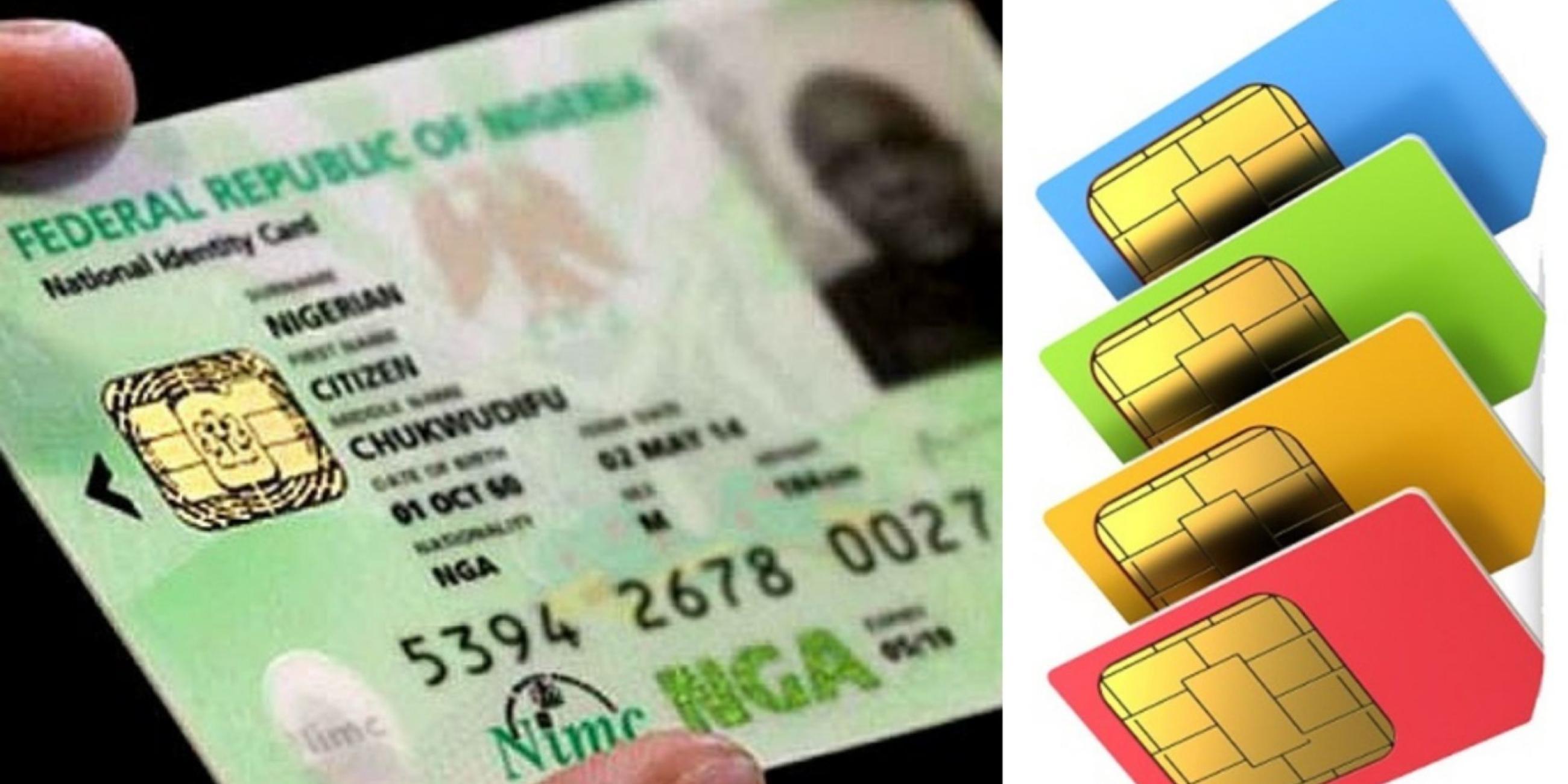
    The Federal Government has admitted that security agencies face serious technical challenges in tracking SIM cards used by kidnappers, despite mandatory NIN–SIM registration. Communications Minister Bosun Tijani revealed that criminal gangs now exploit poor network coverage and advanced call-routing technologies, especially in remote areas. To counter this, the government plans to deploy 4,000 new telecom towers, expand fibre-optic networks, and upgrade Nigeria’s communication satellites to close connectivity gaps aiding criminal operations.

    #Insecurity

    #NINSIM

    #Telecommunications
    Nigerian Government Admits Difficulty Tracking Kidnappers’ SIM Cards Despite NIN Policy The Federal Government has admitted that security agencies face serious technical challenges in tracking SIM cards used by kidnappers, despite mandatory NIN–SIM registration. Communications Minister Bosun Tijani revealed that criminal gangs now exploit poor network coverage and advanced call-routing technologies, especially in remote areas. To counter this, the government plans to deploy 4,000 new telecom towers, expand fibre-optic networks, and upgrade Nigeria’s communication satellites to close connectivity gaps aiding criminal operations. #Insecurity #NINSIM #Telecommunications
    0 Commenti ·0 condivisioni ·451 Views
  • 2027 Election: Former Lawmakers Ask Court to Deregister ADC Over Poor Electoral Performance

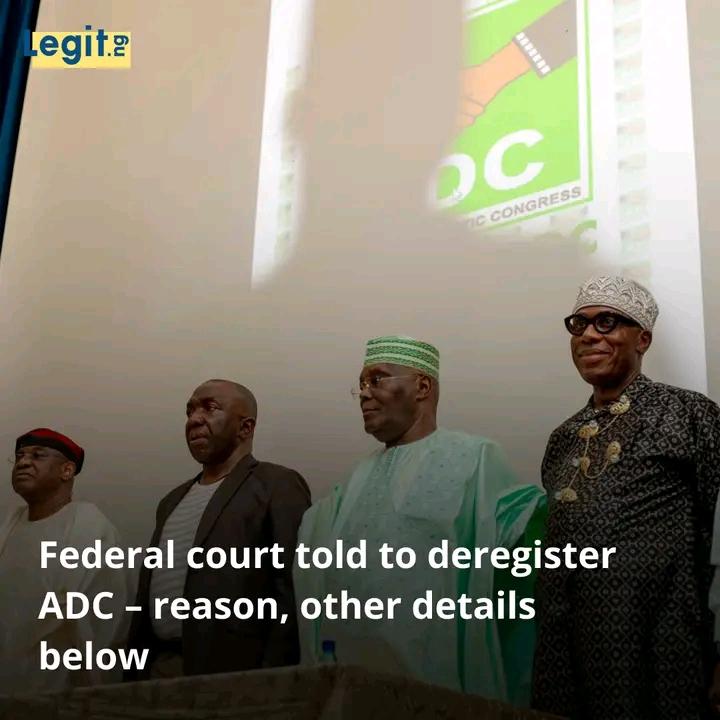
    A group of former federal lawmakers under the National Forum of Former Legislators (NFFL) has filed a suit at the Federal High Court in Abuja seeking the deregistration of the African Democratic Congress (ADC). The group alleged that the ADC failed to meet constitutional and Electoral Act requirements, including securing 25% of votes in any state during the last presidential election or winning any legislative seat in recent bye-elections. Citing Section 225A of the 1999 Constitution, they argued that the party lacks the statutory criteria to remain registered. This development comes as the ADC reportedly plans to receive new lawmakers ahead of 2027, even as coalition members like Peter Obi, Atiku Abubakar, Nasir El-Rufai, and Rotimi Amaechi continue efforts to build a united opposition against President Tinubu.
    2027 Election: Former Lawmakers Ask Court to Deregister ADC Over Poor Electoral Performance A group of former federal lawmakers under the National Forum of Former Legislators (NFFL) has filed a suit at the Federal High Court in Abuja seeking the deregistration of the African Democratic Congress (ADC). The group alleged that the ADC failed to meet constitutional and Electoral Act requirements, including securing 25% of votes in any state during the last presidential election or winning any legislative seat in recent bye-elections. Citing Section 225A of the 1999 Constitution, they argued that the party lacks the statutory criteria to remain registered. This development comes as the ADC reportedly plans to receive new lawmakers ahead of 2027, even as coalition members like Peter Obi, Atiku Abubakar, Nasir El-Rufai, and Rotimi Amaechi continue efforts to build a united opposition against President Tinubu.
    0 Commenti ·0 condivisioni ·635 Views
  • Falana Warns Nigeria Risks Military Coup Without Political Pluralism, Open Civic Space

    Human rights lawyer Femi Falana (SAN) has warned that Nigeria must urgently embrace political pluralism and expand civic freedoms to avoid the growing wave of military coups destabilising West Africa. Speaking on Channels TV, Falana said widespread poverty, insecurity, shrinking civic space, and the criminalisation of dissent are fueling public anger across the region. He criticised INEC for restricting the registration of ideological political parties and warned that Nigeria risks sliding toward a one-party state. Citing the recent failed coup in Benin Republic, Falana stressed that suppressing opposition, jailing critics, or limiting political space undermines democracy and increases instability.
    Falana Warns Nigeria Risks Military Coup Without Political Pluralism, Open Civic Space Human rights lawyer Femi Falana (SAN) has warned that Nigeria must urgently embrace political pluralism and expand civic freedoms to avoid the growing wave of military coups destabilising West Africa. Speaking on Channels TV, Falana said widespread poverty, insecurity, shrinking civic space, and the criminalisation of dissent are fueling public anger across the region. He criticised INEC for restricting the registration of ideological political parties and warned that Nigeria risks sliding toward a one-party state. Citing the recent failed coup in Benin Republic, Falana stressed that suppressing opposition, jailing critics, or limiting political space undermines democracy and increases instability.
    like
    1
    · 0 Commenti ·0 condivisioni ·554 Views
Pagine in Evidenza
Fintter https://fintter.com