


 About
About
Museveni Says Even Uganda Can Harm U.S. in Ground War, Cites Venezuela Crisis to Renew Call for Pan-African Security and Military Unity
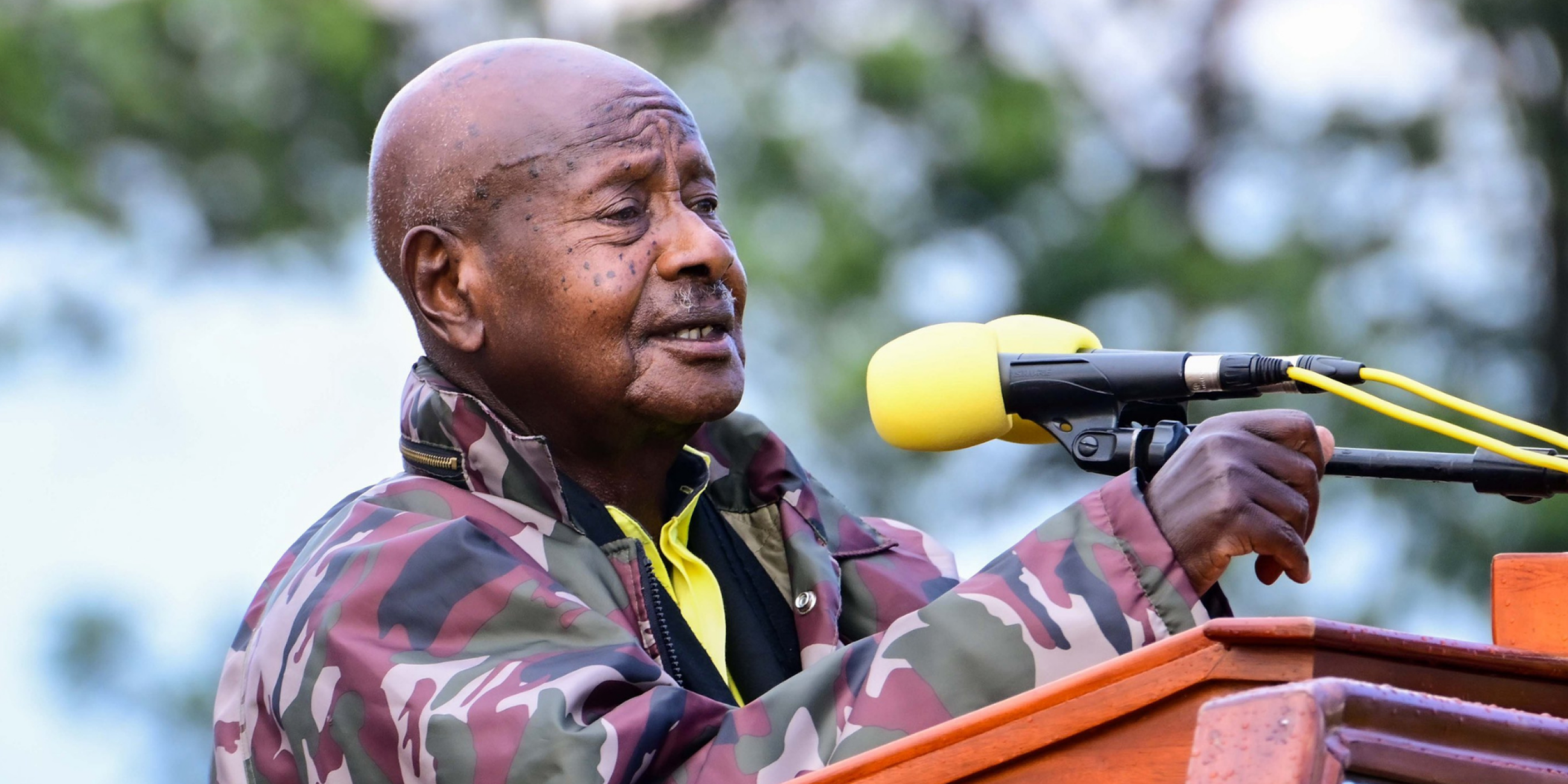
Ugandan President Yoweri Museveni has stated that despite the United States’ overwhelming military dominance across sea, air, and space, it remains vulnerable in ground combat, arguing that even countries like Uganda could inflict damage in a close-range land confrontation. Museveni made the remarks while responding to questions on Pan-Africanism and lessons Africa can draw from Washington’s recent military intervention in Venezuela.
According to Museveni, U.S. military power lies in its ability to operate simultaneously across four domains—sea, air, space, and land—giving it a decisive advantage over many adversaries long before direct engagement. However, he noted that once operations shift to land, that advantage diminishes, exposing even powerful forces to harm.
He further explained that while the United States maintains surveillance and technological superiority even on land, weaker states remain strategically exposed across multiple fronts, highlighting a deep imbalance in global security. Museveni traced Africa’s vulnerability to the failure of post-independence leaders to pursue collective security and genuine Pan-African unity in the 1960s.
Citing the Venezuela crisis as a warning, Museveni concluded that Africa must urgently revive Pan-African cooperation, particularly in defence and security, to avoid remaining fragmented and strategically disadvantaged in an increasingly militarised world.
Ugandan President Yoweri Museveni has stated that despite the United States’ overwhelming military dominance across sea, air, and space, it remains vulnerable in ground combat, arguing that even countries like Uganda could inflict damage in a close-range land confrontation. Museveni made the remarks while responding to questions on Pan-Africanism and lessons Africa can draw from Washington’s recent military intervention in Venezuela.
According to Museveni, U.S. military power lies in its ability to operate simultaneously across four domains—sea, air, space, and land—giving it a decisive advantage over many adversaries long before direct engagement. However, he noted that once operations shift to land, that advantage diminishes, exposing even powerful forces to harm.
He further explained that while the United States maintains surveillance and technological superiority even on land, weaker states remain strategically exposed across multiple fronts, highlighting a deep imbalance in global security. Museveni traced Africa’s vulnerability to the failure of post-independence leaders to pursue collective security and genuine Pan-African unity in the 1960s.
Citing the Venezuela crisis as a warning, Museveni concluded that Africa must urgently revive Pan-African cooperation, particularly in defence and security, to avoid remaining fragmented and strategically disadvantaged in an increasingly militarised world.
Museveni Says Even Uganda Can Harm U.S. in Ground War, Cites Venezuela Crisis to Renew Call for Pan-African Security and Military Unity
Ugandan President Yoweri Museveni has stated that despite the United States’ overwhelming military dominance across sea, air, and space, it remains vulnerable in ground combat, arguing that even countries like Uganda could inflict damage in a close-range land confrontation. Museveni made the remarks while responding to questions on Pan-Africanism and lessons Africa can draw from Washington’s recent military intervention in Venezuela.
According to Museveni, U.S. military power lies in its ability to operate simultaneously across four domains—sea, air, space, and land—giving it a decisive advantage over many adversaries long before direct engagement. However, he noted that once operations shift to land, that advantage diminishes, exposing even powerful forces to harm.
He further explained that while the United States maintains surveillance and technological superiority even on land, weaker states remain strategically exposed across multiple fronts, highlighting a deep imbalance in global security. Museveni traced Africa’s vulnerability to the failure of post-independence leaders to pursue collective security and genuine Pan-African unity in the 1960s.
Citing the Venezuela crisis as a warning, Museveni concluded that Africa must urgently revive Pan-African cooperation, particularly in defence and security, to avoid remaining fragmented and strategically disadvantaged in an increasingly militarised world.
0 Reacties
·0 aandelen
·2K Views

