• Elon Musk Calls for EU Abolition, Says Sovereignty Should Return to Member States

    Tech billionaire and X owner Elon Musk has sparked controversy after publicly calling for the abolition of the European Union, arguing that sovereignty should be restored to individual member states. His comments, posted on X, come at a time of rising nationalist sentiment across Europe and ongoing disputes between Brussels and tech platforms over regulatory compliance.
    Musk’s statement coincides with mounting tensions between X and EU regulators, who accuse the company of violating the Digital Services Act, prompting investigations into content moderation and transparency practices.
    His remarks drew mixed reactions online, with critics accusing him of meddling in European politics, while supporters echoed concerns about centralized EU bureaucracy. EU officials have not yet responded to his comments, which add to the ongoing global debate about the political influence of tech billionaires.

    Elon Musk Calls for EU Abolition, Says Sovereignty Should Return to Member States Tech billionaire and X owner Elon Musk has sparked controversy after publicly calling for the abolition of the European Union, arguing that sovereignty should be restored to individual member states. His comments, posted on X, come at a time of rising nationalist sentiment across Europe and ongoing disputes between Brussels and tech platforms over regulatory compliance. Musk’s statement coincides with mounting tensions between X and EU regulators, who accuse the company of violating the Digital Services Act, prompting investigations into content moderation and transparency practices. His remarks drew mixed reactions online, with critics accusing him of meddling in European politics, while supporters echoed concerns about centralized EU bureaucracy. EU officials have not yet responded to his comments, which add to the ongoing global debate about the political influence of tech billionaires.
    0 Comentários ·0 Compartilhamentos ·468 Visualizações
  • Clemency: You’ve brought shame, scrap NDLEA, EFCC, ICPC – APC chieftain to Tinubu.

    A Chieftain of the Peoples Democratic Party, Eze Chukwuemeka Eze, has called for the scrapping of some federal government agencies.

    The agencies include the National Drug Law Enforcement Agency, NDLEA, the Economic and Financial Crimes Commission, EFCC, and the Independent Corrupt Practices and Other Related Offences Commission, ICPC.

    According Eze, these agencies have Iost their flavours to political Interferences, stressing that President Bola Tinubu’s presidential pardon of drug barons have further erodes public confidence in statutory Institutions.

    The APC chieftain said as long as he remains a member of the ruling party it must be said categorically that Tinubu, by his action, has brought shame and reproach to the party.

    Eze believes that no reasonable person would vote for the APC again as the President has made it unelectable in any election in this country.

    Eze said that APC’s return to power in 2027 would mean that Nigerians approve of a regime that legitimizes illegality as a political strategy to sustain its odious reign beyond 2027.

    Bayo Onanuga, Special Adviser to the President on Media and Public Information and Strategy last week, said in a statement that out of the 175 beneficiaries of the Presidential pardon, 41 illegal miners, 28 drug traffickers and 22 murderers topped the list.

    Notable among the 175 beneficiaries are Herbert Macaulay, one of Nigeria’s foremost nationalists; Farouk Lawan, a former member of the house of representatives; Mamman Vatsa, a major general and poet executed in 1986 over alleged treason; and Maryam Sanda, who was sentenced to death for killing her husband in 2017.

    Clemency: You’ve brought shame, scrap NDLEA, EFCC, ICPC – APC chieftain to Tinubu. A Chieftain of the Peoples Democratic Party, Eze Chukwuemeka Eze, has called for the scrapping of some federal government agencies. The agencies include the National Drug Law Enforcement Agency, NDLEA, the Economic and Financial Crimes Commission, EFCC, and the Independent Corrupt Practices and Other Related Offences Commission, ICPC. According Eze, these agencies have Iost their flavours to political Interferences, stressing that President Bola Tinubu’s presidential pardon of drug barons have further erodes public confidence in statutory Institutions. The APC chieftain said as long as he remains a member of the ruling party it must be said categorically that Tinubu, by his action, has brought shame and reproach to the party. Eze believes that no reasonable person would vote for the APC again as the President has made it unelectable in any election in this country. Eze said that APC’s return to power in 2027 would mean that Nigerians approve of a regime that legitimizes illegality as a political strategy to sustain its odious reign beyond 2027. Bayo Onanuga, Special Adviser to the President on Media and Public Information and Strategy last week, said in a statement that out of the 175 beneficiaries of the Presidential pardon, 41 illegal miners, 28 drug traffickers and 22 murderers topped the list. Notable among the 175 beneficiaries are Herbert Macaulay, one of Nigeria’s foremost nationalists; Farouk Lawan, a former member of the house of representatives; Mamman Vatsa, a major general and poet executed in 1986 over alleged treason; and Maryam Sanda, who was sentenced to death for killing her husband in 2017.
    0 Comentários ·0 Compartilhamentos ·1K Visualizações
  • Presidential Clemency: Tinubu Pardoned 70 Drug Lords – Dino Melaye Alleges.

    According to get a report by Daily Post, former Kogi senator, Dino Melaye, has alleged thar President Bola Tinubu of included about 70 convicted drug offenders among the 175 persons recently granted presidential clemency.

    The allegation, shared on his X (formerly Twitter) account on Sunday, has sparked controversy over the nature and scope of the president’s latest pardon exercise.

    Melaye described the action as “unprecedented in history,” insisting that no administration in the world had ever pardoned such a large number of convicted drug traffickers. “Pardon granted 70 drug lords by President Tinubu is unprecedented in history. My advice to the President is to scrap the NDLEA. His action has made a beautiful nonsensical of all the efforts of the agency since inception,” he wrote.

    President Tinubu recently approved the release or posthumous pardon of 175 individuals as part of his administration’s effort to promote reconciliation and decongest correctional facilities.

    The list included prominent names such as the late environmental activist Ken Saro-Wiwa, nationalist Herbert Macaulay, and former military officer Major General Mamman Vatsa, who was executed for treason in 1986. Also listed was Maryam Sanda, who had been sentenced to death for killing her husband, Bilyamin Bello.

    The presidency framed the gesture as part of broader national healing, aimed at righting perceived historical wrongs and showing compassion. But critics say the clemency exercise lacked transparency and may have rewarded people convicted of serious crimes.

    Melaye’s claim that dozens of drug traffickers were among those pardoned has heightened public concern. The former federal lawmaker did not name the allegedly pardoned drug Lords and the claim has not been verified.

    Notwithstanding, following the allegations, some Nigerians warn that such a move could demoralize anti-narcotics agencies. The National Drug Law Enforcement Agency (NDLEA) has been praised internationally in recent years for its intensified war on drug cartels, with several high-profile convictions recorded.
    Presidential Clemency: Tinubu Pardoned 70 Drug Lords – Dino Melaye Alleges. According to get a report by Daily Post, former Kogi senator, Dino Melaye, has alleged thar President Bola Tinubu of included about 70 convicted drug offenders among the 175 persons recently granted presidential clemency. The allegation, shared on his X (formerly Twitter) account on Sunday, has sparked controversy over the nature and scope of the president’s latest pardon exercise. Melaye described the action as “unprecedented in history,” insisting that no administration in the world had ever pardoned such a large number of convicted drug traffickers. “Pardon granted 70 drug lords by President Tinubu is unprecedented in history. My advice to the President is to scrap the NDLEA. His action has made a beautiful nonsensical of all the efforts of the agency since inception,” he wrote. President Tinubu recently approved the release or posthumous pardon of 175 individuals as part of his administration’s effort to promote reconciliation and decongest correctional facilities. The list included prominent names such as the late environmental activist Ken Saro-Wiwa, nationalist Herbert Macaulay, and former military officer Major General Mamman Vatsa, who was executed for treason in 1986. Also listed was Maryam Sanda, who had been sentenced to death for killing her husband, Bilyamin Bello. The presidency framed the gesture as part of broader national healing, aimed at righting perceived historical wrongs and showing compassion. But critics say the clemency exercise lacked transparency and may have rewarded people convicted of serious crimes. Melaye’s claim that dozens of drug traffickers were among those pardoned has heightened public concern. The former federal lawmaker did not name the allegedly pardoned drug Lords and the claim has not been verified. Notwithstanding, following the allegations, some Nigerians warn that such a move could demoralize anti-narcotics agencies. The National Drug Law Enforcement Agency (NDLEA) has been praised internationally in recent years for its intensified war on drug cartels, with several high-profile convictions recorded.
    0 Comentários ·0 Compartilhamentos ·619 Visualizações
  • Popular Activist Abiodun Aremu killed by Hit-and-Run Driver.

    Prominent Nigerian activist and secretary of the Joint Action Front (JAF), Comrade Abiodun Aremu, has died following a hit-and-run accident in Ota, Ogun State. He was 65.

    The tragic incident occurred on Sunday evening when the veteran pro-labour campaigner was struck by an unidentified driver while crossing the road around 6:00 p.m. Eyewitnesses said the driver fled the scene immediately, leaving Aremu critically injured.

    He was rushed to a nearby hospital where doctors battled to save his life, but he was pronounced dead shortly after despite attempts to revive him with oxygen.

    Confirming his passing, Owei Lakemfa, former Secretary-General of the Organisation of African Trade Union Unity and ex-acting General Secretary of the Nigeria Labour Congress (NLC), described Aremu’s death as a huge loss to the labour movement.

    Lakemfa, speaking on behalf of the Nigeria Labour Movement, said the late activist “joined the pantheon of revolutionaries” on Sunday, October 12, 2025.

    He described Aremu as “one of the greatest revolutionaries and internationalists of our time,” adding that his contributions to workers’ rights, democracy, and social justice in Nigeria would never be forgotten.

    According to Lakemfa, Aremu will now be laid to rest on Thursday, October 23, 2025, at his residence located at No. 30, Kabiru Fatoye Street, Opposite Alaka Field, Ijako Sugar Bus Stop, Ifo Road, along the Lagos–Abeokuta Expressway.

    He explained that the burial date, originally scheduled for October 13, was shifted to allow adequate time for mobilisation of comrades, labour leaders, and civil society groups who wish to pay their final respects.

    “The greatest honour we can give our fearless teacher and leader is to continue in his footsteps and build a world founded on social justice,” Lakemfa said.
    Popular Activist Abiodun Aremu killed by Hit-and-Run Driver. Prominent Nigerian activist and secretary of the Joint Action Front (JAF), Comrade Abiodun Aremu, has died following a hit-and-run accident in Ota, Ogun State. He was 65. The tragic incident occurred on Sunday evening when the veteran pro-labour campaigner was struck by an unidentified driver while crossing the road around 6:00 p.m. Eyewitnesses said the driver fled the scene immediately, leaving Aremu critically injured. He was rushed to a nearby hospital where doctors battled to save his life, but he was pronounced dead shortly after despite attempts to revive him with oxygen. Confirming his passing, Owei Lakemfa, former Secretary-General of the Organisation of African Trade Union Unity and ex-acting General Secretary of the Nigeria Labour Congress (NLC), described Aremu’s death as a huge loss to the labour movement. Lakemfa, speaking on behalf of the Nigeria Labour Movement, said the late activist “joined the pantheon of revolutionaries” on Sunday, October 12, 2025. He described Aremu as “one of the greatest revolutionaries and internationalists of our time,” adding that his contributions to workers’ rights, democracy, and social justice in Nigeria would never be forgotten. According to Lakemfa, Aremu will now be laid to rest on Thursday, October 23, 2025, at his residence located at No. 30, Kabiru Fatoye Street, Opposite Alaka Field, Ijako Sugar Bus Stop, Ifo Road, along the Lagos–Abeokuta Expressway. He explained that the burial date, originally scheduled for October 13, was shifted to allow adequate time for mobilisation of comrades, labour leaders, and civil society groups who wish to pay their final respects. “The greatest honour we can give our fearless teacher and leader is to continue in his footsteps and build a world founded on social justice,” Lakemfa said.
    0 Comentários ·0 Compartilhamentos ·643 Visualizações
  • Tinubu Grants Presidential Pardon for Herbert Macaulay,  175 Nigerians

    On Thursday, the Council of State approved the exercise of the presidential prerogative of mercy for 175 persons across different categories.

    The decision followed a presentation by the Attorney-General of the Federation and Minister of Justice, Lateef Fagbemi (SAN), who conveyed President Bola Tinubu’s recommendations based on the report of the Advisory Committee on the Prerogative of Mercy during the council meeting held at the State House, Abuja.

    Although the full list of beneficiaries is yet to be released, pardons were granted to Herbert Macaulay, Nigeria’s nationalist icon, and Maj.-Gen. Mamman Vatsa (retd.), a former FCT minister, was executed in 1986 under the Babangida regime. Members of the Ogoni Nine and Ogoni Four were also named among the beneficiaries.

    Macaulay, regarded as the father of Nigerian nationalism, was twice jailed by the British colonial authorities — in 1913 for alleged fund misappropriation and in 1928 for sedition following his newspaper’s publication during the Eleko of Lagos crisis. Historians have long questioned the fairness of his convictions.

    Vatsa, a poet and member of the Supreme Military Council, was executed by firing squad for an alleged coup attempt, a case that has remained controversial for decades, with repeated calls for a posthumous pardon.

    Of the 175 approved cases, 82 inmates received full pardons, 65 had their sentences reduced, while seven death sentences were commuted to life imprisonment.

    Briefing journalists after the meeting, Governor Uba Sani of Kaduna State said the decision reflects President Tinubu’s “commitment to justice, fairness, and correctional reform.”

    The meeting, chaired by the President, also ratified key appointments, including Dr Aminu Yusuf from Niger State as Chairman of the National Population Commission and Tonge Bularafa as Federal Commissioner representing Yobe State. 

    Both nominations were unanimously endorsed.
    Tinubu Grants Presidential Pardon for Herbert Macaulay,  175 Nigerians On Thursday, the Council of State approved the exercise of the presidential prerogative of mercy for 175 persons across different categories. The decision followed a presentation by the Attorney-General of the Federation and Minister of Justice, Lateef Fagbemi (SAN), who conveyed President Bola Tinubu’s recommendations based on the report of the Advisory Committee on the Prerogative of Mercy during the council meeting held at the State House, Abuja. Although the full list of beneficiaries is yet to be released, pardons were granted to Herbert Macaulay, Nigeria’s nationalist icon, and Maj.-Gen. Mamman Vatsa (retd.), a former FCT minister, was executed in 1986 under the Babangida regime. Members of the Ogoni Nine and Ogoni Four were also named among the beneficiaries. Macaulay, regarded as the father of Nigerian nationalism, was twice jailed by the British colonial authorities — in 1913 for alleged fund misappropriation and in 1928 for sedition following his newspaper’s publication during the Eleko of Lagos crisis. Historians have long questioned the fairness of his convictions. Vatsa, a poet and member of the Supreme Military Council, was executed by firing squad for an alleged coup attempt, a case that has remained controversial for decades, with repeated calls for a posthumous pardon. Of the 175 approved cases, 82 inmates received full pardons, 65 had their sentences reduced, while seven death sentences were commuted to life imprisonment. Briefing journalists after the meeting, Governor Uba Sani of Kaduna State said the decision reflects President Tinubu’s “commitment to justice, fairness, and correctional reform.” The meeting, chaired by the President, also ratified key appointments, including Dr Aminu Yusuf from Niger State as Chairman of the National Population Commission and Tonge Bularafa as Federal Commissioner representing Yobe State.  Both nominations were unanimously endorsed.
    0 Comentários ·0 Compartilhamentos ·897 Visualizações
  • Tinubu grants mass clemency to 175 Nigerians including Herbert Macaulay , Mamman Vatsa, Ogoni Nine, and Farouk Lawan.

    President Bola Tinubu extends historic pardons to national icons, ex-lawmakers, and long-serving inmates — sparking debate over justice, mercy, and selective forgiveness.

    In a landmark exercise of presidential clemency, President Bola Ahmed Tinubu has approved the pardon of 175 Nigerians, including posthumous exonerations for Herbert Macaulay, Major General Mamman Jiya Vatsa, and the Ogoni Nine, alongside amnesty for several living convicts such as former lawmaker Farouk Lawan.

    The decision, endorsed by the National Council of State in Abuja, was made public through a State House statement issued on Wednesday by Presidential Adviser Bayo Onanuga.

    Among the pardoned historical figures, Herbert Macaulay—Nigeria’s founding nationalist and co-founder of the National Council of Nigeria and the Cameroons (NCNC)—was posthumously cleared of his 1913 colonial conviction, which barred him from public service. Mamman Vatsa, a poet and general executed in 1986 for alleged treason, also received a symbolic national pardon nearly four decades later.
    Equally significant is the posthumous pardon of the Ogoni Nine, led by environmental activist Ken Saro-Wiwa, whose 1995 execution by the military regime sparked global outrage. Their rehabilitation comes with national honours awarded to four other Ogoni elders for their advocacy and sacrifice.

    The list of pardoned individuals includes:
    Farouk Lawan, convicted for bribery while chairing the House fuel subsidy probe,
    Nweke Francis Chibueze, a convicted drug trafficker,
    Dr. Nwogu Peters, jailed for fraud,
    Mrs. Anastasia Daniel Nwaobia, Barr. Hussaini Umar, and Ayinla Saadu Alanamu, among others.
    According to the PACPM’s report, 175 beneficiaries met the criteria of old age, ill health, good conduct, rehabilitation, or remorse during long-term imprisonment.

    However, the decision has ignited public debate. Activist Omoyele Sowore criticized the clemency list, accusing President Tinubu of “forgiving political criminals while keeping Mazi Nnamdi Kanu behind bars despite court rulings in his favour.”
    Sowore wrote on X (formerly Twitter):
    “Criminals and political thieves are forgiven, celebrated, and rehabilitated, while a man demanding self-determination remains unjustly detained.”
    The presidency, however, insists the move aligns with Nigeria’s constitutional commitment to mercy, justice reform, and national healing.
    Tinubu grants mass clemency to 175 Nigerians including Herbert Macaulay , Mamman Vatsa, Ogoni Nine, and Farouk Lawan. President Bola Tinubu extends historic pardons to national icons, ex-lawmakers, and long-serving inmates — sparking debate over justice, mercy, and selective forgiveness. In a landmark exercise of presidential clemency, President Bola Ahmed Tinubu has approved the pardon of 175 Nigerians, including posthumous exonerations for Herbert Macaulay, Major General Mamman Jiya Vatsa, and the Ogoni Nine, alongside amnesty for several living convicts such as former lawmaker Farouk Lawan. The decision, endorsed by the National Council of State in Abuja, was made public through a State House statement issued on Wednesday by Presidential Adviser Bayo Onanuga. Among the pardoned historical figures, Herbert Macaulay—Nigeria’s founding nationalist and co-founder of the National Council of Nigeria and the Cameroons (NCNC)—was posthumously cleared of his 1913 colonial conviction, which barred him from public service. Mamman Vatsa, a poet and general executed in 1986 for alleged treason, also received a symbolic national pardon nearly four decades later. Equally significant is the posthumous pardon of the Ogoni Nine, led by environmental activist Ken Saro-Wiwa, whose 1995 execution by the military regime sparked global outrage. Their rehabilitation comes with national honours awarded to four other Ogoni elders for their advocacy and sacrifice. The list of pardoned individuals includes: Farouk Lawan, convicted for bribery while chairing the House fuel subsidy probe, Nweke Francis Chibueze, a convicted drug trafficker, Dr. Nwogu Peters, jailed for fraud, Mrs. Anastasia Daniel Nwaobia, Barr. Hussaini Umar, and Ayinla Saadu Alanamu, among others. According to the PACPM’s report, 175 beneficiaries met the criteria of old age, ill health, good conduct, rehabilitation, or remorse during long-term imprisonment. However, the decision has ignited public debate. Activist Omoyele Sowore criticized the clemency list, accusing President Tinubu of “forgiving political criminals while keeping Mazi Nnamdi Kanu behind bars despite court rulings in his favour.” Sowore wrote on X (formerly Twitter): “Criminals and political thieves are forgiven, celebrated, and rehabilitated, while a man demanding self-determination remains unjustly detained.” The presidency, however, insists the move aligns with Nigeria’s constitutional commitment to mercy, justice reform, and national healing.
    0 Comentários ·0 Compartilhamentos ·981 Visualizações
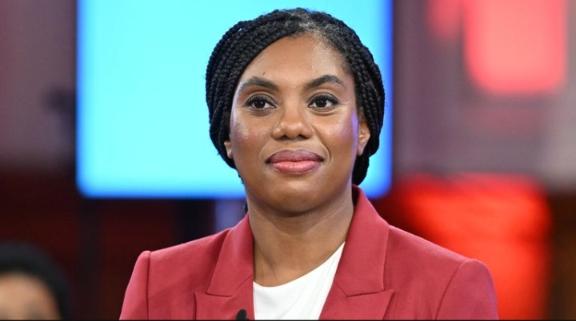
  • Kemi Badenoch laments facing more racist abuse as conservative leader.

    Kemi Badenoch has revealed her shock at the level of racist abuse she has faced since her election as the first Black woman to lead the Conservative Party, despite previously calling Britain “the best place in the world to be Black.”

    In an interview with the Sunday Times, she described a barrage of personal attacks, both online and from a small number of MPs, labelling the hostility as “Kemi derangement syndrome.”

    She noted a rise in ethno-nationalist rhetoric on social media, stating that critics questioned her achievements due to her race and ethnicity.

    She said, “There’s a certain cadre of people who clearly can’t cope with the fact that I won this, and I’m doing it. The level of personal attacks from anonymous people it’s hysterical. Not even just from MPs. I actually don’t think it’s that many MPs. I think it’s two to three people out of 120. That’s nothing. But online as well. People used to talk about Trump derangement syndrome. I think there’s a Kemi derangement syndrome: ‘How could she possibly have done this?’”

    On social media, the Tory leader said, “There’s a lot of ethno-nationalism creeping up, lots of stuff about my race and my ethnicity and the tropes around, ‘well, she couldn’t possibly have done this all by herself.’”

    Born in Wimbledon and raised in Nigeria before returning to the UK at 16, Badenoch has previously distanced herself from her Nigerian roots.

    The Sunday Times quoted her on Saturday, saying, “I always try to think of every possible explanation before I go to race and racism. I think that is a healthy way to run a society. I remember when I stood up a few years ago and said Britain is not a racist country—ethnic minorities do very well here, it is white working-class boys who are actually struggling on a lot of metrics—and I got pilloried for that.

    “My view is that there are people out there who will say whatever it is, they will throw whatever kind of mud at you, and they will hope that it sticks.”
    Kemi Badenoch laments facing more racist abuse as conservative leader. Kemi Badenoch has revealed her shock at the level of racist abuse she has faced since her election as the first Black woman to lead the Conservative Party, despite previously calling Britain “the best place in the world to be Black.” In an interview with the Sunday Times, she described a barrage of personal attacks, both online and from a small number of MPs, labelling the hostility as “Kemi derangement syndrome.” She noted a rise in ethno-nationalist rhetoric on social media, stating that critics questioned her achievements due to her race and ethnicity. She said, “There’s a certain cadre of people who clearly can’t cope with the fact that I won this, and I’m doing it. The level of personal attacks from anonymous people it’s hysterical. Not even just from MPs. I actually don’t think it’s that many MPs. I think it’s two to three people out of 120. That’s nothing. But online as well. People used to talk about Trump derangement syndrome. I think there’s a Kemi derangement syndrome: ‘How could she possibly have done this?’” On social media, the Tory leader said, “There’s a lot of ethno-nationalism creeping up, lots of stuff about my race and my ethnicity and the tropes around, ‘well, she couldn’t possibly have done this all by herself.’” Born in Wimbledon and raised in Nigeria before returning to the UK at 16, Badenoch has previously distanced herself from her Nigerian roots. The Sunday Times quoted her on Saturday, saying, “I always try to think of every possible explanation before I go to race and racism. I think that is a healthy way to run a society. I remember when I stood up a few years ago and said Britain is not a racist country—ethnic minorities do very well here, it is white working-class boys who are actually struggling on a lot of metrics—and I got pilloried for that. “My view is that there are people out there who will say whatever it is, they will throw whatever kind of mud at you, and they will hope that it sticks.”
    1 Comentários ·0 Compartilhamentos ·767 Visualizações
Fintter https://fintter.com