Site içinde arama yapın
  • The World’s First Telephone (1876)

    The oldest real telephone is the device invented by Alexander Graham Bell in 1876, widely recognized as the first practical telephone capable of transmitting clear human speech over electrical wires. This groundbreaking invention marked the beginning of modern voice communication and laid the foundation for the global telecommunications industry we rely on today.
    #TelephoneHistory, #AlexanderGrahamBell, #VintageTechnology, #HistoryOfCommunication
    The World’s First Telephone (1876) The oldest real telephone is the device invented by Alexander Graham Bell in 1876, widely recognized as the first practical telephone capable of transmitting clear human speech over electrical wires. This groundbreaking invention marked the beginning of modern voice communication and laid the foundation for the global telecommunications industry we rely on today. #TelephoneHistory, #AlexanderGrahamBell, #VintageTechnology, #HistoryOfCommunication
    love
    1
    · 0 Yorumlar ·0 hisse senetleri ·249 Views
  • JUST IN
    Wizkid and Davido didn’t become icons by staying comfortable. They started from the ground up, evolved constantly, took risks, and experimented with new sounds. That commitment to growth is why they remain relevant today.

    According to Lord Lamba, the same mindset inspired his transition from skit-making to live streaming.

    Growth demands reinvention. Relevance belongs to those who adapt. In entertainment, standing still is the fastest way to fall behind.
    `~Richard Udofia

    #Wizkid #Davido #LordLamba #EntertainmentNews #GrowthMindset #Reinvention
    JUST IN ‼️ Wizkid and Davido didn’t become icons by staying comfortable. They started from the ground up, evolved constantly, took risks, and experimented with new sounds. That commitment to growth is why they remain relevant today. According to Lord Lamba, the same mindset inspired his transition from skit-making to live streaming. Growth demands reinvention. Relevance belongs to those who adapt. In entertainment, standing still is the fastest way to fall behind. 🗣️ `~Richard Udofia #Wizkid #Davido #LordLamba #EntertainmentNews #GrowthMindset #Reinvention
    0 Yorumlar ·0 hisse senetleri ·424 Views
  • Can Datti Baba-Ahmed Really Replace Peter Obi? LP’s 2023 Running Mate Declares 2027 Presidential Ambition Amid Party Crisis

    Is a new political battle for Nigeria’s presidency already taking shape within the opposition—and could Senator Datti Baba-Ahmed be positioning himself as the next major contender? These are the questions dominating political discussions after the former Labour Party (LP) vice-presidential candidate in the 2023 election formally declared his intention to contest the 2027 presidency.

    Baba-Ahmed made the announcement at a rally at the Labour Party’s national secretariat in Abuja, at a time when the party is grappling with internal realignments following the high-profile exit of its 2023 presidential candidate, Peter Obi, to the African Democratic Congress (ADC). His declaration comes barely days after Obi’s departure, instantly igniting debate about the future direction of the Labour Party and the broader opposition ahead of the next general election.

    Addressing party members and supporters, Baba-Ahmed was quick to dismiss any suggestion that his ambition was a reaction to Obi’s political move. Instead, he insisted that his presidential aspiration predates his alliance with Obi, stressing that he was not “following anybody’s trajectory” or attempting to step into anyone’s political space. According to him, records clearly show that he had sought the presidency even before Obi entered the 2023 race.

    He recalled his participation in the 2018 presidential primaries of the Peoples Democratic Party (PDP) in Port Harcourt, noting that his eventual decision to serve as Obi’s running mate was driven by what he described as a rare opportunity for national unity rather than personal ambition. For Baba-Ahmed, aligning with Obi was not a surrender of his own political vision but a strategic choice aimed at offering Nigerians an alternative leadership model.

    Beyond ambition, his speech touched on sensitive but unavoidable themes in Nigerian politics—religion and ethnicity. Baba-Ahmed openly acknowledged his identity as a practising Muslim and a Hausa man, but maintained that the Nigerian Constitution guarantees every qualified citizen the right to seek elective office. According to him, his decision to run is rooted in what he described as a genuine desire to help rescue Nigeria from its many challenges, rather than sectional or personal interests.

    However, he also struck a cautious tone, emphasizing that he would respect due process within the Labour Party and the electoral framework. While affirming his intention, he stated that he would not formally pursue the ticket until the Independent National Electoral Commission (INEC) releases its timetable and the party leadership officially calls for aspirants. To him, this approach reflects both loyalty to party structures and adherence to democratic norms.

    His declaration has added a new layer of complexity to an already evolving opposition landscape. With Peter Obi now outside the Labour Party, questions are being raised about who will command the loyalty of the party’s grassroots supporters, many of whom were mobilized by the “Obidient” movement in 2023. Can Datti Baba-Ahmed inherit that momentum, or will the party struggle to redefine itself without its most visible figure?

    Reacting to the announcement, Labour Party National Chairman Julius Abure praised Baba-Ahmed for remaining within the party despite speculation that he might defect following Obi’s exit. For party loyalists, his decision to stay is being interpreted as a signal of continuity and internal stability. For critics, however, it raises deeper questions: does the Labour Party still have a unified ideological direction, or is it entering a phase of leadership contest and fragmentation?

    As 2027 approaches, Baba-Ahmed’s declaration invites broader national reflection. Is Nigeria’s opposition finally preparing early for the next election, or is this the beginning of another cycle of internal rivalry that could weaken alternative voices? Can Baba-Ahmed’s experience, ideology, and personal narrative convince Nigerians that he offers something fundamentally different from the political establishment? And perhaps most importantly, can he fill the vacuum left by Peter Obi’s departure—or will the Labour Party need a complete reinvention to remain politically relevant?

    On Fintter, this development is more than a headline. It is a conversation about leadership, loyalty, and the future of opposition politics in Nigeria. Is Datti Baba-Ahmed the natural successor within the Labour Party, or is his ambition likely to deepen internal divisions? Can he rally young voters and reform-minded citizens the way Obi once did?

    What do you think? Is Datti Baba-Ahmed the right figure to lead the Labour Party into 2027—or is the party losing its political identity? Share your views and join the debate on Fintter.

    Can Datti Baba-Ahmed Really Replace Peter Obi? LP’s 2023 Running Mate Declares 2027 Presidential Ambition Amid Party Crisis Is a new political battle for Nigeria’s presidency already taking shape within the opposition—and could Senator Datti Baba-Ahmed be positioning himself as the next major contender? These are the questions dominating political discussions after the former Labour Party (LP) vice-presidential candidate in the 2023 election formally declared his intention to contest the 2027 presidency. Baba-Ahmed made the announcement at a rally at the Labour Party’s national secretariat in Abuja, at a time when the party is grappling with internal realignments following the high-profile exit of its 2023 presidential candidate, Peter Obi, to the African Democratic Congress (ADC). His declaration comes barely days after Obi’s departure, instantly igniting debate about the future direction of the Labour Party and the broader opposition ahead of the next general election. Addressing party members and supporters, Baba-Ahmed was quick to dismiss any suggestion that his ambition was a reaction to Obi’s political move. Instead, he insisted that his presidential aspiration predates his alliance with Obi, stressing that he was not “following anybody’s trajectory” or attempting to step into anyone’s political space. According to him, records clearly show that he had sought the presidency even before Obi entered the 2023 race. He recalled his participation in the 2018 presidential primaries of the Peoples Democratic Party (PDP) in Port Harcourt, noting that his eventual decision to serve as Obi’s running mate was driven by what he described as a rare opportunity for national unity rather than personal ambition. For Baba-Ahmed, aligning with Obi was not a surrender of his own political vision but a strategic choice aimed at offering Nigerians an alternative leadership model. Beyond ambition, his speech touched on sensitive but unavoidable themes in Nigerian politics—religion and ethnicity. Baba-Ahmed openly acknowledged his identity as a practising Muslim and a Hausa man, but maintained that the Nigerian Constitution guarantees every qualified citizen the right to seek elective office. According to him, his decision to run is rooted in what he described as a genuine desire to help rescue Nigeria from its many challenges, rather than sectional or personal interests. However, he also struck a cautious tone, emphasizing that he would respect due process within the Labour Party and the electoral framework. While affirming his intention, he stated that he would not formally pursue the ticket until the Independent National Electoral Commission (INEC) releases its timetable and the party leadership officially calls for aspirants. To him, this approach reflects both loyalty to party structures and adherence to democratic norms. His declaration has added a new layer of complexity to an already evolving opposition landscape. With Peter Obi now outside the Labour Party, questions are being raised about who will command the loyalty of the party’s grassroots supporters, many of whom were mobilized by the “Obidient” movement in 2023. Can Datti Baba-Ahmed inherit that momentum, or will the party struggle to redefine itself without its most visible figure? Reacting to the announcement, Labour Party National Chairman Julius Abure praised Baba-Ahmed for remaining within the party despite speculation that he might defect following Obi’s exit. For party loyalists, his decision to stay is being interpreted as a signal of continuity and internal stability. For critics, however, it raises deeper questions: does the Labour Party still have a unified ideological direction, or is it entering a phase of leadership contest and fragmentation? As 2027 approaches, Baba-Ahmed’s declaration invites broader national reflection. Is Nigeria’s opposition finally preparing early for the next election, or is this the beginning of another cycle of internal rivalry that could weaken alternative voices? Can Baba-Ahmed’s experience, ideology, and personal narrative convince Nigerians that he offers something fundamentally different from the political establishment? And perhaps most importantly, can he fill the vacuum left by Peter Obi’s departure—or will the Labour Party need a complete reinvention to remain politically relevant? On Fintter, this development is more than a headline. It is a conversation about leadership, loyalty, and the future of opposition politics in Nigeria. Is Datti Baba-Ahmed the natural successor within the Labour Party, or is his ambition likely to deepen internal divisions? Can he rally young voters and reform-minded citizens the way Obi once did? 💬 What do you think? Is Datti Baba-Ahmed the right figure to lead the Labour Party into 2027—or is the party losing its political identity? Share your views and join the debate on Fintter.
    0 Yorumlar ·0 hisse senetleri ·660 Views
  • What Will Be the End of Nyesom Wike? Analysis of His Political Influence and Future Prospects”

    In this incisive opinion piece, Pelumi Olajengbesi, Esq., examines the political trajectory and future of Nyesom Wike, one of Nigeria’s most influential and polarizing politicians. Wike, formerly instrumental in shaping the emergence of President Tinubu, has long dominated Rivers State politics, pushing aside rivals and asserting a near-absolute influence over his political domain. His style, a combination of strategic brilliance, territorial control, and relentless confrontation, has both earned him admiration and created friction with allies and the opposition alike.
    Wike’s political approach has been defined by territorial command—he defines the political space, punishes disloyalty, and keeps opponents uncertain. This method proved highly effective when he fully controlled Rivers politics, yet the shifting political terrain has begun to challenge his authority. The analysis highlights that when his former protégé, Governor Fubara, aligned with the APC, Wike’s influence began to face constraints, illustrating that political power dependent on perception and intimidation can be fragile.
    Olajengbesi notes that Wike’s predicament is heightened by his dual position as both a useful ally and an outsider within the ruling party. While his support for Tinubu and his ability to destabilize opposition calculations have made him relevant at the federal level, his independence and confrontational style are increasingly perceived as a threat to party discipline and structure. As the ruling party prepares for the next political cycle, Wike’s influence risks erosion if it continues to undermine institutional hierarchy.
    The opinion piece predicts several possible outcomes for Wike: gradual isolation, where his access and influence diminish quietly; neutralisation, where he retains office but loses political leverage; or forced realignment, requiring him to fully submit to party structures, sacrificing the independence that has defined his political brand. However, Wike’s experience and strategic acumen suggest he may yet adapt, potentially transitioning from territorial dominance to coalition management, balancing influence with accommodation.
    Ultimately, Olajengbesi portrays Wike as a fascinating case study of power, strategy, and political survival, highlighting that his future depends not only on strength but on his capacity to navigate institutional politics without alienating the structures that sustain it. The piece underscores that in Nigerian politics, influence without institutional belonging is potent but precarious, and Wike’s next moves will determine whether his story ends in decline or reinvention.
    What Will Be the End of Nyesom Wike? Analysis of His Political Influence and Future Prospects” In this incisive opinion piece, Pelumi Olajengbesi, Esq., examines the political trajectory and future of Nyesom Wike, one of Nigeria’s most influential and polarizing politicians. Wike, formerly instrumental in shaping the emergence of President Tinubu, has long dominated Rivers State politics, pushing aside rivals and asserting a near-absolute influence over his political domain. His style, a combination of strategic brilliance, territorial control, and relentless confrontation, has both earned him admiration and created friction with allies and the opposition alike. Wike’s political approach has been defined by territorial command—he defines the political space, punishes disloyalty, and keeps opponents uncertain. This method proved highly effective when he fully controlled Rivers politics, yet the shifting political terrain has begun to challenge his authority. The analysis highlights that when his former protégé, Governor Fubara, aligned with the APC, Wike’s influence began to face constraints, illustrating that political power dependent on perception and intimidation can be fragile. Olajengbesi notes that Wike’s predicament is heightened by his dual position as both a useful ally and an outsider within the ruling party. While his support for Tinubu and his ability to destabilize opposition calculations have made him relevant at the federal level, his independence and confrontational style are increasingly perceived as a threat to party discipline and structure. As the ruling party prepares for the next political cycle, Wike’s influence risks erosion if it continues to undermine institutional hierarchy. The opinion piece predicts several possible outcomes for Wike: gradual isolation, where his access and influence diminish quietly; neutralisation, where he retains office but loses political leverage; or forced realignment, requiring him to fully submit to party structures, sacrificing the independence that has defined his political brand. However, Wike’s experience and strategic acumen suggest he may yet adapt, potentially transitioning from territorial dominance to coalition management, balancing influence with accommodation. Ultimately, Olajengbesi portrays Wike as a fascinating case study of power, strategy, and political survival, highlighting that his future depends not only on strength but on his capacity to navigate institutional politics without alienating the structures that sustain it. The piece underscores that in Nigerian politics, influence without institutional belonging is potent but precarious, and Wike’s next moves will determine whether his story ends in decline or reinvention.
    0 Yorumlar ·0 hisse senetleri ·511 Views
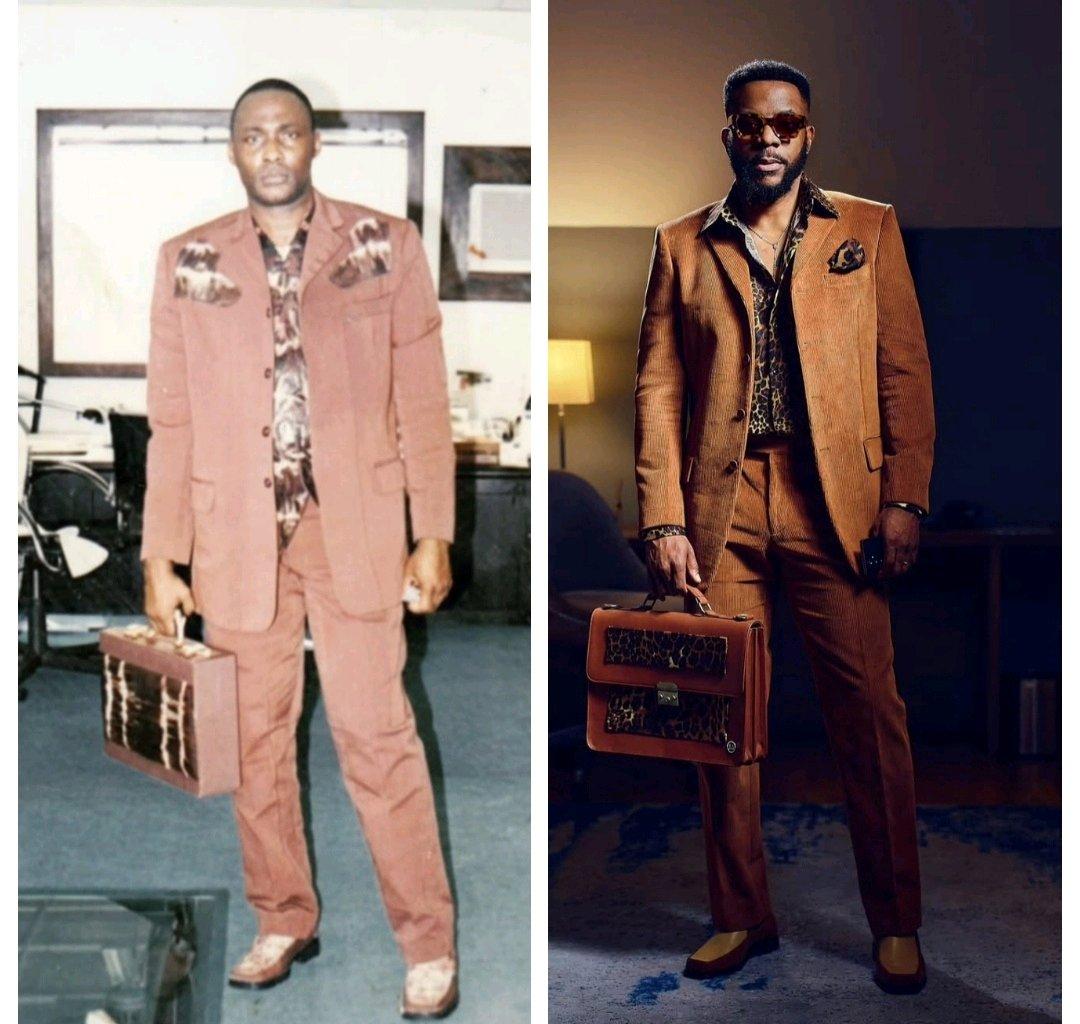
  • Ebuka Pays Stylish Tribute to Nollywood Icon RMD

    Media personality and fashion trendsetter Ebuka Obi-Uchendu has wowed fans once again — this time by recreating one of Richard Mofe-Damijo’s (RMD) classic throwback looks.

    Sharing the tribute on Instagram, Ebuka donned a brown patterned suit, paired with a matching briefcase and polished shoes. The outfit was a modern twist on RMD’s vintage photo taken decades ago, where the legendary actor posed confidently in a similar setting.

    In his post, Ebuka hailed RMD as a “superstar actor, producer, writer, lawyer, journalist, and public servant,” while also describing him as “Nigeria’s favourite boyfriend & zaddy for over 30 years.”

    The homage sparked massive reactions online, with celebrities and fans applauding Ebuka’s creativity. Many praised the stylish gesture as the perfect blend of respect and reinvention, cementing both RMD’s timeless influence and Ebuka’s standing as one of Nigeria’s most fashionable personalities.
    Ebuka Pays Stylish Tribute to Nollywood Icon RMD Media personality and fashion trendsetter Ebuka Obi-Uchendu has wowed fans once again — this time by recreating one of Richard Mofe-Damijo’s (RMD) classic throwback looks. Sharing the tribute on Instagram, Ebuka donned a brown patterned suit, paired with a matching briefcase and polished shoes. The outfit was a modern twist on RMD’s vintage photo taken decades ago, where the legendary actor posed confidently in a similar setting. In his post, Ebuka hailed RMD as a “superstar actor, producer, writer, lawyer, journalist, and public servant,” while also describing him as “Nigeria’s favourite boyfriend & zaddy for over 30 years.” The homage sparked massive reactions online, with celebrities and fans applauding Ebuka’s creativity. Many praised the stylish gesture as the perfect blend of respect and reinvention, cementing both RMD’s timeless influence and Ebuka’s standing as one of Nigeria’s most fashionable personalities.
    0 Yorumlar ·0 hisse senetleri ·547 Views
  • Nigerian Inventor Emeka Nelson Builds 1,000-Watt Water-Powered Generator That Runs 6 Hours on Just 1 Litre of Water.

    Emeka Nelson’s eco-friendly invention promises affordable and sustainable electricity, powering devices for six hours with just one litre of water.

    In a groundbreaking innovation that could reshape the future of clean energy in Africa, Nigerian inventor Emeka Nelson has developed a 1,000-watt water-powered generator capable of running for six hours on just one litre of water.
    Nelson’s creation is being hailed as a potential game-changer in the renewable energy space, especially in a country like Nigeria where access to consistent electricity remains a major challenge for millions. The generator reportedly produces clean energy without emitting harmful gases or requiring expensive fuel, making it both eco-friendly and cost-efficient.
    Standing proudly in front of the Nigerian flag and holding his invention in a viral photo posted by The African Dream, Nelson embodies the spirit of grassroots innovation and resilience. According to sources, the generator could provide electricity for small appliances, lighting, and essential devices in homes and small businesses — a much-needed solution in rural and underserved communities.
    This innovation adds to Nelson’s growing reputation as a young inventor to watch, and it further reinforces the immense potential that lies within Nigeria’s youth — particularly in science, technology, and engineering.
    Author
    Source
    Nigerian Inventor Emeka Nelson Builds 1,000-Watt Water-Powered Generator That Runs 6 Hours on Just 1 Litre of Water. Emeka Nelson’s eco-friendly invention promises affordable and sustainable electricity, powering devices for six hours with just one litre of water. In a groundbreaking innovation that could reshape the future of clean energy in Africa, Nigerian inventor Emeka Nelson has developed a 1,000-watt water-powered generator capable of running for six hours on just one litre of water. Nelson’s creation is being hailed as a potential game-changer in the renewable energy space, especially in a country like Nigeria where access to consistent electricity remains a major challenge for millions. The generator reportedly produces clean energy without emitting harmful gases or requiring expensive fuel, making it both eco-friendly and cost-efficient. Standing proudly in front of the Nigerian flag and holding his invention in a viral photo posted by The African Dream, Nelson embodies the spirit of grassroots innovation and resilience. According to sources, the generator could provide electricity for small appliances, lighting, and essential devices in homes and small businesses — a much-needed solution in rural and underserved communities. This innovation adds to Nelson’s growing reputation as a young inventor to watch, and it further reinforces the immense potential that lies within Nigeria’s youth — particularly in science, technology, and engineering. Author Source
    1 Yorumlar ·0 hisse senetleri ·813 Views
Fintter https://fintter.com