• Abuja Health Centre in Kuje Left in Ruins for Years, Linked to Childbirth Deaths as Residents Urge FCT Minister Nyesom Wike to Intervene

    Residents of Sabo community in Kuje Area Council, Abuja, have raised alarm over the prolonged neglect of their only primary healthcare facility, linking its dilapidated condition to preventable maternal deaths. The Sabo Primary Health Care Centre, which serves an estimated 7,200 people, has been largely non-functional for years, severely limiting access to basic and emergency medical services, particularly for pregnant women.

    According to Tracka, BudgIT’s public expenditure tracking platform, the centre’s infrastructure has collapsed, with damaged roofs and ceilings, wards without beds, and a complete lack of drugs and essential medical equipment. The facility has reportedly remained abandoned and vandalised for nearly seven years, forcing residents to depend on local chemists and unqualified alternatives for treatment. Community members disclosed that several women have died during childbirth due to the absence of functional maternal healthcare services.

    In response, Tracka and affected residents have appealed directly to FCT Minister Nyesom Wike, alongside Senator Ireti Kingibe and Hon. Abdullahi Sabo, urging them to prioritise the reconstruction, equipping, and staffing of the centre. They stressed that restoring the facility is critical to safeguarding public health, reducing maternal mortality, and ensuring that vulnerable residents can access lifesaving medical care within their community.
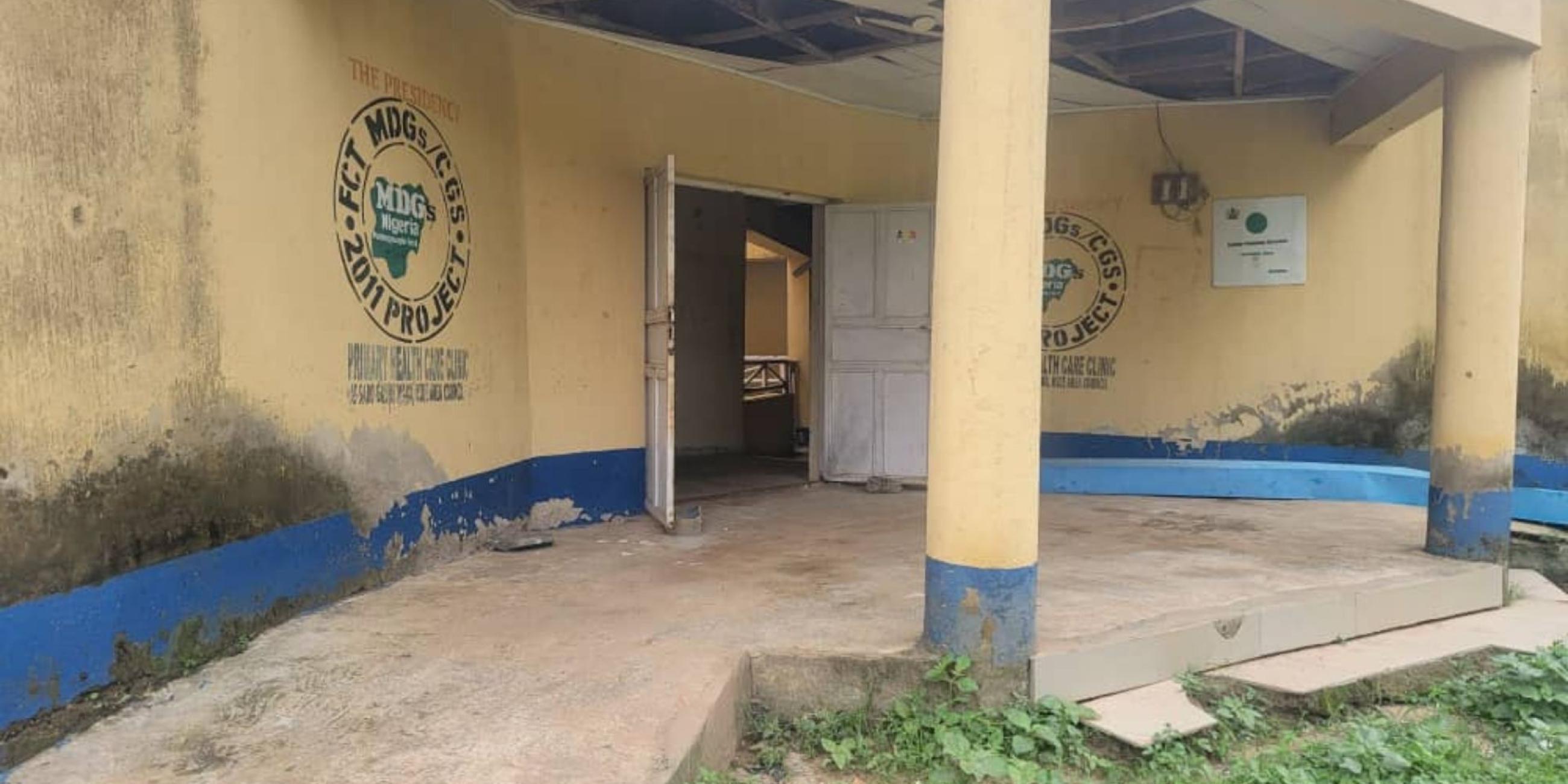
    Abuja Health Centre in Kuje Left in Ruins for Years, Linked to Childbirth Deaths as Residents Urge FCT Minister Nyesom Wike to Intervene Residents of Sabo community in Kuje Area Council, Abuja, have raised alarm over the prolonged neglect of their only primary healthcare facility, linking its dilapidated condition to preventable maternal deaths. The Sabo Primary Health Care Centre, which serves an estimated 7,200 people, has been largely non-functional for years, severely limiting access to basic and emergency medical services, particularly for pregnant women. According to Tracka, BudgIT’s public expenditure tracking platform, the centre’s infrastructure has collapsed, with damaged roofs and ceilings, wards without beds, and a complete lack of drugs and essential medical equipment. The facility has reportedly remained abandoned and vandalised for nearly seven years, forcing residents to depend on local chemists and unqualified alternatives for treatment. Community members disclosed that several women have died during childbirth due to the absence of functional maternal healthcare services. In response, Tracka and affected residents have appealed directly to FCT Minister Nyesom Wike, alongside Senator Ireti Kingibe and Hon. Abdullahi Sabo, urging them to prioritise the reconstruction, equipping, and staffing of the centre. They stressed that restoring the facility is critical to safeguarding public health, reducing maternal mortality, and ensuring that vulnerable residents can access lifesaving medical care within their community.
    like
    1
    · 0 Comentários ·0 Compartilhamentos ·761 Visualizações
  • Kano State Allocates ₦2 Billion for Generator Maintenance and Servicing in 2026 Budget Amid Nigeria’s Worsening Electricity Crisis

    The Kano State Government has earmarked ₦2 billion in its 2026 budget for the servicing and maintenance of generating sets across government facilities, highlighting the state’s continued reliance on alternative power sources due to Nigeria’s unreliable electricity supply. The allocation was revealed in the 2026 appropriation document published on the Open States transparency platform owned by BudgIT and reviewed by SaharaReporters.

    The spending plan comes despite recent efforts by Kano State, alongside Katsina and Jigawa states, to establish Nigeria’s first regional electricity market with an initial ₦50 billion funding commitment. Kano has also invested in independent power projects, including the 10-megawatt Tiga Hydro Power Plant, which is already producing electricity, and another six-megawatt project that was about 65 percent completed as of late 2024.

    However, persistent national power challenges continue to undermine these initiatives. Nigeria’s electricity crisis deepened recently after the national grid collapsed, plunging power generation from over 2,000 megawatts to just 139.92MW within an hour and leaving most distribution companies without electricity supply. Kano was among several states that received zero allocation during the outage.

    The ₦2 billion generator maintenance budget underscores the harsh reality facing many Nigerian states as they grapple with frequent grid failures and inadequate power infrastructure, mirroring similar spending patterns elsewhere, including Plateau State’s ₦400 million allocation in 2025 for the purchase of thousands of generators.
    Kano State Allocates ₦2 Billion for Generator Maintenance and Servicing in 2026 Budget Amid Nigeria’s Worsening Electricity Crisis The Kano State Government has earmarked ₦2 billion in its 2026 budget for the servicing and maintenance of generating sets across government facilities, highlighting the state’s continued reliance on alternative power sources due to Nigeria’s unreliable electricity supply. The allocation was revealed in the 2026 appropriation document published on the Open States transparency platform owned by BudgIT and reviewed by SaharaReporters. The spending plan comes despite recent efforts by Kano State, alongside Katsina and Jigawa states, to establish Nigeria’s first regional electricity market with an initial ₦50 billion funding commitment. Kano has also invested in independent power projects, including the 10-megawatt Tiga Hydro Power Plant, which is already producing electricity, and another six-megawatt project that was about 65 percent completed as of late 2024. However, persistent national power challenges continue to undermine these initiatives. Nigeria’s electricity crisis deepened recently after the national grid collapsed, plunging power generation from over 2,000 megawatts to just 139.92MW within an hour and leaving most distribution companies without electricity supply. Kano was among several states that received zero allocation during the outage. The ₦2 billion generator maintenance budget underscores the harsh reality facing many Nigerian states as they grapple with frequent grid failures and inadequate power infrastructure, mirroring similar spending patterns elsewhere, including Plateau State’s ₦400 million allocation in 2025 for the purchase of thousands of generators.
    like
    1
    · 0 Comentários ·0 Compartilhamentos ·460 Visualizações
  • Conflicting Revenue Figures Under Tinubu Government Raise Concerns Over Fiscal Transparency in Nigeria

    Concerns are mounting over Nigeria’s fiscal transparency following conflicting revenue figures reported under President Bola Tinubu’s administration. While the Medium-Term Expenditure Framework (MTEF) indicates the government had generated ₦13.6 trillion as of July 2025, Finance Minister statements report only ₦10.7 trillion in revenue. Analysts warn that the discrepancy raises questions about budget accuracy, deficit financing, and long-term economic implications. Civil society groups, including BudgIT and MonITNG, have called for reconciled, transparent, and timely disclosure of revenue, borrowing, and expenditure data to ensure accountability and public trust.
    Conflicting Revenue Figures Under Tinubu Government Raise Concerns Over Fiscal Transparency in Nigeria Concerns are mounting over Nigeria’s fiscal transparency following conflicting revenue figures reported under President Bola Tinubu’s administration. While the Medium-Term Expenditure Framework (MTEF) indicates the government had generated ₦13.6 trillion as of July 2025, Finance Minister statements report only ₦10.7 trillion in revenue. Analysts warn that the discrepancy raises questions about budget accuracy, deficit financing, and long-term economic implications. Civil society groups, including BudgIT and MonITNG, have called for reconciled, transparent, and timely disclosure of revenue, borrowing, and expenditure data to ensure accountability and public trust.
    like
    1
    · 0 Comentários ·0 Compartilhamentos ·563 Visualizações
  • Owena–Idanre Road in Ondo State Left Abandoned Despite ₦371 Million Government Payment, Raising Fresh Concerns Over Corruption and Project Accountability

    A field report by Tracka and the BudgIT Foundation has revealed that the Owena–Alade–Idanre Road in Ondo State remains abandoned and nearly impassable despite over ₦371 million released for its construction and rehabilitation in 2024. Physical inspections found no evidence of active work or contractor presence, contradicting official payment records. The poor condition of the road has worsened transportation challenges, hurt local economic activities, and heightened security risks for residents. Civil society groups are now demanding transparency from the Federal Ministry of Works and calling on anti-graft agencies to investigate the contractor and possible diversion or mismanagement of public funds.
    Owena–Idanre Road in Ondo State Left Abandoned Despite ₦371 Million Government Payment, Raising Fresh Concerns Over Corruption and Project Accountability A field report by Tracka and the BudgIT Foundation has revealed that the Owena–Alade–Idanre Road in Ondo State remains abandoned and nearly impassable despite over ₦371 million released for its construction and rehabilitation in 2024. Physical inspections found no evidence of active work or contractor presence, contradicting official payment records. The poor condition of the road has worsened transportation challenges, hurt local economic activities, and heightened security risks for residents. Civil society groups are now demanding transparency from the Federal Ministry of Works and calling on anti-graft agencies to investigate the contractor and possible diversion or mismanagement of public funds.
    0 Comentários ·0 Compartilhamentos ·347 Visualizações
  • News Brief: Tinubu Must Lead on Social Welfare, Not Delegate to Governors — Falana.

    Prominent human rights lawyer Femi Falana (SAN) has urged President Bola Tinubu to take direct responsibility for combating poverty in Nigeria, rather than deferring social welfare duties to state governors.

    In a statement on Sunday, Falana reacted to Tinubu’s recent plea to APC governors to “wet the grass” by addressing grassroots economic hardship. While acknowledging the President’s concern, Falana insisted the Federal Government must move beyond appeals and fully fund existing national welfare programmes.

    He criticised the 2025 budget allocation of ₦32.7 billion to the National Social Investment Programme (NSIP), comparing it unfavorably to the ₦39 billion reportedly spent on the International Conference Centre renovation. “This government cannot justify underfunding welfare while indulging in expensive renovations,” Falana said.

    He called for a ₦5 trillion investment in the NSIP, which supports youth employment, school feeding, soft loans, and cash transfers for vulnerable households. Falana also called out wasteful spending in the 2025 budget, citing ₦6.93 trillion in padded projects exposed by BudgIT.

    With ₦11.195 trillion disbursed to states via FAAC in the last year, Falana said resources are available—what’s lacking is political will and prioritization.

    He also demanded multi-stakeholder oversight for NSIP funds, including civil society and trade unions, to ensure transparency and real impact.

    #FemiFalana #TinubuAdministration #SocialWelfare #NSIP #NigerianPovertyCrisis #Budget2025
    News Brief: Tinubu Must Lead on Social Welfare, Not Delegate to Governors — Falana. Prominent human rights lawyer Femi Falana (SAN) has urged President Bola Tinubu to take direct responsibility for combating poverty in Nigeria, rather than deferring social welfare duties to state governors. In a statement on Sunday, Falana reacted to Tinubu’s recent plea to APC governors to “wet the grass” by addressing grassroots economic hardship. While acknowledging the President’s concern, Falana insisted the Federal Government must move beyond appeals and fully fund existing national welfare programmes. He criticised the 2025 budget allocation of ₦32.7 billion to the National Social Investment Programme (NSIP), comparing it unfavorably to the ₦39 billion reportedly spent on the International Conference Centre renovation. “This government cannot justify underfunding welfare while indulging in expensive renovations,” Falana said. He called for a ₦5 trillion investment in the NSIP, which supports youth employment, school feeding, soft loans, and cash transfers for vulnerable households. Falana also called out wasteful spending in the 2025 budget, citing ₦6.93 trillion in padded projects exposed by BudgIT. With ₦11.195 trillion disbursed to states via FAAC in the last year, Falana said resources are available—what’s lacking is political will and prioritization. He also demanded multi-stakeholder oversight for NSIP funds, including civil society and trade unions, to ensure transparency and real impact. #FemiFalana #TinubuAdministration #SocialWelfare #NSIP #NigerianPovertyCrisis #Budget2025
    0 Comentários ·0 Compartilhamentos ·3KB Visualizações
Fintter https://fintter.com