


 About
About
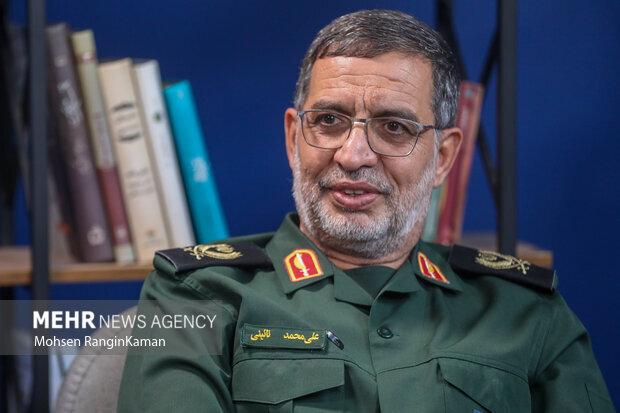
An Iranian military spokesman says Israel would have collapsed if the recent 12-day war had continued for just two more weeks.
Speaking at a conference in Tehran, IRGC spokesman Brig. Gen. Ali Mohammad Naeini said Iran relied entirely on its own capabilities during the conflict and claimed this strategy enabled it to defeat its enemies.
He highlighted the Basij force as a key pillar of Iran’s national power, arguing that any government disconnected from its citizens is at risk of collapse. Naeini said the war tested Iran’s deterrence, strategy, and resilience, adding that decades of threats pushed Iran to build a self-reliant, asymmetric defense system after the Iran-Iraq war.
He noted that Iran has expanded its missile ranges and scientific capabilities, describing the country’s missile experts as young, committed specialists. According to him, Iran struck at least 45 Israeli strategic sites during the conflict, causing major damage and prompting calls to end the fighting.
Naeini insisted Iran needed no foreign assistance and aimed to counter narratives portraying it as weak. He also said neighboring countries quickly condemned Israel’s initial attack on Iran.
The conflict began on June 13 when Israel carried out an attack on Iran, followed by U.S. strikes on Iranian nuclear sites. The fighting left more than 1,000 people dead in Iran. In response, Iran targeted sites across Israeli-controlled territories and struck the U.S. Al-Udeid air base in Qatar.
By June 24, Iran’s retaliatory operations forced an end to the hostilities.
Speaking at a conference in Tehran, IRGC spokesman Brig. Gen. Ali Mohammad Naeini said Iran relied entirely on its own capabilities during the conflict and claimed this strategy enabled it to defeat its enemies.
He highlighted the Basij force as a key pillar of Iran’s national power, arguing that any government disconnected from its citizens is at risk of collapse. Naeini said the war tested Iran’s deterrence, strategy, and resilience, adding that decades of threats pushed Iran to build a self-reliant, asymmetric defense system after the Iran-Iraq war.
He noted that Iran has expanded its missile ranges and scientific capabilities, describing the country’s missile experts as young, committed specialists. According to him, Iran struck at least 45 Israeli strategic sites during the conflict, causing major damage and prompting calls to end the fighting.
Naeini insisted Iran needed no foreign assistance and aimed to counter narratives portraying it as weak. He also said neighboring countries quickly condemned Israel’s initial attack on Iran.
The conflict began on June 13 when Israel carried out an attack on Iran, followed by U.S. strikes on Iranian nuclear sites. The fighting left more than 1,000 people dead in Iran. In response, Iran targeted sites across Israeli-controlled territories and struck the U.S. Al-Udeid air base in Qatar.
By June 24, Iran’s retaliatory operations forced an end to the hostilities.
An Iranian military spokesman says Israel would have collapsed if the recent 12-day war had continued for just two more weeks.
Speaking at a conference in Tehran, IRGC spokesman Brig. Gen. Ali Mohammad Naeini said Iran relied entirely on its own capabilities during the conflict and claimed this strategy enabled it to defeat its enemies.
He highlighted the Basij force as a key pillar of Iran’s national power, arguing that any government disconnected from its citizens is at risk of collapse. Naeini said the war tested Iran’s deterrence, strategy, and resilience, adding that decades of threats pushed Iran to build a self-reliant, asymmetric defense system after the Iran-Iraq war.
He noted that Iran has expanded its missile ranges and scientific capabilities, describing the country’s missile experts as young, committed specialists. According to him, Iran struck at least 45 Israeli strategic sites during the conflict, causing major damage and prompting calls to end the fighting.
Naeini insisted Iran needed no foreign assistance and aimed to counter narratives portraying it as weak. He also said neighboring countries quickly condemned Israel’s initial attack on Iran.
The conflict began on June 13 when Israel carried out an attack on Iran, followed by U.S. strikes on Iranian nuclear sites. The fighting left more than 1,000 people dead in Iran. In response, Iran targeted sites across Israeli-controlled territories and struck the U.S. Al-Udeid air base in Qatar.
By June 24, Iran’s retaliatory operations forced an end to the hostilities.
0 Commentarii
·0 Distribuiri
·1K Views
