About
About
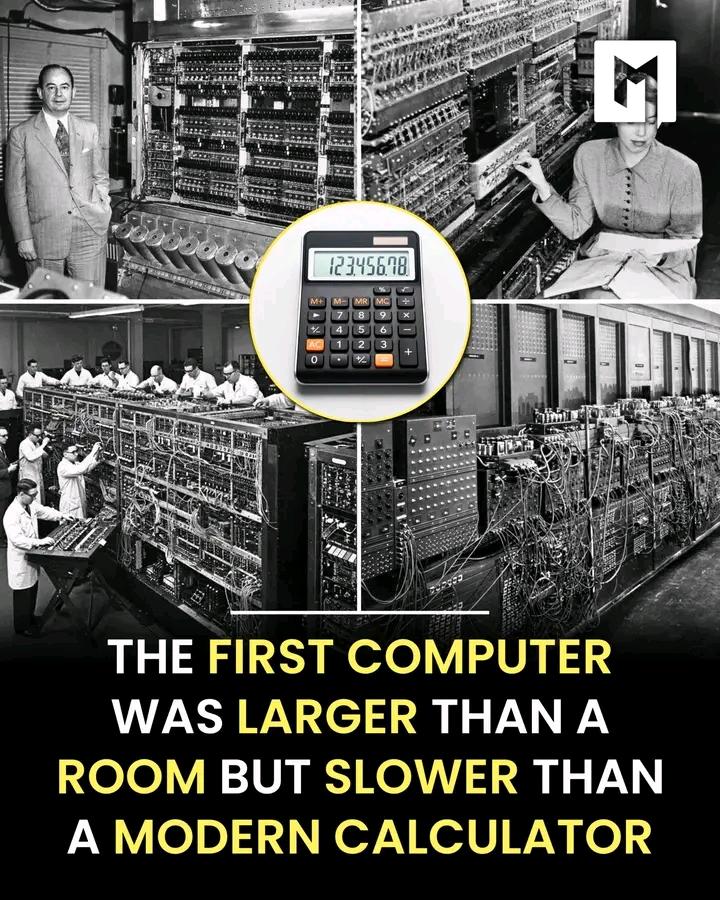
The first computers were massive machines that could fill an entire room.
Devices like the ENIAC weighed more than 25 tons, relied on thousands of glass vacuum tubes, and used a huge amount of electricity.
Despite their size, they could only handle basic math that a simple modern calculator or a smartphone can now finish in a fraction of a second.
Today, the power that once required a whole warehouse and a large team of workers has been shrunk down to fit on a tiny silicon chip.
In less than 100 years, technology has moved from giant, heavy hardware to nearly invisible parts. Looking ahead 50 years, experts predict that computers may disappear into the world around us.
We might use "biological" computers made of living cells, quantum machines that solve impossible problems instantly, or even brain-linked devices that allow us to control technology with just our thoughts.
Devices like the ENIAC weighed more than 25 tons, relied on thousands of glass vacuum tubes, and used a huge amount of electricity.
Despite their size, they could only handle basic math that a simple modern calculator or a smartphone can now finish in a fraction of a second.
Today, the power that once required a whole warehouse and a large team of workers has been shrunk down to fit on a tiny silicon chip.
In less than 100 years, technology has moved from giant, heavy hardware to nearly invisible parts. Looking ahead 50 years, experts predict that computers may disappear into the world around us.
We might use "biological" computers made of living cells, quantum machines that solve impossible problems instantly, or even brain-linked devices that allow us to control technology with just our thoughts.
The first computers were massive machines that could fill an entire room.
Devices like the ENIAC weighed more than 25 tons, relied on thousands of glass vacuum tubes, and used a huge amount of electricity.
Despite their size, they could only handle basic math that a simple modern calculator or a smartphone can now finish in a fraction of a second.
Today, the power that once required a whole warehouse and a large team of workers has been shrunk down to fit on a tiny silicon chip.
In less than 100 years, technology has moved from giant, heavy hardware to nearly invisible parts. Looking ahead 50 years, experts predict that computers may disappear into the world around us.
We might use "biological" computers made of living cells, quantum machines that solve impossible problems instantly, or even brain-linked devices that allow us to control technology with just our thoughts.