Sobre
Sobre
The Kingdom That Grew Rich on Chains
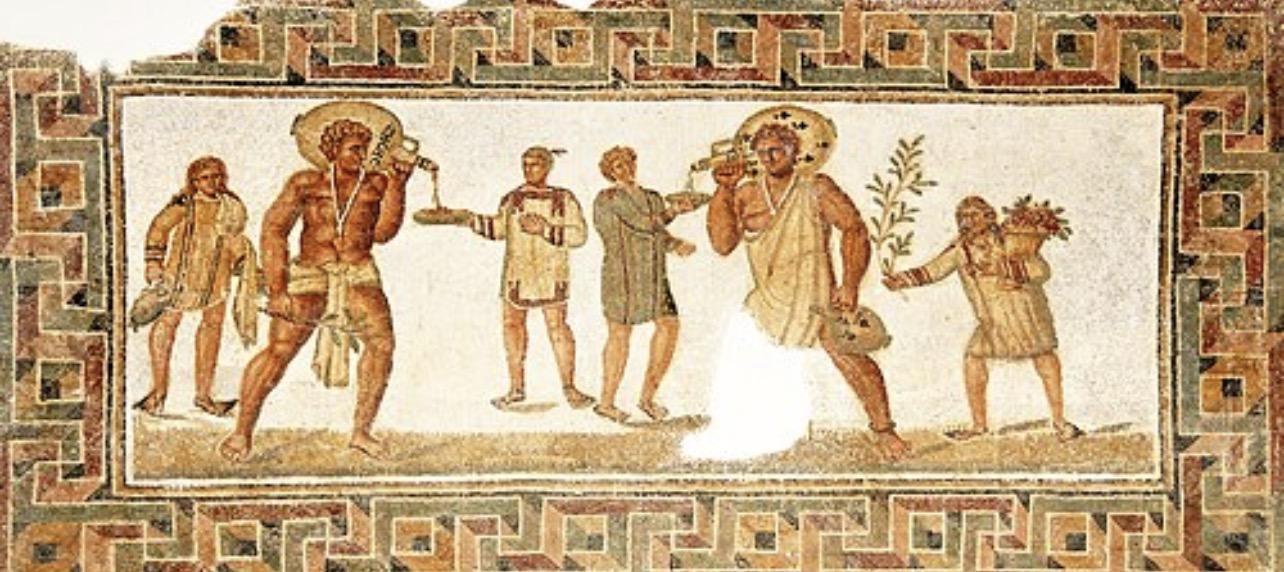
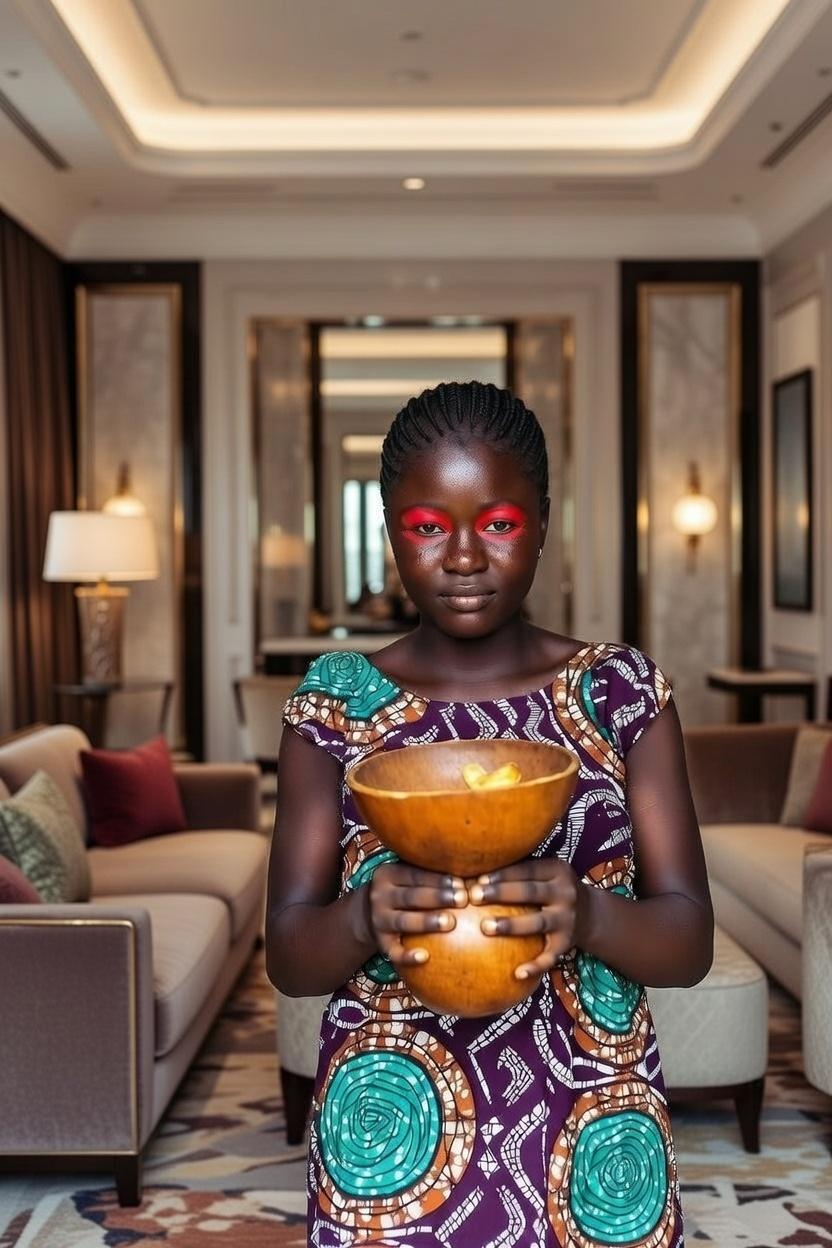
Africa Kingdom
There was once a kingdom so wealthy that its streets seemed to glow under the sun, where gold dust clung to sandals and laughter echoed through markets filled with spices, silk, and stories, yet beneath the music and the celebration, there was a silence no one spoke about, a silence made of chains. The kingdom stood near the sea, where ships came like hungry birds, their bellies empty when they arrived and heavy when they left, and the people of the land believed at first that this trade was like any other, just another way to grow strong, to rise above neighboring lands, to make their king feared and respected across distant shores. The king himself was not born cruel, he was once a boy who ran barefoot across the same earth, who knew the names of his people and laughed with them, but power is a slow fire, and when it burns long enough, it reshapes even the softest heart into something unrecognizable. When the strangers first came with their promises of wealth, weapons, and endless power, they did not ask for gold or crops or art, they asked for people, and at first, the king hesitated, because a kingdom is not its land or its walls but its people, yet the whispers of his council grew louder, telling him that strength required sacrifice, that the world was changing, that if he did not act, others would rise above him and take everything he had built. And so, slowly, quietly, the chains were forged. At first, it was prisoners of war, then it became criminals, then it became anyone who could be taken without causing too much noise, and over time, the lines blurred until even innocence was no longer protection. The markets grew louder, the palace grew brighter, the treasury overflowed, and the king sat on a throne heavier than ever before, but the laughter in the streets began to change, it became sharper, more cautious, as if people spoke with one ear listening for footsteps behind them. Mothers held their children tighter, fathers avoided traveling alone, and trust, once the foundation of the kingdom, began to crack like dry earth under a relentless sun. Still, the ships kept coming, and the kingdom kept growing, its wealth becoming the envy of many, its power unmatched, yet every coin in the treasury carried a weight no one dared to measure.
As years passed, the kingdom became a shadow of its former self, though on the surface it shone brighter than ever, because wealth has a way of hiding decay, of dressing wounds in silk so no one sees the bleeding underneath. The king grew older, and with age came a kind of silence that no music could fill, he began to notice the emptiness in the eyes of his people, the way they bowed not out of respect but out of fear, the way the stories told in the markets no longer spoke of pride but of loss, of those who vanished without farewell. One night, unable to sleep, he walked through the palace halls alone and heard something he had not heard in years, a song, soft and broken, coming from the far end of the courtyard where the captured were held before the ships took them away. It was not a song of anger or rebellion, it was a song of memory, of home, of names that would soon be forgotten, and in that moment, the king felt the weight of every chain his kingdom had ever forged. He realized then that his kingdom had not grown stronger, it had only grown richer, and there is a difference that no gold can bridge. Strength is built on unity, on trust, on people who stand together, but wealth built on suffering is like a house built on sand, it stands tall for a time but it cannot endure. The next morning, the king gave an order that shocked the entire land, he commanded that the trade must end, that no more people would be sold, that the ships would leave empty, but by then, it was too late. The kingdom had become dependent on the chains, its allies expected them, its enemies had grown strong from similar trades, and even his own council resisted him, because they had tasted the wealth and were unwilling to let it go. The people, once united, were now divided, some had profited, others had suffered, and the bond that once held them together had been broken beyond easy repair. The kingdom that had risen so quickly began to fall just as fast, not because of war or invasion, but because it had lost itself, because it had traded its soul for gold and discovered too late that no amount of wealth could buy it back. In the end, the ships stopped coming, the markets grew quiet, and the palace stood as a hollow reminder of what once was, and those who survived told the story not with pride but with warning, that a kingdom can conquer lands, gather riches, and command fear, but if it forgets the value of its own people, it builds not a legacy, but a tragedy that echoes long after the gold has turned to dust.

Categorias
Leia mais
Rammstein Rammstein is a German industrial metal band known for their heavy sound, theatrical performances, and explosive stage shows. Formed in 1994 in Berlin, Germany, the band has become one of the most successful non English speaking music groups in the world. Formation and Members Rammstein was formed by six musicians: Till Lindemann (lead vocals) Richard Kruspe (lead guitar)...

I opened my wife’s Bible to read Psalm 91 for protection. Instead, I found my death sentence. The Bible slipped from my hands and hit the tiled floor with a dull thud. My knees buckled. I didn’t even remember running only that seconds later I was in the guest room, heart slamming against my ribs, locking the door with fingers that refused to cooperate. Now she was outside....
Caetano Veloso Caetano Veloso is a legendary Brazilian singer, songwriter, and cultural icon known for his role in shaping modern Brazilian music. He is one of the key figures behind the Tropicália movement, which blended traditional Brazilian sounds with international influences. Caetano Emanuel Viana Teles Veloso was born on August 7, 1942, in Santo Amaro, Bahia, Brazil. Early...
Eminem Eminem, whose real name is Marshall Bruce Mathers III, is an American rapper, songwriter, and record producer widely regarded as one of the greatest and most influential rappers of all time. Known for his rapid fire delivery, lyrical depth, and controversial themes, he transformed hip hop and broke barriers in the music industry. He was born on October 17, 1972, in St. Joseph,...
At a special Channels Television forum held to mark 26 years of uninterrupted democratic rule in Nigeria, prominent figures across sectors called for a deeper, people-focused democratic system beyond regular elections. Speaking at the forum titled “Nigeria’s Democratic Journey: An Inter-Generational Conversation on Building a Better Nation,” were former Ekiti State Governor...