Σχετικά
The Lion of Katsina Who Refused to Bow
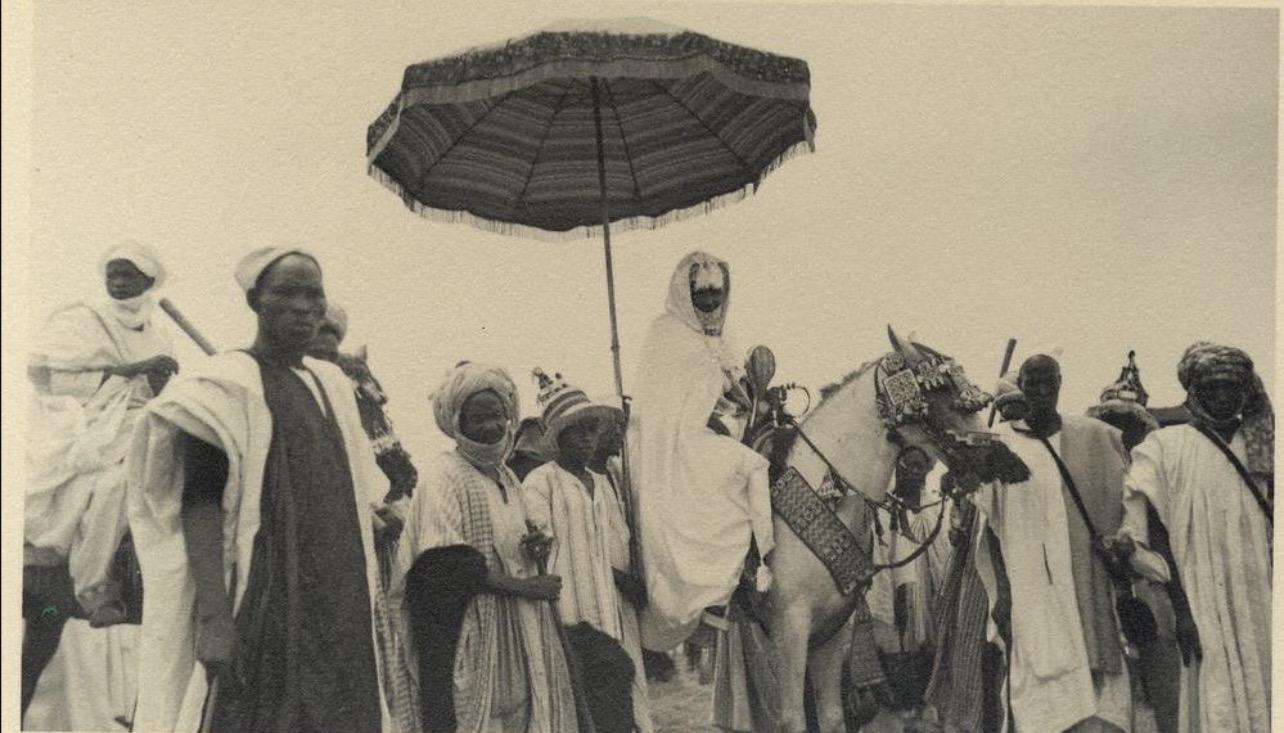
Sarkin Katsina
In the golden haze of the northern savannah, where the wind carried stories older than the walls of ancient cities, there lived a ruler whose name refused to fade with time. He was known as Sarkin Katsina, the King of Katsina, a title worn by many across generations, but one man among them rose beyond kingship and became legend.
His name was spoken with reverence, not just because he ruled, but because he stood when others fell.
Long before his rise, Katsina was already a jewel among the Hausa states. Its walls were tall, its markets alive with traders from distant lands, and its scholars filled the air with knowledge. But prosperity often attracts shadows, and danger was never far away. Raiders circled its borders, rival kingdoms watched with envy, and internal divisions threatened to tear the city apart.
It was into this fragile world that the boy who would become a legend was born.
He was not born into ease. Though of royal blood, his early life was marked by trials that would have broken a weaker soul. His father, a respected leader, died when he was still young, leaving behind a throne surrounded by ambition and betrayal. Many believed the boy would be swallowed by the politics of power, forgotten before he could even begin.
But the boy had something rare. He listened.
He listened to the elders who spoke in proverbs. He listened to the warriors who spoke in scars. He listened to the traders who spoke of distant lands. And most importantly, he listened to the people.
As he grew, it became clear that he was not like the others. Where some sought power, he sought understanding. Where others rushed into conflict, he studied patience. And where fear spread among the people, he offered calm.
By the time he came of age, Katsina stood at the edge of collapse.
A powerful rival force had begun to push toward the city. Villages fell one after another, and refugees poured into Katsina’s gates with stories of fire and loss. Inside the city, fear began to turn into doubt. Some nobles whispered of surrender. Others plotted to replace the young heir with someone they believed stronger.
But strength is not always loud.
When the time came, the young man stood before the council. His voice was steady, his eyes clear.
“We do not inherit peace,” he said, “we build it.”
Many doubted him. Some even laughed. But the people listened.
He did not rush to war. Instead, he prepared.
He strengthened the city walls, not just with mud and stone, but with unity. He reached out to neighboring communities, forming alliances where there had once been suspicion. He trained the young and honored the old. He turned fear into purpose.
And when the enemy finally came, they did not find a divided city.
They found Katsina standing as one.
The battle that followed would be remembered for generations. It was not just a clash of weapons, but a test of will. The enemy expected chaos. Instead, they met discipline. They expected weakness. Instead, they found strategy.
Sarkin Katsina led not from behind, but from the front.
Stories say he moved through the battlefield like a storm guided by wisdom. He did not fight for glory, but for his people. When his warriors faltered, he lifted them. When fear crept in, his presence drove it away.
And when the dust finally settled, Katsina still stood.
That victory changed everything.
No longer was he just a king. He became a symbol.
But what truly made him a legend was not the battles he won, but the peace he built after.
Many rulers are remembered for conquest. Few are remembered for what they do when the fighting ends.
Sarkin Katsina chose a different path.
He opened the city even wider to trade, turning Katsina into a meeting point for cultures and ideas. Scholars from across the region came to teach and to learn. Knowledge flourished, and the city became not just strong, but wise.
He ruled with justice, not fear. Disputes were settled with fairness, not favoritism. He walked among his people, not above them. It is said that he would sometimes disguise himself and move through the markets, listening to the voices of ordinary citizens, understanding their struggles without the barrier of a crown.
And when he spoke, people listened, not because they were forced to, but because they trusted him.
Years passed, and his legend grew.
Children were told stories of the king who stood firm when others would have fallen. Warriors spoke of his courage. Elders spoke of his wisdom. Traders spoke of the peace he brought that allowed their journeys to flourish.
Even his enemies spoke of him with respect.
But time, as always, moved forward.
In his later years, Sarkin Katsina became quieter. He spent more time in reflection, guiding the next generation, ensuring that the legacy he built would not crumble after him. He understood something many leaders never do: that true greatness is not in holding power, but in preparing others to carry it wisely.
When he finally passed, the city did not just mourn a king.
It mourned a legend.
But legends do not disappear.
They live in stories told under moonlight. They live in the walls that still stand. They live in the values passed from one generation to another.
To this day, the title Sarkin Katsina carries weight, but it also carries a memory. A memory of a ruler who chose unity over division, wisdom over pride, and service over self.
That is what made him a legend.
Not just the crown he wore, but the way he wore it.
And in the quiet moments, when the wind moves across the ancient land, it is said that if you listen closely, you can still hear the echoes of his words.
“We do not inherit peace. We build it.”

Κατηγορίες
Διαβάζω περισσότερα
In a groundbreaking move, Rotary International District 9112 has officially chartered Nigeria’s first-ever Passport Club—and potentially the first in Africa—under the banner of the Rotary Club of Nigeria Globetrotters. This marks a significant milestone for Rotary in Nigeria, embracing the innovative Passport Club model that offers greater flexibility and inclusivity for...

Allen Ifechukwu Onyema Allen Ifechukwu Onyema’s story doesn’t start in an airport. It starts in the kind of Nigeria where a young boy grows up learning two lessons at once: how fragile peace can be, and how strong determination must become if you want to build anything that lasts. Most credible profiles describe him as an Anambra State son from Mbosi, Ihiala Local Government Area,...

Fresh details have emerged on the circumstances that led to the resignation of the National Chairman of the All Progressives Congress (APC), Dr. Abdullahi Ganduje. POLITICS NIGERIA reports that Ganduje stepped down following ongoing political moves involving President Bola Tinubu and former Kano State Governor, Senator Rabiu Musa Kwankwaso. The development, insiders say, is tied to a reported...

Have you ever wondered what your life would look like if you made entirely different choices? Life simulation games have always been a fascinating genre for gamers, but few capture the unpredictable, hilarious, and sometimes chaotic nature of existence quite like Bitlife. Instead of relying on heavy 3D graphics, it is a text-based simulator that focuses entirely on the ripple effects of...

Israel Akanji Israel Akanji, more fully known as Israel Adelani Akanji, is a Nigerian Baptist pastor and church leader best known as the President of the Nigerian Baptist Convention. He is also publicly identified as President of the All Africa Baptist Fellowship and a member of the World Council of Churches Central Committee, which places him among the better known Baptist voices from Nigeria...