About
About
The Mask That Commands Silence The Story of Ekpe and the Power of Fear
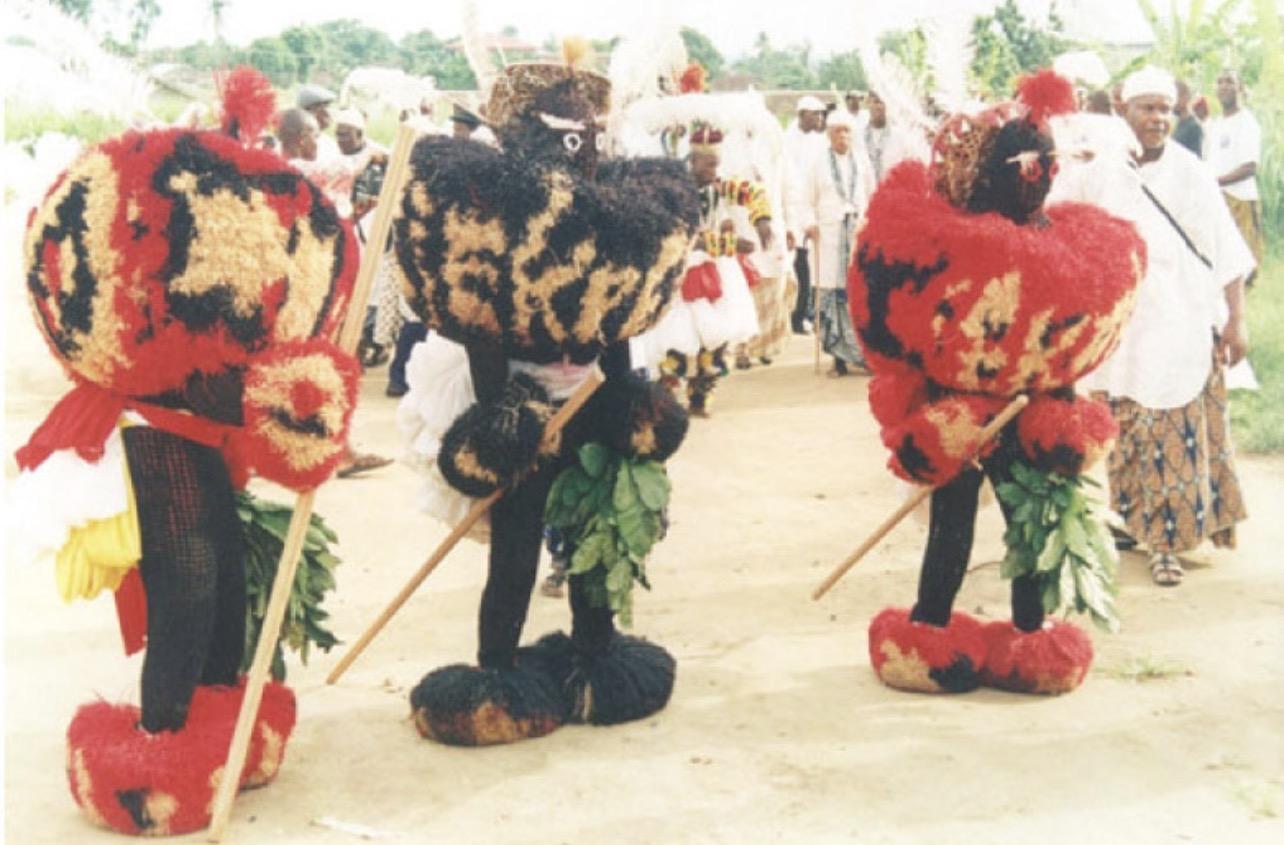
Ekpe
Long before modern laws, police stations, or courts, there were systems that ruled with something deeper than written words. In the forested lands of southeastern Nigeria, among the Efik, Ibibio, and neighboring communities, there existed a force that did not need to speak loudly to be obeyed. Its presence alone was enough. Its name carried weight. Its movement commanded silence.
This force was Ekpe.
To outsiders, Ekpe was a masquerade. To insiders, it was authority itself. It was discipline made visible. It was law wrapped in mystery. And to many, it was something even more unsettling a presence that could not be questioned.
The story of Ekpe is not just about fear. It is about control, order, justice, and the thin line between protection and intimidation.
When Law Had No Uniform
In ancient times, communities needed structure. There had to be a way to resolve disputes, punish wrongdoing, and maintain peace. But there were no police uniforms, no courtrooms, and no written constitutions.
Instead, there was Ekpe.
Ekpe was not just a masquerade that danced during festivals. It was the physical expression of a powerful secret society. Only initiated men knew its inner workings. Only they understood its language, its codes, and its authority.
When Ekpe appeared, it was not entertainment. It was enforcement.
The sound of Ekpe was often heard before it was seen. Deep, echoing drumbeats. A haunting call. A rhythm that seemed to come from somewhere beyond the ordinary world.
People would stop what they were doing.
Children would run indoors.
Women would lower their voices.
Even the bravest men would step aside.
Because when Ekpe moved, it meant something serious was about to happen.
The Night Ekpe Walked
There were nights when Ekpe walked through the village.
No one announced it. No one questioned it.
You would hear the sound first a low, vibrating tone that made your skin tighten. Then the drums. Then the footsteps.
Ekpe did not rush.
It moved slowly, deliberately, as if it owned every inch of the land it walked on.
Its costume was elaborate and intimidating layers of cloth, animal symbols, sometimes decorated with objects that hinted at power and mystery. Its face was hidden behind a mask that revealed nothing human.
Because Ekpe was not supposed to be seen as human.
It was a spirit of authority.
When Ekpe stopped in front of a house, everyone inside already knew.
Someone had done something.
A debt unpaid. A rule broken. A disrespect shown. A crime committed.
Ekpe did not knock.
It commanded.
The Judgment Without Argument
Ekpe was not just about fear. It was about order.
In many communities, Ekpe acted as judge, jury, and enforcer.
If two families were in conflict, Ekpe could intervene.
If someone refused to obey community rules, Ekpe would appear.
If there was theft, dishonor, or disruption, Ekpe would handle it.
And when Ekpe made a decision, there was no appeal.
Punishments varied. Sometimes it was fines. Sometimes public humiliation. Sometimes physical discipline. And sometimes, the punishment was so severe that it became a warning story for generations.
People obeyed not just because of the punishment, but because of what Ekpe represented.
It was believed that Ekpe saw everything.
That it knew secrets.
That it could not be deceived.
And that belief was stronger than any physical force.
Why People Call It Cruel
Over time, stories began to spread.
Stories of harsh punishments.
Stories of people being chased.
Stories of fear so intense that people would hide at the mere sound of Ekpe approaching.
To many, especially outsiders, Ekpe seemed cruel.
And in some cases, it was.
Because Ekpe did not operate with modern ideas of human rights or legal fairness. Its authority came from tradition, secrecy, and collective belief.
If Ekpe declared something, it became truth.
If Ekpe punished someone, it was accepted.
There were no explanations. No debates. No second chances in certain cases.
This is why people began to describe it as the most feared masquerade.
Not because it danced the most aggressively.
But because it held the power to change lives instantly.
The Power Behind the Mask
But here is the deeper truth.
Ekpe was never just about fear.
Behind the mask were men.
Respected elders. Leaders. Influential members of society.
They used Ekpe as a system to maintain order in a time when chaos could easily take over.
Without Ekpe, disputes might turn into violence.
Without Ekpe, rules might be ignored.
Without Ekpe, communities might lose structure.
So Ekpe became more than a masquerade.
It became a tool.
A system of governance.
A symbol that reminded everyone that actions had consequences.
Fear as a Language
Ekpe spoke a language that everyone understood.
Fear.
But not all fear is destructive.
Sometimes, fear keeps people from doing wrong.
Sometimes, fear protects order.
In the world of Ekpe, fear was not just about punishment.
It was about control.
When people knew Ekpe was watching, they behaved.
When people believed Ekpe could appear at any moment, they respected the rules.
This made Ekpe incredibly effective.
Because it did not need to act often.
Its reputation did the work.
The Mystery That Strengthened It
One of the reasons Ekpe was so powerful was its secrecy.
Only initiated members knew the truth behind it.
To others, it remained mysterious.
And mystery creates power.
When you do not understand something, it becomes bigger in your mind.
Stronger.
More dangerous.
Ekpe used this perfectly.
It allowed people to believe that it was more than human.
And that belief made it unstoppable.
Ekpe in the Modern World
Today, Ekpe still exists, but its role has changed.
It is no longer the absolute authority it once was.
Modern law has taken over many of its functions.
But Ekpe has not disappeared.
It remains a cultural symbol.
A representation of tradition.
A reminder of how communities once governed themselves before external systems arrived.
In festivals, Ekpe now appears more as a performer.
But even then, the respect remains.
Because people remember.
They remember the time when Ekpe was not just a masquerade.
It was power.
The Truth Behind the Fear
So, is Ekpe cruel?
The answer is not simple.
To some, yes.
Because its methods were strict and sometimes harsh.
To others, no.
Because it brought order in a time when disorder could destroy everything.
Ekpe is both.
It is discipline and fear.
It is protection and intimidation.
It is culture and control.
And that is what makes it unforgettable.
Why It Remains the Most Feared
Ekpe is not feared because of its appearance alone.
It is feared because of what it represents.
Authority that cannot be questioned.
Judgment that cannot be escaped.
Power that does not need permission.
Even today, when people hear stories of Ekpe, there is a pause.
A respect.
A memory of something larger than life.
Because Ekpe was never just a mask.
It was the voice of a system.
A system built on belief, discipline, and fear.
And once something controls both the mind and the heart, it becomes something people never forget.

Categories
Read More
Jide Awobona Jide Awobona is a Nigerian Nollywood actor, filmmaker, and television personality widely known for his roles in Yoruba language films and television dramas. Over the years he has gained recognition for his powerful acting style and his ability to portray emotional and complex characters. He is considered one of the talented actors who helped shape the modern Yoruba movie...

The Senior Pastor of The Second Coming of Christ Ministry, Adewale Giwa, has strongly criticized Nigeria’s democratic journey, declaring that after 26 years of civilian rule, there’s no clear distinction between democracy and military dictatorship. Speaking on Friday, Pastor Giwa lamented that those who once championed democracy have now become “enemies of the people”,...

Human rights lawyer and lead counsel to IPOB leader, Nnamdi Kanu, Barrister Aloy Ejimakor, has strongly criticised the Federal Government over what he described as a shameful and contradictory narrative surrounding the recent United States military airstrikes in Sokoto State. Ejimakor was reacting to reports traced to The New York Times, which suggested that the Nigerian government had...

Emeka Akumefule Before the viral tweets, before the bold declaration “Best Rapper in Africa,” and before the chart-topping albums, there was a young boy in Nigeria who found comfort in words. The world knows him as Blaqbonez — confident, witty, controversial, and unapologetically ambitious. But his journey began as Emeka Akumefule, a creative child whose...
Skales Skales is a Nigerian Afrobeats singer, songwriter, and rapper. He is widely known for his hit song Shake Body, which gained international recognition. Early Life and Background Skales whose real name is Raoul John Njeng-Njeng was born on April 1, 1991, in Kaduna State, Nigeria. He spent part of his childhood in Kaduna before later moving to Jos, Plateau State with his mother....