About
About
The Giant That Walks with Spirits The True Story of Ijele the Most Feared Yet Noble Masquerade
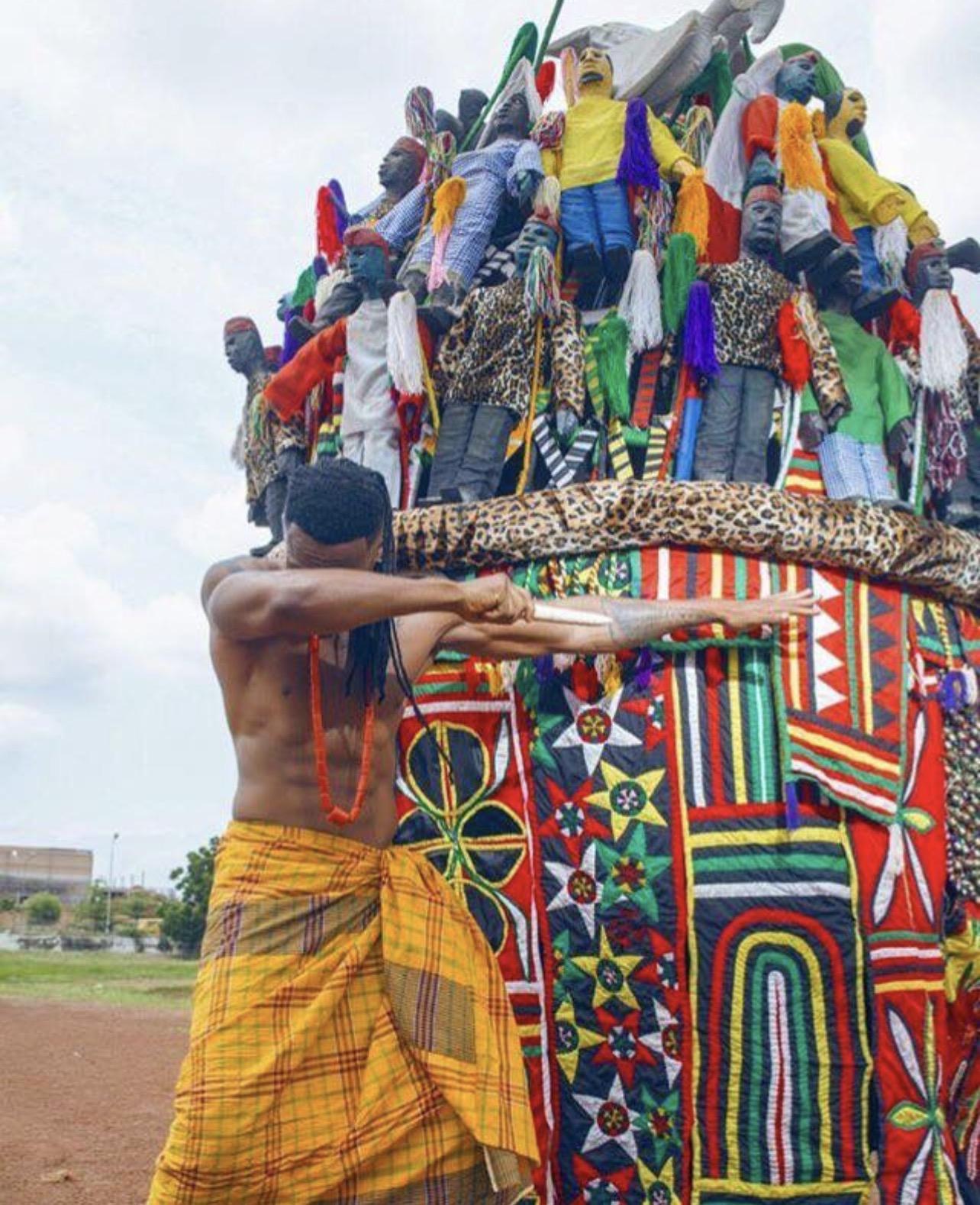
Ijele Masquerade
Long before the cities grew loud and electric lights replaced moonlit gatherings, in the heart of Igbo land, there lived a presence that was not entirely human, yet not entirely spirit. It was called Ijele.
To some, it was beauty beyond imagination.
To others, it was fear walking in daylight.
But to those who truly understood, Ijele was neither cruel nor evil.
It was power. It was authority. It was tradition in its highest form.
This is the story of Ijele.
When the Earth Still Listened
In the old days, villages were not just clusters of houses. They were living worlds guided by unseen forces. The people of the Igbo land believed deeply in the connection between the living, the ancestors, and the spirits of the earth.
Masquerades were not mere costumes. They were vessels.
Each masquerade represented something: justice, celebration, ancestors, warnings. But above all of them, there was one that stood taller, heavier, and more sacred than the rest.
That was Ijele.
They called it the King of Masquerades.
Not because it ruled with cruelty, but because it carried the weight of an entire culture on its shoulders.
The Day Ijele Appears
Ijele does not come out often.
It is not like other masquerades that dance during every festival. Ijele appears only on rare and special occasions when the land itself calls for it.
When the drums begin, they do not sound ordinary.
They echo deep, like something ancient waking up.
Women gather at a distance.
Children are pulled back.
Men stand firm, but even they know this is not a moment for play.
Then, slowly, it emerges.
A towering figure, sometimes over 12 feet high, dressed in layers upon layers of colorful cloth, mirrors, carvings, and symbols. It does not just walk. It commands space.
Every step feels like the ground itself is acknowledging its presence.
The air changes.
Silence falls.
Because when Ijele comes out, it is no longer just a festival.
It is a visitation.
Why People Say It Is Cruel
Fear is a powerful storyteller.
Many who have never understood Ijele speak of it as something dangerous. They say it is cruel. They say it chases people. They say it brings harm.
But the truth is more complex.
Ijele is not meant to entertain casually. It is sacred, and anything sacred demands respect.
In the old days, there were strict rules:
No one was allowed to touch Ijele.
No one could cross its path carelessly.
No one could disrespect its presence.
If someone broke these rules, the consequences could be severe. Not because Ijele was cruel, but because it represented authority.
Just like a king punishes disorder, Ijele enforces discipline.
There were stories of people who mocked it and were chased away. Others who disrespected the space and were struck, not out of hatred, but to restore order.
Over time, these stories grew.
Fear exaggerated them.
And soon, people began to call Ijele cruel.
But those who knew better would always say:
“Ijele does not harm without reason. It only protects what is sacred.”
The Weight Behind the Beauty
What many people do not realize is that Ijele is not just one person.
Inside that magnificent structure are strong, trained men carrying the weight of tradition sometimes weighing over 100 kilograms or more.
It takes strength.
It takes discipline.
It takes spiritual preparation.
Before Ijele appears, rituals are performed. Prayers are made. The carriers prepare both physically and spiritually.
Because they are not just dancing.
They are becoming something greater than themselves.
Every movement of Ijele is calculated. Every turn has meaning. Every pause speaks.
It is not chaos.
It is controlled power.
The Symbol of Unity
Ijele is not owned by one man. It belongs to the community.
When it appears, it represents the strength, unity, and identity of the people.
The decorations on Ijele often tell stories:
Scenes of daily life
Symbols of leadership
Images of animals and ancestors
It is like a moving history book, carried on human shoulders.
When people see Ijele, they are not just watching a performance.
They are seeing themselves.
Why It Is the Most Feared
Fear does not always come from danger.
Sometimes, it comes from greatness.
Ijele is feared because:
It is massive and overwhelming
It moves with authority and silence
It is surrounded by strict rules
It represents spiritual power beyond ordinary understanding
And most importantly, it reminds people of something they cannot control.
In a world where humans like to feel in charge, Ijele stands as a reminder that there are forces greater than us.
That is why even the bravest men step aside.
Not out of weakness.
But out of respect.
A Moment of Truth
There was once a young boy who decided he was not afraid.
He had heard the stories. He had seen people run. And he laughed.
“Why should I fear a man inside cloth?” he said.
On the day Ijele appeared, he stood his ground.
As the giant approached, the air grew heavy. The drums slowed. The crowd moved back.
But he did not.
For a moment, nothing happened.
Then Ijele stopped.
Turned.
And faced him.
No words were spoken. But something passed between them something deep, something ancient.
The boy’s laughter faded.
Not because he was attacked.
But because he understood.
He stepped aside.
And as Ijele continued its path, the boy lowered his head.
From that day, he never called it cruel again.
He called it powerful.
The Truth About Ijele
Ijele is not a monster.
It is not a symbol of fear.
It is a symbol of balance.
Power with control
Authority with purpose
Tradition with meaning
Those who misunderstand it see danger.
Those who understand it see culture at its highest form.
Today and Tomorrow
Even in modern times, where technology has taken over many traditions, Ijele still appears.
And when it does, everything stops.
Phones come out. Cameras flash. But deep down, the same old feeling remains.
Respect.
Because no matter how modern the world becomes, some things cannot be replaced.
Some things must be experienced.
And Ijele is one of them.
Final Reflection
So, is Ijele cruel?
No.
It is disciplined.
It is powerful.
It is sacred.
And like anything sacred, it demands respect.
The fear people feel is not because it is evil.
It is because it reminds them of something greater than themselves.
And sometimes, that is the most powerful feeling of all.

Categorii
Citeste mai mult
Emeka Offor Emeka Offor is one of Nigeria’s most influential industrialists, a man whose name is deeply connected with oil, energy, and large scale engineering projects. His journey reflects ambition, calculated risk, and the ability to build powerful networks in a competitive sector. From modest beginnings in Anambra State to commanding major oil and gas operations, his...

Italian fashion legend Valentino Garavani has passed away at the age of 93. His foundation confirmed on Monday that the iconic designer died peacefully at his home in Rome, surrounded by family. Born in 1932 in Voghera, northern Italy, Valentino trained in Paris before founding his fashion house in Rome in 1959. He quickly rose to global fame for his elegant haute couture and his signature...
Osas Ighodaro Early Life and Background Osas Ighodaro is a Nigerian American actress, television host, philanthropist, and former beauty queen known for her work in Nollywood and international media. She was born on October 26, 1990, in New York City, United States. Her full name is Osariemen Martha Elizabeth Ighodaro. Although she was born and raised in the United States, she is...

Muhammad Kudu Abubakar Introduction The story of Muhammad Kudu Abubakar is one of simplicity, growth, and quiet determination. It is not always the loudest voices that leave the deepest impact sometimes, it is the steady life of purpose that truly inspires. Early Life Muhammad Kudu Abubakar was born into a modest family where values were stronger than wealth. Growing up, life...
Emeka Okonkwo Emeka Okonkwo, popularly known as E-Money, is a Nigerian businessman, entrepreneur, and philanthropist widely recognized for his luxury lifestyle and business success. Born Emeka Okonkwo on February 18, 1981, in Ajegunle, Lagos State, Nigeria, he rose from humble beginnings to become one of Nigeria’s well known business figures. Early Life and Background...