The Untouchable Agemo Masquerade and the Fear That Walks With It
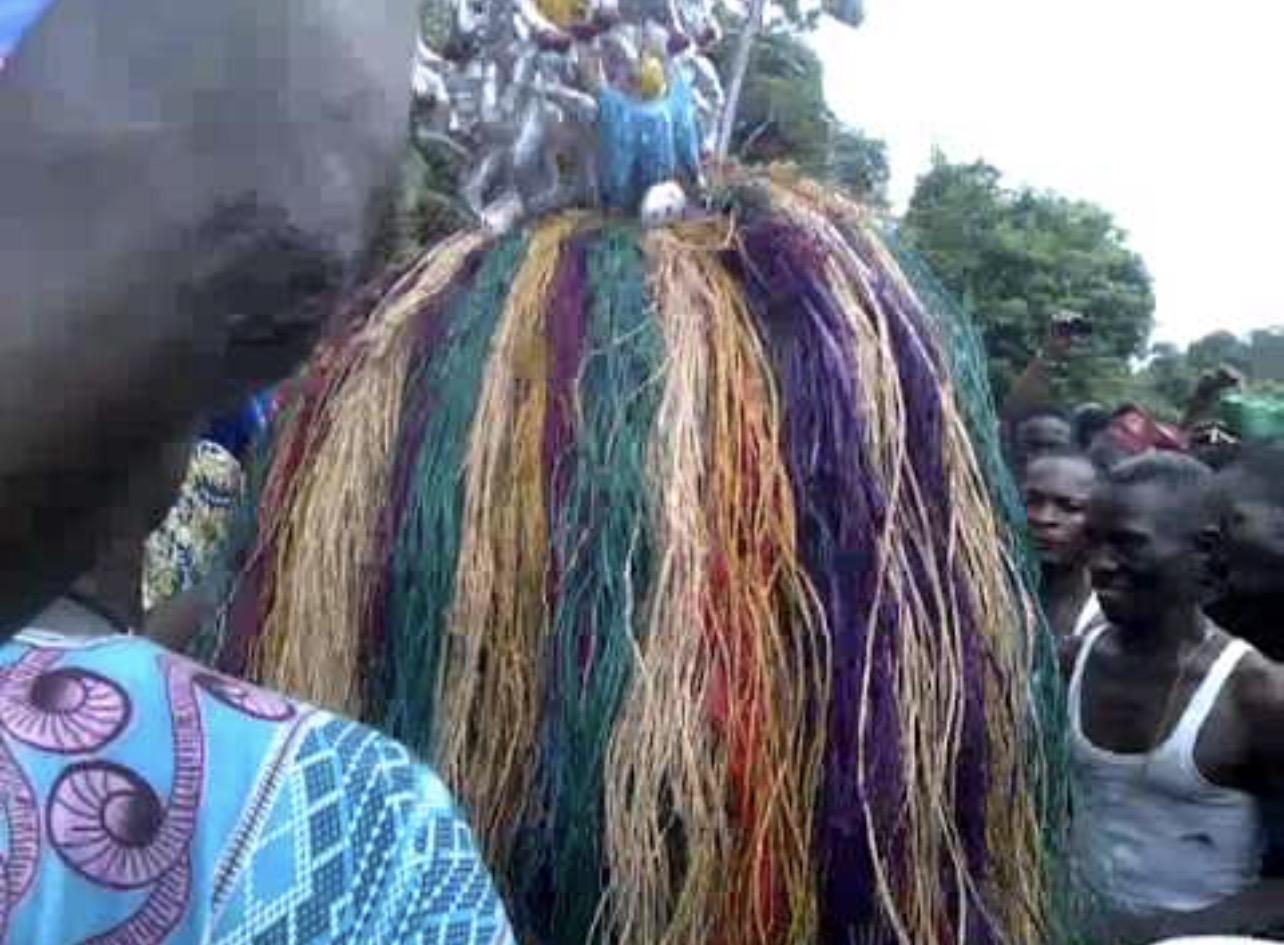
Agemo Masquerade
The Sacred Shadow of Ijebu
In the heart of the Yoruba land, deep within the ancient towns of Ijebu, there lives a mystery that no ordinary eye can fully understand. It is not written in books alone, nor told in full even by elders. It is a presence that arrives like the wind, announces itself like thunder, and disappears like a spirit returning to the unseen. This is Agemo.
To the outsider, Agemo is just a masquerade. But to the people of Ijebu, Agemo is far more than that. It is sacred. It is authority. It is spirit. And above all, it is untouchable.
Long before modern Nigeria was formed, before roads and cities spread across the land, the Ijebu people had already established a strong system of tradition and spiritual order. Among these traditions, Agemo stood at the very center. It was not just a festival figure. It was a representation of ancestral power, a living link between the physical world and the unseen realm.
Agemo is believed to be a messenger of the ancestors, a carrier of spiritual authority that enforces truth, discipline, and order. Whenever Agemo appears, it is not seen as a human being in costume. It is seen as something beyond human, something that has temporarily taken form to walk among the people.
The story is often told of how Agemo first came to the Ijebu land. Elders say that in ancient times, when the people were troubled by conflicts, dishonesty, and unseen forces, the ancestors revealed a sacred institution that would restore balance. That institution became Agemo.
From that moment, Agemo was never treated as ordinary again.
During the Agemo festival, which usually takes place once every year, the entire atmosphere of Ijebu changes. The air becomes heavy with anticipation. Markets quiet down. People speak in lower tones. Children are warned. Visitors are advised.
Because when Agemo is coming, it is not something you joke with.
As the drums begin to sound, deep and commanding, people gather, but not too close. The paths are cleared. The roads are respected. And then, from a distance, Agemo appears.
Covered in layers of colorful but powerful traditional material, moving in a way that does not feel entirely human, Agemo dances. But this is not ordinary dancing. It is a spiritual performance. Every movement carries meaning. Every step is watched carefully.
And yet, beneath the beauty of the performance lies a deep fear.
Why is Agemo feared?
The fear does not come from appearance alone. It comes from what Agemo represents.
Agemo is believed to have the power to reveal truth and punish wrongdoing. In traditional belief, anyone who disrespects Agemo or violates its sacred rules may face consequences that go beyond physical punishment. It is said that Agemo sees beyond the surface. It sees the hidden.
There are strict rules surrounding Agemo. Women are not allowed to come too close. In fact, in many traditions, women are expected to stay indoors when Agemo is passing. Not because they are lesser, but because the spiritual energy surrounding Agemo is considered too intense, too dangerous.
It is also forbidden to touch Agemo.
This is where the idea of cruelty begins to take root.
Stories have been passed down of individuals who ignored warnings. Curious young men who tried to get too close. Outsiders who did not understand the rules. People who laughed or mocked what they did not understand.
The consequences, according to tradition, were severe.
Some say those who disrespected Agemo were beaten. Others say they fell mysteriously ill afterward. There are even deeper stories, whispered only in quiet gatherings, of people who disappeared or suffered strange misfortunes after crossing the line.
Whether all these stories are literal or symbolic, one thing is clear. The fear is real.
And the enforcement of that fear is also real.
Agemo is guarded by followers, strong men who ensure that the sacred rules are obeyed. These followers are not just ordinary attendants. They are deeply connected to the tradition. They protect Agemo with seriousness and sometimes with force.
If someone tries to break the rules, the reaction can be swift.
This is why some people describe Agemo as cruel.
Not because the spirit itself is evil, but because the enforcement of its sacredness leaves no room for carelessness. It is a system built on discipline, respect, and fear of consequences.
To the modern eye, especially those who do not understand the depth of tradition, this can feel harsh.
But to the custodians of the culture, it is necessary.
Because without that level of seriousness, the sacred would lose its power.
And Agemo is not meant to be ordinary.
There is also something deeply mysterious about Agemo that increases its fear.
No one is supposed to know who is inside.
Even if you suspect, you do not say it. Even if you think you know, you keep silent. Because the moment you reduce Agemo to just a human being in costume, you break the illusion, and in traditional belief, that is a dangerous act.
Agemo must remain spirit.
That belief is protected with everything.
During the festival, multiple Agemo groups from different parts of Ijebu land come together. Each one has its own identity, its own style, its own history. But they all share the same sacred foundation.
The gathering is both a celebration and a display of power.
As they move, dance, and perform, the crowd watches with a mixture of admiration and fear. Some cheer from a distance. Some bow their heads. Some simply watch in silence.
Because even in celebration, Agemo is not to be taken lightly.
There are moments during the festival when Agemo moves suddenly, rushing toward the crowd. People scatter instantly. Not out of panic alone, but out of respect. That sudden movement is a reminder.
A reminder that this is not entertainment.
This is tradition.
This is power.
This is something you do not control.
And this is where the fear becomes deeply rooted.
Agemo does not behave like something that is fully predictable. Its movements can be calm one moment and intense the next. Its presence can feel distant and then suddenly close.
To those who believe, this unpredictability is proof of its spiritual nature.
To those who do not understand, it is terrifying.
Yet, despite the fear, Agemo is loved.
Because beyond the strictness and the intensity, Agemo represents unity. It brings the people together. It reminds them of their roots. It connects generations.
Elders tell stories. Young ones listen. Traditions are passed down.
And in that process, Agemo remains alive.
There is also a protective side to Agemo that is often overlooked. It is believed that Agemo does not only punish wrongdoing but also protects the land from evil forces. It acts as a spiritual guard, ensuring that negative energies do not take hold.
In this sense, the fear of Agemo is not just fear of punishment, but respect for protection.
It is the kind of fear that says, stay in line, do what is right, respect what is sacred.
Because there are consequences.
Over time, as modern life has grown and beliefs have changed, some people have begun to question these traditions. They see Agemo as outdated, as something that should be softened or reformed.
Others strongly disagree.
They believe that once you remove the fear, you remove the power.
And once the power is gone, the tradition will slowly fade.
So the balance continues.
Between fear and respect.
Between tradition and modernity.
Between mystery and understanding.
Agemo stands right in the middle of it all.
A symbol that refuses to be simplified.
A presence that refuses to be ignored.
And a tradition that continues to walk, year after year, through the streets of Ijebu, carrying with it centuries of belief, discipline, and spiritual weight.
So when people say Agemo is cruel, they are not entirely wrong.
But they are not entirely right either.
Because what they call cruelty, others call sacred enforcement.
What they call fear, others call respect.
And what they see as harsh, others see as necessary.
Agemo is not meant to be comfortable.
It is meant to be powerful.
It is meant to remind people that some things are beyond ordinary understanding.
That some traditions are not just to be observed, but to be respected deeply.
And that in a world that is constantly changing, there are still forces that stand firm, untouched, and untouchable.
Agemo is one of them.

الأقسام
إقرأ المزيد
Francis Duru Francis Duru is a Nigerian actor, producer, and television personality known for his long standing contributions to Nollywood. He is respected for his versatility and consistency in the Nigerian film industry. Francis Odega Duru was born on July 27, 1969, in Cameroon to Nigerian parents from Imo State. Early Life and Background Francis Duru was born in Cameroon but is...

U.S. President Donald Trump has announced that Indonesian goods will now face a 19% tariff under a newly finalized trade agreement, a significant reduction from the 32% rate he previously threatened. The announcement came via Trump’s Truth Social platform on Tuesday. According to the president, the deal includes major purchase commitments from Indonesia: $15 billion in U.S. energy, $4.5...

The Nigerian government has been accused of secretly detaining a prominent Zaria-based Islamic scholar, Sheikh Sani Khalifa, for over three weeks without charge, raising serious concerns about human rights abuses and violations of due process. Sources told SaharaReporters on Saturday that Sheikh Khalifa has been in custody for 23 days, with his whereabouts unknown to family members and...

Phyna Phyna, whose real name is Josephina Otabor, is a Nigerian hype woman, model, and reality TV star best known for winning Big Brother Naija Season 7 in 2022. Her bold personality, street vibe, and confidence made her one of the most talked-about housemates of her season. Early Life and Background Phyna was born on June 2, 1997, in Edo State, Nigeria. She hails from Edo State in...

Jemima Osunde Jemima Osunde is a Nigerian actress, model, and presenter known for her natural screen presence, intelligence, and versatility in Nollywood. Born on April 30, 1996, in Lagos State, Nigeria, she has grown into one of the most admired young actresses in the Nigerian film industry. Early Life and Education Jemima Osunde was born and raised in Lagos in a close knit...