Environ
The Ancient Wisdom of the Soil How African Farmers Practiced Sustainable Agriculture Long Before Modern Science
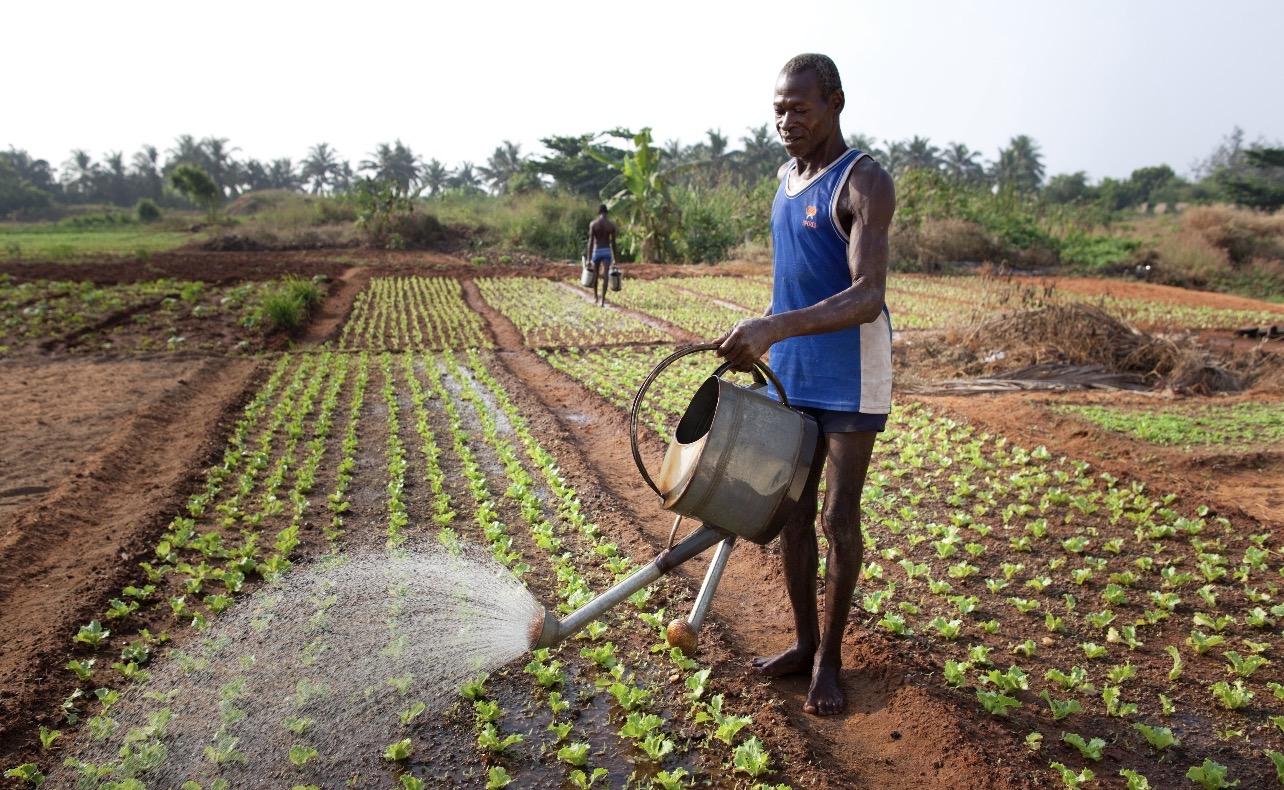
African agriculture
The Land That Taught Its People
Long before laboratories, agricultural universities, and modern farming technologies existed, African communities had already mastered a deep relationship with the land. Across the vast continent, from the savannahs of West Africa to the highlands of East Africa and the fertile river valleys of the Nile and Niger, farming was not simply about growing food. It was a sacred partnership between people, soil, water, animals, and seasons.
In many African societies, the land was considered a living being. Farmers believed the soil carried memory and spirit. It was inherited from ancestors and protected for future generations. Because of this belief, they treated farmland with respect and care.
When elders taught the younger generation how to farm, they did not only show them how to plant seeds. They taught them how to read the sky, observe birds, understand insects, watch the color of the soil, and listen to the rhythm of the rains. Farming knowledge was passed down through stories, songs, and rituals that carried generations of wisdom.
African farmers understood something modern science would only later explain: when humans work with nature rather than against it, the land can remain productive for centuries.
The Art of Farming With Nature
In many regions of Africa, farmers practiced a method today known as mixed cropping or intercropping. Instead of planting a single crop over large areas, they planted different crops together in the same field.
A farmer might grow maize, beans, and pumpkin side by side. While it looked simple, this system had powerful benefits.
Beans added nitrogen to the soil, naturally enriching it. Maize provided shade and structure for climbing plants. Pumpkins covered the ground, protecting the soil from erosion and moisture loss.
Without chemical fertilizers or synthetic inputs, African farmers had already developed a natural ecosystem within their farms.
Another practice widely used across the continent was crop rotation. Farmers knew that planting the same crop repeatedly on the same land would weaken the soil. So each season they changed what they planted.
For example, after harvesting sorghum or millet, they might plant legumes the following season to restore soil nutrients. This simple but effective method kept farmland healthy for many years.
Generations before soil scientists studied soil fertility, African farmers had already perfected techniques to preserve it.
The Wisdom of Rain and Water
Water has always been one of the most precious resources for farmers. African communities developed ingenious systems to manage water efficiently.
In the Sahel region, farmers created planting pits known as zai pits. These small holes were dug into the soil and filled with compost and organic matter. When rain came, the pits captured water and concentrated nutrients around the crops.
This technique allowed crops to grow even in dry environments.
In the highlands of Ethiopia and East Africa, farmers built stone terraces along hillsides. These terraces prevented soil erosion and slowed the flow of rainwater, allowing it to soak into the soil rather than wash away fertile land.
Meanwhile, along river valleys like the Niger and Nile, farmers used simple irrigation channels to guide water from rivers into their fields.
These irrigation systems were built using local knowledge and community labor, often maintained collectively by entire villages.
Modern agricultural engineers later studied these ancient methods and discovered how effective they were.
Farming as a Community Tradition
Unlike modern industrial agriculture, which often focuses on individual farms and large corporations, traditional African farming was deeply rooted in community.
In many villages, farming was a collective activity. Families helped one another during planting and harvesting seasons. Community labor groups worked together to cultivate fields, repair irrigation systems, and protect crops from pests.
Festivals and ceremonies often marked the beginning of planting or the arrival of harvest season.
These gatherings strengthened social bonds while reinforcing agricultural traditions. Elders would share knowledge, reminding younger farmers when to plant, when to wait for rain, and how to protect crops naturally.
Because farming knowledge was shared among the community, no single person controlled it. It belonged to everyone.
This collective system ensured that sustainable farming practices were preserved for generations.
Natural Pest Control Without Chemicals
Long before pesticides were invented, African farmers developed natural ways to protect crops from insects and disease.
One method involved planting certain crops that naturally repel pests. For example, farmers planted herbs and aromatic plants near crops to keep harmful insects away.
Another approach was encouraging beneficial insects and birds that feed on pests.
Farmers also used ash, crushed leaves, and plant extracts to protect crops from insects. These natural treatments were safe for the environment and did not damage the soil.
Some communities practiced a system now recognized by modern scientists as integrated pest management. Instead of trying to eliminate every insect, they maintained a balance between pests and natural predators.
This ecological understanding allowed farms to remain productive without chemical pollution.
Soil Care Passed Through Generations
African farmers knew that the soil was their greatest treasure. Protecting it meant protecting their future.
Organic materials such as crop residues, animal manure, leaves, and compost were returned to the soil after each harvest. This practice enriched the soil and maintained its fertility.
In forest regions, farmers practiced shifting cultivation in a careful and sustainable way. After farming a plot for several years, they allowed the land to rest and regenerate while they cultivated another area.
During the resting period, natural vegetation restored the soil’s nutrients.
This system worked because populations were smaller and land was managed responsibly.
Many of these traditional soil management techniques are now recognized as forms of regenerative agriculture.
The Deep Knowledge of Indigenous Crops
Another reason African agriculture remained sustainable for centuries was the use of indigenous crops perfectly adapted to local climates.
Crops like millet, sorghum, yam, cassava, and cowpeas could survive harsh conditions including drought, poor soil, and unpredictable rainfall.
These crops were resilient and required fewer external inputs.
Farmers selected seeds carefully each season, saving the best seeds from healthy plants for future planting. Over generations, this natural selection created crop varieties uniquely suited to each region.
Seed saving also ensured farmers remained independent and did not rely on external suppliers.
Today scientists study these traditional crop varieties to develop climate resilient agriculture.
A Knowledge System Hidden in Plain Sight
For a long time, many colonial scholars dismissed African farming methods as primitive. However, modern research has revealed that these traditional systems were actually highly sophisticated.
What looked simple on the surface was built upon centuries of observation, experimentation, and adaptation.
African farmers were scientists in their own right. Their laboratories were the fields, forests, and rivers around them.
Their knowledge was not written in textbooks but preserved through oral tradition, community practice, and lived experience.
Today, as the world faces soil degradation, climate change, and environmental crises, many researchers are turning back to these ancient methods for inspiration.
The solutions to sustainable agriculture may not only lie in new technology but also in rediscovering the wisdom that has existed for generations.
The Future Rooted in the Past
As global agriculture continues to evolve, there is growing recognition that traditional African farming knowledge holds valuable lessons for the future.
Sustainable agriculture is not a new idea in Africa. It is a heritage that has existed for centuries.
By combining indigenous wisdom with modern scientific research, communities can develop farming systems that are both productive and environmentally responsible.
The story of African farmers reminds the world that innovation does not always come from laboratories. Sometimes it grows quietly in the fields, nurtured by generations who understood the language of the land.
The ancient wisdom of African agriculture continues to teach us that caring for the earth is not only a scientific responsibility but also a cultural and spiritual duty.

Catégories
Lire la suite
Young Jonn In the bustling heart of Lagos, where traffic horns mix with street vendors’ chants and music pours from buses and barbershops, a young boy once listened more than he spoke. That boy would grow up to become one of the most influential hitmakers in modern Nigerian music. His name is Young Jonn. Born John Saviours Udomboso on February 16, 1995, in Ibadan, Oyo State, Young...

Ibrahim Chatta The Relentless Voice of Yoruba Cinema Ibrahim Abiodun Chatta is one of the most powerful and respected faces in the Yoruba film industry. Known for his deep voice, intense delivery, and commanding presence on screen, Ibrahim Chatta has built a career defined by resilience, talent, and cultural pride. His journey from a modest background to becoming a household name in...

The Chief of Army Staff (COAS), Lt. Gen. Olufemi Oluyede, says the Nigerian Army will bring to justice the perpetrators of the recent killings in Benue, Plateau and other parts of the country. Oluyede made this known on Saturday in Akure during a second quarter 2025 media chat organised by the Department of Civil-Military Affairs, Nigerian Army Headquarters. The media chat was themed...

TY Bello TY Bello, whose full name is Toyin Sokefun-Bello, is a Nigerian singer, songwriter, photographer, and philanthropist known for her soulful worship music and powerful storytelling through both sound and images. She is one of the most respected voices in Nigerian gospel and creative arts. Early Life and Background TY Bello was born on January 14, 1978, in Ogun State, Nigeria....

By the time we reached our final months together, Kunle and I were no longer pretending. The apologies had stopped meaning anything. Even the gifts disappeared. What remained was raw tension, stretched so thin that even silence could trigger an explosion. Our house no longer felt like a home. It felt like a waiting room for disaster. We barely touched each other. Conversations were...