About
About
Sarraounia Mangou The Desert Queen Who Refused to Bow
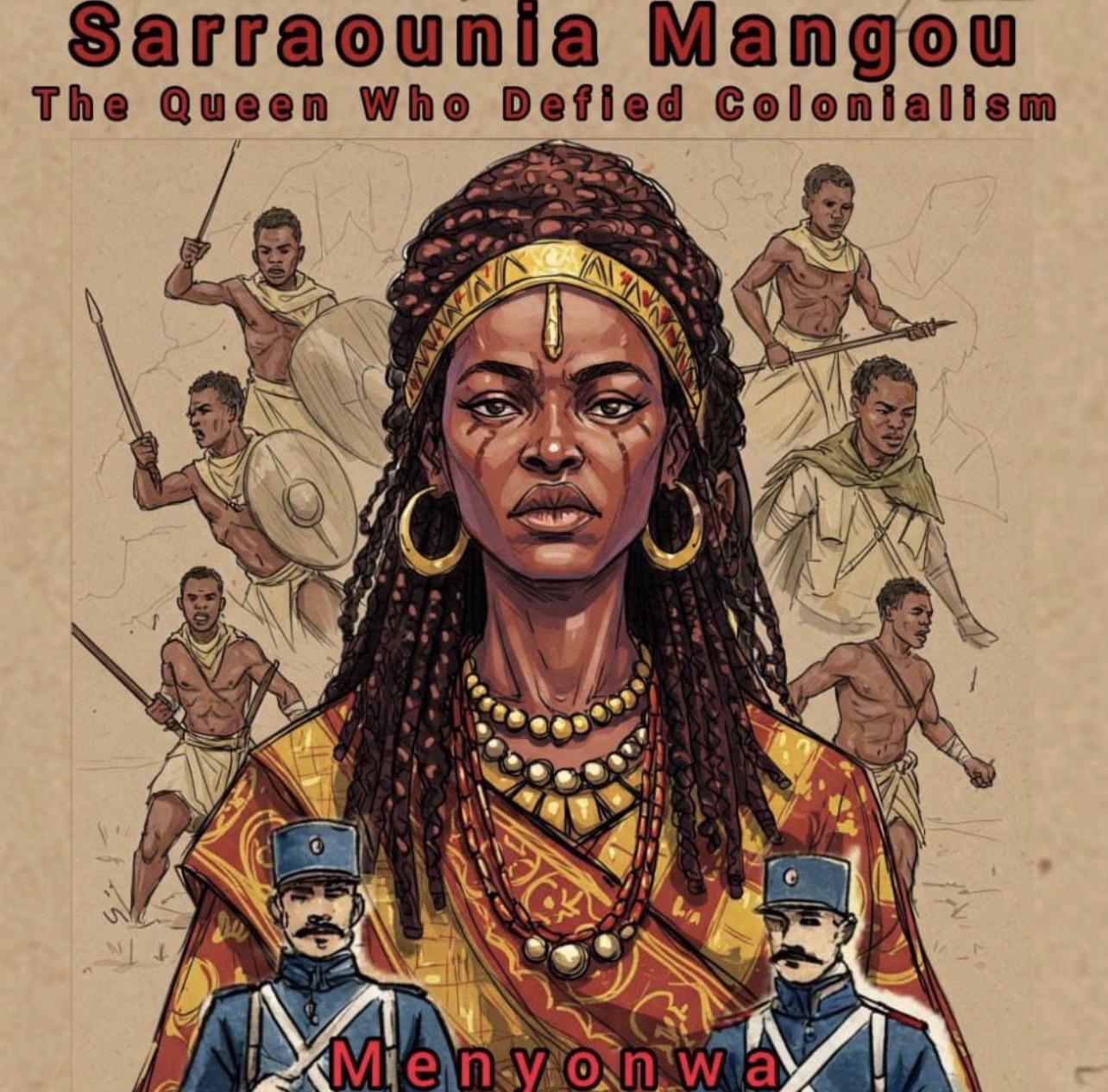
Sarraounia Mangou
Long before her name began appearing in books, films, and conversations about African resistance, Sarraounia Mangou lived in a world where danger could arrive on horseback, where power was measured not only by the sword but by spirit, and where a ruler was expected to protect both land and people. She was not remembered simply because she sat on a throne. She was remembered because when others surrendered to a violent colonial advance, she stood her ground. In the history of Niger, she remains one of the strongest symbols of courage against invasion, a queen whose name still carries the sound of defiance.
Sarraounia Mangou was the ruler of Lougou, in what is now Niger, among the Azna, a community often described as an animist subgroup within the wider Hausa world. The title Sarraounia was more than a personal name. It signified a female ruler with both political and spiritual authority. That matters, because her story was never only about war. It was also about leadership, sacred duty, memory, and the burden of protecting a people when a brutal empire came marching across their horizon.
To imagine her world, one must first picture the land. Lougou stood in a region shaped by heat, open sky, dry earth, seasonal rains, and old traditions. Villages were not rich in the way Europe measured wealth, but they were rich in continuity. Families lived by inherited customs. Authority passed through known structures. Sacred sites mattered. The people of the land knew their seasons, their beliefs, their enemies, and their neighbors. Into this world came the expanding violence of French colonial conquest at the end of the nineteenth century. The invading force that would meet Sarraounia Mangou was not a peaceful mission of diplomacy. It was the Voulet Chanoine Mission, a French military expedition sent to extend colonial control toward the Lake Chad region. It became notorious for extreme brutality across West Africa.
News travels in its own way even in times before modern media. It moves through traders, scouts, refugees, rumors, and frightened witnesses. By the time the French columns approached, stories of destruction had already spread. Villages had seen fires. Communities had been crushed. The invaders carried guns, discipline, and the arrogance of men convinced that conquest was their right. Many local rulers, faced with such overwhelming force, chose submission. Some saw it as survival. Some saw no alternative. But Sarraounia Mangou was different. According to the historical record, she chose resistance, and that choice is the heartbeat of her legacy.
One can imagine the mood in Lougou as the threat drew near. Dust in the air. Messengers arriving breathless. Elders speaking in low voices. Young fighters trying to appear brave in front of mothers and sisters. The queen at the center of it all, watching, weighing, deciding. A ruler does not reach such a moment by accident. She had already become a figure of authority in a tradition where the Sarraounia was not just a political head but a spiritual presence. Oral memory would later surround her with stories of mystical strength, unusual power, and a near legendary ability to protect her people. Even when such stories grow in the retelling, they reveal something important. People do not turn a leader into legend unless that leader first moved them deeply in real life.
Then came the confrontation that history would remember as the Battle of Lougou. It took place in April 1899, when the French forces under Paul Voulet moved against her stronghold. This was not a fair fight. On one side stood a colonial military machine armed with rifles and organized for expansion. On the other stood a local queen and her people, defending home soil with far fewer resources. Yet what makes this story unforgettable is not that she had the stronger weapons. It is that she resisted despite knowing she did not.
The French attacked Lougou with superior firepower. Mangou and her fighters could not match bullets with equal weapons. The fortress capital was eventually overwhelmed. But defeat in a single battle is not the same as surrender in spirit. Her resistance was powerful precisely because she refused to let colonial violence define the meaning of the encounter. Even when forced to retreat, she remained the central figure of opposition. Her name outlived the commanders who attacked her. Their mission moved with terror. Her memory moved with dignity.
This is where the story becomes larger than the battlefield. Many people are remembered for victory. Far fewer are remembered for refusal. Sarraounia Mangou belongs to that rarer group. She became a symbol because she showed that resistance itself has value, even under impossible conditions. She demonstrated that African history was not simply a long silence before colonial rule. It was full of rulers, strategies, beliefs, and choices. When the French met her, they did not meet emptiness. They met a state, a culture, and a queen who understood what was at stake.
Her story also matters because it pushes back against the idea that women in African history were only background figures. Sarraounia Mangou was not standing behind a king. She was the ruler. She was the political authority. She was the spiritual center. She was the one whose name history kept. In her, one sees an older pattern across parts of Africa where women could hold profound public authority, especially in moments of crisis. Her life reminds us that courage is not owned by gender, and leadership does not ask permission before revealing itself.
After the violence at Lougou, her figure did not vanish from memory even though the colonial record often reduced African resistance or treated it as a footnote. Local memory preserved her. Oral traditions protected her image. The place of Lougou itself remained tied to the Sarraounia institution, and accounts of the area note that the site retained its association with female sacred rulership long after the battle. That continuity is powerful. Colonial armies could burn buildings, but they could not easily erase a people’s memory of who had defended them.
Over time, Sarraounia Mangou’s legacy moved beyond local remembrance and entered literature and film. The Nigerien writer Abdoulaye Mamani revived her story in a novel that helped bring her back into wider public consciousness. Later, the 1986 film Sarraounia, directed by Med Hondo, turned her resistance into one of the major anti colonial epics of African cinema. That film mattered because it refused to tell the colonial story from the conqueror’s proud viewpoint. Instead, it centered the African queen, her people, and the violence of the invaders. The movie went on to win major recognition at FESPACO, showing that Mangou’s story still had the power to move audiences many decades after her lifetime.
There is something deeply moving about that afterlife. A queen fights in 1899. Her village is attacked. Her people scatter and survive. The empire that marched in with guns writes its reports and continues on. Yet in the long run, what remains in the cultural imagination is not the pride of empire but the image of the woman who resisted it. That reversal is one of history’s quiet forms of justice. When we speak of Sarraounia Mangou today, we are not only speaking of one battle. We are speaking of moral posture. She represents the human moment when fear is real, danger is near, and surrender appears easier, yet someone chooses dignity over submission. In that sense she belongs not only to Niger but to the wider story of Africa. She stands beside other remembered figures of resistance whose significance lies in reminding later generations that colonial conquest was challenged, contested, and never accepted by everyone.
Her memory also carries a lesson for the present. Power often wants history to be simple. It wants us to remember the empire, the army, the map, the flag. But stories like that of Sarraounia Mangou force complexity back into view. They show that under every colonial march there were real communities deciding how to respond. They show that every occupied land had guardians. They show that leadership is often clearest at the edge of disaster.
And so, when the name Sarraounia Mangou is spoken, it should be spoken with the weight it deserves. Not as a decorative legend. Not as a side note. But as the name of a ruler of Lougou, a woman of authority and spirit, and a queen of Niger who faced one of the most violent French expeditions of her age and refused to kneel. That refusal made her unforgettable. Time did the rest.
Today she survives in history, in oral tradition, in scholarship, and in art because courage leaves a long echo. The dust of the Sahel may have covered the footprints of armies, but it did not bury her name. Across the years, Sarraounia Mangou still rises from the story of Niger as a figure of fire, resolve, and memory, the warrior queen who stood before empire and chose resistance.

Categories
Read More
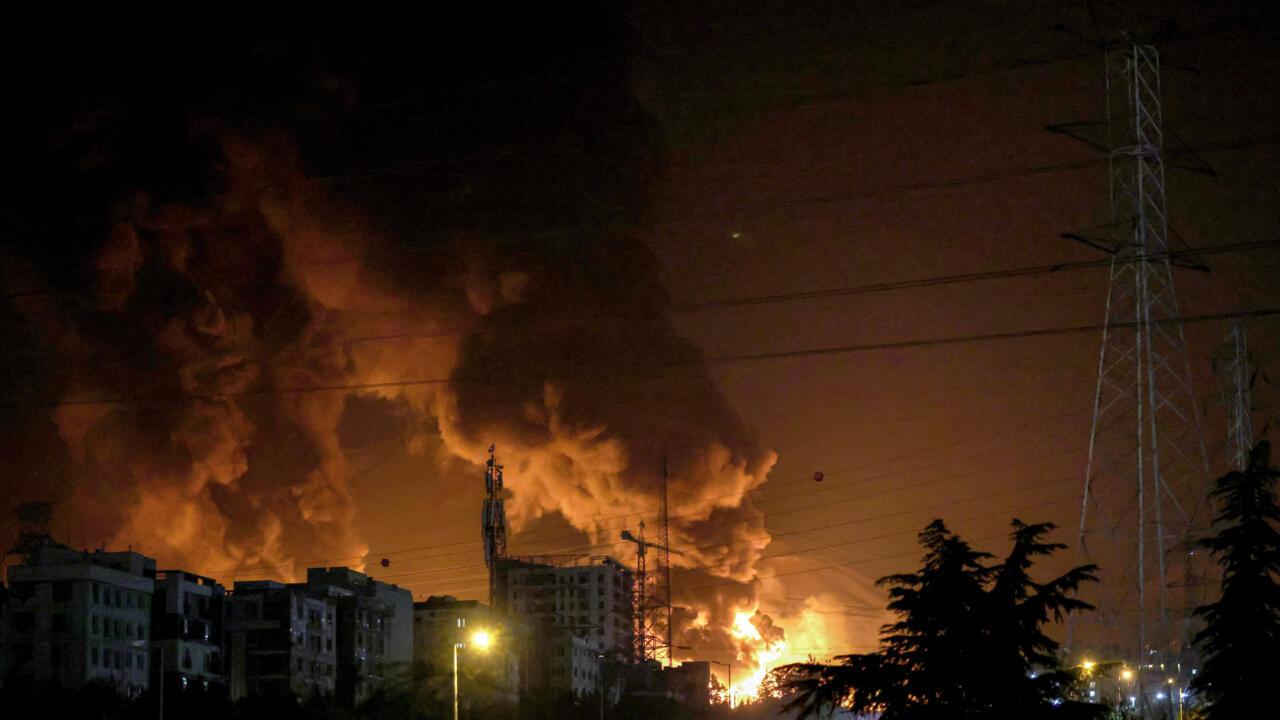
The military confrontation between Israel and Iran has undoubtedly pushed the world nearer a global war precipice. Considering the universal need for peace and order, the war should never have been allowed to happen. Barely a month earlier, nuclear-armed neighbours India and Pakistan exchanged fire after a terrorist attack in Indian-administered Jammu and Kashmir. The Russia-Ukraine conflict,...
The U.S. Department of Defense has warned that China is increasingly focusing on developing the means to challenge its rivals in space. According to the Pentagon’s 2024 annual report on China’s military power, Beijing is advancing technologies that could disrupt or destroy satellites, including co-orbital systems, anti-satellite missiles, electronic warfare tools, surveillance...

Amaka was a young woman living in Apapa, deeply in love with Olamide, a charming but notorious womanizer. From the beginning, Amaka’s heart belonged entirely to him, despite the warning signs. Olamide was unpredictable—he could be sweet one moment and cruel the next, treating her with disregard even though she gave him all her love. Amaka’s only confidante during this time...
LAGOS — Human rights lawyer and Senior Advocate of Nigeria (SAN), Femi Falana, has criticised the agreement reached between the Federal Government, the Nigeria Union of Petroleum and Natural Gas Workers (NUPENG), and the management of Dangote Refinery and Petrochemicals on staff unionisation, arguing that it violates existing labour laws. Falana made his position known while...

With an eye-watering $1 billion in prize money, some of the biggest stars in the game and clubs competing from across the globe, FIFA’s new Club World Cup has all the ingredients to be a huge event. But the 32-team tournament, which will be played across the USA from June 14 to July 13, has faced criticism and scepticism since the moment FIFA president Gianni Infantino began to float the...