About
About
Mbuya Nehanda The Spirit Who Refused to Bow
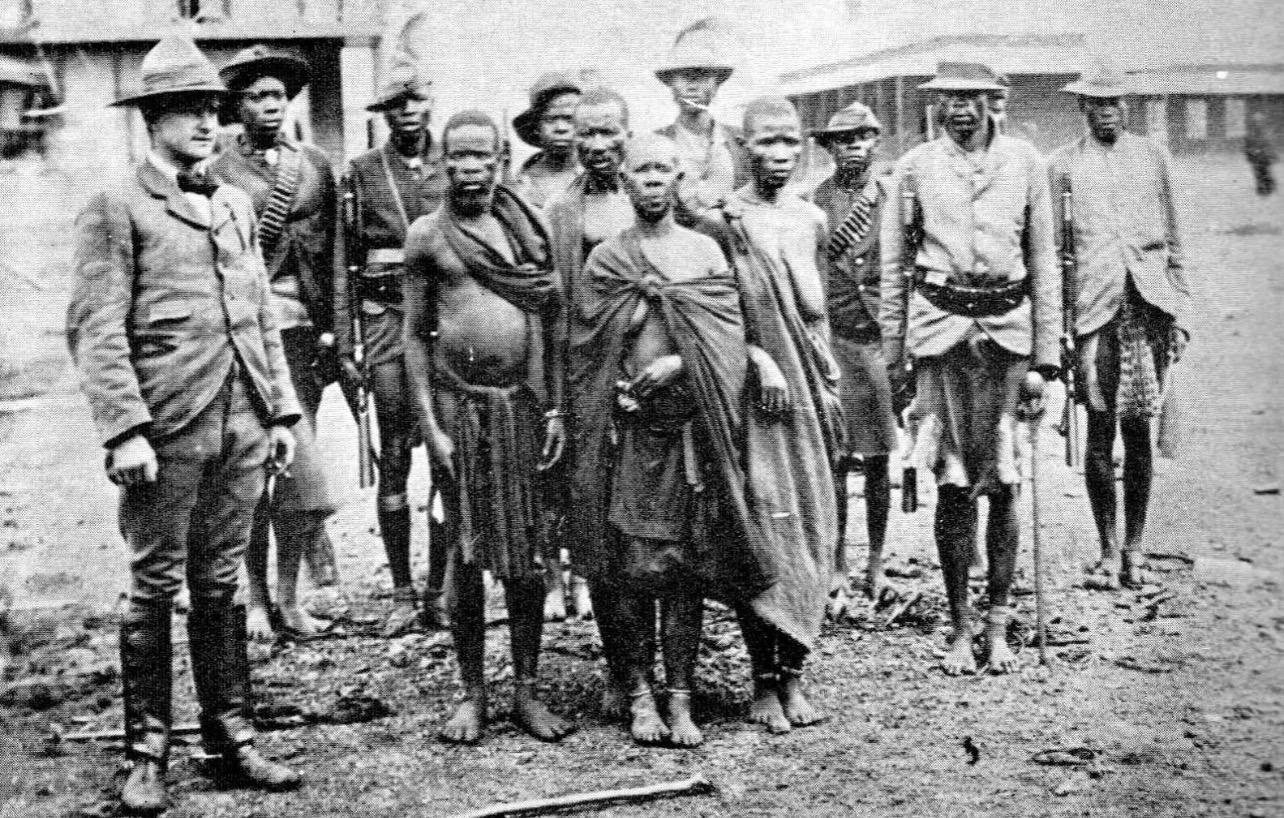
Mbuya Nehanda
Long before Zimbabwe became Zimbabwe, before the flag, before the songs of freedom rose from townships and villages, before the dream of self rule had a name that could be shouted in public, there lived a woman whose story would travel farther than her footsteps. Her name was Nehanda Charwe Nyakasikana, though many came to know her with deep reverence as Mbuya Nehanda, Grandmother Nehanda. She stands in history as a spirit medium and one of the most powerful symbols of resistance to colonial rule in what is now Zimbabwe. She is remembered not only for what she did, but for what she came to mean. Even some details of her early life remain debated by historians, including her birth year, which is sometimes given as around 1840 and sometimes as 1862. What is not debated is her place in the story of resistance.
To tell her story only as biography is not enough. Nehanda belongs to that rare space where history and legend walk side by side. She was a woman of the Shona people, and she became known as a medium of Nehanda, a revered ancestral spirit among the Shona. In that world, spirit mediums were not entertainers of belief or ornaments of tradition. They were guardians of memory, interpreters of meaning, and voices that connected the living to the authority of the ancestors. Charwe is believed to have become a Nehanda medium in the 1880s, and from then on she carried a name that held both spiritual power and public responsibility.
Imagine the land then. Hills and valleys. Villages arranged around kinship, soil, cattle, and sacred obligation. Seasons mattered. Rain mattered. Harvest mattered. The balance between the visible world and the unseen world mattered. In such a world, a spirit medium did not simply speak. A spirit medium carried weight. People listened because the words were believed to come from a source older than any chief and deeper than any single family line. Before the colonial invasion hardened into conquest, Nehanda already held influence in Mashonaland. She was known, consulted, and respected.
Then came the men who arrived not as guests but as claimants. Under the banner of the British South Africa Company, settlers entered Mashonaland in 1890. They came with maps, rifles, legal claims, greed for minerals, and a certainty that the land could be measured, divided, taxed, and possessed. Land was taken. Cattle were taken. Systems that had governed life for generations were pushed aside. Forced labor and heavy taxation followed. Colonial rule did not merely change politics. It pressed itself into daily life, into dignity, into food, into movement, into the right to exist on ancestral land without permission from outsiders.
At first, some African leaders and spirit mediums tried to read the newcomers carefully. History is often more layered than slogans. There were moments of caution, moments of observation, and moments when the full violence of occupation had not yet revealed itself. But it did reveal itself. And when it did, resistance grew. What became known as the First Chimurenga, the first war of liberation, began in 1896. The Ndebele rose first, and the Shona joined the struggle soon after. In Mashonaland, religion and resistance were closely bound together. Nehanda, together with other spirit mediums such as Kagubi or Kaguvi and Mukwati, became central to the moral and spiritual force behind the uprising.
This is where Nehanda becomes larger than ordinary political description. She was not simply issuing commands like a military officer standing over a map. Her power moved differently. She gave people a language for courage. She helped turn suffering into purpose. She helped villages understand that invasion was not just a local problem or an isolated insult, but a tearing of the whole moral fabric of the land. Resistance needed weapons, yes, but it also needed meaning. Men and women do not endure great danger only because they are angry. They endure because they believe there is something sacred worth defending. Nehanda gave that sacred defense a voice.
In the stories told about her, one hears not merely the account of a woman reacting to events, but of a figure standing in judgment over an age of violation. She represented continuity against rupture. She represented memory against conquest. She represented the right of a people to remain themselves on their own soil. Colonial authorities could count rifles and arrests, but they could not easily measure what someone like Nehanda meant to the people around her. That is why such figures frightened empires. An empire can suppress an army more easily than it can suppress a symbol that has entered the bloodstream of a nation.
The First Chimurenga did not end in immediate victory for the African fighters. The British South Africa Company possessed superior military force, and over time the rebellion was beaten down. Supplies ran low. Pressure increased. Reprisals were brutal. Yet defeat on the battlefield did not erase the power of the rising. In fact, the colonial state understood well enough that some people had to be made examples of. Nehanda was arrested. She was put on trial. She was accused in connection with the killing of H H Pollard, a colonial official known for cruelty. In March 1898 her trial opened, and in April 1898 she was executed by hanging. Britannica records her death on April 27, 1898.
Execution is meant to end a person. In colonial logic, it is meant to do even more than that. It is meant to break the spirit of those watching. It is meant to say, This is what happens when you resist. Be afraid. Submit. Forget. But the strange thing about history is that power often misunderstands martyrdom. In trying to silence Nehanda, colonial rule gave her a second life.
One of the most enduring memories attached to her is the prophecy that her bones would rise again, or that she would return in a later victorious struggle. The exact wording varies in retelling, as often happens when history passes through generations of oral memory and nationalist symbolism. But the meaning remained strong. Her death would not be the end. Defeat would not be permanent. The struggle would return. In time, that memory became deeply important to later nationalist movements in Zimbabwe, especially during the liberation struggle of the twentieth century. Her name became a bridge between the First Chimurenga and the later fight that eventually led to independence.
That is one reason Nehanda lives in two worlds at once. In one world, the historian writes about evidence, trial records, dates, colonial documents, oral histories, and contested interpretations. In the other world, the people remember a grandmother of the nation whose spirit outlived the rope. Both worlds matter. History gives us discipline. Legend gives us emotional truth. Together they explain why Nehanda still stands so tall in Zimbabwean memory.
Even the archives bear witness. UNESCO records that the judgment dockets related to Nehanda and Kaguvi were added to the Memory of the World Register in 2015, recognizing them as documentary heritage of global importance. Those records matter because they preserve the paper trail of colonial punishment, but they also preserve proof that these figures stood at the center of a major anti colonial uprising. The archive, in this case, does not bury memory. It protects it.
And memory has continued to make her visible. In 2021, Zimbabwe unveiled a bronze statue of Mbuya Nehanda in central Harare on Africa Day. News reports and cultural coverage described it as a national tribute to a liberation heroine and anti colonial figure. The statue marked not only remembrance, but the public insistence that her story belongs in the heart of the city and the heart of the nation. Her image, once held in limited historical photographs and scattered retellings, was raised into monumental form for new generations to see.
There is something moving about that. A woman once marched to execution under colonial rule is now cast in bronze and placed where crowds pass, vehicles move, and a modern African capital looks at itself. Time turns. Empires boast of permanence, yet many of them vanish. Symbols rooted in a people’s memory endure.
Still, the deepest reason Nehanda matters is not the statue. It is not even the trial record. It is the moral force of her story. She reminds us that resistance does not always begin in formal politics. Sometimes it begins in the village. In the shrine. In the refusal to let humiliation become normal. In the decision to say that land is not just property, that people are not just labor, that rule without justice is violence even when it hides behind paperwork and guns.
For women especially, Nehanda carries another layer of meaning. So much of recorded history, especially colonial history, tries to place women at the edge of great events. Yet here stands a woman at the center of national memory, not as a footnote, not as decoration, but as one of the great voices of resistance. She breaks the false story that power and courage have always worn a male face. In Nehanda, Zimbabwe remembers a woman who was at once spiritual authority, political symbol, and rebel presence.
To speak of her today is to speak of more than the nineteenth century. It is to ask what a nation chooses to honor. It is to ask whose courage deserves public memory. It is to ask whether spiritual and cultural traditions can also be sources of political strength. Her story suggests that the answer is yes. Colonization sought not only land and labor but also the right to define whose worldview counted as real. Nehanda’s life pushed back against that theft of reality.
So when people say her name now, they are not only recalling a medium who lived and died under colonial violence. They are also naming a promise. That dignity can outlast defeat. That memory can outlast empire. That a people can be wounded without surrendering the deepest knowledge of who they are.
In that sense, Mbuya Nehanda never truly left. She remained in songs, in stories, in whispered reverence, in speeches of liberation, in novels, in scholarship, in archives, in public monuments, and in the emotional vocabulary of a nation learning to remember itself. She is one of those rare historical figures whose story does not sit quietly in the past. It keeps speaking.
And perhaps that is the best way to end her story. Not with the image of a rope, though the rope was real. Not with the cold language of a verdict, though the verdict was real. But with the larger truth that the colonizers could not control. They could hang a woman. They could not hang what she had already awakened.
Nehanda Charwe Nyakasikana entered history as a spirit medium.
She remained in memory as a mother of resistance.
And in legend, she rose beyond both death and fear.

Categories
Read More
Bolaji Amusan Bolaji Amusan, popularly known as Mr Latin, is a Nigerian comic actor, filmmaker, producer, and industry leader recognized for his immense contribution to Yoruba-language films. With decades of experience in Nollywood, he is one of the most respected figures in the Yoruba movie industry Early Life and Background Bolaji Amusan was born on October 15, 1966, in...
Moyo Lawal Moyo Lawal is a Nigerian Nollywood actress, television personality, and entrepreneur known for her energetic performances and strong screen presence. She is one of the recognizable faces in Nollywood and has appeared in numerous Nigerian movies and television productions. Over the years she has gained attention for her acting talent, bold personality, and active presence on...

Human rights activist and lawyer, Dele Farotimi, has criticised the red-carpet reception and speech of President Bola Tinubu during his visit to Benue State. Naija News reports that Benue, a food-producing state in Nigeria’s North-Central zone, has been under heavy attacks by suspected herdsmen for some time. However, the killings in the last few weeks have been without a break as no...
The Managing Director of Fidelity Bank Plc, Dr. Nneka Onyeali-Ikpe, allegedly confessed to paying ₦5 billion to avoid detention by the police amid a multi-billion-naira fraud investigation. Court documents from Charge No: FHC/L/138C/2025 before the Federal High Court in Lagos reveal that the Federal Republic of Nigeria is prosecuting Victor Ukutt, Fidelity Bank Plc, Dr. Onyeali-Ikpe, and a...
Dog owners are feeling the pinch as pet food prices climb amid the ongoing cost-of-living crisis. With inflation driving up the cost of essentials, pet care budgets are stretched thin, forcing many to rethink their spending. Premium pet food brands have seen price hikes of up to 20% in the past year, while even budget options are no longer as affordable. For devoted pet parents, cutting back...