


 About
About
Mwanga II The Young King Who Faced Empire and Fire
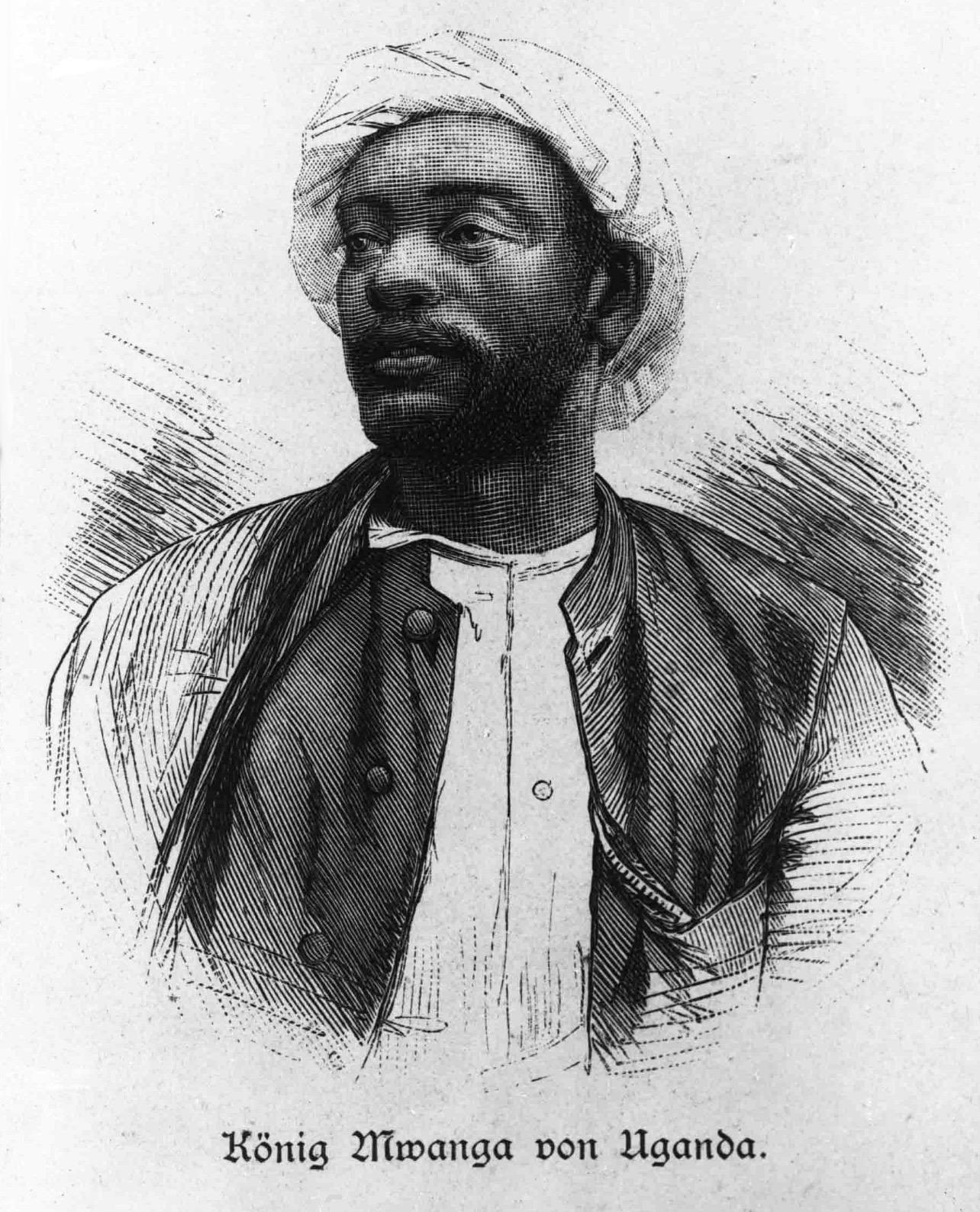
Mwanga II
Mwanga II The King Caught Between Faith and Empire
Mwanga II was one of the most talked about kings in East African history. He ruled Buganda at a time when foreign powers were arriving, bringing new religions, new ideas, and new control. His life was filled with power, fear, resistance, and tragedy. Some people see him as a cruel ruler, while others see him as a young king trying to defend his kingdom from outsiders. His story is complex, emotional, and unforgettable.
Early Life and Background
Mwanga II was born around 1868 in the powerful Kingdom of Buganda, located in present day Uganda. He was the son of Kabaka Muteesa I, a respected king who had already begun interacting with Arab traders and European missionaries.
As a prince, Mwanga grew up in a royal environment filled with tradition, authority, and strict cultural expectations. He watched how his father balanced relationships with foreigners while still maintaining control over Buganda.
But unlike his father, Mwanga would inherit a kingdom that was already changing fast.
Becoming King at a Young Age
Mwanga became king in 1884 after the death of his father. He was still very young and suddenly found himself in charge of a powerful kingdom facing growing foreign influence.
At that time, Christian missionaries and Muslim traders were already present in Buganda. Many people at the royal court had begun to convert to these new religions.
Mwanga felt threatened. He feared that these new beliefs were weakening his authority as king. In Buganda tradition, the Kabaka was not just a ruler but also a central figure of power and control. Seeing his people follow foreign religions made him uneasy and suspicious.
Fear of Foreign Influence
As more people converted to Christianity and Islam, Mwanga began to worry that his kingdom was slowly slipping out of his control.
Missionaries encouraged new ideas about loyalty, obedience, and faith that sometimes conflicted with the king’s authority. Some converts refused to follow royal commands if they believed it went against their religion.
To Mwanga, this was dangerous. He believed these changes could lead to rebellion or even takeover by foreign powers.
His fear slowly turned into anger.
The Execution of the Martyrs
One of the most controversial moments in Mwanga’s rule was the execution of young Christian converts, now known as the Uganda Martyrs.
In 1886, Mwanga ordered the killing of several young men who had refused to abandon their Christian faith. These executions shocked many people and later became a powerful symbol of faith and sacrifice.
To some, Mwanga became known as a cruel and harsh ruler. To others, he was a king trying to protect his kingdom from foreign control and cultural invasion.
This event would define his legacy for generations.
Struggles with Power and Rebellion
Mwanga’s rule became unstable as tensions grew within the kingdom. Religious groups began to form alliances, and some chiefs opposed his leadership.
Eventually, Mwanga was forced out of power for a short time. He fled and later returned with support from different factions.
But by then, the situation had changed. European powers, especially the British, were becoming more involved in Buganda’s affairs.
Mwanga was no longer fully in control.
Encounter with Colonial Rule
As British influence increased, Buganda slowly became part of a larger colonial system.
Mwanga tried to resist foreign domination, but he lacked the strength and unity needed to push them back. Internal conflicts and divided loyalties made it even harder for him.
At one point, Mwanga even cooperated with the British to regain his throne, showing how complex his situation had become.
He was no longer just fighting for power within Buganda. He was now caught in a bigger struggle between African independence and European colonial expansion.
Final Resistance and Exile
Mwanga later joined a rebellion against British rule, hoping to regain full control of his kingdom.
But the resistance failed.
He was captured by the British and eventually exiled. Far from his homeland, the once powerful king lived the rest of his life away from Buganda.
He died in exile in 1903.
Legacy and Controversy
Mwanga II remains one of the most debated figures in African history.
Some people remember him as a tyrant who killed innocent people. Others see him as a young king who faced impossible challenges during a time of massive change.
He ruled during a moment when Africa was being reshaped by colonial forces, and many leaders struggled to respond.
Mwanga’s story is not simple. It is a story of power, fear, resistance, and the difficult choices leaders must make when their world is changing.
Conclusion
Mwanga II was more than just a king. He was a symbol of a turning point in African history.
His life shows how difficult it was for African rulers to deal with foreign influence, religion, and colonial expansion.
Whether seen as a villain or a defender, Mwanga’s story reminds us that history is often complex, and leaders are shaped by the challenges of their time.

Categorie
Leggi tutto
Tiwa Savage is one of Africa’s most influential female music artists and a leading figure in the global rise of Afrobeats. Known for her powerful vocals, stage presence, and bold personality, she has become a symbol of female success in a male dominated industry. Early Life and Education Tiwa Savage was born Tiwatope Omolara Savage on February 5, 1980, in Isale Eko, Lagos, Nigeria. She...

Lucas Grabeel Lucas Grabeel is an American actor, singer, and songwriter best known for his role as Ryan Evans in the High School Musical film series. He is admired for his musical talent, acting skills, and contributions to both film and television. Lucas Stephen Grabeel was born on November 23, 1984, in Springfield, Missouri, United States. Early Life and Background Lucas Grabeel...

The Peoples Democratic Party (PDP) has raised the alarm over what it describes as a growing attempt to turn Nigeria into a one-party state. In a strong statement, the opposition party urged citizens to stand up for democracy, warning that political dominance by a single party undermines freedom, accountability, and good governance. The PDP emphasized that a vibrant multi-party system is the...

JULIET IBRAHIM Juliet Ibrahim is a Ghanaian-Liberian actress, film producer, singer, and entrepreneur widely recognized for her beauty, versatility, and cross-industry influence in both Ghanaian and Nigerian cinema. Over the years, she has become one of the most prominent female figures in West African entertainment. Early Life and Background Juliet Ibrahim was born on March 3,...

Lil Uzi Vert Lil Uzi Vert is one of the most unconventional and influential figures in modern hip hop. Known for a high pitched melodic delivery, eccentric fashion, emotional vulnerability, and genre bending creativity, he emerged from Philadelphia’s underground scene to become a chart dominating star whose music defined a generation of internet driven rap culture. His life story...

