Sobre
Sobre
Queen Nzinga The Lioness Who Stood Before Empire
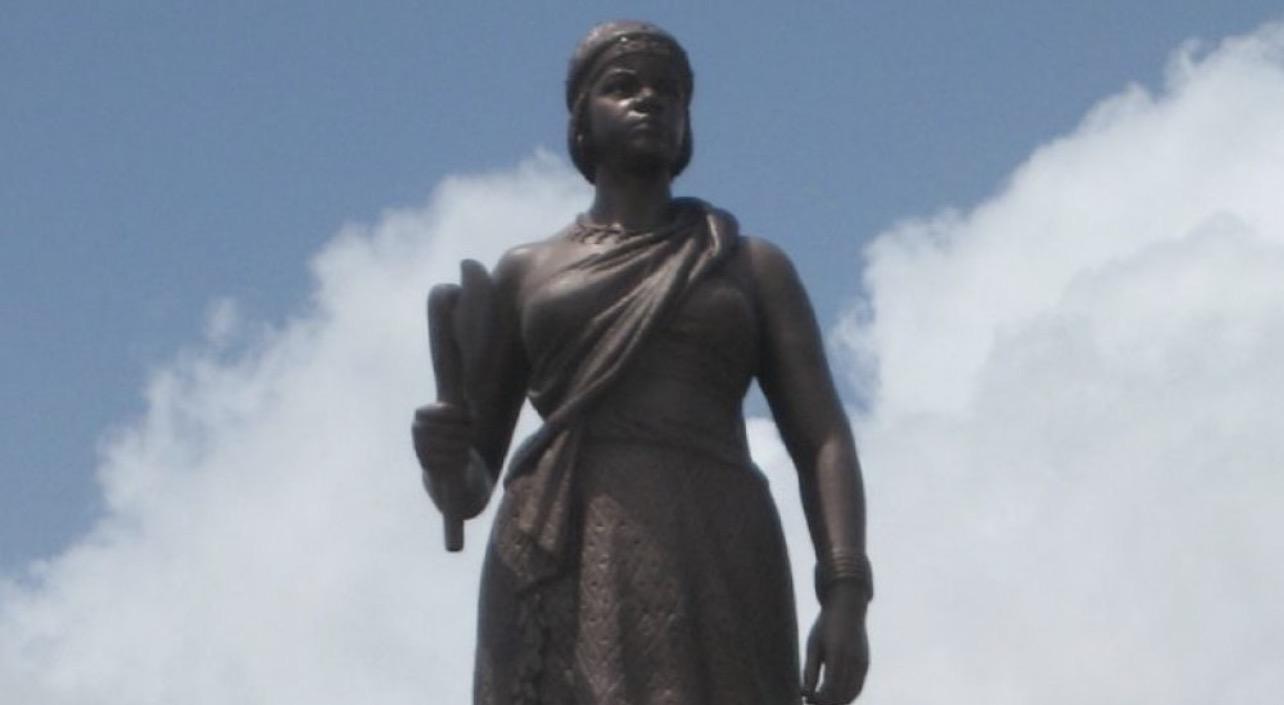
Queen Nzinga
Long before modern Angola took shape on the map, before colonial flags tried to redraw the destiny of African kingdoms, there was a woman whose name moved through palaces, battlefields, and whispered campfire stories with equal force. Her name was Queen Nzinga. She was not merely a ruler seated on a throne. She was strategy with a heartbeat, courage in royal cloth, and defiance sharpened into leadership.
Queen Nzinga was born around 1582 in the kingdom of Ndongo, in the region that is now Angola. She would later rule both Ndongo and Matamba, and history remembers her as one of the most formidable African leaders of the seventeenth century. She became known for her political intelligence, military strength, and relentless resistance to Portuguese expansion into her homeland.
Her world was already under pressure when she was born. Portuguese traders and colonial agents had entered the region seeking power, control, and above all people to capture and sell through the slave trade. Kingdoms were being pushed into dangerous alliances, wars were spreading, and the balance of power was shifting. In that storm, Nzinga grew up watching leadership not as a luxury, but as a matter of survival.
As a child, she was not raised to be small in spirit. Stories about her early life often describe a girl who listened carefully, observed deeply, and learned quickly. She watched court discussions, understood the language of power, and learned that a ruler needed more than weapons. A ruler needed timing, presence, and the ability to read both friends and enemies. She was born into a royal family, the daughter of Ngola Kiluanji, the ruler of Ndongo, and from early on she developed the qualities that would later make even foreign governors uneasy.
When her father died, the path before her did not open easily. Power in royal families often came wrapped in rivalry, and Ndongo was no exception. Her brother, Ngola Mbandi, took the throne in a period of enormous crisis. Portuguese pressure was growing, military losses were painful, and the kingdom was under severe strain. Yet in that difficult moment, Nzinga rose not first as a queen, but as something just as dangerous to her enemies: a diplomat.
One of the most famous moments in her life came in 1622, when she was sent to negotiate with the Portuguese governor in Luanda. It is the kind of scene that feels too powerful to be true, yet it has endured for centuries because it captures the spirit of the woman so perfectly. She entered the meeting knowing the Portuguese intended to humiliate her. They arranged the room so that the governor had a chair while she had none, expecting her to sit lower than him, literally beneath him in status. But Nzinga understood symbols. She understood that surrender begins in small gestures. So instead of accepting the insult, she ordered one of her attendants to kneel and used the person as a seat, placing herself eye level with the governor. In that instant, she told the room everything they needed to know. She had not come to beg. She had come to bargain as an equal. That moment became one of the most enduring images of African resistance and royal intelligence. Her diplomacy at Luanda helped secure a treaty, at least for a time.
But paper promises rarely stopped imperial hunger for long. The Portuguese broke agreements, advanced their interests, and continued to interfere in the region. After her brother’s death in 1624, Nzinga took power in Ndongo, first as regent and then as queen. This alone was a bold act, because she was stepping into a political world where leadership was contested and where the Portuguese were eager to exploit any internal dispute. Yet she refused to let her kingdom be handed over through weakness or confusion. She fought for the throne, fought for legitimacy, and fought for survival.
To imagine Queen Nzinga only as a warrior with a blade in hand is to miss half her strength. She was a strategist above all. She knew when to speak softly, when to strike, when to move, and when to transform. As Portuguese influence deepened, she adapted. She formed alliances with local groups when necessary. She used diplomacy when it bought her time. She understood the value of religion in politics and at one point accepted baptism, taking the name Ana de Sousa, a move that gave her diplomatic leverage in dealing with the Portuguese world. But Nzinga was never simply being remade by outside influence. She used every available tool for her own purposes. That was her genius.
Still, the struggle intensified. Rivals backed by Portuguese interests pushed her from parts of Ndongo, and by the early 1630s she had established herself in Matamba, a neighboring kingdom that would become her new power base. Many rulers might have seen exile as the end of the story. Nzinga turned it into a second beginning. In Matamba, she rebuilt power, gathered followers, welcomed those displaced by war, and transformed the kingdom into a center of resistance. From there she continued to challenge Portuguese influence for decades.
This is where her story becomes even more remarkable. She did not vanish into memory after losing ground. She changed the battlefield. She made Matamba a living answer to conquest. People fleeing chaos and enslavement could find shelter under her rule. She expanded her influence, strengthened her court, and kept alive the dream that African sovereignty did not have to collapse under European expansion. In an age when colonial powers expected submission, she kept creating obstacles, delays, counter moves, and political headaches for them. She refused to become a footnote in somebody else’s empire.
Her military leadership was not symbolic. She was deeply involved in warfare and was remembered as a ruler who led, organized, and inspired resistance on the ground. She used mobility, alliances, and regional knowledge to challenge better armed enemies. At different moments she allied with the Dutch against Portugal, proving again that she was never trapped in one fixed method. If diplomacy failed, she turned to war. If war stalled, she turned to negotiation. If she was cornered, she changed the shape of the struggle. That ability to adapt is one of the reasons she survived so long in one of the most violent political landscapes of her time. Britannica notes that she was especially skillful in allying with local groups and European powers alike to improve her position and protect her people.
And protect them she did, though not in some soft, simple way. Queen Nzinga ruled in an age of brutal realities. The slave trade was tearing through societies. Kingdoms were forced into impossible choices. War, diplomacy, commerce, and survival were tightly entangled. Her legacy is powerful not because she lived in a clean moral world, but because she fought in a dirty one without surrendering her people easily to outside domination. She stood in a century designed to break African rulers apart and yet remained standing for more than three decades as a major political force.
As the years passed, something else happened. Nzinga became more than a ruler. She became a symbol. To her enemies, she was a problem that would not disappear. To her people, she was endurance. To later generations, she became one of the clearest faces of African resistance to colonial aggression. UNESCO recognizes her as a major historical figure, and Britannica records that she ruled Ndongo and Matamba in what is now Angola until her death in 1663.
Picture her in her later years. Not broken. Not silenced. Not erased. A woman who had watched treaties fail, armies move, rivals rise, and foreign powers scheme. A woman who had lost ground and regained power. A woman who had learned that survival itself could be an act of rebellion. Even as age advanced, her name still carried weight. Her court still mattered. Her decisions still shaped the region.
She died in 1663, but she did not disappear. That is the mark of true historical greatness. Some rulers die and are buried in records. Others live on because they changed the emotional memory of a people. Queen Nzinga belongs to the second kind. In Angola today, she is remembered as a national heroine, a founding mother of resistance, and one of the great women of African history. Her image appears in statues, books, and cultural memory because she represents far more than a throne. She represents refusal.
What makes Queen Nzinga so unforgettable is not only that she fought the Portuguese. It is how she fought them. She fought with presence before she fought with weapons. She fought with intelligence before she fought with force. She understood dignity as a political act. She knew that to kneel wrongly before empire was to surrender the future. So she kept rising, again and again, whether in the negotiation hall or on the battlefield.
History often tries to simplify powerful women. It calls them dramatic when they are decisive. It calls them dangerous when they are unyielding. It calls them unusual when they are simply extraordinary. Queen Nzinga does not fit neatly into the timid boxes history sometimes prepares for women. She was fierce, calculating, brave, adaptable, and proud. She could talk peace and prepare war in the same breath. She could retreat without giving up. She could lose territory without losing herself.
That is why her story still matters.
In every generation, there comes a struggle over who gets to decide the meaning of power. For Queen Nzinga, that struggle was against Portuguese expansion, political betrayal, and the machinery of empire. She met that struggle not with fear, but with will. And because she did, her story crossed centuries.
She remains one of Africa’s brightest royal flames, a queen who would not bow, a diplomat who could outthink governors, and a warrior who turned survival into legend.
If you want, I can also turn this into a cleaner blog post format with an SEO title, 4 tags, and 4 hashtags.

Categorias
Leia Mais
My name is Amara, and this is the story that taught me that betrayal does not always come from enemies. Sometimes, it sleeps beside you, laughs with you, and calls you “best friend.” Lola and I had been friends for seven years. We met in secondary school and grew together into adulthood. People used to say we were inseparable. We shared secrets, dreams, pains, and even clothes....

Shoday Shoday, born Shodade Solomon Segun in 2000, is a Nigerian Afrobeat artist and singer-songwriter celebrated for his distinctive sound and engaging melodies. Originating from Ogun State and raised in Lagos, he developed a passion for music early on. As of December 2024, Shoday has accumulated over 19 million total plays on Spotify, with a monthly listenership...
Maurice Sam Maurice Sam is a Nigerian actor, model, DJ, and television personality best known for his charming screen presence and romantic roles in Nollywood films. Over the years, he has become one of the most admired young actors in Nigeria’s contemporary film industry. Early Life and Background Maurice Sam was born on March 12, 1990, in Lagos State, Nigeria. He...

Phyna Phyna, whose real name is Josephina Otabor, is a Nigerian hype woman, model, and reality TV star best known for winning Big Brother Naija Season 7 in 2022. Her bold personality, street vibe, and confidence made her one of the most talked-about housemates of her season. Early Life and Background Phyna was born on June 2, 1997, in Edo State, Nigeria. She hails from Edo State in...
Lolo 1 Lolo 1, whose real name is Omotunde Adebowale-David, is a Nigerian comedian, actress, radio personality, and media host known for her vibrant personality and strong voice in entertainment and social issues. She became widely recognized for her role as Adaku in the popular TV series Jenifa’s Diary. Early Life and Background Lolo 1 was born on April 27, 1977, in Lagos State,...