About
About
Mansa Musa and the Golden Thunder of Mali
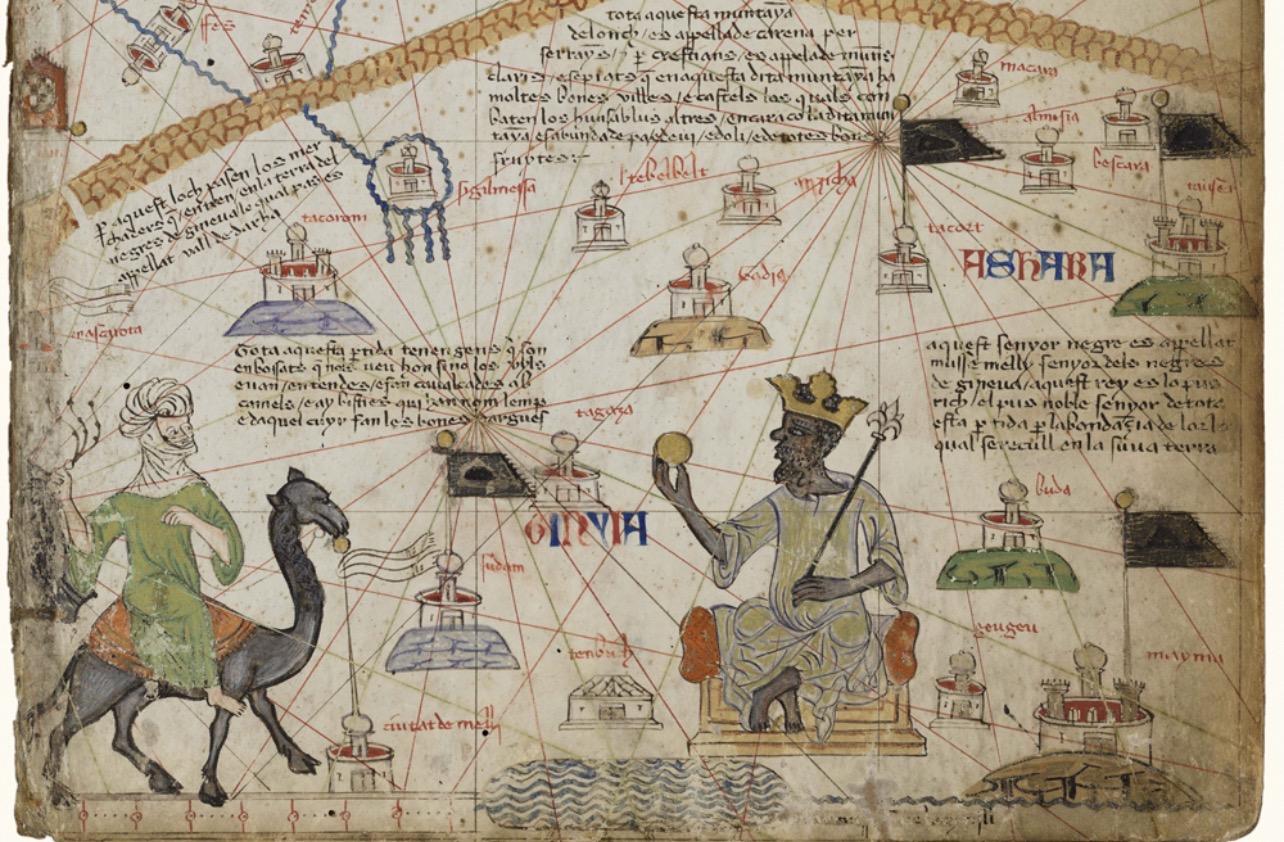
Mansa Musa
There are names that enter history like a whisper, and there are names that arrive like thunder. Mansa Musa belongs to the second kind. His story does not begin in a small way, and it does not remain small for long. It rises from the red earth of West Africa, from the sound of caravans crossing the desert, from the weight of gold carried in leather bags, from royal drums and crowded markets and the faith of a king who wanted the world to know that Mali was not merely a land on a map, but a living power. To tell the story of Mansa Musa is to tell the story of wealth, faith, power, knowledge, and memory. It is to step into an age when Africa stood tall in the eyes of the world, and when one emperor became so famous that centuries later people still speak his name with wonder.
Long before Mansa Musa took the throne, the lands of West Africa had already learned how to build greatness. Great kingdoms rose from trade, from discipline, from strong rulers, and from people who understood the value of land and river and road. In that world, the Mali Empire emerged as one of the brightest crowns in Africa. It grew after the fall of older powers and was shaped by strong rulers who understood that an empire must be fed by more than swords alone. It needed roads, trade, law, and loyalty. It needed a center that could hold many peoples together. Mali became that center.
At the heart of this greatness lay gold. Gold was not just metal in Mali. It was the pulse of the empire. It gave the empire its reach, its pride, and its fame. The forests and lands connected to Mali produced gold in astonishing quantity. Traders carried it north across the Sahara. In return came salt, cloth, horses, books, and ideas. Gold moved outward, but wealth did not simply leave Mali. Wealth returned in many forms. Cities grew. Markets expanded. Rulers became stronger. Scholars found homes. Mosques rose into the sky. Caravans arrived and departed under the watchful eyes of men who knew they stood within one of the richest lands on earth.
Into this world came Mansa Musa.
His full story is wrapped in memory, oral tradition, and the written words of those who heard about him or met people who had seen his splendor. Yet even where history leaves some spaces unfilled, the shape of his greatness remains clear. He was born into the ruling family of Mali and came of age within a system where kingship was heavy with responsibility. He did not inherit an ordinary seat. He inherited command over a vast empire whose lands stretched across important routes of trade and influence. His title, Mansa, meant king or emperor. But Mansa Musa would make that title shine brighter than almost anyone before him.
When he came to power in the early fourteenth century, Mali was already strong. But under Musa, strength became magnificence. He did not simply sit on the throne and enjoy inherited wealth. He expanded authority, strengthened administration, and made the empire feel present across its many regions. Rule over a large empire is never only about military force. It is about convincing many different people that the center is powerful, stable, and worth obeying. Mansa Musa understood this deeply. He governed not just with riches, but with a vision of order.
The empire under Musa contained cities that were alive with trade and learning. Niani is often remembered as the imperial capital, a seat of royal authority and ceremony. Timbuktu and Gao became names that would echo across deserts and centuries. Timbuktu in particular would grow into a symbol of wealth and scholarship. But before it became legend in foreign imagination, it was a real city filled with merchants, students, judges, scribes, travelers, and ordinary people trying to make a living in the shadow of greatness.
Mansa Musa ruled at a time when Islam connected many parts of the world through faith, law, learning, and commerce. Mali had already been touched by Islam before Musa, but under him the empire’s Islamic identity became more visible to the wider world. This mattered deeply. Religion was not just personal devotion for a ruler like Musa. It was also part of diplomacy, legitimacy, and cultural identity. To be known as a powerful Muslim ruler linked Mali to North Africa, Egypt, Arabia, and beyond. It placed the empire within a broad network of respect and exchange.
Yet it was one extraordinary journey that would lift Mansa Musa beyond the level of a powerful emperor and turn him into a figure of astonishment. That journey was his pilgrimage to Mecca.
The pilgrimage was one of the great duties of a Muslim believer who had the means. Mansa Musa had more than the means. He had an empire behind him, and when he moved, the world noticed. Around the year 1324, he set out on the hajj, and what followed became one of the most famous royal journeys in history.
Imagine the scene. The sun over the Sahel burns bright. Dust rises beneath countless feet. The procession stretches so far that one can hardly see where it begins or where it ends. Servants, officials, soldiers, attendants, and merchants move together. Camels carry loads of gold. Horses move beside the great line. Fine cloth shines in the light. Men walk in ordered ranks. The emperor himself travels with dignity and purpose, not like a man fleeing danger, but like a ruler whose presence announces an entire civilization.
Stories of the pilgrimage tell of thousands of people in the caravan. They tell of gold carried in such abundance that it dazzled every place the procession touched. They tell of generosity so enormous that it changed markets. This is where Mansa Musa became more than a ruler of Mali. He became a wonder spoken of in Cairo, in the cities of the Middle East, and later in Europe.
When he reached Cairo, one of the great cities of the Islamic world, his presence caused a sensation. Cairo was no stranger to wealth or power. It had seen kings, governors, scholars, and merchants from many lands. Yet Mansa Musa impressed it in a way few others had. He distributed gold so generously to the poor, to officials, and to those he met that the value of gold in the region reportedly fell for years afterward. That detail has become one of the most repeated parts of his story, and it survives because it captures something central about him. His wealth was not modest. It was overwhelming. It was the kind of wealth that bent economies and startled experienced observers.
But the pilgrimage was not just a parade of riches. It was also a declaration. It told the wider world that Mali was a major power. It told scholars and traders that beyond the Sahara there was an empire of deep resources, firm belief, and imperial confidence. Musa was not content for Mali to remain distant and misunderstood. By making this journey in such grand fashion, he placed Mali firmly on the mental map of the medieval world.
There is something deeply human in this moment. One can imagine Musa looking upon Cairo, seeing its mosques, its scholars, its organized life, and feeling both admiration and purpose. Great rulers often measure themselves not only by what they possess, but by what they can build. The pilgrimage did not simply expose Musa to the wider world. It transformed his ambitions for Mali itself. He returned not just as a pilgrim who had fulfilled a sacred duty, but as a ruler sharpened by encounter, eager to deepen the cultural and intellectual life of his empire.
On his way back, he is said to have brought with him scholars, architects, and learned men. This decision reveals a great truth about Mansa Musa. He understood that the wealth of an empire is safest when it becomes more than treasure. Gold can be stolen, spent, or buried. Knowledge builds something more lasting. A mosque can gather a community. A school can shape generations. A judge can organize justice. A scribe can preserve memory. Musa invested in these things.
Timbuktu stands at the center of this part of his legacy. Though it had already existed as a trading center, it grew in importance under Mali, and Mansa Musa helped turn it into a beacon of learning and religion. Mosques were built or expanded. Scholars found patronage. Students came seeking knowledge. The city became known not only for commerce, but for books and debate. In later years, Timbuktu would be remembered as one of the great centers of Islamic scholarship in Africa.
There is beauty in the image of an emperor whose fame rests not only on the weight of his gold, but also on the libraries that rose in his age. In many stories of kings, wealth leads only to excess. In the story of Mansa Musa, wealth also led to learning. He seems to have believed that a powerful empire should speak through architecture, scholarship, and public devotion. The mosques associated with his reign became visible signs of this belief. They announced order, piety, and refinement.
Yet the empire was not made of books and mosques alone. It was sustained by people whose lives often go unnamed in grand history. Farmers worked the land and fed the cities. Traders risked long journeys through dangerous heat and uncertain roads. Craftsmen shaped goods that filled markets. Women organized households, worked in commerce, maintained communities, and helped pass down memory through generations. Soldiers defended order. Local leaders linked villages and provinces to the emperor’s authority. The empire of Mansa Musa was vast because many hands held it up.
In the markets of Mali, one could hear many languages and see goods from many lands. Salt from the Sahara was precious, sometimes as precious as gold in the right place. Cloth moved from one region to another. Leather goods, grain, copper, and manuscripts passed through the trading world. A city like Timbuktu was not only a place where wealth rested. It was a place where wealth moved. Merchants arrived with news. Scholars brought arguments. Pilgrims carried prayers. Travelers brought stories that changed how distant lands imagined one another.
The fame of Mansa Musa spread so widely that he began to appear on maps beyond Africa. This was a remarkable development in an age when much of sub Saharan Africa was poorly understood by European mapmakers. On some famous maps, he was shown seated with gold in hand, like a symbol of unimaginable wealth. This image mattered. It told distant viewers that there was a ruler in West Africa whose riches could not be ignored. Even if those who made the maps did not know every detail of his world, they knew enough to place him there as a figure of power.
And yet there is a danger in fame. Sometimes the world remembers a man for only one thing. In the case of Mansa Musa, many remember only that he was rich. That is true, but it is not enough. To remember him only as a wealthy king is to flatten a far more important legacy. His empire was not great merely because it had gold. Many lands have had riches and still faded into silence. Mali under Musa mattered because it joined wealth to administration, trade, religion, culture, and learning. It was a civilization of depth, not just glitter.
One should also remember that enormous wealth always carries questions. How was it managed? How was it distributed? How stable was the system behind it? No empire, however glorious, is free from strain. The very routes that made Mali prosperous also required protection. The regions that paid tribute needed supervision. Succession after a powerful ruler could become difficult. Great kings often cast such large shadows that those who follow them struggle to hold the same authority. Mansa Musa’s brilliance could not guarantee that every future generation would rule with equal strength.
Still, during his lifetime, the empire stood as one of the marvels of the age. Its prestige was real. Its influence reached far. Its ruler was discussed in courts and markets far beyond his homeland. Few African rulers from the medieval era left such a broad impression on the written memory of the wider world.
Picture Timbuktu in the years after Musa’s return from pilgrimage. The city hums with activity. Traders bargain over goods that crossed sand and river. Scholars bend over manuscripts. The call to prayer rises over the roofs. Dust glows in afternoon light. In some courtyard, a teacher explains law or grammar or theology to young students. Somewhere in the city a caravan leader prepares for the next journey north. Somewhere else, a family cooks, talks, laughs, and worries about tomorrow just as families always have. And over all of this lies the invisible hand of imperial order, the sense that the city belongs to something large and powerful.
Now picture the emperor himself. Not only seated in glory, but thinking. Thinking about faith. Thinking about rule. Thinking about how to turn passing wealth into enduring honor. Thinking about how a ruler will be remembered when the gold is gone from his hands. That question gives his story its depth. Because in the end, Mansa Musa was remembered not only because he possessed treasure, but because he attached that treasure to vision.
His story also challenges old habits of historical imagination. Too often, world history has been told as if greatness belonged mainly to certain regions while others stood in the background. The empire of Mansa Musa destroys that false picture. It reminds us that medieval Africa was not empty, silent, or waiting to be discovered by others. It was active, organized, wealthy, thoughtful, and connected. It had rulers of astonishing capability. It had cities of learning. It had economies that shaped regions far beyond their borders. Mali was not an afterthought. It was a center.
And that may be the deepest reason the story continues to fascinate people. Mansa Musa is not just a figure of luxury. He is evidence. He is evidence that Africa produced empires whose influence the world could feel. He is evidence that black history is not a side note to civilization, but one of its grand chapters. He is evidence that memory, when honestly searched, reveals splendor where ignorance once imagined emptiness.
As the years passed after his reign, the Mali Empire would face the natural tests that confront all states. Time changes rulers. Trade routes shift. Rivals rise. Internal weakness can grow where strong hands once held things together. No empire lives forever. But decline does not erase greatness. The sunset of a kingdom does not cancel its noon. What Mansa Musa built, strengthened, and symbolized remained powerful in memory long after the political shape of the empire changed.
Today, when people speak of the richest man who ever lived, his name often returns. But perhaps the better question is not whether he was the richest. Wealth can be counted in many ways, and history rarely offers exact balances. The better question is what he did with the power that wealth gave him. He used it to make Mali visible. He used it to honor his faith. He used it to attract scholars and builders. He used it to stamp his empire onto the consciousness of the world.
That is why his story still glows.
It glows in the image of camels moving across the Sahara with the treasure of an empire on their backs. It glows in the courtyards of Timbuktu where books were opened beneath African skies. It glows in the memory of a ruler whose generosity was so great that foreign markets felt it. It glows in the pride of a continent whose past is rich with greatness. And it glows in the minds of all who hear his name and realize that history is larger, deeper, and more magnificent than they were once taught.
The empire of Mansa Musa was made of gold, yes, but also of order, faith, ambition, and intelligence. It was made of roads and rivers, of scholars and merchants, of prayer and policy. It was made by countless lives gathered under imperial rule, and by one emperor whose vision turned prosperity into legend.
So when the story is told, it should not be told as a simple tale of a rich king showing off his treasure. It should be told as the rise of a civilization that knew its worth. It should be told as the journey of a ruler who crossed deserts and entered history with the force of a storm. It should be told as one of Africa’s grandest chapters, where wealth met wisdom and power met purpose.
And in that telling, Mansa Musa still rides on. Not lost in dust, not buried in silence, but shining across the centuries like a golden thunder no time could fully quiet.

Kategoriler
Read More
The immediate past President and Chief Executive of African Export and Import Bank (Afreximbank), Professor Benedict Okey Oramah, has stated that African leadership must act with courage and innovation to ensure that the current winds of deglobalisation would not stifle the continent’s opportunity to develop. Oramah stated this in Lagos on Monday night at the Nigeria-British...
David Guetta David Guetta is a French DJ, music producer, and songwriter who is widely regarded as one of the pioneers of modern electronic dance music (EDM). Known for his global hits and collaborations with top artists, he has played a major role in bringing EDM into mainstream pop music. David Pierre Guetta was born on November 7, 1967, in Paris, France. Early Life and...

A Businesswoman based in Onitsha, Anambra State, Ms Eberechukwu Sophia Okoye, has sued the National Agency for Food and Drug Administration and Control (NAFDAC) before a Federal High Court in Awka over the alleged invasion of her office, and the seizure and looting of goods estimated at N15.746 million. Among the items seized by NAFDAC were dozens of jeans imported from Turkey, boxers, joggers,...

Pursuing a PhD was never meant to be easy—but I never expected that the biggest obstacle would be the very people meant to guide me. From the first year, I faced what I now call “institutional resistance.” Questions were dismissed. Progress was delayed for months over trivial issues. One supervisor told me bluntly, “You don’t belong here.” Another...
Lilian Esoro Lilian Esoro is a Nigerian actress, model, and television personality known for her roles in Nollywood films and TV series. She gained widespread recognition for her talent, beauty, and strong screen presence. She was born on March 9, 1982, in Imo State, Nigeria. Early Life and Background Lilian Esoro hails from Imo State but grew up in Lagos State, Nigeria. She developed...