About
About
The Sacred Throne of a Nation: The Powerful Story of the Ashanti Golden Stool and the Royal Legacy of Kumasi
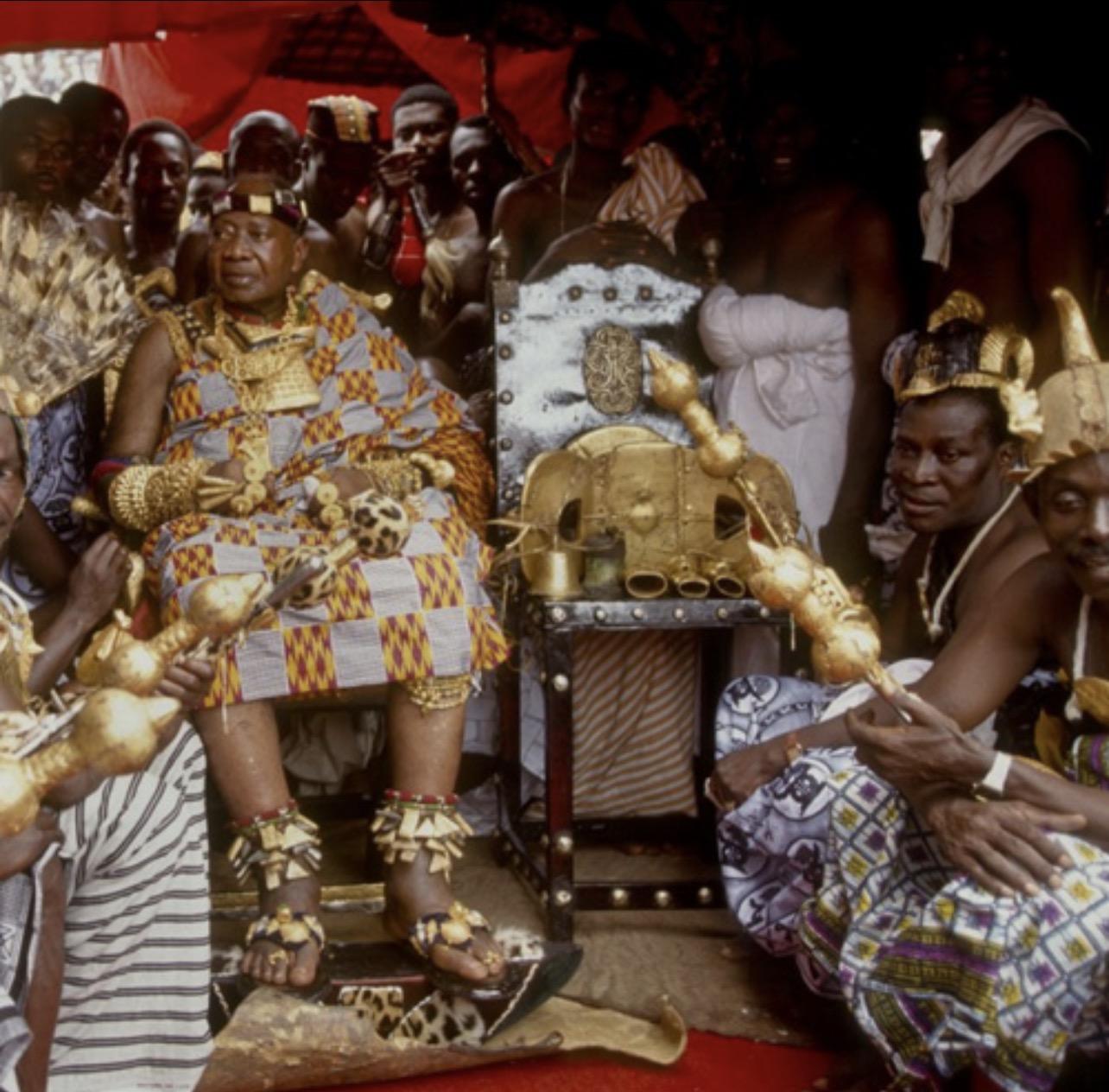
Ashanti Golden Stool and the Royal Legacy
Deep within the rich forests of present day Ghana stands a city that has long been the spiritual and political heart of one of Africa’s most powerful historical kingdoms. That city is Kumasi, the capital of the Ashanti Kingdom and home to one of the most sacred symbols in African history.
That symbol is the legendary Golden Stool.
Unlike ordinary royal thrones, the Golden Stool is believed to hold the soul of an entire nation. It represents unity, power, identity, and the spiritual strength of the Ashanti people. No king ever sits on it. No one is allowed to touch it. It is treated with reverence as the living heart of the Ashanti Kingdom.
The story of the Golden Stool is not just about a royal artifact. It is about a people’s belief, a nation’s identity, and a long history of courage and resistance. Its story is deeply connected to the rise of the powerful Ashanti Empire and the royal city of Kumasi.
The Birth of the Ashanti Kingdom
Before the Ashanti Kingdom became a powerful empire, the forest regions of central Ghana were home to many small Akan states. Each had its own leaders, customs, and territories.
In the late seventeenth century, these states faced pressure from stronger neighboring kingdoms and internal divisions. It became clear that unity was necessary for survival.
One man emerged as the leader who would change the destiny of the region forever. His name was Osei Tutu.
Osei Tutu was a brilliant strategist and visionary leader. But he did not act alone. By his side was a powerful spiritual leader named Okomfo Anokye.
Okomfo Anokye was believed to possess extraordinary spiritual powers. His influence over the people and the chiefs helped unite the Akan states under a single authority.
Together they laid the foundation for the Ashanti Kingdom.
The Miraculous Appearance of the Golden Stool
The most famous moment in Ashanti history happened during a great gathering of chiefs and elders.
According to oral tradition, Okomfo Anokye performed a powerful spiritual ceremony before the assembled leaders. During the ritual, he called upon the ancestors and the spiritual forces of the nation.
As the chiefs watched in amazement, something extraordinary happened.
A magnificent golden stool slowly descended from the sky and landed gently on the lap of Osei Tutu.
The people believed this was a divine sign. Okomfo Anokye declared that the stool carried the soul of the Ashanti nation.
From that moment forward, the Golden Stool became the ultimate symbol of Ashanti unity and authority.
It was not created by human hands alone. It was believed to be spiritually ordained.
Osei Tutu was then recognized as the first Asantehene, meaning king of the Ashanti.
The Golden Stool was placed above the authority of the king himself. The king ruled in the name of the stool, not the other way around.
This belief made the stool sacred beyond imagination.
The Meaning of the Golden Stool
The Golden Stool is not just a royal object. It carries deep symbolic meaning.
For the Ashanti people, it represents the collective spirit of the nation. It connects the living with their ancestors and future generations.
Because it is believed to contain the soul of the people, the stool is treated with the highest respect.
It is never allowed to touch the ground.
No one sits on it.
It is carried on special occasions and protected by trusted custodians.
The king himself swears loyalty to the Golden Stool during his coronation.
This unique tradition made the Ashanti Kingdom different from many other kingdoms around the world.
Power did not belong solely to the king. It belonged to the people whose spirit was represented by the stool.
Kumasi the Royal Capital
The spiritual home of the Golden Stool became the city of Kumasi.
Kumasi quickly grew into the political and cultural center of the Ashanti Kingdom. It became the seat of the Asantehene and the location of the royal palace.
The city was famous for its organized markets, powerful chiefs, and impressive royal ceremonies.
One of the most important locations in Kumasi today is the Manhyia Palace.
The palace became the official residence of the Ashanti kings and the center of government for the kingdom.
Within Kumasi, royal traditions and ceremonies continued to strengthen the unity of the Ashanti people.
The Ashanti Empire Expands
Under the leadership of Osei Tutu and later kings, the Ashanti Kingdom grew into one of the most powerful empires in West Africa.
The Ashanti army was well organized and highly disciplined. Their military strength allowed them to expand their territory and control important trade routes.
Gold, kola nuts, and other valuable goods moved through Ashanti territory.
The kingdom became wealthy and influential.
European traders who arrived on the West African coast soon realized the power of the Ashanti Empire.
The Ashanti controlled much of the interior trade and maintained strong political authority in the region.
The Golden Stool remained the spiritual center of this growing empire.
Every major decision and ceremony recognized its sacred importance.
The British and the Struggle for Power
By the nineteenth century European colonial powers were expanding their control across Africa.
The British had established colonies along the Gold Coast, which is now Ghana.
But the Ashanti Kingdom remained independent and powerful.
This independence led to a series of conflicts between the Ashanti and the British known as the Anglo Ashanti wars.
Despite fierce resistance from the Ashanti warriors, British military technology eventually gave them an advantage.
In 1896 the British captured the Ashanti king Prempeh I and exiled him to the Seychelles Islands.
Even after the king was removed, the Golden Stool remained hidden and protected by the Ashanti people.
The War of the Golden Stool
One of the most famous events in Ghanaian history occurred in 1900.
A British governor named Frederick Hodgson demanded that the Golden Stool be brought to him so he could sit on it.
To the Ashanti people this was an unimaginable insult.
The Golden Stool was sacred. No foreign ruler could ever sit upon it.
This demand sparked a major uprising known as the War of the Golden Stool.
The resistance was led by a remarkable woman named Yaa Asantewaa.
Yaa Asantewaa was the queen mother of Ejisu and one of the most courageous leaders in Ashanti history.
When the male chiefs hesitated to fight, she stood before them and declared that if the men would not defend the nation, the women would.
Her speech inspired the Ashanti people to rise against the British forces.
The war lasted several months and became one of the most dramatic acts of resistance against colonial rule in West Africa.
Although the British eventually won the conflict, they never captured the Golden Stool.
The Ashanti people kept it hidden and protected.
Preservation of a Sacred Symbol
Even during colonial rule, the Golden Stool remained a powerful symbol of Ashanti identity.
When the Ashanti Kingdom was eventually restored under British administration, the sacred traditions surrounding the stool continued.
The return of Prempeh I from exile marked an important moment in the restoration of Ashanti leadership.
Later kings continued to honor the spiritual importance of the stool.
The Modern Ashanti Kingdom
Today the Ashanti Kingdom still exists as a traditional authority within modern Ghana.
The current Asantehene is Otumfuo Osei Tutu II.
He resides in Kumasi and continues to lead the Ashanti people in cultural and traditional matters.
Ceremonies celebrating Ashanti heritage still take place in Kumasi with great pride and dignity.
One of the most famous events is the Adae festival where ancestors are honored and the legacy of the Golden Stool is remembered.
During such ceremonies the sacred stool remains protected and treated with reverence.
Why the Golden Stool Became History
The story of the Golden Stool became history because it represents more than a physical object.
It symbolizes unity, resistance, identity, and cultural pride.
It played a central role in the formation of one of Africa’s most powerful empires.
It inspired resistance against colonial domination.
It continues to represent the spiritual soul of the Ashanti people.
Few objects in world history have carried such deep national meaning.
The Golden Stool reminds the world that African civilizations developed complex political systems, rich cultural traditions, and powerful symbols of unity long before colonial times.
In Kumasi, the heart of Ashanti heritage still beats strongly.
The sacred stool that once descended from the sky remains protected as the symbol of a proud and enduring people.
The story of the Golden Stool and the royal history of Kumasi stands today as one of the most remarkable chapters in African history.

Categories
Read More
Olaniyi Afonja Olaniyi Afonja, popularly known as Sanyeri, is a Nigerian comic actor, filmmaker, and producer best recognized for his humorous roles in Yoruba-language films. With his unique facial expressions, energetic delivery, and comic timing, he has become one of the most beloved comedians in Yoruba Nollywood. Early Life and Background Olaniyi Afonja was born on...

President Bola Ahmed Tinubu has said the value of human life must always take precedence over that of cattle, as he addressed Benue residents during a condolence visit following a surge in deadly attacks linked to suspected armed herders. Speaking at a town hall meeting in Makurdi, the state capital, Tinubu stressed the urgent need to end the bloodshed and foster lasting peace in the region. He...

I used to think Valentine’s Day was for lucky people men who had figured life out early, men whose wallets were heavy and whose love stories were simple. For me, Valentine’s Day always arrived like an unwanted reminder of what I didn’t have or what I had failed to keep. This is my story, told by me, because the Valentine that changed my life did not come with roses and...

A Louisiana man who spent nearly 30 years on death row walked out of prison Wednesday after a judge overturned his conviction and granted him bail. Jimmie Duncan, now in his 60s, was sentenced to death in 1998 for the alleged rape and drowning of his girlfriend’s 23-month-old daughter, Haley Oliveaux — a case long clouded by disputed forensic testimony. His release comes months...

Sheikh Muhammad Auwal Adam Early Life and Background Sheikh Muhammad Auwal Adam was born in northern Nigeria, in a region deeply rooted in Islamic learning and Hausa culture. From a young age, he showed strong interest in religion and knowledge. He grew up in a modest home where discipline, faith, and respect were important values. Like many children in northern Nigeria, he began his...