About
About
Robben Island The Prison That Could Not Silence Freedom
Robben Island
Far out in the cold waters of Table Bay, just a few kilometers from the city of Cape Town, lies a small rocky island that once held the dreams of a nation behind iron bars. This island is Robben Island, a place whose prison walls witnessed some of the most powerful scenes in the history of the struggle for freedom in South Africa.
Today the island is quiet. Tourists walk through its gates and listen to guides tell stories of courage, suffering, resistance, and hope. But decades ago, Robben Island was a place of silence, pain, and strict control. It was used by the apartheid government as a prison designed to break the spirit of those who fought for equality.
Yet the island did something the rulers did not expect. Instead of destroying hope, it helped create leaders who would later transform a nation.
The story of Robben Island is not just about a prison. It is the story of how ideas survived inside stone walls and how men who were meant to be forgotten became symbols of freedom for the world.
Early History of the Islands
Long before it became famous as a prison, Robben Island already had a long and complex history. The island sits in the Atlantic Ocean and was known to sailors and travelers as early as the fifteenth century.
When European explorers reached the southern tip of Africa, the island became a convenient stopping point for ships. It was rich with wildlife such as seals and birds, and sailors often stopped there to hunt animals for food.
The island received its name from Dutch settlers. The word Robben comes from the Dutch word for seals because the island was once full of them.
But soon the island would gain another purpose.
When the Dutch established a settlement at Cape Town in the seventeenth century, they began using Robben Island as a place to isolate people considered troublesome or dangerous. Indigenous leaders who resisted colonial rule were often sent there. Later it was also used to isolate people suffering from diseases such as leprosy.
Even in those early centuries the island became associated with exile and punishment.
The Birth of a Political Prison
By the twentieth century South Africa had entered one of the darkest periods in its history. The system known as apartheid had been officially introduced by the government in 1948.
Apartheid was a policy of racial segregation that controlled nearly every part of life. It determined where people could live, work, travel, and study based on the color of their skin.
The white minority government used strict laws to suppress opposition. Activists who protested against apartheid were arrested, banned from political activity, or forced into exile.
As resistance movements grew stronger, the government needed a place where it could imprison political leaders far from the public eye.
Robben Island became that place.
In the 1960s the island prison was expanded and turned into a maximum security facility for political prisoners.
Many leaders of the anti apartheid struggle were sent there.
Among them was one man whose name would later become known across the world.
Nelson Mandela.
The Arrival of Mandela
In 1964 Nelson Mandela and several other leaders of the liberation movement were sentenced to life imprisonment during the famous trial known as the Rivonia Trial.
Mandela had already spent years fighting against apartheid through political organizing and resistance activities connected with the African National Congress.
When the sentence was announced, many people believed he would never walk free again.
Mandela was taken to Robben Island along with other political prisoners. They were placed in a section of the prison reserved for those considered the most dangerous opponents of the apartheid system.
The prison cell given to Mandela was extremely small. It contained a thin mat on the floor, a bucket used as a toilet, and very little space to move.
The walls were bare and the window was small.
Yet inside that tiny room Mandela began a long journey that would eventually change the course of South African history.
Life Inside the Prison
Life on Robben Island was harsh and tightly controlled.
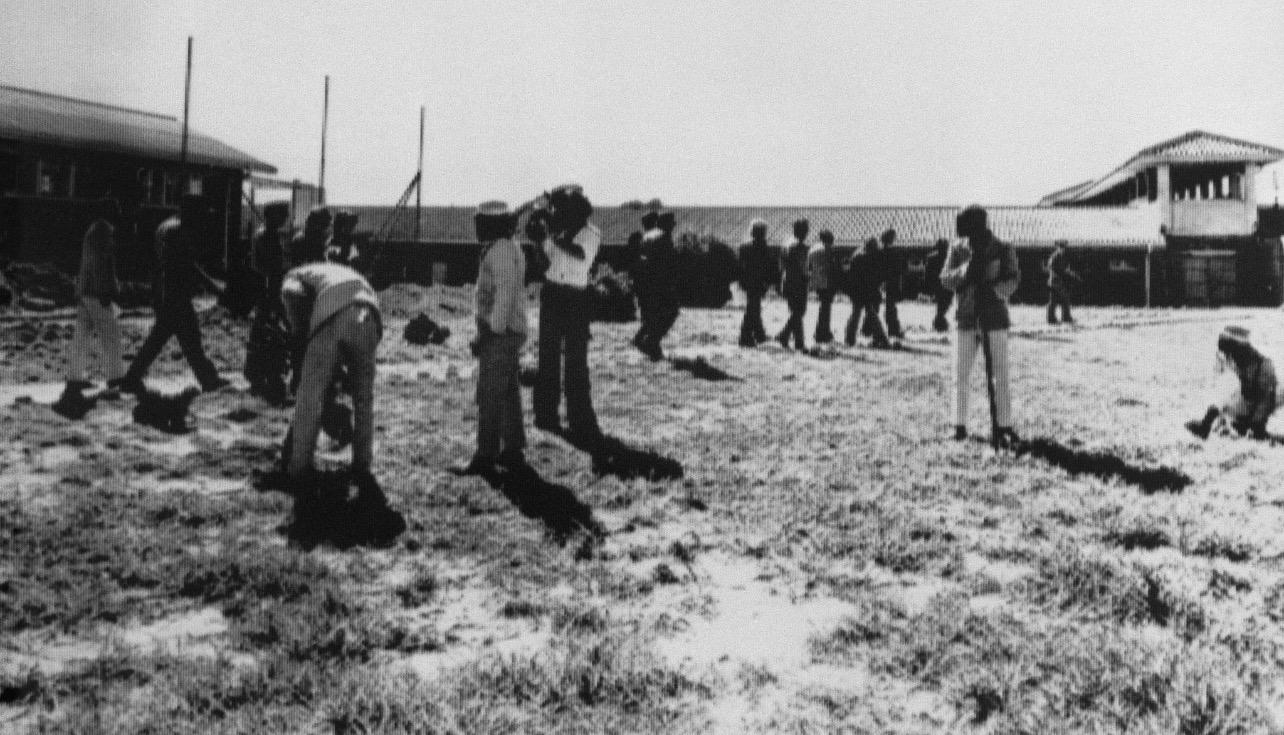
Prisoners woke early every morning and were sent to perform heavy labor. One of the most famous prison scenes occurred in the limestone quarry where prisoners were forced to break stones under the hot sun.
The work was exhausting. The white dust from the limestone damaged the prisoners eyes and lungs. Many prisoners later suffered permanent health problems because of the quarry.
Communication with the outside world was strictly limited. Prisoners were allowed to receive only a few letters per year and many of those letters were heavily censored.
Visits from family members were rare and closely monitored.
Food and clothing were also controlled according to racial categories. Black prisoners were often given smaller food portions than prisoners classified as other racial groups.
The authorities hoped that these harsh conditions would destroy the morale of the prisoners.
But something unexpected happened.
The Prison Becomes a University
Instead of losing hope, the prisoners began turning Robben Island into a place of learning.
Many of the men imprisoned there were already educated and politically aware. They decided that even inside prison they would continue studying and teaching each other.
Soon the prison developed what prisoners jokingly called the Robben Island University.
Prisoners taught classes to one another in subjects such as politics, economics, history, philosophy, and law. Books were carefully shared and discussed.
Debates took place quietly in prison yards and cells.
Some prisoners studied for university degrees through correspondence courses. Others learned new languages or developed skills that would later help them in political life.
Mandela himself spent much of his time studying law and discussing strategy for a future democratic South Africa.
The prison authorities tried to limit these activities, but the prisoners continued to find ways to educate themselves.
In many ways Robben Island became a training ground for future leaders.
The Brotherhood of Prisoner's
Another important historical element of Robben Island was the sense of unity that developed among prisoners.
Men from different ethnic groups, political organizations, and backgrounds were imprisoned together. They shared suffering but also shared ideas and dreams of freedom.
Leaders such as Walter Sisulu and Govan Mbeki played important roles in guiding younger prisoners.
Older activists often mentored younger prisoners, teaching them discipline, patience, and political strategy.
The prison community developed strong bonds of respect and solidarity.
This unity later helped shape the leadership of South Africa after apartheid ended.
The World Begins to Notice
During the 1970s and 1980s international attention increasingly focused on the apartheid system and the imprisonment of political leaders.
Activists around the world began demanding the release of Nelson Mandela and other prisoners.
Protests were organized in many countries. Cultural figures, musicians, and politicians spoke out against apartheid.
The phrase Free Nelson Mandela became a global call for justice.
Although the prisoners on Robben Island were isolated, they eventually learned that their struggle had inspired people across the world.
This knowledge gave them strength to continue enduring the harsh prison conditions.
The End of the Prison Era
By the late 1980s the apartheid system was facing growing pressure both inside and outside South Africa.
Mass protests, economic sanctions, and political negotiations forced the government to reconsider its policies.
In 1990 Nelson Mandela was finally released from prison after spending twenty seven years in captivity, much of it on Robben Island.
The moment of his release was broadcast across the world.
It marked the beginning of the end of apartheid.
Just a few years later South Africa held its first democratic elections in 1994.
Nelson Mandela was elected as the first Black president of South Africa.
A man who had once been locked in a small prison cell on Robben Island now led the nation.
Robben Island Becomes a Symbol
After the end of apartheid the prison on Robben Island was closed.
Instead of being forgotten, the island was transformed into a place of remembrance and education.
Former prisoners became guides who told visitors about life inside the prison and the struggle for freedom.
The island was later recognized as a global historical site by UNESCO.
Today Robben Island stands as a symbol of the human fight for dignity and justice.
Visitors walk through the prison corridors, see the limestone quarry where prisoners worked, and stand outside the small cell where Nelson Mandela spent many years of his life.
These scenes remind people of the cost of freedom and the power of resilience.
Why Robben Island Is Important in History
Robben Island is important not only because it was a prison but because of what happened inside it.
It shows how the human spirit can survive even under the harshest conditions.
The island became a place where political ideas grew stronger rather than weaker.
It also played a major role in shaping the leaders who would guide South Africa into a new democratic era.
The stories from Robben Island have inspired movements for justice and equality around the world.
They remind humanity that even in the darkest places, hope can survive.
Today when people visit the island they do not see only a prison.
They see a monument to courage.
They see the place where men refused to surrender their dreams.
And they remember that the quiet island in the sea once held the voices that helped transform an entire nation.

Categorie
Leggi tutto
Rihanna Rihanna is a Barbadian singer, songwriter, actress, fashion designer, and businesswoman. She is one of the most successful and influential artists in global music and fashion. Early Life and Background Rihanna whose full name is Robyn Rihanna Fenty was born on February 20, 1988, in Saint Michael, Barbados. She grew up in Bridgetown, the capital city of Barbados. Her...

Four Nigerian banks — Zenith Bank, Fidelity Bank, GTBank, and FCMB — are facing class action lawsuits at the Federal High Court in Lagos for allegedly misusing customers’ personal data during aggressive share offer campaigns. The suits claim the banks used KYC data to send unsolicited emails, SMS, calls, and in-app pop-ups urging customers to buy shares. In GTBank’s...

Benue State Police Command has confirmed the rescue of six law students who were kidnapped on July 28, 2025, along the Benue-Taraba border while en route to the Nigerian Law School in Adamawa State. According to a statement released on Friday by the Command’s spokesperson, Udeme Edet, the students were traveling from Anambra State to the Yola campus of the Law School when they fell into...

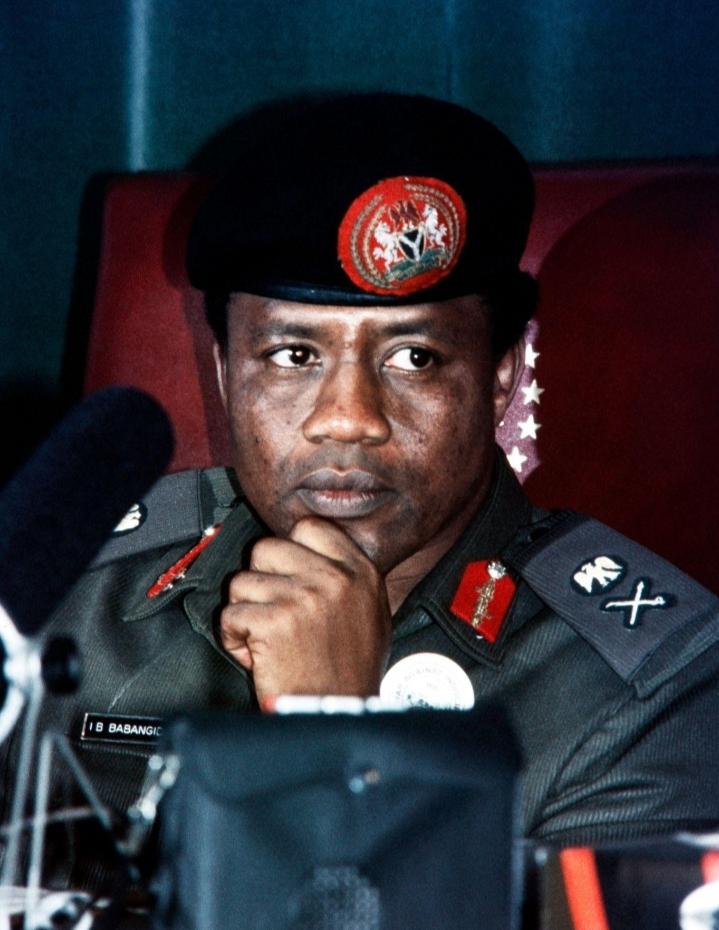
Ibrahim Badamasi Babangida In the ancient town of Minna in present day Niger State, on August 17, 1941, a boy was born into a modest Muslim family. His name was Ibrahim Badamasi Babangida. No one could have predicted that the quiet child from the Nupe heartland would grow up to become one of the most powerful and controversial leaders in Nigeria’s history. Ibrahim...
Prince Abubakar Audu Prince Abubakar Audu was a Nigerian politician, banker, and statesman best known as the first elected civilian governor of Kogi State. He governed the state twice, first from January 1992 to November 1993 and again from 29 May 1999 to 29 May 2003. Early Life and Background He was born in October 1947 in Ogbonicha Alloma, Ofu Local Government Area, in present day Kogi...