


 Environ
Ibrahim Babangida: The Maradona of Nigerian Politics and the General Who Shaped a Nation
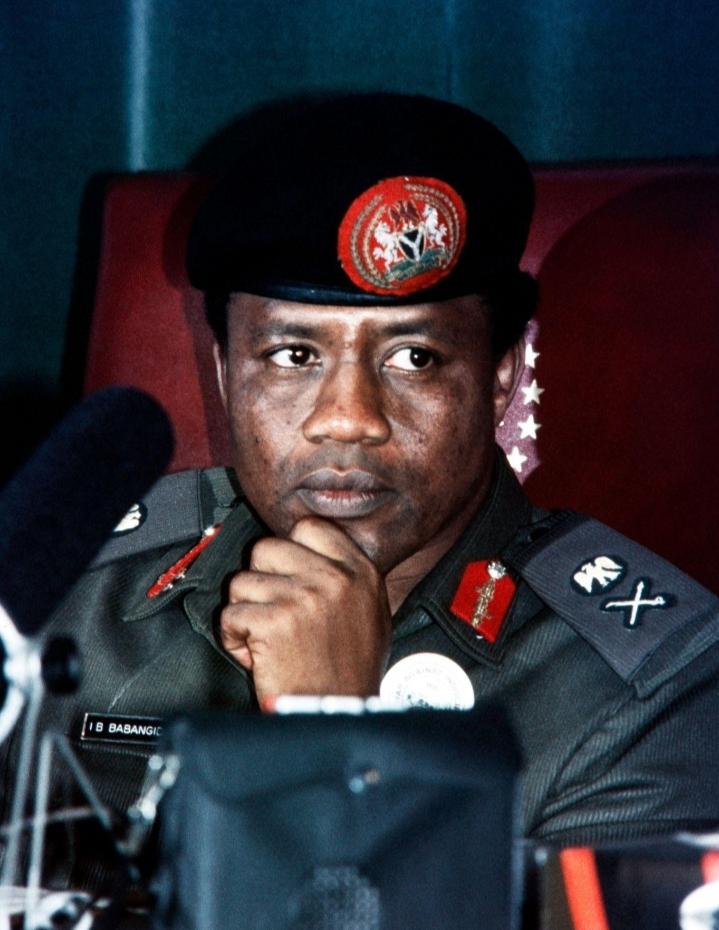
Ibrahim Badamasi Babangida
In the ancient town of Minna in present day Niger State, on August 17, 1941, a boy was born into a modest Muslim family. His name was Ibrahim Badamasi Babangida. No one could have predicted that the quiet child from the Nupe heartland would grow up to become one of the most powerful and controversial leaders in Nigeria’s history.
Ibrahim Babangida’s story is not just the tale of a soldier who became a Head of State. It is the story of ambition, survival, reform, controversy, and decisions that would echo across decades.
Early Life and Military Calling
Babangida attended Provincial Secondary School in Bida before choosing the military path at a young age. In 1962, he enlisted in the Nigerian Military Training College in Kaduna. From there, he trained in India, the United Kingdom, and the United States. The military became his classroom, his battlefield, and eventually his ladder to power.
When the Nigerian Civil War broke out in 1967, Babangida was already a rising officer. He fought on the federal side and was wounded in battle. Those who knew him during those years described him as bold, strategic, and politically aware. The war shaped his worldview and deepened his understanding of Nigeria’s fragile unity.
He steadily climbed the ranks. By the 1970s and early 1980s, Babangida had become one of the most influential officers in the Nigerian Army. He played a role in several military coups, including the 1975 coup that removed General Yakubu Gowon and the 1983 coup that brought General Muhammadu Buhari to power.
But Babangida was not content to remain in the shadows.
The Palace Coup of 1985
On August 27, 1985, Ibrahim Babangida led a bloodless coup that removed General Muhammadu Buhari as Head of State. He accused the Buhari administration of rigid leadership and human rights abuses.
With that move, Babangida became Nigeria’s military president.
He presented himself differently from his predecessors. He was charismatic, smiling, and politically flexible. The media nicknamed him “Maradona” after the Argentine footballer, suggesting that he could dribble his way out of tight political situations.
His regime promised openness and consultation. Political detainees were released. The press experienced a brief period of relative freedom. Nigerians, tired of strict military rule, initially welcomed him.
The Structural Adjustment Era
One of Babangida’s most defining policies was the introduction of the Structural Adjustment Program in 1986. Nigeria’s economy had been battered by falling oil prices and heavy debt. The International Monetary Fund and World Bank recommended economic reforms.
Under SAP, the naira was devalued, subsidies were removed, and market forces were allowed to determine exchange rates. The policy aimed to diversify the economy and reduce dependence on oil.
But the impact was harsh. Prices soared. Inflation rose. Many Nigerians struggled with increased cost of living. Critics accused Babangida of surrendering Nigeria’s economic sovereignty. Supporters argued that difficult reforms were necessary.
SAP remains one of the most debated economic policies in Nigerian history.
Political Transition and Endless Transition
Babangida promised a return to civilian rule. He dissolved existing political parties and banned many politicians. Then he created two government funded parties: the Social Democratic Party and the National Republican Convention.
He described them as a little to the left and a little to the right.
The transition program stretched on for years. Elections were conducted and cancelled. Politicians were disqualified and later reinstated. Deadlines shifted repeatedly. Many Nigerians began to suspect that Babangida was reluctant to leave power.
Yet, by 1993, the country finally conducted what would later be regarded as one of the freest elections in its history.
The June 12 Election
On June 12, 1993, Nigerians voted in a presidential election contested mainly between Chief Moshood Kashimawo Olawale Abiola of the SDP and Bashir Tofa of the NRC.
Early results showed that Abiola was winning convincingly, cutting across ethnic and religious lines. It was a rare moment of national unity.
Then came the announcement that stunned the nation.
Babangida annulled the election.
He cited irregularities and security concerns. But to millions of Nigerians, the annulment was an injustice. Protests erupted across the country. Civil society groups, journalists, and political leaders condemned the decision.
The June 12 crisis became a turning point in Nigeria’s democratic struggle. Babangida’s reputation changed dramatically. From being seen as a clever political strategist, he became associated with one of the most controversial decisions in Nigerian history.
Stepping Aside
Under mounting pressure, Babangida addressed the nation on August 26, 1993. In a broadcast, he announced that he would step aside and hand over to an Interim National Government led by Ernest Shonekan.
It was a carefully chosen phrase. He did not say he resigned. He said he stepped aside.
Soon after, General Sani Abacha would seize power, plunging Nigeria into another era of strict military rule.
Babangida retreated to his hometown in Minna.
Personal Life and Influence
Beyond politics, Babangida’s personal life also attracted attention. He married Maryam Babangida, who became a powerful and influential First Lady. She launched the Better Life for Rural Women program, which focused on empowering women across Nigeria. Maryam’s elegance and activism changed the perception of the role of First Lady in Nigeria.
Even after leaving office, Babangida remained influential. Politicians regularly visited his Minna residence. His endorsements were sought during elections. Though he never returned to power, his shadow lingered in Nigerian politics.
He made attempts to run for president in the Fourth Republic but later withdrew.
Controversies and Allegations
Babangida’s regime was not free from controversy. His government was accused of corruption and lack of transparency. The mysterious 1986 parcel bomb assassination of journalist Dele Giwa remains a dark stain on that era, though direct responsibility was never legally established.
There were also allegations concerning missing oil revenues during the Gulf War windfall. Critics argue that billions of dollars were unaccounted for during his administration.
Yet, his supporters maintain that he modernized Nigeria’s banking sector, liberalized the media space, and encouraged private enterprise.
His legacy remains complex.
The Man Behind the Uniform
Those who have interacted with Babangida often describe him as intelligent, humorous, and deeply strategic. He mastered political survival in a volatile era. He built alliances across ethnic and religious divides within the military.
He understood power not just as force, but as negotiation.
Even his critics admit that he was one of the most politically skilled military leaders Nigeria ever had.
Legacy in Nigerian History
Ibrahim Babangida’s name cannot be separated from the June 12 election. It is the chapter that defines his historical image. For some, he delayed Nigeria’s democratic progress. For others, he navigated an extremely complex military and political environment.
His administration reshaped Nigeria’s economy, restructured the banking industry, and introduced policies that still influence governance today.
He was neither a simple villain nor a simple hero. He was a leader operating in turbulent times, making decisions that carried enormous consequences.
From a young boy in Minna to a general who commanded a nation of millions, Babangida’s journey reflects the drama of Nigeria itself. A country of promise, struggle, ambition, and resilience.
His story is woven into the fabric of Nigeria’s Fourth Republic and its long road to democracy.
History will continue to debate him. Scholars will continue to analyze him. Citizens will continue to remember the day of June 12.
But one thing remains certain.
Ibrahim Badamasi Babangida shaped Nigeria in ways that cannot be erased.


Catégories
Lire la suite
Ex-BBNaija star Bambam found herself trending recently—not for drama, but for fashion. The reality TV star attended her daughter’s graduation in a stylish outfit that some online critics deemed “too much” for the occasion. Rather than clap back with words, Bambam let her silence and elegance speak volumes. She later shared graceful photos from the event with a simple...

Margot Robbie Margot Robbie is an Australian actress and film producer known for her versatility, beauty, and powerful performances in Hollywood films. She has become one of the most successful and influential actresses of her generation. Margot Elise Robbie was born on July 2, 1990, in Dalby, Queensland, Australia. Early Life and Background Margot Robbie grew up on a farm in...

Young Jonn In the bustling heart of Lagos, where traffic horns mix with street vendors’ chants and music pours from buses and barbershops, a young boy once listened more than he spoke. That boy would grow up to become one of the most influential hitmakers in modern Nigerian music. His name is Young Jonn. Born John Saviours Udomboso on February 16, 1995, in Ibadan, Oyo State, Young...
Kate Winslet Kate Winslet is a British actress known for her powerful performances in films and her ability to portray deep, emotional characters. She is widely regarded as one of the finest actresses of her generation. Kate Elizabeth Winslet was born on October 5, 1975, in Reading, Berkshire, England. Early Life and Background Kate Winslet was born into a family of actors. Her parents...

As a passionate gardener and pet owner, I understand the delicate balance of creating a flourishing garden while also keeping your furry friends safe. Pets, whether they’re playful pups or curious cats, often find themselves wandering through your garden beds, digging up plants or knocking over delicate flowers. But don’t worry, there are plenty of ways to protect your garden...

