Σχετικά
Yusuf Bilesanmi The Nigerian Innovator Behind ShiVent and the Mission to Build Affordable Life Saving Ventilator Technology
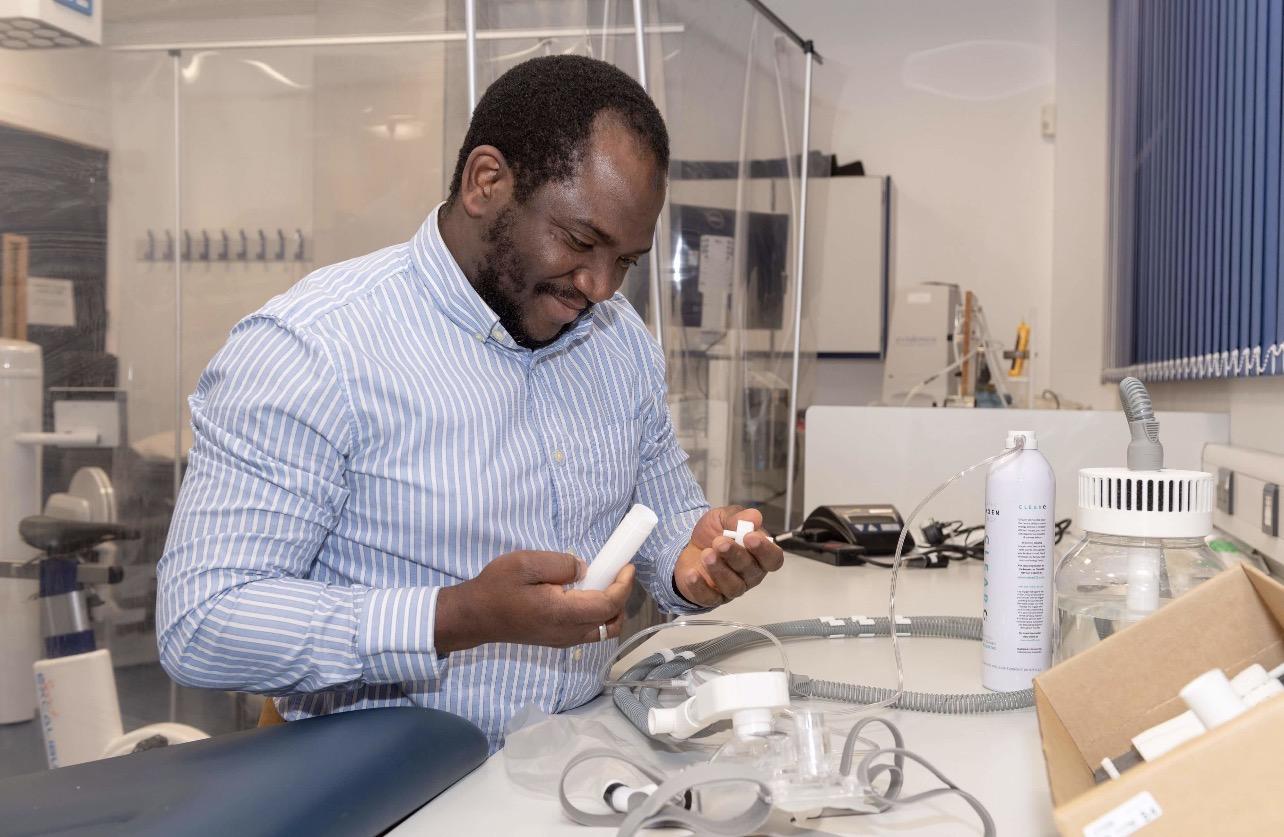
Yusuf Bilesanmi
Yusuf Bilesanmi is one of the young Nigerian innovators whose work reflects the growing spirit of creativity and problem solving emerging from Africa’s new generation of engineers. His invention known as ShiVent stands as a symbol of how necessity can inspire technological breakthroughs, especially in places where limited resources challenge conventional solutions. The story of Yusuf Bilesanmi is not only about engineering but also about determination, empathy for human suffering, and the courage to imagine new possibilities where others see limitations.
Yusuf Bilesanmi grew up in Nigeria at a time when the country was experiencing rapid growth in technology awareness but still faced serious challenges in healthcare infrastructure. Like many children raised in communities where public hospitals struggled with limited equipment and resources, Yusuf often heard stories of patients who could not receive timely treatment simply because the necessary medical devices were unavailable. These experiences shaped his early curiosity about science and engineering. While many young students admired technology from a distance, Yusuf was the type who wanted to understand how things worked from the inside.
From a young age he showed strong interest in machines and electronics. Household appliances fascinated him. Radios, old fans, small motors, and discarded gadgets became learning tools in his hands. Instead of seeing broken equipment as useless objects, he saw them as puzzles waiting to be solved. His family often recalled how he would take apart devices just to understand their internal structure and then attempt to reassemble them. This curiosity eventually became the foundation of his engineering mindset.
Education played a crucial role in shaping Yusuf’s ambitions. In school he developed strong interest in science subjects especially physics and mathematics. Teachers noticed that he approached problems differently from many of his classmates. While others focused on memorizing formulas, Yusuf focused on understanding real world applications. He constantly asked questions about how technology could solve everyday problems in Nigeria.
Nigeria, like many developing countries, faces serious healthcare challenges including shortages of advanced medical equipment. One of the most critical devices in emergency medicine is the ventilator. Ventilators help patients breathe when their lungs cannot function properly due to illness, infection, or injury. However ventilators are expensive and require sophisticated manufacturing processes, which makes them difficult for many hospitals in developing regions to obtain in large numbers.
The turning point in Yusuf Bilesanmi’s journey came during the global health crisis when respiratory illnesses highlighted the urgent need for ventilators around the world. Many countries faced shortages, but the problem was even more severe in parts of Africa where hospitals already struggled with limited equipment. News reports and medical discussions revealed heartbreaking stories of patients who needed respiratory support but could not access ventilators due to limited supply.
For Yusuf this situation was more than a headline. It became a personal challenge. He began thinking about how engineers could design a simpler and more affordable ventilator that could be built locally and used in emergency situations. Instead of relying on expensive imported components, he wanted a design that could be produced using accessible materials and straightforward engineering principles.
This idea gradually developed into what would become known as ShiVent.
ShiVent is an emergency ventilator concept designed to provide respiratory assistance in situations where conventional ventilators are unavailable or insufficient. The goal behind ShiVent was not necessarily to replace advanced hospital ventilators but to provide a reliable backup system that could help save lives during emergencies.
The design philosophy behind ShiVent focused on simplicity, affordability, and functionality. Yusuf believed that medical technology should not always depend on highly complex systems that only wealthy institutions can afford. Instead he envisioned a device that could be manufactured locally, maintained easily, and deployed quickly when needed.
One of the key ideas behind ShiVent was the use of mechanical automation to control breathing cycles. In basic terms a ventilator works by pushing air into a patient’s lungs and then allowing the lungs to release the air again. The challenge lies in controlling pressure, timing, and airflow safely. Many high end ventilators use advanced computer systems to manage these processes. Yusuf explored ways to achieve similar functions using simplified engineering approaches.
ShiVent incorporated a system that could automate the compression of a manual breathing bag which is commonly used in hospitals for emergency ventilation. By creating a mechanical mechanism that compressed the bag at controlled intervals, the device could deliver consistent breathing support to patients who required assistance. This approach allowed the system to mimic the essential function of a ventilator without relying on expensive components.
Another important element of the ShiVent concept was energy efficiency. In many regions electricity supply can be unstable. Yusuf recognized that a medical device designed for African environments needed to function even during power interruptions. Therefore the design considered low power consumption and possible battery operation so that the device could continue working during critical moments.
Beyond engineering principles the ShiVent project also demonstrated the power of youth innovation in Africa. Yusuf Bilesanmi represented a generation of students who are not waiting for solutions to come from abroad. Instead they are developing their own technologies tailored to local challenges.
Innovation rarely happens in isolation. Yusuf worked with fellow students, mentors, and academic advisors who supported the development of the concept. Engineering laboratories provided space to test mechanical systems and refine the design. Through experimentation and repeated adjustments the idea gradually evolved into a functioning prototype.
Building prototypes requires patience. Early versions of the device often revealed weaknesses that needed improvement. Timing mechanisms had to be calibrated carefully to ensure safe breathing cycles. Pressure control had to be refined to avoid damaging delicate lung tissues. Every modification brought the project closer to a reliable solution.
The process also taught Yusuf valuable lessons about teamwork and interdisciplinary thinking. Medical devices require collaboration between engineers, doctors, and healthcare professionals. Feedback from medical practitioners helped guide improvements in the design, ensuring that the device could meet practical clinical needs.
As awareness of the ShiVent concept spread within academic circles, it attracted attention as an example of practical engineering innovation emerging from Nigeria. The project highlighted how local solutions can address global challenges. Ventilator shortages were not limited to one country. During health emergencies many nations faced similar problems. A simplified emergency ventilator could therefore have relevance far beyond its original environment.
For Yusuf Bilesanmi the journey was never about personal recognition alone. His motivation came from the belief that engineering should serve humanity. The possibility that a device he designed could help save lives became the most powerful inspiration behind the project.
The story of ShiVent also reflects a broader transformation happening across Africa. Young innovators are increasingly combining technical education with social awareness. They understand that the continent’s challenges require creative thinking rooted in local realities. Instead of copying solutions from elsewhere they are adapting technology to suit their own environments.
Nigeria in particular has become a vibrant hub for innovation. Universities and technology communities are producing engineers, developers, and inventors who are eager to build new systems that improve everyday life. From financial technology to agricultural engineering and healthcare innovation, young Nigerians are pushing the boundaries of what is possible.
Yusuf Bilesanmi’s work fits within this growing movement. His story shows that impactful inventions do not always begin in large research corporations. Sometimes they begin with a student asking a simple but powerful question. How can we solve this problem ourselves.
The journey of invention is never complete after the first prototype. Ideas must continue evolving through testing, improvement, and real world evaluation. For ShiVent the next stages involved refining the design, improving safety features, and exploring opportunities for broader production if the device could meet medical regulatory standards.
Medical devices must undergo careful validation to ensure patient safety. Engineers must work alongside healthcare professionals to test performance under controlled conditions. These processes take time but they are necessary for transforming experimental prototypes into reliable healthcare tools.
Even beyond the specific device, Yusuf’s work carries an important message. Innovation can emerge anywhere. It does not depend solely on massive laboratories or billion dollar research budgets. What matters most is curiosity, determination, and the willingness to confront problems directly.
Young people across Nigeria and Africa often face narratives that focus on limitations rather than possibilities. Stories like that of Yusuf Bilesanmi challenge those narratives. They demonstrate that creativity and intelligence exist everywhere and that meaningful solutions can arise from communities that understand their own challenges best.
Another powerful aspect of the ShiVent story is its humanitarian spirit. Technology sometimes appears distant from human emotion, but at its core engineering is about improving life. A ventilator is not just a machine. It represents hope for patients struggling to breathe and relief for families praying for recovery.
When engineers design life saving equipment they are participating in one of the most compassionate forms of innovation. They transform scientific knowledge into tools that protect human life. Yusuf Bilesanmi’s work embodies this principle.
His journey also serves as inspiration for students who dream of becoming inventors. Many young people assume innovation requires extraordinary circumstances. In reality it begins with observing problems carefully and daring to imagine solutions. Curiosity leads to experimentation and experimentation leads to discovery.
The story of ShiVent reminds us that the future of healthcare innovation will likely come from diverse places and perspectives. As more young engineers across Africa engage in research and invention, the continent may produce many technologies that reshape global industries.
Yusuf Bilesanmi’s path continues to symbolize the potential of youth driven innovation. His work encourages governments, universities, and private organizations to invest more in research and engineering education. When young innovators receive support, their ideas can grow into solutions that benefit entire societies.
Looking ahead the legacy of the ShiVent project is already clear. It demonstrates that even in challenging environments creativity can flourish. It shows that engineering students can tackle real world problems with courage and imagination. Most importantly it highlights the power of human empathy in driving technological progress.
For Yusuf Bilesanmi the invention of ShiVent represents not just a device but a philosophy. A belief that technology should be accessible, practical, and designed with compassion. His story continues to inspire conversations about how African innovators can build systems that respond directly to the needs of their communities.
As new generations of engineers emerge, the example set by Yusuf Bilesanmi will remain a reminder that the future of innovation belongs to those who are willing to question existing limits and design new possibilities.

Κατηγορίες
Διαβάζω περισσότερα
Mo Ibrahim Mo Ibrahim didn’t set out to become a symbol. He set out to solve a problem. In the 1970s and 80s, telecoms was the kind of industry where only big governments and bigger corporations seemed to belong. But Ibrahim—an engineer with a sharp mind for systems—kept noticing something others ignored: Africa wasn’t “too risky” for telecoms; Africa was...

THE NAME THAT FELL OUT OF A SMILE On the fifth day, Esteban returned with the list. Alejandro read it slowly. Nurses. Doctors. Two physiotherapists. A hair stylist named Claudia. A pastor Alejandro’s aunt insisted on bringing. A charity organizer. Two cousins. A “friend” from Alejandro’s old neighborhood. A spiritual advisor Alejandro’s business partner...

Bukola Saraki Bukola Saraki is a Nigerian politician, medical doctor, and public administrator. He is widely known for serving as the President of the Nigerian Senate from 2015 to 2019 and as the Governor of Kwara State from 2003 to 2011. Early Life and Background Bukola Saraki whose full name is Olubukola Abubakar Saraki was born on December 19, 1962, in London, United Kingdom. He...

Prince Adewale (POV) I watched her leave, thoughtful. She was different. Not just in beauty—but in presence. She did not beg for attention, yet she drew it. The palace had a way of breaking people quickly. She, however, was still standing. When she returned with my breakfast, her steps were slower. Careful. Burdened. I noticed. “You carry more than food today,” I said....

Governor Nasir Idris of Kebbi State has signed a strategic partnership with Chinese security firm G-Safety to bolster the fight against banditry and escalating violence by the Lakurawa terrorist group across the state. The governor’s office described the deal as a “strategic collaboration on intelligence and technology,” aimed at enhancing local capacity to respond to...