About
About
Dr Jack Fletcher and the HYENA POWER POD: The Quiet Energy Revolution Rising from South Africa
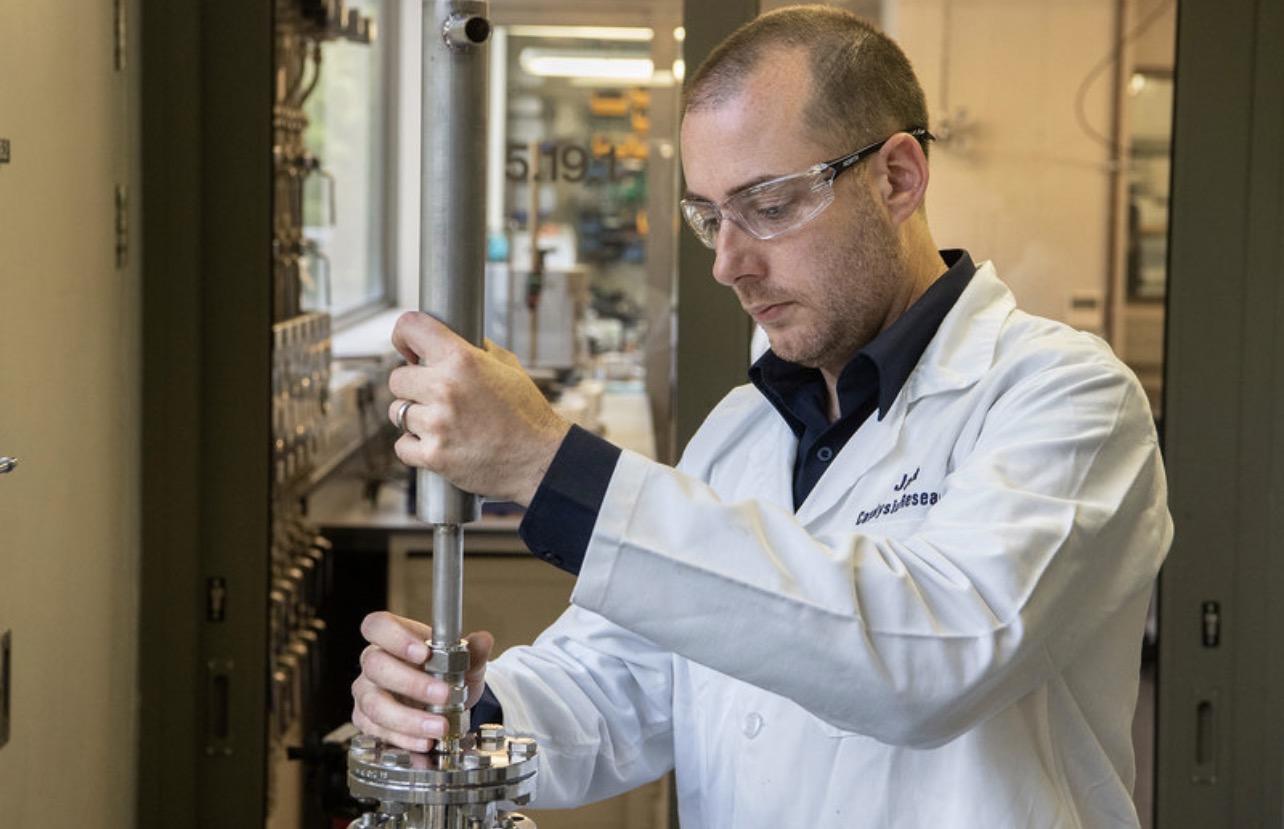
Dr Jack Fletcher
Dr Jack V Fletcher is one of the South African innovators trying to solve one of Africa’s biggest everyday problems, which is reliable electricity. He is a co founder, director, and chief technology officer of Hydrogen Energy Applications, known as HYENA, a University of Cape Town spinout company. His best known invention, the HYENA POWER POD, was shortlisted for the 2022 Africa Prize for Engineering Innovation, where it was recognized as a fuel cell based system that converts liquefied petroleum gas, or LPG, into usable electricity inside a single device.
To understand why his story matters, it helps to begin with the problem he set out to face. Across many parts of Africa, electricity is either unavailable, unstable, too expensive, or too difficult to rely on with confidence. In cities, people deal with blackouts. In rural communities, some places remain poorly connected to national grids. In business, telecom towers, clinics, schools, and small enterprises often need constant electricity to function, yet they cannot always depend on the grid. In many of these settings, diesel generators became the default answer. They are familiar, they can be moved around, and they can provide power quickly. But they also come with noise, fumes, moving parts, heavy maintenance, oil leaks, and unhealthy particulate emissions. Dr Fletcher and the HYENA team built the POWER POD as a different answer to that reality.
At the heart of Dr Fletcher’s work is a practical idea that feels simple once you hear it. Hydrogen fuel cells are attractive because they can produce electricity quietly and with fewer harmful emissions than diesel based power. But in many African markets, there is almost no widespread hydrogen distribution network. That means a technology can look excellent in theory and still fail in the real world because the fuel needed to run it is not easy to store, transport, or buy. Dr Fletcher and his team recognized that this missing infrastructure was the real barrier. Instead of waiting for a future hydrogen economy to appear, they asked a more grounded question. What fuel already exists across the continent, reaches households and businesses, and can be used as a practical carrier of hydrogen? Their answer was LPG.
That decision is what gives the HYENA POWER POD much of its importance. LPG is already widely used in many places for cooking and heating. Because that infrastructure already exists, HYENA saw a way to bridge the gap between advanced fuel cell technology and African conditions on the ground. The POWER POD takes LPG and water, extracts hydrogen through a series of reactions, and then feeds that hydrogen into a fuel cell that produces electricity and water. Rather than trying to build a power solution around ideal conditions, Dr Fletcher and his team designed around the conditions Africa already has. That is a major reason the invention drew attention from engineering and innovation circles.
This is what makes the story of Dr Jack Fletcher more than the story of one machine. It is a story about engineering that begins with context. Many technologies fail because they are imported into environments they were never truly designed for. They may work beautifully in wealthy countries with mature infrastructure, deep capital, and specialized supply chains. But Africa often needs something else. It needs solutions that are not only clean and intelligent, but also practical, serviceable, and scalable under local conditions. The POWER POD appears to have been created with that exact philosophy in mind. HYENA describes it as a diesel generator replacement that is quiet, has no moving parts in the core power generation process, requires less frequent maintenance, and is designed for simple field service through exchangeable cartridges.
That cartridge idea is one of the most memorable parts of the invention. The company compares it to replacing a printer cartridge. In many regions, sophisticated energy equipment becomes difficult to keep alive because repair requires specialized technicians, imported parts, or expensive shutdown periods. The HYENA approach tries to remove some of that pain. By designing the system to be easy to service, the team is not only thinking like scientists but also like operators. They are thinking about who will maintain the system, how quickly it can be restored, and whether the owner can keep it running without endless technical drama. That kind of design logic often separates inventions that remain in the lab from inventions that survive in real life.
Dr Fletcher’s path also reflects the growing importance of university spinouts in Africa. HYENA originated from the University of Cape Town, and the journey from research into commercialization was supported by the university’s research and innovation structures. UCT reported that HYENA became the first recipient of seed phase funding from the University Technology Fund in 2020, and that the company later pursued additional fundraising that included investment from UCT’s Evergreen Fund. That matters because many promising African inventions do not fail because the science is weak. They fail because the bridge between laboratory success and market deployment is hard to cross. In this case, Dr Fletcher’s work was helped by a system that recognized that good ideas need legal, commercial, and financial support as much as they need technical strength.
When Dr Fletcher was shortlisted for the Africa Prize for Engineering Innovation, it brought broader attention to what HYENA was building. The Royal Academy of Engineering listed the POWER POD as a system developed to deploy fuel cell technology into Africa using LPG as an accessible hydrogen source. UCT also noted that he became the 11th South African to be shortlisted for the award since its inception. Recognition like this does not by itself guarantee commercial success, but it does signal that the invention has crossed a threshold. It means respected observers saw not only technical ingenuity, but also the possibility of scale and social impact.
The most compelling thing about Dr Fletcher’s invention may be that it does not ask Africa to choose between realism and ambition. Too often the conversation around energy on the continent falls into extremes. One side says Africa should simply use whatever is cheapest today, even if it is noisy, dirty, and inefficient. The other side imagines a leap straight into a fully green future without asking whether the needed systems are already in place. The HYENA POWER POD sits somewhere more interesting. It accepts that LPG already exists, accepts that grid power cannot always be trusted, and accepts that customers need dependable electricity now. But it also uses that reality as a stepping stone toward cleaner and more advanced energy systems. In other words, it is not built on fantasy. It is built on transition.
That transition matters especially for mobile telecommunications. HYENA and its partners have repeatedly pointed to remote mobile phone towers as one of the key uses for the technology. That makes sense. Telecom towers need extremely high uptime. People often think of towers as just structures, but they are really part of the nervous system of modern society. Calls, mobile banking, internet access, emergency communication, and digital business all rely on them. In regions where the grid is weak, towers often depend on backup generators. A quieter, lower maintenance alternative with reduced emissions could be valuable in such settings. The Africa Prize materials note that the team developed prototypes and worked toward a pre commercial 5 kilowatt POWER POD for telecom towers. Later reporting in 2024 said HYENA had reached operation at its design output of 5 kilowatts and was preparing for field trials and commercial opportunities.
That 2024 milestone is important because it shows the story did not end with awards and headlines. Engineering innovation is full of concepts that attract applause and then fade away before real deployment. HYENA’s progress to operating the system at its design output suggests the work continued beyond the prize circuit into the slower and harder stage of development. According to Engineering News, the company was preparing for field trials and looking at commercialization while also exploring ways to scale production. That is where inventions meet reality. A machine must prove it can perform outside controlled conditions. It must show customers that it can handle duty cycles, service conditions, local environments, and cost pressures. Dr Fletcher’s story is therefore not just about invention but also about persistence.
There is also a wider scientific and industrial layer to this story. The POWER POD relies on extracting hydrogen from LPG and water through catalytic reactions before using that hydrogen in a fuel cell. That reflects a depth of chemical engineering knowledge, not just product design. Dr Fletcher’s work sits within a world where catalysis, reaction engineering, energy conversion, and materials science meet commercial need. The invention is not simply a box that makes power. It is a carefully organized chain of chemical and electrical processes. For many readers, that technical complexity may be invisible, because the most powerful inventions often hide their sophistication behind a user friendly result. But it is precisely that hidden sophistication that makes the result possible.
Another reason the POWER POD stands out is its environmental balance. HYENA and UCT state that the system operates silently, with no vibration, no unhealthy particulates, and about 15 percent lower carbon dioxide emissions than a diesel generator. That does not mean it solves every environmental issue, because LPG is still a fossil fuel. But it does represent a meaningful improvement over conventional diesel generation. More than that, HYENA has also signaled interest in moving further by developing a renewable form of LPG made from captured carbon dioxide and green hydrogen. This suggests that the company does not see the present model as the final destination, but as part of a longer clean energy journey.
That future oriented thinking connects Dr Fletcher’s invention to a bigger African energy conversation. For decades, many people have spoken about Africa as if it must either copy existing industrial paths or wait for perfect conditions before building modern energy systems. But African innovators are increasingly showing another path. They are adapting frontier technologies to local realities and creating systems that can function within current constraints while opening a door to cleaner futures. In that sense, the HYENA POWER POD is not only a product. It is a model of how innovation can happen on the continent. It starts by looking closely at the practical world around you. It respects infrastructure that already exists. It reduces the burden of maintenance. It tries to solve a present problem without losing sight of long term transformation.
Dr Fletcher’s own public comments capture that spirit well. He has said the goal is to make fuel cells possible and practical in Africa, where hydrogen technologies often face obstacles not considered in developed regions. That sentence says a lot. It reflects not just technical intelligence but also humility before context. It recognizes that a brilliant technology becomes truly useful only when it fits the conditions of the people meant to use it.
There is something symbolic about the name HYENA as well. The hyena is an animal shaped by survival, adaptation, and hard conditions. Whether deliberate or not, the name suits the invention. The POWER POD is not a luxury technology created for perfect environments. It is something built for places where power reliability is hard won, where maintenance cycles matter, where fuel availability decides feasibility, and where silence and lower emissions can improve both operations and human well being. It belongs to a category of African innovation that is not flashy for its own sake. It is clever, but it is also grounded.
And that may be the strongest part of Dr Jack Fletcher’s story. He did not simply invent a device. He helped build a bridge between advanced science and African necessity. He took a technology many would associate with future hydrogen economies and reworked it to fit present African infrastructure. He helped move fuel cells from the realm of distant possibility toward local practicality. He did it through a university spinout, through research translated into entrepreneurship, and through a design that values simplicity, serviceability, and reliability as much as scientific elegance.
The HYENA POWER POD still has a road ahead. Field deployment, customer adoption, manufacturing scale, and cost competitiveness are never easy. Many promising energy technologies face difficult commercial tests. But the significance of Dr Fletcher’s work is already clear. He represents a kind of African inventor whose work is deeply technical yet directly relevant to daily life. His invention speaks to communities, businesses, and infrastructure operators who need power not as a luxury, but as a constant. It speaks to a continent where the energy transition cannot be imported as a finished script. It has to be written in a language of local fuels, local constraints, and local ambition.
So the story of Dr Jack Fletcher is the story of a scientist entrepreneur who looked at Africa’s energy challenge and refused to accept that the continent had to settle for noisy diesel dependence or wait passively for a perfect hydrogen future. Instead, he and the HYENA team built something in between those worlds, a system that could work now while pointing toward something better. In a place where reliable electricity can change a clinic, a school, a communications tower, a business, or a community, that is not a small achievement. It is the kind of work that begins quietly, like the machine itself, and then gradually changes what people believe is possible.

Categorie
Leggi tutto
Sheikh Jamiu Bulala Early Life and Background Sheikh Jamiu Bulala was born in Nigeria into a humble Muslim family where faith and discipline were part of everyday life. From a young age, he showed a deep interest in religion. While other children played, Jamiu often stayed close to elders, listening to Quran recitations and Islamic discussions. His environment shaped him. He grew up...
Sundiata Keita In the long memory of West Africa, there are names that do not merely belong to kings or warriors. They belong to the spirit of a people. They belong to the firelight, to the drumbeat, to the voices of griots who keep the past alive when paper fades and stone breaks. One of those names is Sundiata Keita, the man remembered as the founder of the Mali Empire and the great...

Joseph Benjamin Joseph Benjamin is a Nigerian actor, model, and television presenter known for his charming screen presence and roles in Nollywood films and TV shows. He gained widespread recognition for his smooth acting style and ability to play romantic and sophisticated characters. He was born on November 9, 1976, in Benue State, Nigeria. Early Life and Background Joseph Benjamin...

Senegal has revoked the Cayar Offshore Shallow exploration licence held by Nigerian energy company Atlas Oranto Petroleum due to repeated failures to meet financial and operational obligations. Covering 3,600 square kilometres north of Dakar, the block saw minimal exploration despite several extensions since the licence was awarded in 2008. The Ministry of Energy and Petroleum, under Minister...
Have you ever found yourself with a spare five minutes and an itch for some quick, engaging fun? Look no further than the world of io games! These browser-based games are the perfect antidote to boredom, offering accessible gameplay, instantly gratifying progression, and a surprising amount of depth, all without needing to download a single thing. This article will guide you through...