Environ
Sundiata Keita The Lion Who Rose From Silence to Build the Mali Empire
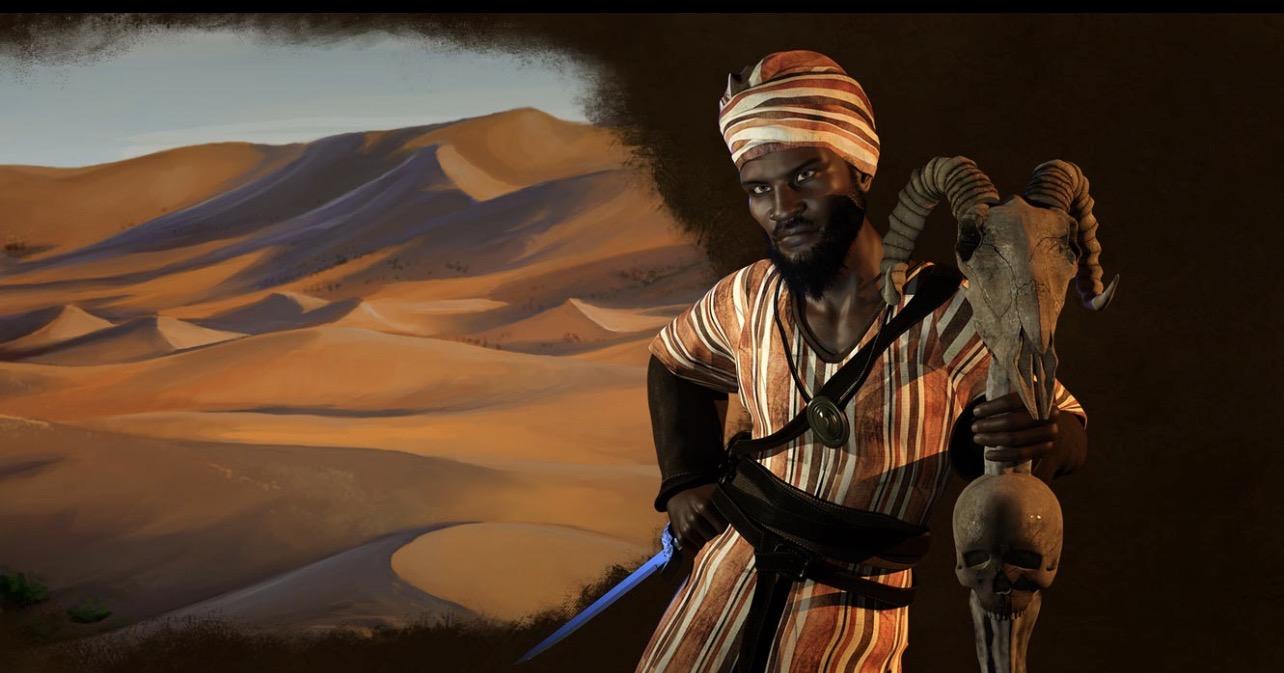
Sundiata Keita
In the long memory of West Africa, there are names that do not merely belong to kings or warriors. They belong to the spirit of a people. They belong to the firelight, to the drumbeat, to the voices of griots who keep the past alive when paper fades and stone breaks. One of those names is Sundiata Keita, the man remembered as the founder of the Mali Empire and the great hero of the Epic of Sundiata. His story is not told as an ordinary life. It is told like the coming of rain after a terrible season of dust. It is told like the birth of destiny itself.
To understand Sundiata, one must first imagine a time when West Africa was not divided into the modern countries people know today, but was instead a land of kingdoms, trade routes, hunters, warriors, farmers, smiths, and storytellers. Gold moved through the region like hidden sunlight beneath the earth. Salt came from the desert and was as precious as life. Caravans crossed enormous distances. Kings rose and fell. Families fought for power. And in this world, the future of a people could rest on a single child.
Sundiata was born into the Keita dynasty in the old Manding world, in the land that would one day become the center of a mighty empire. His father was Maghan Kon Fatta, often remembered as a king of Niani. His mother was Sogolon, a woman surrounded in tradition by mystery and prophecy. Her story is as important as that of her son, because before Sundiata ever lifted a spear or claimed a throne, his life had already been shaped by words spoken by seers.
The griots say hunters once came before the king and spoke of a strange and remarkable woman who was destined to bear the child who would become a mighty ruler. She was not described in terms of beauty that would impress a royal court. In some versions of the tale, she was called unattractive, even odd in appearance, and yet marked by fate. This was Sogolon. She was not the woman many would have expected a king to choose, but destiny does not consult human pride. Maghan Kon Fatta married her because prophecy had entered his house, and prophecy had to be obeyed.
When Sundiata was born, he did not arrive like the image many people imagine when they think of heroes. He did not spring up with the strength of a lion in his limbs. Instead, the child who would become one of Africa’s greatest legendary rulers began life in weakness. In the epic tradition, Sundiata was unable to walk as a young child. While other boys ran, played, and learned the pride of movement, he remained on the ground. He watched the world from below. He endured the shame of whispers, the cruelty of laughter, and the doubt of those who believed prophecy had failed.
This part of the story matters deeply because it is one of the reasons Sundiata has remained powerful in memory. He was not loved because he was born perfect. He was loved because he rose. He was the child everyone could have dismissed. He was the one judged too weak, too slow, too broken for greatness. Yet in silence, something was gathering inside him.
His father’s court was not a place of peace. Royal households rarely were. There were wives, children, rivalries, ambitions, and silent calculations about succession. One of the most feared figures in the story is Sassouma Berete, a senior wife of the king and the mother of Dankaran Touman, who wanted the throne for her own son. She looked upon Sogolon and Sundiata not as family, but as threats. In courts where power mattered more than affection, a prophecy could create enemies before a child could even speak.
After the death of Maghan Kon Fatta, the tension in the royal house grew sharper. Dankaran Touman was elevated, and Sassouma gained influence. Sogolon and her children became vulnerable. Sundiata, still not walking, seemed no danger at first. But destiny has a way of disturbing even those who pretend not to believe in it. The fear of what he might become hung over the court like a shadow.
Then came one of the most famous moments in the Epic of Sundiata, the moment that turned pity into awe. One day, after a bitter insult against his mother, Sundiata made a decision. In some retellings, Sogolon had been humiliated because she could not provide baobab leaves, and the insult cut deep. Her suffering awakened something fierce in her son. He asked for an iron rod, or in some versions a heavy staff, something strong enough to support him. What happened next lives in oral tradition like a miracle.
The boy who had not walked rose to his feet.
At first the rod bent under his force, because his strength was greater than anyone expected. Then he stood upright. Then he walked. Then he uprooted a baobab tree and carried it to his mother. It was not simply the act of walking that mattered. It was the announcement hidden inside it. The child who had lain still for years had not been empty. He had been gathering power. What looked like weakness had been waiting for its hour.
From that moment forward, Sundiata was no longer merely a prince overlooked in the palace. He became the center of expectation, fear, and unfolding legend. He grew in strength, in skill, and in dignity. The griots describe him as a man of enormous physical and moral presence, someone whose rise could not be stopped once it had begun. Yet his path to power was not smooth. Heroes are not made in comfort.
The conflict at court became unbearable. Sassouma’s hostility and the danger surrounding Sogolon pushed the family toward exile. Sundiata, his mother, and his siblings left their home and wandered through different kingdoms, seeking refuge. Exile is one of the great teachers in heroic stories. A future ruler who has known only ease cannot fully understand the world he will govern. Sundiata’s years away from home forced him to learn patience, diplomacy, endurance, and the value of alliance.
He is said to have stayed in places such as Wagadou and Mema, gaining experience and respect. In exile, he was not just a boy with a prophecy over his head. He became a man shaped by travel, hardship, and the observation of other courts and customs. He learned how rulers behaved, how kingdoms functioned, how loyalty was earned, and how power could be lost. Every place he passed through became part of his education.
Most importantly, exile gave him time to build a reputation beyond his birthplace. He grew into a warrior and leader whose qualities attracted support. Those who met him saw more than royal blood. They saw character. They saw calm authority. They saw the kind of strength that does not need to shout. This was crucial, because when the time came for him to return, he would not do so alone.
Back in Manding, darkness was spreading. The land was under threat from Sumanguru Kante, the powerful king of Sosso. In history and legend, Sumanguru appears as both a formidable political conqueror and a figure wrapped in fearsome, almost supernatural power. He had broken the old order and brought many territories under his control. In the epic tradition, he is not merely an enemy king. He is the storm against which Sundiata must rise. He represents oppression, fear, disorder, and the humiliation of a people waiting for deliverance.
As Sumanguru’s power expanded, the people of Manding remembered the exiled prince. Messengers were sent. Appeals were made. The child of prophecy, now grown, was needed at last. This is one of the most moving elements of Sundiata’s legend. The land that once watched him with doubt now called for him with desperation. The one who had been pushed aside became the one in whom everyone placed their hope.
Sundiata did not return in bitterness, though he had reason. He returned as a leader. That distinction is important. A bitter man seeks revenge for himself. A leader returns for his people. Sundiata gathered allies from different places and forged a coalition strong enough to challenge Sosso. He understood that no empire is built by one man alone. Even the greatest hero needs companions, generals, griots, mothers, hunters, blacksmiths, and loyal friends. In the epic, his companions are remembered almost like constellations around a central star, each playing a role in the struggle to reclaim Manding.
Then came the great confrontation that would define his destiny, the battle of Kirina. In the memory of West Africa, this was more than a military contest. It was a turning point between fear and freedom. Sumanguru Kante, who had seemed almost unbeatable, faced Sundiata Keita, the exiled prince who had turned suffering into strength.
The oral traditions surrounding this conflict are rich with drama, strategy, and symbolism. There are tales of hidden weaknesses, magical protections, secret knowledge, and the role of hunters and griots in uncovering what ordinary soldiers could not. Some versions speak of Sumanguru’s mystical power being broken through special means before he could be defeated. Whether one reads these details as literal belief, symbolic storytelling, or a mixture of both, they reveal something important about how the people remembered the battle. It was not just about armies. It was about the overthrow of terror.
Sundiata emerged victorious.
With that victory, the path opened for the creation of the Mali Empire, one of the greatest states in African history. This was no small kingdom or brief triumph. Under Sundiata’s leadership, Mali grew into a powerful and organized empire whose influence would stretch across West Africa. He did not simply win a throne. He laid foundations.
This is where Sundiata’s story moves from heroic legend into enduring statecraft. Many conquerors can win battles. Far fewer can build an order that lasts. Sundiata is remembered not only because he fought, but because he united. He brought together different peoples and territories under a broader political structure. He helped create stability in a region where trade, agriculture, and governance could flourish.
The empire that emerged under his rule sat across important trade routes. Gold from the south and west, salt from the Sahara, and goods moving across long caravan networks enriched Mali and strengthened its political standing. Yet wealth alone does not explain greatness. What made Mali significant was the way power, commerce, and culture became intertwined. Under the Keita line, Mali became a name recognized far beyond its immediate borders.
Tradition also links Sundiata with the establishment of principles and laws that shaped the empire’s internal life. One of the most discussed elements in this regard is the idea of a charter or foundational code often associated with Kouroukan Fouga. While historians debate the exact form and transmission of such traditions, in collective memory Sundiata stands as a lawgiver as well as a conqueror. He is portrayed as someone who understood that the sword can open a kingdom, but only justice can hold it together.
That image matters. It is one reason Sundiata has endured not just as a warrior hero but as a model of leadership. He is remembered as a ruler who knew suffering, respected counsel, honored memory, and saw the value of order. In many African traditions, kingship was not only about command. It was about responsibility to community, ancestors, and moral balance. Sundiata fit this ideal.
The griots, especially among Mande speaking peoples, carried his memory across generations. Through them, Sundiata never became a silent figure trapped in the past. He remained alive in performance. His deeds were sung, recited, expanded, and interpreted for new audiences. In their hands, history and poetry met. The Epic of Sundiata became more than a record of events. It became a living vessel of identity.
That is why one must be careful not to read Sundiata only through the narrow lens of modern biography. He exists in several forms at once. He is a historical ruler who likely lived in the thirteenth century and played a central role in the rise of Mali. He is also a legendary hero shaped by oral tradition. He is both memory and meaning. He belongs to history, but he also belongs to culture. His story teaches values as much as it recounts events.
Among those values, perseverance stands tallest. Sundiata’s inability to walk in childhood is not a small detail that can be ignored. It is one of the great emotional pillars of the tale. It reminds listeners that greatness may begin in limitation. It tells children that mockery is not the final word. It tells communities that people must not be judged too early. It tells rulers that strength without patience is incomplete.
Another value in his story is loyalty to one’s mother and family. Sogolon is central to the emotional world of the epic. Her humiliation wounds Sundiata deeply, and his rise is inseparable from his love and loyalty to her. In many tellings, the relationship between mother and son carries enormous symbolic force. She is the vessel of prophecy, the suffering mother, the outsider woman who must endure scorn, and the one whose child restores honor. Through Sogolon, the epic reminds its audience that behind many great leaders stands a story of maternal endurance.
There is also the value of community. Sundiata does not build Mali as a lone hero. His success depends on alliances, the loyalty of companions, the counsel of griots, and the support of those who believe in him. This collective dimension is important in African epic tradition. Even when one figure stands at the center, the world around him matters. A hero who does not listen cannot found an empire. A ruler who cannot unite cannot endure.
The historical Mali Empire that followed Sundiata would eventually produce later famous names, especially Mansa Musa, whose wealth and pilgrimage became legendary across the wider world. But before Mali dazzled outsiders with gold and grandeur, it had to be born. Sundiata was that beginning. He was the root before the flowering. He was the first great shape of a political order that would leave a deep mark on African and global history.
His legacy also challenges shallow narratives about Africa’s past. Too often, African history has been ignored, minimized, or told as though civilization only arrived from elsewhere. The story of Sundiata stands firmly against that falsehood. Here was a ruler in West Africa building institutions, forging alliances, commanding armies, shaping law, and presiding over a state linked to major economic networks. Here was a people with historians of their own in the form of griots, preserving complex memory through oral art. Here was an empire that mattered.
To speak of Sundiata is therefore to speak not only of one man, but of African political genius, cultural continuity, and historical depth. His story tells the world that West Africa had its own epics, its own state builders, its own moral imagination, and its own grand narratives long before outsiders began writing about the continent in ways that often distorted it.
Even today, the name Sundiata Keita carries immense symbolic power. He appears in literature, scholarship, oral performance, school lessons, and cultural discussion. For many, he remains the lion king of Manding, the one who turned exile into return and weakness into command. For others, he is a reminder of the way oral tradition can preserve truths that do not always fit neatly into written categories. For all, he is one of the towering figures of African historical memory.
And perhaps that is the most beautiful thing about him. Sundiata does not survive only because of monuments or royal records. He survives because people kept speaking his name. Across generations, under changing skies, in villages and towns, beside family compounds and in places of ceremony, his story continued to be told. Children heard of the boy who could not walk and became a king. Adults heard of the exile who returned to save his land. Leaders heard of the founder who united people and made law. Every telling renewed the meaning.
If one listens closely, the heart of the Epic of Sundiata is not simply victory. It is becoming. It is the unfolding of destiny through pain, patience, courage, and community. It is the transformation of insult into strength, of wandering into wisdom, of scattered hopes into an empire. Sundiata begins as a child others look down on. He becomes the standard by which greatness is measured.
In that way, his story remains timeless. Every generation knows something about doubt. Every people understand loss, waiting, struggle, and the need for someone to rise. Sundiata gives those experiences a noble shape. He reminds the world that heroes do not always announce themselves early. Sometimes they begin in silence. Sometimes they are hidden in weakness. Sometimes history is waiting for the child no one believes in.
When Sundiata Keita finally stood up, he did more than lift himself from the ground. In the imagination of West Africa, he lifted a nation toward its future. He gave Manding back its dignity. He defeated fear. He founded an empire. He entered the song of the griots. And from that moment onward, he was never merely a man of one lifetime. He became legend.
That is why, centuries later, the tale still breathes.
Sundiata Keita, founder of the Mali Empire, hero of the Epic of Sundiata, remains one of Africa’s greatest remembered sons. He is the lion of Manding, the child of prophecy, the exile who returned, the ruler who united, and the name that still walks through history with the sound of drums behind it.

Catégories
Lire la suite
Muna Obiekwe Muna Obiekwe was a Nigerian actor and film producer known for his roles in Nollywood films. He was recognized for his powerful performances in romantic and dramatic movies. Early Life and Background Muna Obiekwe was born in Anambra State, Nigeria. He grew up in southeastern Nigeria where he developed an interest in acting and entertainment. From a young age, he showed...

Adebayo Ogunlesi Adebayo Ogunlesi is not the kind of entrepreneur who built factories or oil rigs. He built influence in boardrooms. He mastered finance. He studied systems. And then he positioned himself where global capital meets critical infrastructure. His journey took him from Nigeria to the highest levels of global investment, where he led deals worth billions of dollars...

Sean Connery Sean Connery was a legendary Scottish actor and producer best known as the first actor to portray James Bond on the big screen. He is widely regarded as one of the greatest actors in cinematic history. His full name was Sir Thomas Sean Connery, and he was born on August 25, 1930, in Edinburgh, Scotland. Early Life and Background Sean Connery was born into a working class...

Deepika Padukone Deepika Padukone is an Indian actress, model, and film producer. She is one of the most successful and highest paid actresses in Bollywood and is widely known for her powerful performances in Indian cinema. Early Life and Background Deepika Padukone was born on January 5, 1986, in Copenhagen, Denmark. She was raised in Bangalore, India. She comes from a sports...

Article:The Anambra State Government is reportedly considering replacing Franklin Ikechukwu Nwadialo, the newly elected Chairman of Ogbaru Local Government Area, following his arrest in the United States on serious fraud charges.  According to U.S. authorities, Nwadialo was arrested at a Texas airport and indicted in December 2023 on 14 counts of wire fraud, tied to an elaborate romance scam....