Environ
Norah Magero and VacciBox: The Kenyan Engineer Who Carried Hope Into Hard to Reach Communities
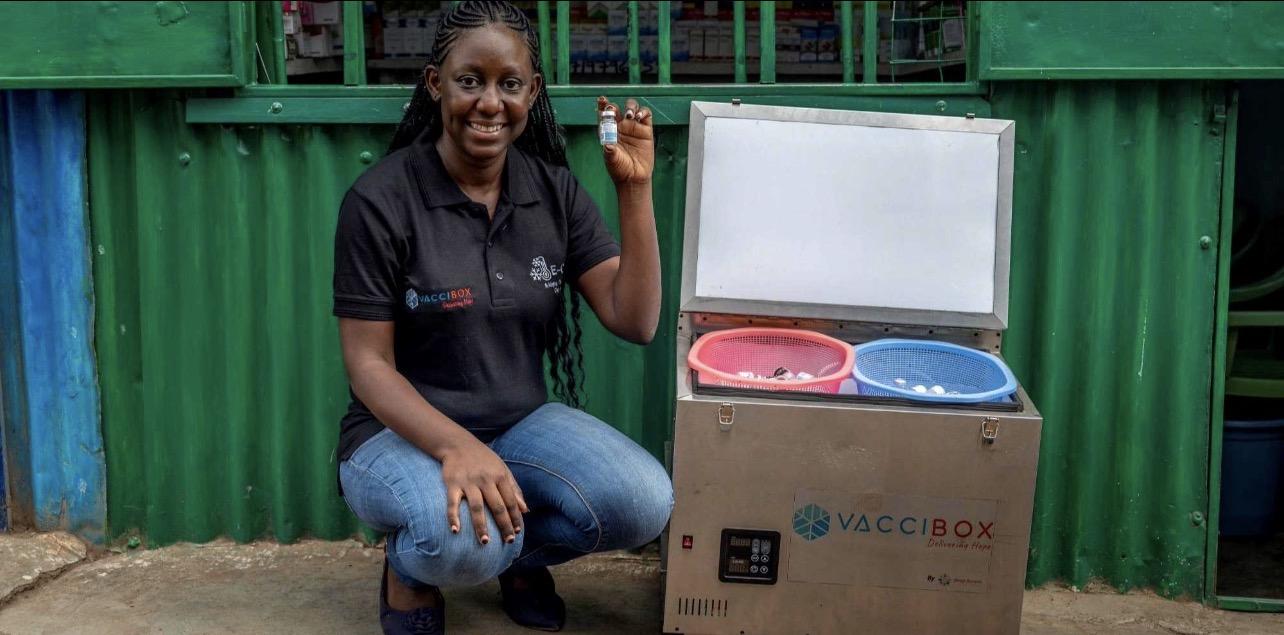
Norah Magero and VacciBox
There are inventions that make life easier, and there are inventions that quietly stand between life and death. Norah Magero’s VacciBox belongs to the second kind. It was not created for comfort, status, or spectacle. It was created because in many places, a child can miss a life saving vaccine simply because there is no reliable way to keep it cold long enough to reach them. In that gap between medicine and access, between a hospital shelf and a distant village, Norah Magero saw a problem that engineering could solve.
Norah Magero is a Kenyan mechanical engineer and renewable energy expert whose work has focused on practical solutions for rural and off grid communities. She is the co founder and chief executive of Drop Access, a social enterprise that develops affordable energy based solutions for underserved areas. Over the years, her work has centered on one idea that sounds simple but is incredibly powerful: technology should meet people where they are, not the other way around.
That philosophy shaped the invention that made her name widely known across Africa and beyond. VacciBox is a small, mobile, solar powered refrigerator designed to safely store and transport temperature sensitive medicines such as vaccines. It was built for field vaccinations, off grid hospitals, and remote clinics where cold chain infrastructure is weak, unreliable, or missing entirely. The device can also be used to transport blood and tissue, making it useful beyond routine immunization.
To understand why VacciBox matters so much, it helps to understand the problem it was built to confront. Vaccines save lives, but they are fragile. They must be stored and transported within carefully controlled temperatures. When the cold chain breaks, the vaccine may lose its effectiveness. In urban hospitals with stable electricity and proper equipment, this challenge is manageable. In remote areas, it becomes far more difficult. Roads may be poor. Power may fail often. Clinics may be far apart. Healthcare workers may need to travel by motorcycle, bicycle, or boat. In such conditions, a vaccine can exist in the country and still remain out of reach for the child who needs it.
This was not just a technical issue to Norah. It was a human one. Reports on her work show that the realities of rural healthcare and the difficulties of vaccination became deeply personal to her, especially after she encountered the practical challenges surrounding vaccination access in rural settings. One account notes that she had first worked on a related cooling solution for dairy farmers before her attention turned more directly to vaccine access after the birth of her daughter. What began as energy innovation broadened into healthcare innovation, and from there VacciBox was born.
That origin matters because it explains the spirit of the invention. VacciBox was not designed from a distance. It was designed with local conditions in mind. Norah herself said the product was built around local challenges and meant to work the way healthcare workers actually need it to work. That is why portability became central to its design. The unit can be wheeled by hand. It can also be mounted on a bicycle, a motorbike, or a boat. It has a telescopic handle to make movement easier. In places where large vehicles cannot always pass and paved roads are not guaranteed, that flexibility is not a luxury. It is the difference between reaching a community and failing to reach it.
The technical thinking behind VacciBox is equally impressive. The refrigerator is portable and lightweight while still offering meaningful storage capacity. Royal Academy of Engineering materials describe it as a 40 litre unit, while MIT Solve describes the solution as lightweight, around 20 kilograms, with 40 litres of internal capacity. It is powered by solar energy and also includes battery backup, mains connectivity, and a charge controller for power stability. It is built to maintain the temperatures required for cold chain medicines, and one source describes its operating range as between 2 and 8 degrees Celsius, while another article on its use in Kenya notes that it preserves products between 2 and 10 degrees Celsius with remote temperature tracking. That kind of layered design is what makes the system practical in the real world, where sunlight can change, power can fail, and a clinic cannot afford uncertainty.
But Norah Magero’s real insight went beyond refrigeration alone. She understood that modern healthcare supply is also an information problem. A fridge that merely cools is helpful. A fridge that can be monitored remotely is far more powerful. VacciBox includes remote monitoring and data capabilities that can track temperature, location, stock, and operations in real time. This means healthcare networks can identify issues early, troubleshoot remotely, and plan vaccination drives more efficiently. In environments where technical support is limited and resources are stretched, the ability to see what is happening without being physically present can prevent losses and improve reliability.
Stories from the field show why this matters. In one rural clinic in Ngatu in Kajiado County, Kenya, an official account described how power problems had complicated vaccination work. The nurse in charge had previously stored vaccine doses at another hospital eight kilometers away and paid a motorcycle taxi to bring them each day. Because of temperature constraints, the vaccines had to be returned by early afternoon, meaning some people could miss their vaccinations. VacciBox helped solve that refrigeration problem by bringing dependable cold storage closer to the clinic itself. It is difficult to overstate the meaning of such a change. It is not only about preserving medicine. It is about preserving opportunity. If a mother travels a long distance with her child and arrives after doses have already been returned, the cold chain problem becomes a human disappointment. VacciBox reduces those missed chances.
Another image from the same account captures the wider reality. A mother had walked roughly 30 kilometers to vaccinate her six week old baby. That single journey says everything about why this invention matters. In places where people travel for hours on foot, a refrigerator cannot just sit in one fixed building and wait for the world to come to it. Healthcare has to move. Cold storage has to move. The system has to bend toward the people. Norah Magero’s invention does exactly that.
The challenge is larger than one clinic. The Royal Academy of Engineering noted that infrastructure and human resource challenges continue to hamper vaccine distribution in Kenya, and that cold chain difficulties became especially visible during the COVID 19 pandemic. The Gavi feature adds more context, pointing out that while Kenya has made progress in basic antigen coverage over the years, some counties still lag badly, and frequent electricity cuts remain a real obstacle even where facilities are connected to the grid. In other words, the problem Norah addressed was never small. It touched geography, poverty, infrastructure, energy, logistics, and public health all at once. That is what makes VacciBox such a strong example of engineering for social impact.
Norah did not stop at building a prototype. Through Drop Access, she and her team pushed toward actual deployment. Gavi reported that the company was reaching around fifty communities in Kenya through 23 VacciBox units, with some sites using them as their primary storage refrigerator and others using them as mobile units to serve distant populations. The same report noted that awards and support had helped the company increase production capacity at its Nairobi facility to 100 VacciBox units per year. Those details reveal the difficult middle stage of innovation, the stage many people never see. It is one thing to invent. It is another to manufacture, test, adapt, finance, and distribute. Norah’s story includes all of that hard work.
Recognition followed because the impact was hard to ignore. In 2022, Norah Magero won the Royal Academy of Engineering’s Africa Prize for Engineering Innovation for VacciBox. She became the first Kenyan to win the award in its eight year history and the second woman to do so. The prize came with £25,000 and with something equally valuable: continental visibility and validation from one of Africa’s most respected engineering innovation platforms. The judges praised the innovation’s potential to improve medicine delivery in rural areas. This was not an award for a fashionable concept. It was recognition for a working solution rooted in urgent need.
Other honors also strengthened the journey. A Gavi report states that the initiative won the 2022 Global Problem Solver Challenge from Cisco as well as the 2022 Africa Prize, giving the enterprise a combined funding boost that helped scale production. Norah has also been profiled by organizations such as TED Fellows, TechWomen, and others for her broader work in renewable energy and community centered innovation. These recognitions matter not only because they celebrate her, but because they help move the solution into more conversations, more partnerships, and more communities.
What makes Norah Magero especially remarkable is that her work sits at the intersection of disciplines that are too often treated separately. She is an engineer, but her work is also about healthcare. She is an energy expert, but her impact is also about maternal and child survival. She runs a social enterprise, but her mission is public good. This blending of fields is what gives her story its depth. She is not just making machines. She is redesigning access. She is not just solving for temperature. She is solving for distance, weak infrastructure, and time.
There is also something powerful about the symbolic side of her story. In many narratives about African innovation, the attention goes to software, fintech, or urban consumer platforms. VacciBox reminds the world that some of the continent’s most important inventions are those that answer foundational needs in places often ignored by mainstream technology conversations. A portable vaccine refrigerator may not sound glamorous to some people, but to a rural nurse, a traveling mother, or a child due for immunization, it can be the difference between risk and protection. That is true innovation: not what looks impressive in a presentation, but what changes outcomes in daily life.
Norah’s long term vision appears to go even further. The Royal Academy profile says she planned to improve the VacciBox app so healthcare facilities could connect into a wider network where vaccine, medicine, and blood bank stock could be viewed across a region. Gavi likewise reported that she hoped to build a system for sharing health products among clinics and to digitize vaccination information for better follow up. That future facing ambition is important. It shows that VacciBox was never meant to be a standalone device only. It was part of a larger imagination for stronger, smarter, more responsive healthcare in low resource settings.
Her broader career reflects the same pattern of practical leadership. TED Fellows notes that she has spent years innovating decentralized solutions for rural communities and promoting inclusion and equality within the energy space. It also points to her role in the Cool Green Campaign, an initiative launched in 2016 to promote sustainability in Kenyan high schools through clean energy adoption, including one of the first solar photovoltaic installations in a Kenyan high school at Starehe Girls School and Center. This wider body of work makes it clear that VacciBox did not come from nowhere. It grew out of a longer commitment to renewable energy, community solutions, and a belief that engineering should serve people left out by traditional systems.
In the end, the story of Norah Magero is not only about one inventor or one machine. It is about what happens when intelligence meets empathy. It is about seeing a structural problem and refusing to accept it as normal. It is about listening closely to how nurses work, how mothers travel, how rural clinics struggle, and how vaccines fail when systems fail. Then it is about returning to those realities with a design that answers them directly.
VacciBox carries more than medicine. It carries trust. It carries continuity. It carries the promise that children in hard to reach communities deserve the same protection as children anywhere else. Its wheels, solar panels, sensors, and cooling chamber all point toward one simple truth: life saving health care is only truly life saving when it can reach the people who need it most.
That is why Norah Magero’s invention matters. She did not just build a portable refrigerator. She built a bridge between invention and inclusion, between engineering and equity, between the clinic and the child waiting at the far end of the road. In a world where so many problems are discussed from a distance, she chose to solve one up close. And by doing so, she turned cold storage into something warmer than technology alone. She turned it into hope on the move.

Catégories
Lire la suite
A Chieftain of the Peoples Democratic Party (PDP), Segun Sowunmi, says President Bola Tinubu of the All Progressives Congress (APC) is smarter than his opponents including Peter Obi of the Labour Party. The former spokesman for the 2023 presidential candidate of the PDP, Atiku Abubakar, said his recent meeting with the president did not translate to a betrayal of his affiliation with Atiku, a...

Broda Shaggi Broda Shaggi is a Nigerian comedian, actor, musician, and social media content creator. He is widely known for his humorous character “Oya Hit Me” and his energetic comedy skits that reflect everyday Nigerian life. Early Life and Background Broda Shaggi whose real name is Samuel Animashaun Perry was born on July 6, 1993, in Lagos State, Nigeria. He originally...

The scream did not end it multiplied. One scream turned into many, echoing across the school compound like a warning bell that refused to stop ringing. For a few seconds, everyone stood frozen, confused, trying to understand what was happening. Then we heard the sound that changed everything: angry shouts, the clash of metal, and footsteps running in panic. “Run!” someone...

Once hailed as an extraordinary partnership between the world’s richest man and the most powerful, the alliance between U.S. President Donald Trump and Tesla CEO Elon Musk came to a dramatic and public end Thursday. In a fiery Oval Office address, President Trump expressed “deep disappointment” with Musk, following the billionaire’s sharp criticism of a major...

Sheikh Ahmad Gumi defended his visits to bandits during the 2025 Southwest Muslims Ulama Summit at the University of Ibadan, saying his engagements are not secret and that he always travels with police, government officials, and other representatives. He criticised years of media and public “misrepresentation” of his actions, arguing that his outreach aims to understand the roots of...