About
About
Tolulope Olukokun and ThinkBikes CoolMAX: The Nigerian Engineer Riding Against Waste, Heat, and Hardship
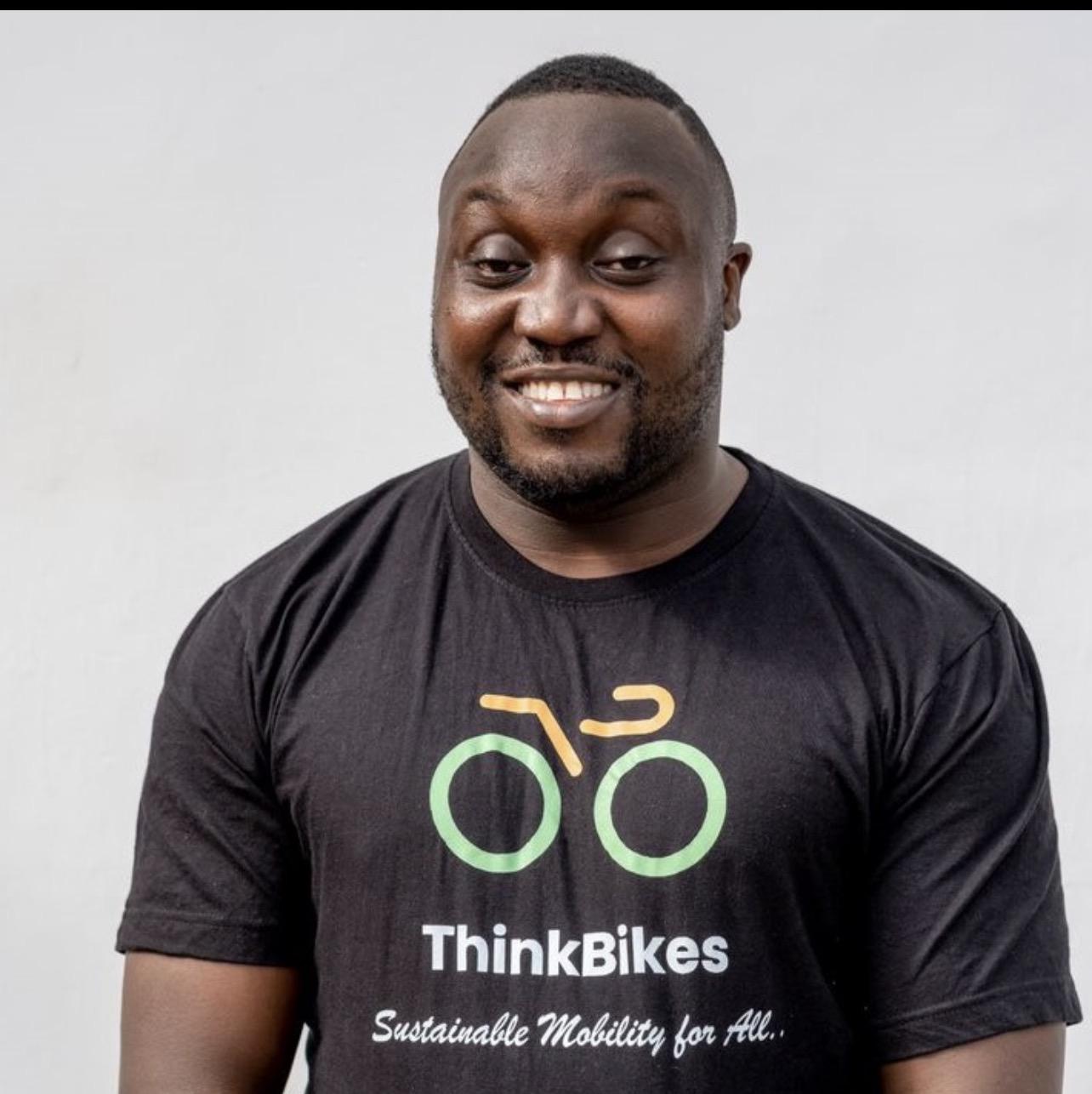
Tolulope Olukokun
In many parts of Nigeria, the story of food does not end on the farm. It begins there, but too often it suffers on the road. A farmer can do everything right. The soil can be kind. The rain can come at the right time. The harvest can be good. Tomatoes can ripen bright and full, fish can be fresh from the water, vegetables can be cut at their best, and fruit can be packed with hope for market day. Yet between the farm and the customer lies a long, punishing journey. Heat rises. Roads shake. Traffic delays. Bad storage ruins what hard work created. By the time some produce reaches town, it has already started to spoil.
That everyday tragedy is the problem Tolulope Olukokun set out to confront. He did not approach it as a distant observer. He approached it as an engineer, a teacher, an entrepreneur, and a Nigerian who understood how transport failures quietly deepen poverty. His invention, ThinkBikes CoolMAX, was not built merely to move goods. It was built to protect value, preserve freshness, reduce waste, and give smallholder farmers and traders a better shot at profit and dignity. The machine itself is impressive, but the deeper story is about what happens when one person looks at a familiar hardship and refuses to accept it as normal. ThinkBikes CoolMAX is an electric cargo bike with a refrigerated compartment designed to help fresh farm produce survive the journey to market in Nigeria’s climate. It was developed by Nigerian mechatronics engineer Tolulope Olukokun, who created the three wheel vehicle and cooling system to run on removable recycled lithium ion battery packs.
Tolulope Olukokun’s path into innovation did not come from chasing a fashionable trend. It grew from technical knowledge and a sense of mission. Before fully committing to ThinkBikes, he worked in higher education, teaching mechatronics engineering at the Federal University of Oye Ekiti. That matters because mechatronics is not a narrow discipline. It brings together mechanics, electronics, and computing. It trains the mind to see systems, not isolated parts. It teaches a person to think about movement, power, control, efficiency, and design all at once. In many ways, it was perfect preparation for someone who would later build a mobility solution that needed to respond to Nigeria’s terrain, economy, and climate at the same time. According to Because International, Tolulope had been teaching mechatronics engineering before leaving academia to focus full time on building ThinkBikes, and an earlier design win in the Siemens Innovation Challenge helped push him toward that decision.
There is something powerful about that turning point. Many people dream while keeping one foot safely planted in what is familiar. Tolulope made a harder choice. He moved from lectures and theory into the uncertainty of building a company in a difficult environment. Nigeria is not an easy place to manufacture advanced transport products from scratch. Supply chains are uneven. Capital can be scarce. Skilled hands are valuable and not always easy to assemble into a young business. Infrastructure problems can slow even the best ideas. Yet that difficulty is also what made the mission worth pursuing. If affordable clean mobility could be built locally, the impact would not just be commercial. It would be social, environmental, and deeply practical.
ThinkBikes emerged from that conviction. The company was established to provide affordable last mile transportation using electric cargo bikes in both urban and rural communities. Its focus was not only on transportation in the abstract. It was aimed at real users, especially small businesses and farmers who were already carrying the burden of costly and unreliable movement of goods. The company says its mission is tied to the challenge of post harvest losses and to the wider problem of food insecurity. Its own material states that it identified the struggle smallholder farmers face in transporting products, while official and partner profiles describe the company as a Nigerian organization committed to affordable, sustainable cargo mobility.
To understand why ThinkBikes CoolMAX matters, it helps to picture the market chain that so many farmers and traders depend on. In rural areas and peri urban communities, transport is not a simple matter of loading produce into a refrigerated truck. That kind of infrastructure is often too expensive or unavailable. Farmers may rely on open vehicles, improvised methods, or transport arrangements that expose food to sun, vibration, delay, and contamination. In hot weather, every extra minute on the road can eat away at freshness. If the produce is delicate, it may arrive damaged. If it is highly perishable, it may arrive unsellable. The loss is not only measured in spoiled food. It is measured in unpaid school fees, reduced business capital, lower confidence, and a cycle in which producers work hard but keep losing value after harvest.
This is where Tolulope’s insight stands out. He did not just think about transportation speed. He thought about preservation during transport. That is a subtle but decisive shift. A standard cargo solution moves goods. A cold chain solution protects goods while moving them. Yet traditional cold chain systems are often too costly for the very people who need them most. So the question became this: could a smaller, more accessible, electrically powered vehicle carry fresh produce while also cooling it, and could that be done in a way adapted to local realities?
The answer became ThinkBikes CoolMAX. The Royal Academy of Engineering describes it as an electric cargo bike with a fridge that helps Nigerian smallholder farmers get fresh crops to market. The same profile explains that the cooling unit and three wheel vehicle are powered by separate removable battery packs made from recycled lithium ion batteries taken from old laptop computers. It also notes that the bike includes a pedal assist system and a patented energy recuperation system that can add up to 5 percent of energy back into the traction batteries, in a way similar to regenerative braking in electric vehicles.
That description contains several layers of ingenuity. First, the vehicle is electric, which reduces dependence on petrol and lowers running costs over time. In a country where fuel scarcity and high fuel prices can disrupt livelihoods, that matters a great deal. Second, the use of recycled battery cells points toward a circular and resource conscious approach. Rather than treating old laptop batteries as waste, Tolulope’s design gives them a second life. Third, the bike is designed not as a luxury machine but as a working tool. It is meant to serve real transport needs in places where roads may be rough and business margins are thin. Fourth, the refrigeration function directly addresses spoilage, which is one of the most painful points in the agricultural value chain.
The technical details make the invention even more interesting. The Africa Prize profile says the CoolMAX has a one metre by one metre 2,000 litre fridge, a cooling range from minus 6 degrees Celsius to 30 degrees Celsius, a top speed of about 40 kilometres per hour, and a range of 30 to 50 kilometres depending on cargo weight. It also states that the rear wheel drive chassis is manufactured by Olukokun and his team before the electric motor and controller are added. The system comes with a wall charger, while the founder has also worked toward solar recharging options and future improvements in torque and range.
What those numbers mean in human terms is simple. A farmer or trader moving perishables no longer has to rely entirely on luck. They have a chance to carry produce in a cooler environment, over meaningful distance, using a vehicle that is cheaper to run than many fuel based alternatives and more suitable for local last mile realities than a full sized refrigerated truck. The ThinkBikes site states that the Cool Max contains a refrigerator with a cooling range of minus 6 degrees Celsius to 30 degrees Celsius and was developed to simplify the issue of food waste while preserving healthy foods before they reach their destination.
There is also a social vision inside the invention that deserves attention. Tolulope has explicitly connected the creation of CoolMAX to the needs of women smallholder farmers. In many agricultural communities, women are central to cultivation, trading, and family economic survival, yet they are often the ones forced to work within the thinnest margins and hardest logistics. When produce spoils, the blow is not abstract. It lands on mothers, traders, and households trying to hold everything together. Tolulope said the goal in creating ThinkBikes CoolMAX was to provide a product for women smallholder farmers and address post harvest losses. That statement reveals that the machine was not designed only to impress engineers. It was designed to serve people who are too often invisible in grand conversations about technology.
Like many meaningful inventions, CoolMAX did not appear out of nowhere as a perfect object. It emerged from a larger journey in electric mobility. ThinkBikes had already been working on cargo bikes and local production before CoolMAX gained international attention. Reports on the company describe its local manufacturing ambition and its use of locally sourced components for electric cargo tricycles. One profile noted that over 90 percent of the components in an earlier ThinkBikes product were locally sourced, with only the electric motors imported. Other accounts describe the company as one of the early electric bicycle manufacturers in Nigeria, trying to build from raw materials rather than merely retrofit existing machines.
That local manufacturing element is one of the strongest parts of Tolulope’s story. In many African countries, innovation is often imagined only as app creation or software adaptation. Hardware is considered harder, riskier, and slower. But hardware can transform daily life in ways that are instantly visible. When a machine is built locally, it can be repaired locally, improved locally, and adapted to actual conditions rather than imported assumptions. Tolulope and his team manufacture the chassis and build around local realities. That makes ThinkBikes not just an invention story, but a manufacturing story too. It is about proving that advanced mobility tools do not have to be endlessly imported to exist in Nigeria.
This commitment to local production also carries symbolic weight. It pushes back against a mindset that sees African countries mainly as consumers of finished technology from elsewhere. ThinkBikes says something different. It says engineering talent exists here. Problems are understood here. Solutions can be built here. Even when some parts still need to be imported, the center of creativity and assembly remains local. That helps retain knowledge, create jobs, and strengthen confidence in homegrown industry.
Recognition followed. ThinkBikes and Tolulope Olukokun began attracting attention from institutions focused on engineering, climate, enterprise, and entrepreneurship. He was shortlisted for the Africa Prize for Engineering Innovation, where ThinkBikes CoolMAX was presented as a notable Nigerian solution for smallholder farmers. The Africa Prize interactive showcase named him a One to Watch winner. Later profiles also highlighted him as an Obama Foundation Africa Leader. Official and partner sources further reference ThinkBikes receiving the BOI Award for Excellence in Manufacturing at the 2022 National MSME Awards in Nigeria, while reports also note its showing in climate innovation competitions.
These recognitions matter, but not because awards themselves solve problems. They matter because they validate the seriousness of the work and open doors. They help a founder move from being seen as someone with an unusual project to being seen as someone building an answer to urgent national and continental challenges. They attract partners, investors, mentors, customers, and media. They also create confidence among users who may be trying an unfamiliar product for the first time.
Still, the core of Tolulope’s story is not trophies. It is persistence. Building an electric cargo bike business in Nigeria means navigating skepticism. New transport technologies always face questions. Can they survive local roads? Are they affordable? What happens when the battery runs low? Can they carry meaningful loads? Will users trust them? Can technicians maintain them? Can a startup meet orders at scale? These are not small questions, and they cannot be answered with speeches alone. They require prototypes, demonstrations, iterations, and customer experience.
That is why the details of production capacity and commercial plans are revealing. The Africa Prize profile said the team was able to produce five units per day and was working to fulfill 1,200 orders by the end of 2023, with hopes of expanding into other African markets. Because International also reported that ThinkBikes had sold more than 50 units within a six month period and aimed for 1,200 in 2023. Even if growth targets shift over time, the ambition itself shows that Tolulope was not building a one off concept piece. He was trying to build a scalable business around useful mobility.
The wider context makes his invention even more significant. Nigeria faces overlapping challenges in transport, food systems, and energy. Fresh produce losses after harvest weaken food security and drain income from producers. Rising fuel prices increase the cost of moving goods. Climate concerns make fossil fuel dependence more costly in the long run. Poor rural transport links make it harder for farmers to reach profitable markets. A solution that touches more than one of those problems at once has unusual value. ThinkBikes CoolMAX sits at the intersection of mobility, refrigeration, local manufacturing, agricultural logistics, and climate adaptation.
That is one reason the invention feels larger than its frame. A cargo bike may look humble when compared with a full sized truck or flashy urban vehicle, but humility can be misleading. In many economies, small machines change more lives than glamorous ones because they meet people where they are. A cargo bike that preserves tomatoes, fish, vegetables, and fruit on the way to market can protect income at the exact point where many livelihoods leak value. It can shorten the emotional distance between hard work and reward.
There is also a philosophical side to Tolulope’s story. He represents a type of innovator who does not separate environmental responsibility from economic practicality. For some people, green technology still sounds like a luxury idea for wealthy countries. But in the ThinkBikes model, sustainability is not decoration. It is tied directly to cost savings, efficiency, reuse of battery materials, and better outcomes for farmers and traders. Clean transport becomes attractive not because it is fashionable, but because it can be useful, cheaper to run, and built around local need.
That kind of practicality is often what determines whether an invention survives beyond applause. Nigeria does not need abstract innovation for its own sake. It needs technology that enters the grain of daily life. It needs machines that can handle bad roads, unreliable power, cost pressure, and user skepticism. It needs founders who understand that adoption depends on trust as much as on invention. Tolulope’s work appears grounded in that understanding.
His own public profile reflects a person whose mission extends beyond a single product. The Obama Foundation profile describes him as a solutions oriented thinker in sustainable mobility. ThinkBikes’ own company profile lists him as a mechatronics engineer with long experience in automobile and autotronics work. Together, these portray someone whose role is not just to invent once, but to keep pushing a broader transition toward cleaner movement and more resilient local logistics.
In a deeper sense, ThinkBikes CoolMAX tells a story about refusing to accept waste as destiny. In too many places, post harvest loss is spoken about as if it is simply part of life, one of those sad inevitabilities that farmers must endure. Tolulope Olukokun’s work argues otherwise. It says that some losses continue not because they are natural, but because better systems have not yet reached the people who need them. Once you see the problem that way, engineering becomes a form of justice. It becomes a way of restoring value to labor that was already done.
It is also worth noticing that this story is not about a lone genius working in isolation. Although Tolulope stands at the center, the ThinkBikes journey includes teams, fabricators, supporters, customers, and institutions that helped refine the product and expand its reach. Official descriptions mention his team manufacturing the chassis and building units. Partner stories reference incubator support, challenge prizes, and mentorship. Innovation is often romanticized as a private flash of brilliance, but in reality it survives through ecosystems. What Tolulope achieved took vision, yes, but it also took collaboration and continued effort.
And yet there is still something distinctly personal in his journey. He left a stable professional path to build hardware in a place where hardware is hard. He chose to address farmers and traders, not the easiest or flashiest customer segment. He entered a field where each unit built requires real materials, real labor, and real risk. He worked in a domain where success must be earned on the road, not just in presentations. That makes the ThinkBikes CoolMAX story inspiring in a grounded way. It is not fantasy. It is courage made practical.
The future of such an invention will depend on many things. Financing matters. Battery supply matters. Maintenance networks matter. Policies that support clean transport matter. Customer education matters. Roads and charging options matter. Scaling a good idea is often harder than inventing it. But the foundation is strong because the need is real. As long as farmers keep losing value between harvest and market, as long as fuel prices strain transport businesses, and as long as local manufacturing remains a strategic need, there will be a place for the kind of work Tolulope Olukokun is doing.
His story belongs to a newer generation of African industrial imagination, one that is not content merely to diagnose problems or wait for imported answers. It wants to build. It wants to test, fail, improve, and manufacture. It wants to make technology answer to ordinary life. ThinkBikes CoolMAX is one example of that mindset on wheels. It is not only a machine for cooling produce. It is a statement that engineering can begin in a workshop in Nigeria and still speak to some of the continent’s biggest development challenges.
When people look at Tolulope Olukokun, they may first see an inventor or entrepreneur. That is true, but incomplete. He is also part of a wider struggle to make movement cleaner, food supply chains less wasteful, and local enterprise more capable. His invention came from seeing what too many others had learned to ignore. Fresh produce was being lost because the road between farm and market was not just a road. It was a corridor of spoilage, cost, and disappointment. ThinkBikes CoolMAX entered that corridor with a different promise.
It promised that the farmer’s effort should have a better chance of surviving the journey.
It promised that technology built in Nigeria could meet Nigerian realities.
It promised that waste can be reduced not only by bigger systems and bigger money, but also by sharper ideas.
And in that promise lies the real weight of Tolulope Olukokun’s story. He did not simply invent a refrigerated electric cargo bike. He built an argument in metal, batteries, motion, and cold air. The argument says that when engineering listens closely to everyday hardship, invention becomes more than a product. It becomes a bridge between labor and reward, between climate pressure and resilience, between local challenge and local answer.
That is why ThinkBikes CoolMAX matters. It is a tool, a business, a symbol, and a quiet rebellion against the waste that has stolen too much from too many. And that is why Tolulope Olukokun’s name stands out in the story of modern Nigerian innovation. He saw heat, distance, spoilage, and hardship not as fixed realities, but as problems waiting for a determined mind to ride straight at them.

Categorie
Leggi tutto
Mosun Filani Mosun Filani is a respected Nigerian actress, producer, and entrepreneur known for her strong presence in Yoruba Nollywood. Over the years, she has built a reputation for playing emotional, bold, and culturally rooted roles that resonate deeply with audiences across the South West and beyond. Her journey into the entertainment industry is one shaped by passion, discipline,...

The Madam Who Scalded Her Blessing I am dictating this story to my nurse because I can no longer use my hands. My fingers are raw meat. If you are a wicked Madam who treats her help like animals, read this and repent. My name is Mrs. Shade Adewale. I live in a duplex in Magodo Phase 2. My husband, Chief Femi Adewale, is a clearing and forwarding agent. We were very rich. I say were because...

Sundiata Keita In the long memory of West Africa, there are names that do not merely belong to kings or warriors. They belong to the spirit of a people. They belong to the firelight, to the drumbeat, to the voices of griots who keep the past alive when paper fades and stone breaks. One of those names is Sundiata Keita, the man remembered as the founder of the Mali Empire and the great...

Ishaya Danjuma Ishaya Danjuma is a Nigerian businessman and entrepreneur known for his involvement in corporate investments and for being part of one of Nigeria’s most influential families. He is widely recognized as the husband of former Miss World Agbani Darego and the son of Nigerian billionaire businessman and former military officer Theophilus Yakubu Danjuma. Early...

Nduka Obaigbena In a nation where politics shapes headlines and headlines shape public opinion, one man understood early that whoever controls the narrative holds enormous influence. That man is Nduka Obaigbena, a publisher, broadcaster, and entrepreneur whose name is inseparable from modern Nigerian media. From newspaper pages to international television screens, his journey is a...